Discordia Ascendant (Chaos Rules)

Reading the news is not necessarily the best way to start your day

“Big, beautiful” tax bill would add $2.4 trillion to US debts, CBO says.

Trump bans 12 countries’ citizens from entering the US.

Emergency Abortions: The Trump administration announced that it had revoked a Biden administration requirement that hospitals provide emergency abortions to women whose health is in peril, including in states where abortion is restricted or banned.

Too many Christians are transforming Christianity into a vertical faith, one that focuses on your personal relationship with God at the expense of the horizontal relationship you have with your neighbors. Selfishness Is Not a Virtue David French NYT 6/5/25

The consumer goods giant Procter & Gamble said on Thursday that it would cut 7,000 jobs globally over the next two years, or 6 percent of its total work force, as it seeks to reorganize amid uncertainty caused by President Trump’s trade war.

A federal judge in Colorado on Wednesday temporarily blocked the Trump administration from deporting the wife and children of the Egyptian man charged with attacking an event in Boulder, Colo., honoring hostages in Gaza….“Punishing individuals for the alleged actions of their relatives is a feature of premodern justice systems or police state dictatorships, not democracies,” (Eric Lee, Attorney for the family)

But with the Trump administration slashing spending on science, Dr. Patapoutian’s federal grant to develop new approaches to treating pain has been frozen. In late February, he posted on Bluesky that such cuts would damage biomedical research and prompt an exodus of talent from the United States. Within hours, he had an email from China, offering to move his lab to “any city, any university I want,” he said, with a guarantee of funding for the next 20 years…Applications from China and Europe for graduate student or postdoctoral positions in the United States have dropped sharply or dried up entirely since President Trump took office. The number of postdocs and graduate students in the United States applying for jobs abroad has spiked.

When the current Congress was convened in January, there were nearly 120 members who were 70 or older — 86 in the House, including nonvoting delegates, and 33 in the Senate. This number, which is unmatched in modern history, included 14 octogenarians in the House, five in the Senate, and 91-year-old Senator Charles E. Grassley, Republican of Iowa.“Big, beautiful” tax bill would add $2.4 trillion to US debts, CBO says.


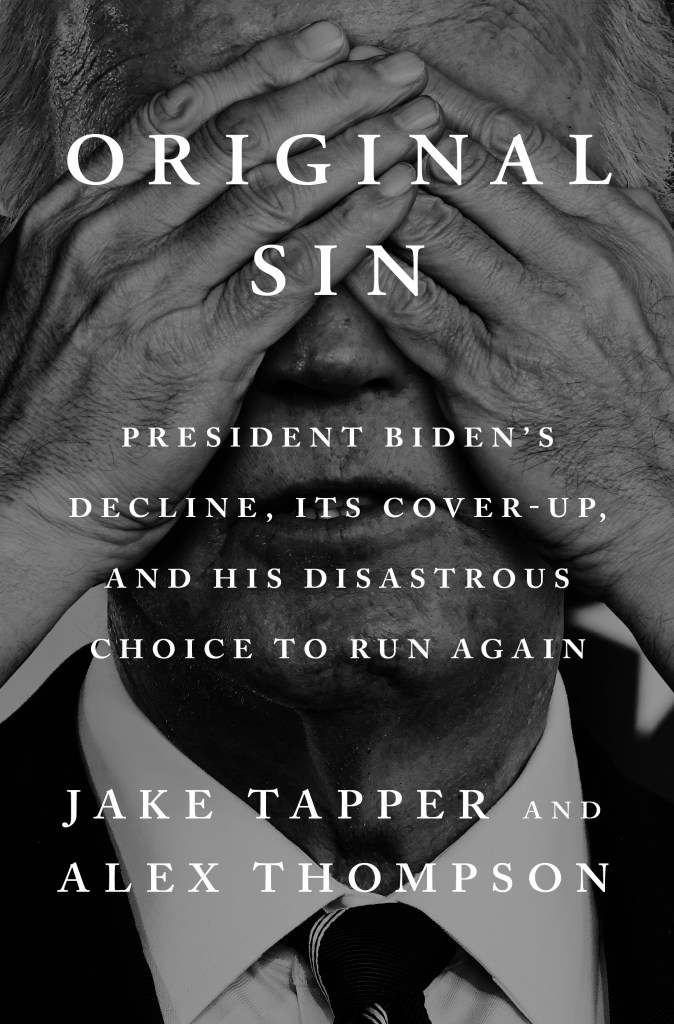
Book Review: Original Sin: President Biden’s Decline, Its Cover-Up, and His Disastrous Choice to Run Again by Jake Tapper and Alex Thompson

This book is well-written, compelling, and—most notably—largely uncontested. I’ve read and heard very little pushback on the specific facts or episodes it reveals, which suggests that authors Alex Thompson and Jake Tapper did their journalistic homework. The anger it has generated seems not to concern the accuracy of its content, but rather the timing of its release—particularly among Biden loyalists, who view it as a betrayal during a time when the President is reportedly battling stage four colon cancer.

Others, more detached, wonder aloud why this information wasn’t brought to light sooner—why major media outlets, especially CNN, did not explore or disclose the full extent of President Biden’s physical and cognitive decline during his time in office. That is perhaps the most damning question of all.

This is an important book. It speaks to an uncomfortable truth that extends far beyond one man: the American political establishment, across all branches, has proven remarkably inept at addressing questions of age, health, and capacity among its senior-most officials. From the silent frailty of Dianne Feinstein to the vanished vigor of Ruth Bader Ginsburg, we’ve seen what happens when ego and denial—both personal and institutional—take precedence over public responsibility.

Perhaps the quintessential case of this phenomenon was Woodrow Wilson’s second term. After a debilitating stroke, Wilson was essentially incapacitated. His wife, Edith, barred access to him, managed his communications, and in effect acted as President. It was a quiet coup by pillow and teacup. The Republic endured, but barely.

There are shades of Edith Wilson in Jill Biden. She appears to have acted as her husband’s chief protector—controlling access, managing his schedule, shielding him from the press, and preserving the illusion of a functioning presidency. In her role as spouse, that’s understandable. In her unelected role as a shadow gatekeeper to the Commander-in-Chief, it is far more problematic. One might say she acted out of love; but in doing so, she may have done a grave disservice not just to Joe, but to the country.

The book should be read not as a political hit job, but as a cautionary tale—a sobering account of what happens when the reality of aging is denied, hidden, or downplayed in a role where vitality, decisiveness, and mental clarity are non-negotiable. The tragic erosion of strength and cognition in old age is painful to witness in any context. But when the individual in decline is the President of the United States, the stakes are exponentially higher.

Being President is not a part-time job. And yet, this administration’s inner circle seemed intent on turning it into a 10 a.m. to 4 p.m. desk duty—often with questionable results. The staff’s attempts to mask or manage the President’s decline weren’t just misguided; they were reckless. Shame on them. Shame on the senior Democrats who knew the truth and said nothing. And shame, too, on the partisans who savaged the few journalists who dared to report what millions of Americans could plainly see.

Modest Proposals for Reform

The republic deserves better than this. Here are a few modest proposals to restore some measure of honesty and responsibility to our political gerontocracy:

  • Mandatory retirement at 78 for all members of Congress and Supreme Court justices. This would mean the last year someone could run for the Senate would be age 73; for the House, age 76.
  • Presidential retirement at 78. If a sitting President reaches that age during their term, the Vice President should assume office.
  • Lower the minimum age to run for President to 32. Why 35, anyway? If you’re old enough to command a drone strike, you’re old enough to command the White House.
  • Annual cognitive testing starting at age 68 for any sitting President, Supreme Court justice, or member of Congress, with results made public. Transparency, like sunlight, is the best disinfectant.

And What of Donald Trump?

Let us not delude ourselves. The other septuagenarian (now octogenarian) candidate is not immune to the same questions. A similar book could be written—perhaps will be written—about Donald Trump’s own health, mental acuity, and fitness for office. The signs are there, albeit in a different key.

One would hope that, should Trump become clearly unfit for office due to health reasons, the wise and the decent would persuade him to step aside. But hoping for wise and decent behavior in American politics is a bit like hoping the Mississippi River will reverse course out of courtesy.

We are a nation now ruled by its elders, but without the wisdom such a gerontocracy is supposed to confer. Instead, we cling to figureheads and fictions, while truth sits ignored in the wings—sometimes until it’s too late. Original Sin may not be a comfortable read, but it is a necessary one.

Notes on Democracy by H.L. Mencken Still Relevant Today

H.L. Mencken’s Notes on Democracy was written about 100 years ago, yet the reader will be struck by how sharply his observations on 1920s politics and culture mirror the political landscape of today.

Mencken’s caustic style and biting sarcasm run throughout the book. He held little confidence in the judgment and wisdom of his fellow citizens, particularly regarding politics and voting, as evidenced by this remark:

“Democracy is a pathetic belief in the collective wisdom of individual ignorance. No one in this world, so far as I know—and I have researched the records for years, and employed agents to help me—has ever lost money by underestimating the intelligence of the great masses of the plain people. Nor has anyone ever lost public office thereby.”

Mencken’s disdain was not reserved solely for the electorate. He was equally unforgiving when it came to the judgment and competence of elected leaders, describing their primary motivation with brutal clarity:

“It is his business to get and hold his job at all costs. If he can hold it by lying, he will hold it by lying; if lying peters out, he will try to hold it by embracing new truths.

One quote in particular struck me—written a century ago, yet hauntingly apt in describing the Trump administration’s approach to governance:

“No man would want to be President of the United States in strict accordance with the Constitution. There is no sense of power in merely executing laws; it comes from evading or augmenting them.”

The relevance of Mencken’s skepticism and critique of American democracy is both startling and disheartening. His writing is a reminder that the flaws he saw in the democratic process and its leaders are not new—they are simply dressed in the colors of each era. We could certainly use more writers and journalists like Mencken today: fearless in their observations, unyielding in their criticism, and unafraid to expose the flaws in both our political culture and the electorate that sustains it.

Murder the Truth by David Enrich: Brief Review and Recommendation

There is little doubt that investigative reporting, journalism, and legacy media are under full-scale assault. When politicians or public figures are confronted with articles or reporting that challenge their narratives, they are quick to sneer, “fake news.” In Murder the Truth: Fear, the First Amendment, and a Secret Campaign to Protect the Powerful, David Enrich details the escalating legal and political efforts to undermine press freedoms in the United States. These efforts, he explains, are largely initiated and financed through right-wing groups and MAGA followers.

One glaring example of this shift is the recent resignation of Bill Owens, executive producer of 60 Minutes. Owens cited that “over the past months, it has become clear that I would not be allowed to run the show as I have always run it, to make independent decisions based on what was right for 60 Minutes, right for the audience.” This resignation is symptomatic of a larger fear permeating newsrooms. Newspapers like The Washington Post and The Los Angeles Times have even become hesitant to make political endorsements. Fear of lawsuits, loss of subscriptions, and dwindling advertising revenue have left many media organizations wary of publishing anything that might stir controversy. As a result, crucial stories and investigations—those that expose government corruption, public official malfeasance, and corporate irresponsibility—often remain buried, locked away in the dead files of an editor’s desk drawer.

More than 2500 newspapers in the United States have stopped publishing in the past two decades, a rate of about two per week. Most counties in the United States are no longer home to any daily papers, and many surviving outlets have been gutted by layoffs and other cost-cutting. 70 million Americans live in what researchers have dubbed “news deserts.”

As staffing at local newspapers, declines, mayoral races, become less competitive, and voter turnout wins. Misinformation spreads. Politicians and other public figures are rarely held to account for lies and misdeeds. Today, state, legislators, city Council members, and small town mayors – – not to mention companies that pollute or mistreat workers or sell dangerous products – –are operating with a degree of invisibility and impunity that they have not enjoyed in a century

This book contains interesting stories and analysis of several free speech battles including:

Sarah Palin vs. The New York Times
Donald Trump’s Lawsuits Against Media Entities
Dominion Voting Systems vs. Fox News
Hulk Hogan vs. Gawker
Melania Trump vs Daily Mail

Enrich’s book may come too late to reverse this tide, but it serves as critical research for future historians who will undoubtedly question how a nation that once prided itself on free speech allowed censorship and political pressure to erode First Amendment guarantees.

An excellent read. Highly recommended for anyone who values a free and independent press.

Times Out

The Sunday New York Times remains one of life’s pleasures. I do miss reading the enormous print edition of the paper with the magazine but at least the online edition still suffices. Shown below are a book I’d like to read and useful analysis and advice from various columnists.

Flesh

by David Szalay

Szalay’s new novel traces the life of a young man in Hungary who eventually makes his way to England, following him from troubled youth to immigrant success to tragic fall. Each chapter provides glimpses of the major stages of adulthood — first love, marriage, parenthood — interwoven with intervals of aimlessness, reinvention and grief. With cool detachment, Szalay offers observations on both the complicated self and the unpredictable world surrounding it.

***

Our current antiglobal moment could last for a long time. Illiberalism is alive and strong. Comparisons that once seemed incendiary or irresponsible now seem obvious. As in the 1930s, minority groups are being scapegoated as symbols and causes of globalization’s ills. For Jews then, read migrants or trans people now. Mr. Trump’s imminent betrayal of Ukraine suggests that we are moving rapidly through the 1930s and have already arrived in 1938. That’s when Western leaders in Munich decided to allow Hitler to dismember one of Europe’s few remaining democracies, Czechoslovakia. It was not worth risking lives over “a quarrel in a faraway country, between people of whom we know nothing,” reasoned the dangerously reasonable Neville Chamberlain. Less than one year later, Hitler browbeat the president of what remained of Czechoslovakia into accepting a complete occupation of his country.

Russia’s invasion of Ukraine was a déjà vu moment for historians of World War II. Will Greenland and Canada become the next Czechoslovakia and Poland?

Globalization Is Collapsing. Brace Yourselves.
By Tara Zahra
Dr. Zahra is a professor of history at the University of Chicago and has written extensively about globalization’s first collapse.

***

A 20 minute agility workout to improve balance

***

Instead of following the standard guidance to keep withdrawals to 4 percent of the balance in your retirement account, then adjust annually for inflation, you might forgo the inflation raise when stock prices are falling, Dr. Pfau said. Or you can install so-called guardrails, limiting withdrawals to, say, 3 percent in bad years for stocks but taking out, perhaps, 5 percent when the market is surging.

How to Protect Your Retirement Savings Now as Markets Plunge by Diane Harris

***

My problem is with Trump’s magical thinking that you just put up walls of protection around an industry (or our whole economy) and — presto! — in short order, U.S. factories will blossom and make those products in America at the same cost with no burden for U.S. consumers.

For starters, that view completely misses the fact that virtually every complex product today — from cars to iPhones to mRNA vaccines — is manufactured by giant, complex, global manufacturing ecosystems. That is why those products get steadily better and cheaper. Sure, if you are protecting the steel industry, a commodity, our tariffs might quickly help. But if you are protecting the auto industry and you think just putting up a tariff wall will do it, you don’t know anything about how cars are made. It would take years for American car companies to replace the global supply chains they depend on and make everything in America. Even Tesla has to import some parts.

I Just Saw the Future. It Was Not in America. Thomas L. Friedman

Backbone

So, you’re talking about a deceitful and highly discredited so-called journalist who’s made a profession of peddling hoaxes time and time again to include the, I don’t know, the hoaxes of Russia, Russia, Russia! Or the fine people on both sides hoax. Or suckers and losers hoax. So, this is a guy that peddles in garbage. This is what he does…Nobody was texting war plans. And that’s all I have to say about that. Thank you.

Secretary of Defense Pete Hegseth

“This appears to be an authentic message chain, and we are reviewing how an inadvertent number was added to the chain.”

National Security Council Member

Like many of my friends who are MAGA supporters, I too wish for a return to the 1950s and 1960s. But for a different reason and perspective…I have listed a small group of political leaders and journalists who showed courage, integrity and judgement in the performance of their duties. They all possessed “backbone”, a quality that is so lacking in Washington D.C. and in many press rooms. These are individuals who did not necessarily toe the party line and displayed personal and professional courage in their political stands.

At my age, I wax nostalgic for the candor and probity in my youth as opposed to the pablum and lies I am subjected in my seasoned years.

Political Leadership:

Martin Luther King Jr. – moral leadership.

Robert F. Kennedy – major advocate for civil rights, poverty alleviation, and social justice before his assassination.

Barry Goldwater – though conservative, he was fiercely independent, opposed religious extremism, and later supported LGBTQ+ rights.

Margaret Chase Smith (R-ME) – A trailblazer, she was the first woman to serve in both the House and Senate. She stood up to McCarthyism with her Declaration of Conscience speech in 1950, warning against the dangers of demagoguery and political extremism.

Frank Church (D-ID) – A leader in investigating government overreach and abuses of power (Church Committee). He’d be crucial in today’s discussions on government surveillance.

Howard Baker (R-TN) – Although his prime influence came in the 1970s, his approach to bipartisan leadership and honesty in government (Watergate hearings) would be crucial today.

Journalists

Edward R. Murrow– fearless in confronting McCarthyism, a standard-bearer for integrity in journalism.

Walter Cronkite – “the most trusted man in America,” his objective reporting shaped public opinion.

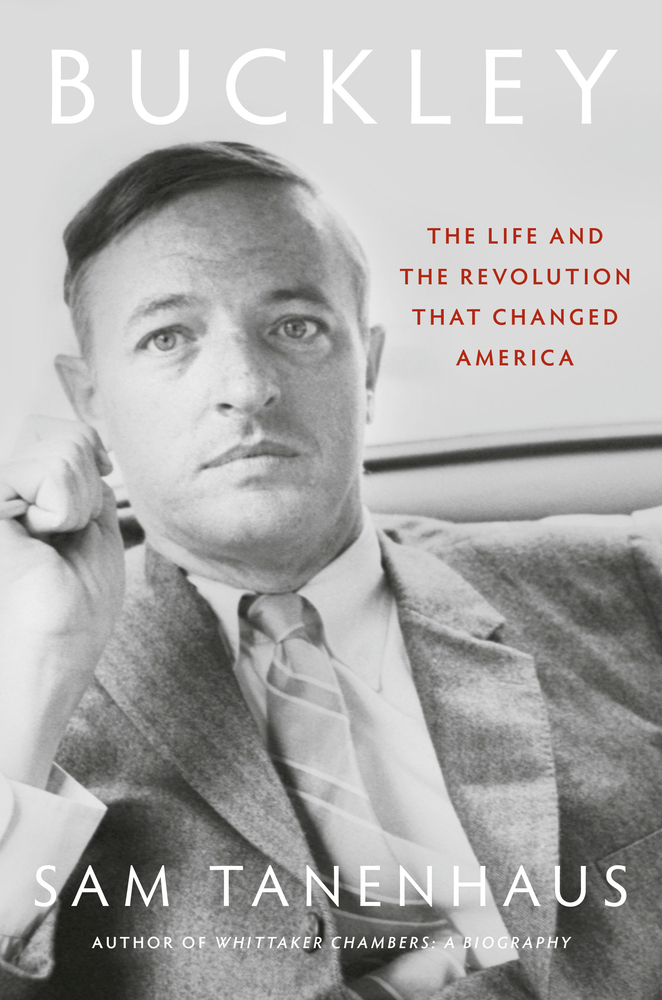
William F. Buckley Jr. – Founder of National Review, he shaped modern conservatism with sharp wit, deep intellect, and respect for debate

Mike Royko – A tough, blue-collar newspaper columnist from Chicago who took on corrupt politicians, injustice, and hypocrisy with biting humor.

Eric Sevareid- Candid and biting essays on political topics.

Mike Wallace (CBS) – Before 60 Minutes, he was an aggressive interviewer who exposed political deception.

James Reston (New York Times) – A Pulitzer Prize-winning columnist who had a major influence on political journalism.

Mary McCarthy (The New Republic, The New York Review of Books) – A brilliant and sharp political writer, she was an outspoken critic of U.S. foreign policy, McCarthyism, and the Vietnam War.

Dorothy Thompson (New York Herald Tribune, Ladies’ Home Journal) – One of the most influential political columnists of the mid-20th century. She was a fierce critic of fascism before and after WWII and tackled McCarthyism and Cold War paranoia.

How America Works… and Why it Doesn’t: A Brief Guide to the US Political System by William Cooper (Book Review)

I wish I could have our friends outside the United States read this book so they can understand what is going on inside it. The book is useful for citizens inside the United States but daily events related to DOGE, budget cuts, Elon Musk, court orders being ignored and chaos from Washington DC are front and center in our minds 24 hours daily. 

Cooper does a very good of explaining the national crisis affecting the United States and its consequences to the rest of the world. He describes how the government and our political system were intended to work. And he accurately analyzes why they aren’t working. Cooper also tries to be even handed on his criticism of both political parties and their leaders.

This book will be an excellent resource for historians 20 or more years out trying to explain the craziness of our contemporary times and politics. I appreciate that this book was updated to reflect the start of the second Trump Administration.

If I have any reservations about this book, it’s that I feel that Cooper is being a bit more optimistic than I am about this country’s immediate future. Cooper writes “None of these definitions applies to Trump. He doesn’t have absolute power over the whole of government. He’s not even close to that. He remains constitutionally responsible to the people in significant and fundamental ways…The most serious domestic risk America faces with Trump as president isn’t dictatorship. It’s that the military follows his orders to break the law—to go after American citizens, for example. This scenario, however, is unlikely.”

I have the advantage of seeing how things have unfolded with in the Trump administration since the book has been published and the author may want to temper his faith in the power of our Constitution and the rationality of the Trump presidency.

Below are some notes and highlights that will provide the prospective reader of an introduction to the book and topics…

Obama’s presidency deeply unsettled and angered millions of Americans not ready for a Black president. And Trump’s hostility to minorities (sometimes subtle, sometimes overt, always cunning) drives his popularity among many Republicans, particularly in southern states.

==========

If the President of the United States were ever to punish disfavored speakers like the Harvard faculty, Google’s CEO, or the New York Times’ publisher, the nation would be in peril.

==========

The root cause of America’s twenty-first-century decline is the combination of (1) tribalism, (2) social media, and (3) a malformed political structure.

==========

Journalists are now disproportionately focused on writing stories that will go viral on Facebook and Twitter, a very different goal from writing stories that will educate and inform

==========

Americans focus little on human history, let alone absorb its lessons. And an embarrassing percentage of them don’t understand basic civics.

==========

Just look at the presidency. Donald Trump is grossly unfit to hold America’s highest office…The House of Representatives, moreover, is throbbing with underqualified mediocrities.

==========

The remedies are easy to prescribe. Americans must improve civic education in schools; raise awareness about cognitive biases throughout society; spend more time with people from other political tribes; reduce and regulate the use of social media; rework the political structure to foster more political parties and equal representation; double down on free speech; shun politically motivated prosecutions; feverishly guard election integrity; and support a new Republican champion other than Donald Trump.

==========

While Cooper’s remedies are easier to prescribe, they are impossible to fulfill. God bless the United States…

America’s Reputation and the Lessons of History

It Isn’t Just Trump. America’s Whole Reputation Is Shot by David Brooks is a sobering analysis of the chess pieces to fall now that our closest allies no longer trust Trump or Americans.

This is not just a Trump problem; America’s whole reputation is shot. I don’t care if Abraham Lincoln himself walked into the White House in 2029, no foreign leader can responsibly trust a nation that is perpetually four years away from electing another authoritarian nihilist.

It Isn’t Just Trump. America’s Whole Reputation Is Shot. David Brooks NYT 3/13/2025

While many draw comparisons between Hitler and Trump—particularly in how they gained and wielded power—I find the parallels between the German people of the early 1930s and Americans today more compelling.

After World War I, Germany was severely punished. It lost territory, its military was disarmed, and the burden of reparations crippled its economy. By the early 1930s, Germany, like much of the world, was in economic turmoil. Unemployment was rampant, and many were homeless and hungry. The country’s ability to recover was constrained by the strict terms imposed after the war.

In contrast, America in 2024 was not in crisis. The economy was largely stable, with low unemployment and a strong stock market. Inflation and housing affordability were challenges, but interest rate cuts signaled efforts to curb economic strain. Unlike pre-war Germany, the U.S. had not suffered a recent military defeat and remained the dominant global power, respected by allies and feared by adversaries.

Despite this position of strength, over 77 million Americans elected a candidate widely seen as aged, incoherent, and lacking a clear platform—a stark contrast to Germany in the 1930s, where voters turned to a charismatic leader promising national revival. Germany was desperate to rebuild; America was already strong.

From a historical view, which country was most guilty of making the most irrational choice at the time? The German people’s decision turned out to be catastrophic. Will America and Americans avoid the disapprobation of history? Time will tell…

State of the Dis-Union

A few fast observations:

The old Democratic strategy of “when they go low, we go high” is a loser.

While I appreciate its intent, peaceful demonstrations, petitions, and letter writing campaigns are passé and ineffective. The age of civil persuasion is dead.

A new political party (Democratic or other) needs a Machiavellian leader, a bit evil but unlike the Republican version, smart. (Maybe Mark Cuban?)

Now the Republicans are concerned about decorum?! Why didn’t this concern apply during Joe Biden’s State of the Union when Lauren Bobert and Marjorie Taylor Greene acted up like spoiled high school sophomores screeching for attention at a school dance.

Congressman Al Green was the only one Democrat with a backbone? When he was removed, all other Democrats should have walked out too.

Likewise, when the Associated Press was barred from White House press room, other legitimate press and news outlets should have left too.

The biggest slaughter this winter was not the Eagles beating the Chiefs in the Super Bowl, but the political thumping Republicans have handed the Democrats since Inauguration Day.

Joe Biden (or his enablers) and Merrick Garland are hugely responsible for the current political mess. They engaged in pillow throwing while Trump and the GOP went MMA.

The “reporter” who asked Zelensky why he was not wearing a suit to the White House must have received his journalism degree from Trump University.

Death knells have been announced periodically for both parties over the decades. However I hear a rattle anytime a Democrat politician speaks.

Communications from Democratic congressmen and women to constituents about how bad Trump is are useless. We get it. Things are bad and about to get worse. Create a plan or strategy and tell us what you are going to do as a party. How about someone stepping up as an effective opposition leader?

I would not count on midterms or any other future elections to change the political direction. First, not sure that they will take place. And second, very uncertain if they take place, whether the results will be “accurate.”

Tending My Fish: Reflections on a Republic in Decline 

As I contemplated last week’s election results, with all their dreary portents for the years ahead, I was reminded of the lament of a Roman senator—his power fading, his influence diminished, as Caesar’s star ascended:  

“I shall tend my fish, study philosophy, and comport myself for death. This republic holds no place for me any longer.”  

(Conspirata: A Novel of Ancient Rome, Robert Harris)  

And then I asked myself, “Does this country hold a place for me? 

The question is not rhetorical. At this late point in my life, I find myself at odds with the culture, principles, and trajectory of the nation I once revered. My beliefs—anchored in reason, history, and an old-fashioned sense of duty—seem increasingly alien in a land preoccupied with spectacle over substance.  

A Discontented Creed  

Consider, for example:  

Religion in Politics: As an agnostic, I believe that the pulpit should stay far away from the podium. Ministers and pastors claiming divine insights on policy strike me as charlatans with better wardrobes. Faith should inspire personal virtue, not dictate public policy.  

Loyalty to Allies: In diplomacy and in life, I value loyalty. A true ally stands by you in both triumph and trial. Yet we seem to cast off old friends—countries and principles alike—as if they were expired coupons.  

Science and Competence: I favor facts over feelings, competence over pretense. But ours is an age where bombast outweighs expertise, and the loudest voice is mistaken for the wisest.  

Reckoning with Our Past: This country’s history is a patchwork of greatness and failure. We have saved nations and crushed dreams, built monuments to liberty and ignored the cries of the oppressed. I believe in confronting our flaws honestly, not whitewashing them with comforting myths—or worse, erasing them entirely in the name of “offense.”  

Respect for Women: Here is a simple proposition: anyone who assaults, demeans, or dehumanizes women is unfit for public office. Full stop. Yet, 52% of white women voters apparently find this a negotiable standard. I am baffled—and disgusted.  

Character Matters: Good judgment, responsibility, empathy, and moral clarity—these should be the cornerstones of a person’s character. Increasingly, though, they are dismissed as relics of a bygone era, sacrificed on the altar of “winning at all costs.”  

A Nation Entertained to Death  The deepest cut of all, perhaps, is that we have traded informed citizenry for the hollow thrills of reality-show governance. Americans now crave entertainment over enlightenment. The morning chatter of Joe and Mika or the smirking commentary of Bill Maher may pass for insight, but to me, they feel like reruns of Neville Chamberlain in Munich, mistaking platitudes for policy while calamity looms.  

The Final Reckoning  

So here I am, like that Roman senator, contemplating my fish and philosophy. The republic of my youth—the one I fought to believe in—is unrecognizable.  

It is a strange thing to feel like an exile in one’s own country, but perhaps the true patriots are always exiles. We stand apart, unwilling to settle for the tawdry spectacle on offer, and dream of something better—a nation of character, competence, and courage.  

Until then, I will tend my fish.