Fire the Coach! Keep the President…

In several of the South’s major college football strongholds — Alabama, LSU, Florida State, Florida, Mississippi, and others — there is little patience for an underperforming football coach. Lose a game, particularly a rivalry game, and the natives get restless. Lose a few, and you’d think the coach had committed a felony. Faster than you could organize a “Hang Mike Pence” rally on January 6, makeshift gallows seem to appear outside the coach’s home. These fans take their football very seriously. Winning is expected; losing is practically a capital offense.

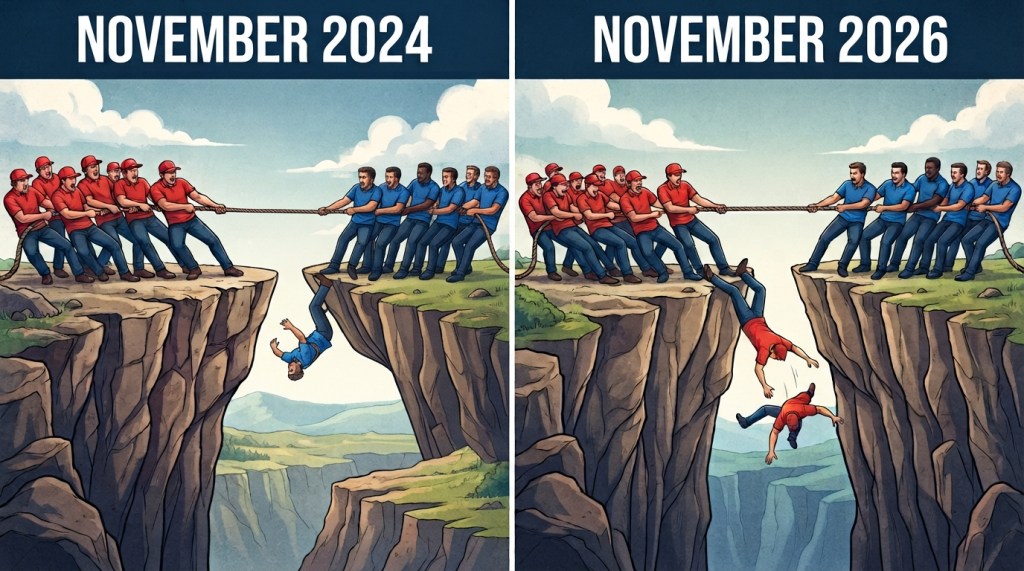
What fascinates me is how that same passion for accountability seems to disappear when it comes to politics, particularly the president. These are voters who will go ballistic over a football team’s losing record but seem remarkably tolerant of political performance that falls well short of expectations.

They complain about rising food, medical, and gasoline costs, the consequences of tariffs on their businesses and pocketbooks, and the uncertainties of a poorly prepared war strategy. Yet, come November, many will dutifully return to the voting booth and support the very political leadership they have been complaining about.

Apparently, the standards for a football coach and a president are entirely different. One is expected to deliver results every Saturday or pack his bags. The other can keep losing and still enjoy the loyalty of the home crowd.

In football terms, the president and his party are sitting on an 0–11 record. And yet, nobody seems to be calling for a coaching change.

Interesting definition of accountability. Even more interesting voter judgment.
Reasoned Cynicism

Call me cynical, but I refuse to get excited about a “huge blue wave” on November 3. The conditions certainly seem ripe for a political backlash: a troubled economy, a disastrously executed war strategy, bizarre presidential behavior, and new revelations of corruption seemingly every day. Yet American voters have developed a remarkable capacity to ignore the obvious and exercise spectacularly poor political and civic judgment.

Let’s assume the Democrats win both the House and the Senate. Then what?

Will gasoline and food prices come down? Can we extricate ourselves from a stupid, unnecessary war? Beyond investigating incompetent Trump administration officials, what can Congress actually do to hold them accountable or remove them? Can a Democratic-controlled Congress stop the weaponization of government against Trump’s critics? And can it restore the trust of allies alienated by our erratic foreign and tariff policies?

A congressional victory might provide a welcome check on the administration. But will it produce meaningful reforms, reverse the damage, or improve anyone’s daily life? Forgive me if I’m not ready to break out the champagne.

I’m still waiting for a strong leader to emerge from the Democratic Party. I admire Barack Obama, but admiration and eloquence aren’t enough. What we need is someone with a considerably sharper edge—someone willing to confront Republican political gamesmanship with the same determination and toughness it demands.

Hope is a fine thing. But after watching American politics for the past several years, I prefer my optimism tempered by experience—and a healthy dose of reasoned cynicism.

Call It Evil: Understanding the Trump Era by Susan Neiman

Call It Evil: Understanding the Trump Era

My rating: 2 of 5 stars


As some other Goodreads reviewers have cited, based on the subtitle of the book, I thought this would’ve been an examination of the Trump presidency and the topic of evil. That would’ve been a very interesting book to read. Instead, it drifted to many other topics, not necessarily relevant to Trump or current times and I lost interest in following the varied paths that the reader had to follow. As an aside, an excellent philosophy book usually requires a very slow and concentrated read or reading the book 2 or more times to understand what the author was trying to convey. Regrettably, I do not have the time or mental bandwidth to pursue those types of readings anymore. So my reading may be very unfair to the author, but I really did not get out of it what I expected. Could be my fault? Could be the author’s? Could be a little of both? This is not an easy book to read for the general reader.

Excerpts of Note from the book:

The gap between ideals and reality structures are consciousness of the world. Evil occurs when that gap becomes unacceptable: judged something evil is a way of setting limits to what we’re willing to endure. The language of good and evil is vulnerable to exploitation because it is the most powerful language we have.

Political, economic, and sociological analysis of Trump’s second victory are already appearing, and more are on the way. In all the words written in attempt to understand the present crises, what striking is the scarcity of moral analysis.

Trump and his ilk could never have come to power without one belief: moral concepts are for suckers who don’t know they’re being conned. It’s a very old idea that was expressed by the sophist who taunted Socrates at the beginning of Plato’s Republic.

The evil that threatens us most today is the idea that nothing is evil, for it lulls us into believing that corruption and cruelty are ordinary.

… particularly galling when every politician repeats the legend that the United States is the best of all actual countries. It’s an extraordinary claim to make for a country whose infant mortality rate is higher than that of Belarus or Cuba. The United States ranks 33rd out of 38 OECD countries and life expectancy and has the highest chronic disease burden of any developed nation. Though we spend more per student the most developed countries, US students perform below the OECD average in math and only around the average in reading and science.

What We Have Here is Failure to Communicate..

I rarely feel sympathy for any people who go to work for Donald Trump in Cabinet or high profile position. Yet, I did feel bad observing Katie Zacharia’s ouster as White House press secretary.

A few observations:

Zacharia was clearly overmatched by the job. As far as I can tell, there was nothing in her background or experience indicating that she could handle such a demanding role. She should have recognized that she lacked the qualifications to be a credible White House spokesperson.

She is hardly alone. The second Trump administration is filled with people whose competence, judgment, and experience seem ill-suited to their positions. I’ll leave it to future historians to explain how so many questionable appointments were made. As unqualified as Zacharia appeared to be, I can’t say she was any worse than Robert F. Kennedy Jr., Pete Hegseth, or much of Trump’s Cabinet and inner circle. Marco Rubio may be the closest thing to a credible Cabinet member—but only by comparison

Whoever vetted Zacharia or made the hiring decision should also be held accountable. Clearly, someone else failed at their job.

I can’t imagine many jobs more difficult—or more impossible—than being a credible spokesperson for Donald Trump.

Team USA: On a Long, Long Losing Streak

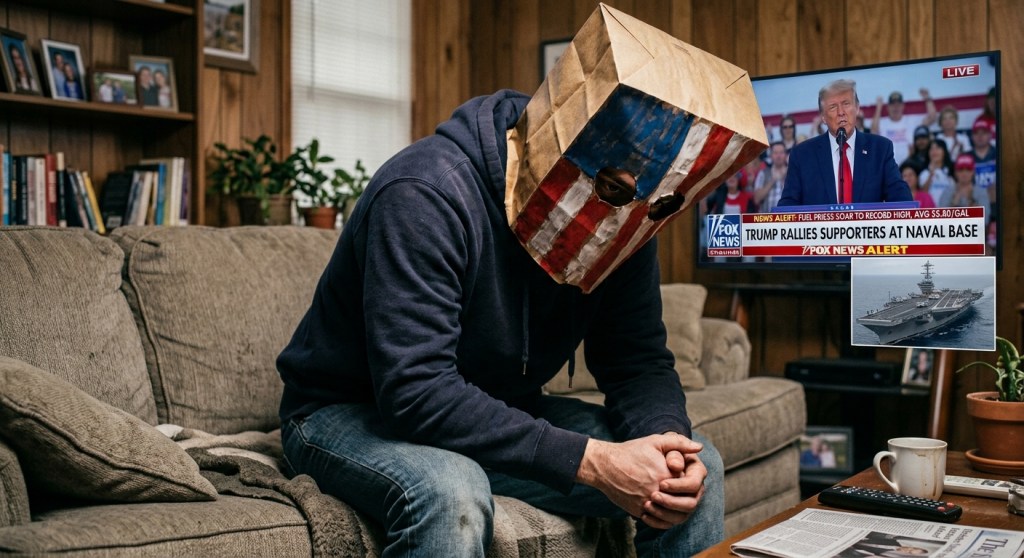
When a sports team falls into a prolonged slump, its most embarrassed fans sometimes resort to wearing paper bags over their heads. Better to hide your identity than be associated with the futility and incompetence on display.

Perhaps it’s time for Team USA to break out the bags.

Consider our current losing streak.

First, the White House. Yesterday, the president’s press secretary made an initial impression that was painful to watch. Teetering on her heels, she projected the stage presence of a third-grader nervously stumbling through a school play. Mercifully, the ordeal was brief—though considerably longer for those of us watching. But is she really worse than many others occupying senior government posts? Or is she simply representative of the talent now being recruited to run the country?

Then there’s Saudi Arabia. A country looking to the United States for help protecting civilian sites finds its expectations unmet. What does it say about American leadership when even those who depend on our military support cannot count on us?

Ukraine is another casualty. Fighting for its very survival, it faces the prospect of American accommodation with Putin’s Russia. A deal involving Russian diesel fuel only deepens the impression that our commitments are negotiable. What American ally can confidently trust our word when our actions so often contradict it?

Poor Kimberly Guilfoyle. Has she done anything that other male Republicans and high level government officials have also been accused of in terms of corruption and trying to make deals to enrich themselves? One has to question the judgment of appointing her as our ambassador to Greece. She might’ve been a better fit as our ambassador to Aruba, if we have an embassy there.

Meanwhile, at home, the president celebrates a strong economy while families struggle with the cost of food, medical care, and borrowing. Inflation remains a burden, interest rates are painful, and a clear strategy for ending the war in Iran remains elusive. Somehow, the president, his defense secretary, and perhaps our military leadership have managed to let themselves be outmaneuvered by a regime whose leaders are supposedly hiding in caves.

And finally, there are the politicians who want to keep their jobs without accepting responsibility for the mess. Republican candidates across the country are ducking, weaving, and distancing themselves from the consequences of the policies they have supported—or the crises they have refused to confront. The candidacies of Ken Paxton in Texas, Darlene Graham in South Carolina, Susan Collins in Maine, and Mike Rogers in Michigan are particularly galling.

For a country accustomed to thinking of itself as the world’s leader, this is one dismal losing streak. Our credibility abroad is eroding, our leadership at home is increasingly difficult to defend, and those who should be held accountable are busy protecting their political futures.

Maybe the most patriotic thing an American sports fan can do right now is pull a paper bag over his head.

At least then, he won’t have to explain the score.