As some other Goodreads reviewers have cited, based on the subtitle of the book, I thought this would’ve been an examination of the Trump presidency and the topic of evil. That would’ve been a very interesting book to read. Instead, it drifted to many other topics, not necessarily relevant to Trump or current times and I lost interest in following the varied paths that the reader had to follow. As an aside, an excellent philosophy book usually requires a very slow and concentrated read or reading the book 2 or more times to understand what the author was trying to convey. Regrettably, I do not have the time or mental bandwidth to pursue those types of readings anymore. So my reading may be very unfair to the author, but I really did not get out of it what I expected. Could be my fault? Could be the author’s? Could be a little of both? This is not an easy book to read for the general reader.
Excerpts of Note from the book:
The gap between ideals and reality structures are consciousness of the world. Evil occurs when that gap becomes unacceptable: judged something evil is a way of setting limits to what we’re willing to endure. The language of good and evil is vulnerable to exploitation because it is the most powerful language we have.
Political, economic, and sociological analysis of Trump’s second victory are already appearing, and more are on the way. In all the words written in attempt to understand the present crises, what striking is the scarcity of moral analysis.
Trump and his ilk could never have come to power without one belief: moral concepts are for suckers who don’t know they’re being conned. It’s a very old idea that was expressed by the sophist who taunted Socrates at the beginning of Plato’s Republic.
The evil that threatens us most today is the idea that nothing is evil, for it lulls us into believing that corruption and cruelty are ordinary.
… particularly galling when every politician repeats the legend that the United States is the best of all actual countries. It’s an extraordinary claim to make for a country whose infant mortality rate is higher than that of Belarus or Cuba. The United States ranks 33rd out of 38 OECD countries and life expectancy and has the highest chronic disease burden of any developed nation. Though we spend more per student the most developed countries, US students perform below the OECD average in math and only around the average in reading and science.
Zacharia was clearly overmatched by the job. As far as I can tell, there was nothing in her background or experience indicating that she could handle such a demanding role. She should have recognized that she lacked the qualifications to be a credible White House spokesperson.
She is hardly alone. The second Trump administration is filled with people whose competence, judgment, and experience seem ill-suited to their positions. I’ll leave it to future historians to explain how so many questionable appointments were made. As unqualified as Zacharia appeared to be, I can’t say she was any worse than Robert F. Kennedy Jr., Pete Hegseth, or much of Trump’s Cabinet and inner circle. Marco Rubio may be the closest thing to a credible Cabinet member—but only by comparison
Whoever vetted Zacharia or made the hiring decision should also be held accountable. Clearly, someone else failed at their job.
I can’t imagine many jobs more difficult—or more impossible—than being a credible spokesperson for Donald Trump.
When a sports team falls into a prolonged slump, its most embarrassed fans sometimes resort to wearing paper bags over their heads. Better to hide your identity than be associated with the futility and incompetence on display.
Perhaps it’s time for Team USA to break out the bags.
Consider our current losing streak.
First, the White House. Yesterday, the president’s press secretary made an initial impression that was painful to watch. Teetering on her heels, she projected the stage presence of a third-grader nervously stumbling through a school play. Mercifully, the ordeal was brief—though considerably longer for those of us watching. But is she really worse than many others occupying senior government posts? Or is she simply representative of the talent now being recruited to run the country?
Then there’s Saudi Arabia. A country looking to the United States for help protecting civilian sites finds its expectations unmet. What does it say about American leadership when even those who depend on our military support cannot count on us?
Ukraine is another casualty. Fighting for its very survival, it faces the prospect of American accommodation with Putin’s Russia. A deal involving Russian diesel fuel only deepens the impression that our commitments are negotiable. What American ally can confidently trust our word when our actions so often contradict it?
Poor Kimberly Guilfoyle. Has she done anything that other male Republicans and high level government officials have also been accused of in terms of corruption and trying to make deals to enrich themselves? One has to question the judgment of appointing her as our ambassador to Greece. She might’ve been a better fit as our ambassador to Aruba, if we have an embassy there.
Meanwhile, at home, the president celebrates a strong economy while families struggle with the cost of food, medical care, and borrowing. Inflation remains a burden, interest rates are painful, and a clear strategy for ending the war in Iran remains elusive. Somehow, the president, his defense secretary, and perhaps our military leadership have managed to let themselves be outmaneuvered by a regime whose leaders are supposedly hiding in caves.
And finally, there are the politicians who want to keep their jobs without accepting responsibility for the mess. Republican candidates across the country are ducking, weaving, and distancing themselves from the consequences of the policies they have supported—or the crises they have refused to confront. The candidacies of Ken Paxton in Texas, Darlene Graham in South Carolina, Susan Collins in Maine, and Mike Rogers in Michigan are particularly galling.
For a country accustomed to thinking of itself as the world’s leader, this is one dismal losing streak. Our credibility abroad is eroding, our leadership at home is increasingly difficult to defend, and those who should be held accountable are busy protecting their political futures.
Maybe the most patriotic thing an American sports fan can do right now is pull a paper bag over his head.
At least then, he won’t have to explain the score.
Two very different generations: one shaped by sacrifice, courage, purpose, and national leadership; the other increasingly defined by greed, money, division, and a loss of purpose.
I was fortunate to grow up benefiting from the bravery and sacrifice of the “Greatest Generation.” In my twilight years, I can only mourn how far we have fallen from their example.
In just about any time in American history, this type of story would end a presidency and anyone involved in this disgusting treatment of American sailors would be investigated, indicted, and removed from office. We have become so inured to incredible imcompetence that not even a story of this magnitude makes a dent in the American psyche.
Before I took my very first cruise, my sister warned my wife that I probably wouldn’t like it.
My sister was generally pretty accurate when it came to me.
She was wrong about cruising.
Over the past 27 years, I have taken 15 cruises. I’ve sailed on several different cruise lines, visited a lot of interesting places, eaten a lot of mediocre food, taken some memorable excursions, spent too much money shopping on excursions and, on more than one occasion, wondered why I was doing this to myself.
But I think I’m finished.
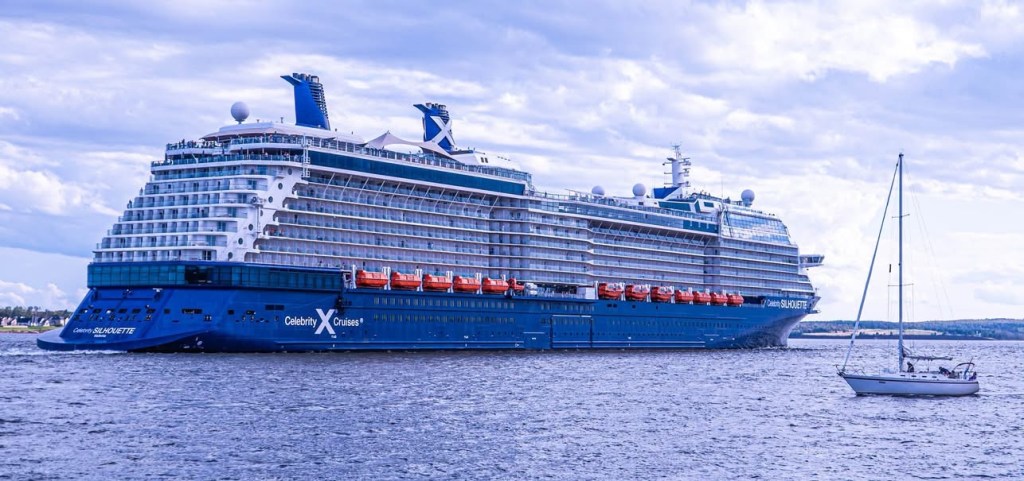
I’m about 95% sure that my recent 12-night Celebrity cruise to New England and Canada was my last cruise. At 74, I’ve reached the point where I can look back on more than two decades of cruising and say that I’ve had some wonderful experiences—but I’m also beginning to understand why my sister thought I wouldn’t like it.
My First Cruise
My introduction to cruising wasn’t exactly reassuring.
Our first cruise was on the Disney Magic. We had spent three days at the Disney resort, and the final three days of the vacation were supposed to be aboard the ship.
There was a weak hurricane in the area, which naturally caused me some concern. I was assured that we would avoid it and that the seas would be fine.
No sooner had we left port and sat down for dinner than the ship started rocking.
The weather and the motion of the ship got progressively worse. I remember staring out the porthole at the huge waves breaking against the ship. I was frightened and didn’t sleep that night.
It turned out that there were winds of 70 to 80 mph and extremely rough seas. At one point, the ship tilted enough that water came down the elevator shafts, and a number of cabins got soaking wet.
The next day I saw the Captain and asked him the obvious question: “Why did we go through a hurricane?
His answer was essentially that they hadn’t expected the weather to be as bad as it was.
Of course, we made it to the Bahamas the next morning. Where there are casinos and shopping…
That experience left me with my first lesson about cruising: When money is involved, passenger comfort and business considerations don’t always seem to be traveling in the same direction.
And yet, somehow, I kept cruising
Cruising Used to Be More Fun
Maybe it’s because I’m 74 now, but I remember cruising being more fun—and certainly more relaxing—10 or 15 years ago.
Perhaps that’s partly because I was younger.
I remember routinely taking the stairs rather than waiting for an elevator. Today, I look at a flight of stairs and think, Where’s the elevator?
My wife and I also have different mobility considerations now. On this most recent cruise, I rented a Rollator so she could get around the ship and participate in excursions. That added another expense and another logistical consideration to a vacation that was already expensive.
There is something about cruising that changes when you get older. Things that once seemed like minor inconveniences—walking long distances, climbing stairs, getting on and off buses, standing in line, navigating a large ship—become part of the calculation.
The Excursion Problem
I’ve also become increasingly skeptical about cruise excursions.
Too many of them seem to involve spending two or three hours sitting on a bus so that you can spend a few minutes looking at something before getting back on the bus.
If I’m visiting a country or an island, I’d rather actually experience the place.
On this most recent cruise, one of our excursions was a bus tour of St. John’s, Newfoundland. Unfortunately, it was Labor Day, and virtually everything was closed.
So we spent a good portion of the excursion riding around on a bus looking at places we couldn’t visit.
That wasn’t exactly my idea of sightseeing.
I’ve come to believe that some excursions are little more than tourist traps. You’re paying good money to be transported somewhere, told what you’re looking at and then transported back to the ship.
Perhaps I’m becoming more selective—or simply more difficult.
Less Staff, More Work
One thing that struck me on this cruise was how hard the crew seemed to be working.
Our room steward worked from approximately 9 in the morning until 9 at night, 7 days a week. He mentioned that he once had an assistant, but that position had been eliminated.
I have no idea how representative that is across the cruise industry, but it certainly gave me the impression that cruise lines are trying to accomplish more with fewer people.
The irony is that the crew members themselves were almost universally friendly and hardworking.
It can’t be easy dealing with thousands of passengers, many of whom are older, demanding and occasionally grumpy.
I also sometimes had difficulty understanding what crew members were telling me because of language differences. That’s not a criticism of the workers; communicating with people from dozens of countries and cultures can’t be easy.
A big complaint was customer service.
There were several occasions when I received incorrect information from customer service personnel on the ship. In my experience, the problem wasn’t a lack of friendliness. It was a lack of accurate answers.
Food: Another Casualty of Time
The food has also changed—or perhaps my expectations have.
I remember being much more impressed by the food on cruises years ago. On my last several cruises, I’ve found the presentation, variety and preparation noticeably less impressive.
The dining-room staff works extremely hard and generally tries to accommodate special requests.
But they aren’t cooking the food.
If the menu isn’t very good or the kitchen isn’t turning out particularly good meals, there isn’t much the waiter can do about it.
I’m not expecting five-star restaurant food on a cruise ship. But when you are paying what cruises cost today, I don’t think it’s unreasonable to expect better.
The Stateroom Gets Smaller as You Get Older
Our stateroom on this cruise also seemed particularly small.
Maybe the stateroom hadn’t changed.
Maybe I had.
I felt claustrophobic at times. There wasn’t much room to move around, and the bathroom was so small that taking a shower required a certain amount of caution and balance.
We also had a problem with the toilet flushing. It took three or four calls before the problem was finally resolved.
None of this ruined the cruise. But when you’re paying thousands of dollars for a vacation, these little irritations add up.
And Then There Is the Cost
Cruising isn’t cheap…
The cruise fare is just the beginning.
There’s travel to and from the port, insurance, excursions, gratuities, drinks, internet, casino money and all the other extras that somehow find their way onto your account.
On this cruise, I paid about $250 for internet access.
I don’t remember paying anything close to that on some of my earlier cruises. Perhaps I did and simply blocked it from my memory.
A can of soda was $5.99, and there was an additional dollar gratuity each time I ordered one.
Fortunately, I discovered that iced tea was free.
There is something satisfying about defeating a cruise line’s beverage pricing strategy with a glass of iced tea.
Maybe I Should Have Stayed in the Casino
Interestingly, on my last two cruises, we actually won some money playing the slot machines.
Looking back, I probably would have been better off skipping one or two of the excursions and spending the money in the casino.
At least the slot machines were honest about taking my money.
And occasionally they gave some of it back
Twelve Nights Was Too Long
The final indication that my cruising days may be over was the length of this cruise.
It was 12 nights.
I was ready to go home after eight.
That never would have happened to me years ago.
There are only so many activities on a cruise ship. You can play trivia a few times. You can see the shows. You can sit by the pool. You can eat. You can gamble. You can walk around the ship.
Then you start doing the same things again.
Perhaps some people can cruise for a month and never get bored.
I’m apparently no longer one of them.
So Why Stop Now?
At 74, stopping seems prudent for a variety of reasons.
The logistics are more difficult. The walking is more difficult. The cost is higher. The cabins seem smaller. The excursions seem less appealing. And after eight or nine days, I’m ready to sleep in my own bed.
Most importantly, I don’t feel that I’m missing something by staying home.
That’s probably the biggest difference between now and 20 years ago.
When you’re younger, you often look forward to the next trip.
When you’re older, you sometimes look forward to getting home.
The Good Memories Remain
Despite everything I’ve written here, I don’t regret the 15 cruises I’ve taken.
Far from it.
I’ve seen places I probably wouldn’t have visited otherwise. I’ve met interesting people, experienced some beautiful scenery and had plenty of laughs. There were cruises that I thoroughly enjoyed and would happily repeat—if I could somehow go back 15 years in time.
And that’s really the point.
My best memories of cruising are mostly from the earlier voyages, when I was younger and when, at least in my perception, the cruise lines seemed more interested in making passengers happy.
Maybe the cruise lines changed.
Maybe I changed.
Probably both.
Either way, 27 years and 15 cruises is a pretty good run.
So if this really was my last cruise, I’m not going to complain.
I’ll remember the good meals, the interesting ports, the casinos that occasionally paid me back, the beautiful views and the many miles we’ve traveled at sea.
I’ll also remember the rough seas, the crowded buses, the tiny bathrooms, the expensive soda and the $250 internet bill.
And somewhere in the back of my mind I’ll remember my sister, who predicted all of this before I ever stepped aboard that first Disney ship.
For the last two weeks, I was on a cruise ship, traveling the rather calm waters of the North Atlantic and the St. Lawrence River. However, back home, I continued to see the deleterious effects of the tsunami that is Trump.
I spoke to a few Canadians on the cruise who asked me: “How is Donald Trump still president? And how did you Americans allow—and keep allowing—Trump to be president?”
As one travels through Canada, one senses a certain civility and calmness among the population, seemingly satisfied with its leadership, culture and government.
Normalcy!
I’d be hard-pressed to think of many Republicans who deserve to be reelected—or elected in the first place—particularly in the House of Representatives. As far as I am concerned, most of them are cowards.
I don’t believe in the polls. I have been sorely disappointed by what I expected in 2016 and 2024. The only way I will be happy with the results of the 2026 elections is if the Democrats control both the House and the Senate. I am not sure that this will necessarily save the state of our union, but maybe it will at least limit the clown show currently performing.
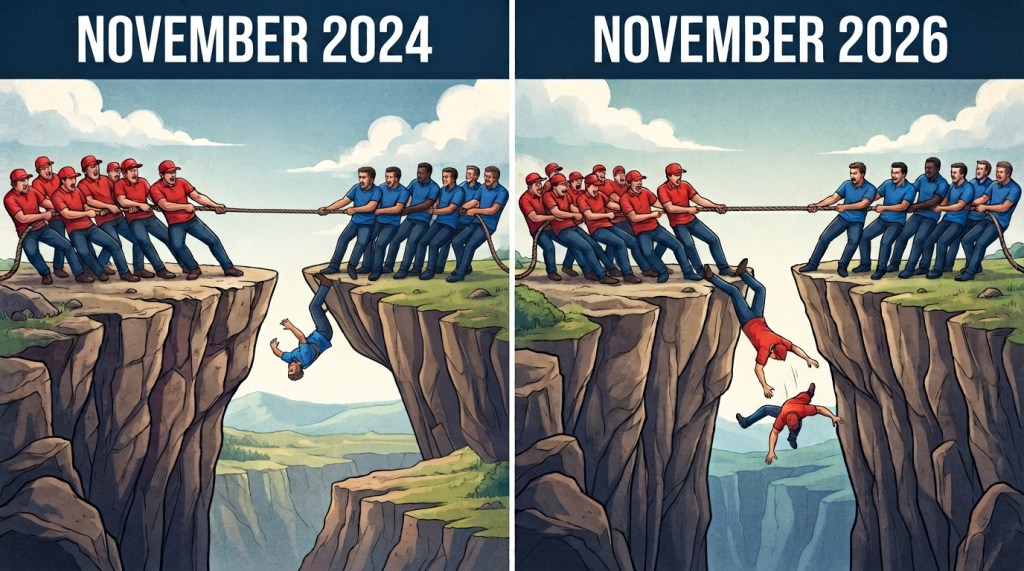
I’m pretty sure that the last chance to save the country occurred in November 2024. So much damage has been done, and much of it may be unrecoverable—especially when it comes to the trust we once had with our allies and neighbors.
That’s gone for decades!
I’m stunned that Darline Graham, Lindsey Graham’s sister and, in my opinion, one of the least capable candidates for elective office, is leading in the polls for the South Carolina Senate race. Yeah, I know. It’s South Carolina!
It’s also concerning that James Talarico does not have a 20-point lead in the Texas Senate race over Ken Paxton.
Yeah, I know. It’s Texas!
I’m still waiting for the press to make a demonstrable stand against the White House—and, in particular, against the administration’s exclusion of CNN, Politico and MS NOW from the White House. Trump announced on September 18 that he was banning the three organizations from the White House, and the following day reporters from all three were denied access, with press credentials being deactivated or confiscated.
Just to be spiteful, why don’t these news outlets document the many lies and false claims of the Trump administration? It’s probably a more useful exercise than actually covering stories from Trump or any of his Cabinet.
I’m not sure what they can do to limit appearances or interviews with Republican candidates or officials, but I would sure as hell make it very uncomfortable for any of them to come on those venues without having to answer questions about their views on freedom of the press.
I confess that I get most of my news from so-called liberal or mainstream media. Every now and then, I take a quick peek at Fox News. I don’t do it for long, as my brain cells begin to decline within minutes of listening to any of their news or programming.
One would think that a network that incurred millions of dollars in legal liabilities over its coverage of the 2020 election would have a little more humility.
A researcher from Anthropic recently warned that AI could destroy humanity by the end of the decade. Evan Hubinger, Anthropic’s alignment-science lead, said he personally believes there is a greater-than-10% chance that AI could kill all humans within the next decade.
I wish that the huge concern and apprehension about this possible event four years from now could somehow be translated into more immediate concern about how our inept president could create a lot of economic and financial damage within the next year.
So I’m not surprised about the Wall Street report on John Fetterman, Democratic Senator from Pennsylvania. He’s always been a bit of a weird duck. Just as the Republicans have a number of people who should not be in the Senate due to incompetence, the Democrats have Fetterman, who would feel more comfortable in the Republican party.
Where is all the MAGA outrage about comments from sailors on the USS Abraham Lincoln.? No one seems happy about the length of engagement, ships conditions and comments made by President Trump. This will not help recruitment! Conditions and morale across our armed forces seem greatly deteriorated.
Maria Bartiromo is out at Fox News. In her early years. I found her a competent business reporter but she lost her skis when she got involved in political commentary. Probably an unfair comparison but what Maria was to business and political commentary, Diana Russini was to pro football insight.
World’s biggest sovereign wealth fund plans to cut U.S. Treasury holdings. I don’t think most Americans understand the gravity of our financial status. The Stock Market is doing well and as long as people are working, they are not looking under the economic hood to see if problems are brewing.
As an alumni of Rutgers University, I have the following recommendations after their humiliating loss to University of Massachusetts 37-21. Rutgers was a 30 point favorite against a team that was winless last year.
Play out the season with Greg Schiano as Head Coach. Too costly to pay him off and you won’t find anyone of any significance to replace him. God no, I don’t want Brian Kelly to coach Rutgers!
Lower ambitions. Remove commitment and contracts with Big 10. Move down to a lesser conference (Big East)
I think the basketball program should have the same scrutiny.
Be satisfied if you win 4 football games this season. I think a bowl appearance is very doubtful but maybe this team will rise up from the ashes and surprise people.
Best comments about Rutgers football after last night’s debacle:
Rutgers invented college football in 1869 and has spent the last 160 years regretting the decision. Rodger Sherman former Ringer writer
This may be grounds to throw Rutgers out of the Big 10. Albert Breer
I’ll say this: The SEC doesn’t have a Rutgers. former Nebraska player Will Compton
Inspired by my frustration at a spate of poorly handled service issues received from doctors, restaurants, financial institutions etc…
Businesses would be more effective if they invested more in excellent customer service upfront instead of relying on emails and surveys to address it afterward.
If you want me to subscribe or sign up for a membership, make it as easy for me to cancel or leave as it was to join.
If I’m a regular customer or diner, learn my name and thank me for my business once in a while. It’s good customer service—and it might even help your tip.
Never bill me for any items that were discussed and agreed to as “no charge” or a “courtesy” before the work was initiated.
If my call is really that important, don’t make me wait 30 minutes to have it answered.
If you offer a senior discount, don’t make seniors ask for it. A discount that customers don’t know about isn’t much of a discount..