The pops of pickleballs at the park sound like a cacophony to some, but to players they’re a symphony.
Pickleball requires planning, hand speed, aggressiveness and anticipation and that’s just to login and register for a meetup.
An 11–0 loss may teach you more than an 11–0 win.
Irony: The player who arrives in a $60,000 car carrying a $250 pickleball bag, a $250 paddle, wearing $200 pickleball shoes and $150 sunglasses… but forgets (?) the $3 ball everyone can use.
Service rules in recreational pickleball are like jaywalking laws—written down, widely not enforced.
A DUPR rating is like an IQ score: useful, but not always an accurate predictor of future performance.
Sometimes the best strategy to improve your pickleball game is to take a day off from playing and rest.
Occasionally the action off the court is often more interesting than the action on the court.
To clear their heads in order to think. Many pray. Many meditate . Some dink.
I came upon this online article The 100 greatest songs of the 1960s by Paste Newsletter. I’m always interested in “best of “lists. However, I have to admit that I am not familiar with many of the songs listed in the Paste Newsletter survey. Paste acknowledges that it lists only one song per artist, otherwise their list would’ve been 40% Beatles music. They listed Eleanor Rigby as the number seven greatest song of the 1960s. I don’t think that I would have Eleanor Rigby in the top 10 songs made by The Beatles in the 1960s.
I made my list in about an hour. I am sure that if I was given a week or two to review and listen to my itunes music, that my list might be considerably different.
Picks by Paste Newsletter
Picks by Eric Burleigh
1
The Ronettes: “Be My Baby”
The Beatles: I Want to Hold Your Hand
2
Simon & Garfunkel: “America”
Aretha Franklin: I Say a Little Prayer
3
Nina Simone: “Lilac Wine”
Association: Cherish
4
Miles Davis: “Shhh/Peaceful”
Herb Alpert: This Guy is in Love with You
5
The Beach Boys: “I Just Wasn’t Made For These Times
Simon & Garfunkel: The Sound of Silence
6
Lorraine Ellison: “Stay With Me
Supremes: You Can’t Hurry Love
7
The Beatles: “Eleanor Rigby”
Four Seasons: Sherry
8
The Jimi Hendrix Experience: “Voodoo Child”
Roy Orbison: Pretty Woman
9
The Shangri-Las: “Out in the Streets”
Creedence Clearwater Revival: Bad Moon Rising
10
Glen Campbell: “Wichita Lineman”
Tymes: So Much in Love
11
The Supremes: “You Can’t Hurry Love”
Archie Bell and the Drells: I Can’t Stop Dancing
12
The Velvet Underground: “Pale Blue Eyes”
Neil Diamond: Sweet Caroline
13
Judy Garland: “Over the Rainbow (Live at Carnegie Hall)”
Retirement has changed many things in my life, including what I read. These days, I’m more interested in books that feature older protagonists or explore topics such as health, aging, money, purpose, and mortality. I look for books that not only entertain but also help me better understand this stage of life.
The 16 books that follow are titles I’ve read and would gladly recommend to fellow retirees. Most book lists seem aimed at younger readers, so I wanted to share a few works that resonate with those of us navigating the Medicare and Social Security years. Although these books have something to offer readers of any age, each provided insights, perspective, or enjoyment that felt particularly relevant to retirement.
Titles displayed in bold type are especially recommended…
Fiction:
A Man Called Ove by Fredrik Backman Winter Journal by Paul Auster The Old Man by Thomas Perry The Remains of the Day by Kazuo Ishiguro The English Major by Jim Harrison Autumn Light: Season of Fire and Farewells by Pico Iyer The Sense of an Ending by Julian Barnes Our Souls at Night by Kent Haruf
Financial Die with Zero: Getting All You Can from Your Money and Your Life by Bill Perkins
Health: Lifespan: Why We Age―and Why We Don’t Have To by David A. Sinclair
Keep Sharp: Build a Better Brain at Any Ageby Sanjay Gupta
Natural Causes: An Epidemic of Wellness, the Certainty of Dying, and Killing Ourselves to Live Longer by Barbara Ehrenreich
Inspiring:
Late to the Ball: A Journey into Tennis and Aging by Gerald Marzorati Ageless Soul: The Lifelong Journey Toward Meaning and Joy by Thomas Moore Somewhere Towards the End by Diana Athill Tuesdays with Morrie: An Old Man, a Young Man, and Life’s Greatest Lesson by Mitch Albom
In July 2021, I was wrapping up a pickleball meetup at River Road and getting ready to head home. It had been a warm, humid evening, and I was looking forward to sitting down, relaxing, and enjoying a couple of cold drinks.
Just as I was about to leave, Reuven Cohen asked if I wanted to play one more game.
Our opponents would be Rodman and Tony—both younger, faster, and far more athletic than Reuven and me. I figured it would be a quick game before heading home, so I agreed.
I couldn’t have been more wrong.
The game stretched on for at about an hour. Reuven and I jumped out to a surprising 7-0 lead, but Rodman and Tony quickly fought their way back. From that point on, neither team could gain much separation. Every point felt important, and every rally seemed to last forever.
By the time the score reached the teens, I was running on fumes. My legs were heavy, my shirt was soaked, and I was wondering why I hadn’t simply gone home when I had the chance. Reuven, however, wasn’t about to quit. He kept encouraging me to hang in there.
Against all odds, we pulled out all kinds of crazy winning shots to a 22-20 victory. Keep in mind, this was not rally scoring…
Two older guys had managed to outlast and outplay two younger athletes.
Several players had stayed to watch the match, and judging from the looks on their faces, they were almost as surprised as I was.
The celebration, however, was short-lived.
When I got home, my body staged a full-scale rebellion. My calves cramped. My feet cramped. My thighs cramped. Even my arms cramped. I could barely move without pain. For a while, I seriously considered a trip to the emergency room, except for one problem—I wasn’t sure I could get there.
It took hours, plenty of fluids, and a great deal of care from my wife before I finally recovered.
We’ve all heard the phrase, “the thrill of victory and the agony of defeat.”
That night, I learned about something else entirely:
The agony of victory.
(This is the first in what I hope are articles, opinions, posts and essays from the perspective of an older pickleball player.)
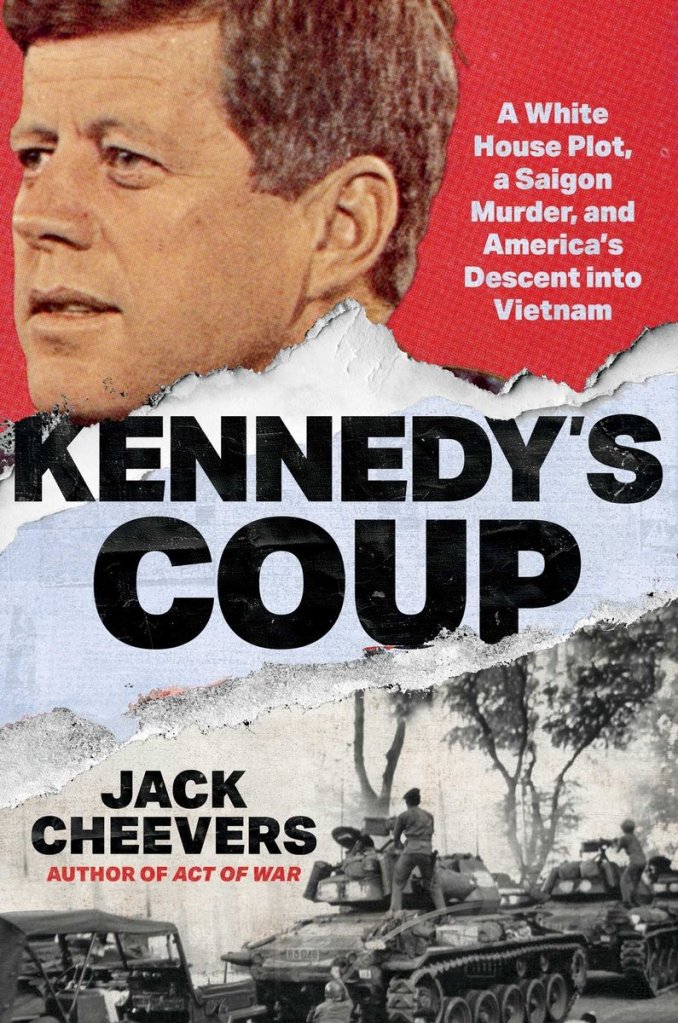
This is the best book I have read this year. Although it is more than 600 pages long, it was a surprisingly quick and engaging read because the stories and characters are so compelling. Rather than feeling like a dry history text about the origins of the Vietnam War, it reads more like a well-crafted historical novel.
Eight Observations
The Role of Journalists The book highlights the remarkable influence and adventures of journalists such as David Halberstam, Malcolm Browne, and Neil Sheehan. They took significant professional and personal risks to uncover and report what was actually happening in Vietnam, often in the face of official denials and misinformation.
Failures of American Intelligence The CIA and other intelligence agencies repeatedly failed to adequately understand the political, cultural, and social turmoil unfolding in Vietnam. Their reports often painted an overly optimistic picture that differed sharply from realities on the ground.
Corruption Within the Diem Regime The extraordinary corruption of President Ngo Dinh Diem, his brother Ngo Dinh Nhu, and Madame Nhu is thoroughly documented. The book raises troubling questions about why the United States tolerated and supported this regime for so many years.
Kennedy’s Information Problem President Kennedy struggled to obtain reliable information about events in Vietnam. Conflicting reports came from intelligence agencies, military leaders, cabinet members, journalists, and members of Congress returning from fact-finding trips.
A Turning Point in American Policy According to the book, Kennedy intended to reduce American military involvement and foreign aid following his anticipated reelection in 1964. After Kennedy’s assassination, Lyndon Johnson chose a different path, eventually committing large numbers of American troops to Vietnam. The result was a war that claimed the lives of 58,220 Americans and left more than 300,000 wounded.
A Pattern of Deception The book documents a steady stream of exaggerations, misleading statements, and outright falsehoods from the Diem government, military officials, diplomats, and various so-called experts. These distortions made it difficult for policymakers to make informed decisions.
Misjudging the Enemy One of the recurring themes is the failure of American leaders to anticipate how their adversaries would react. Despite overwhelming military superiority, the United States consistently underestimated the determination, adaptability, and long-term strategy of its opponents.
The Consequences of Regime Change The overthrow of Diem is presented as a critical mistake. American policymakers failed to consider what would follow his removal, and there was no obvious or widely supported successor capable of providing stable leadership.
Jack Cheevers has written a deeply researched and highly readable account of one of the most consequential foreign-policy failures in American history. For readers interested in Vietnam, the Kennedy presidency, Cold War politics, or the dangers of flawed intelligence and political miscalculation, this book is highly recommended.
Rock band The Black Crowes drew loud boos and fans left a recent concert after frontman Chris Robinson mocked audience members who started “U.S.A.” chants.
“Thanks for the geography lesson, I don’t know what you have to be so proud of right now,” Robinson told the crowd, according to reports.
When fans began booing, Robinson said, “For those of you f—ing booing us, some of us are not afraid, and we most assuredly are not f—ing ignorant, so thank you.
Gas prices can easily rise to over $6 per gallon in the next week or so as our oil reserves are at a very low level. Iran continues to pull the chains of Trump, Hegseth and Rubio in negotiations to end the war. The White House, between the UFC fight stage and the ballroom, looks like one of the deserted Atlantic City casino buildings Trump left by Steel Pier. Trump officials stonewall on Epstein files, Trump’s insider stock trades and proposed $1.8 billion for reparations for January 6 vandals.
There still exists a sizable part of the population who supports Trump for reasons that I can’t fathom at this stage.