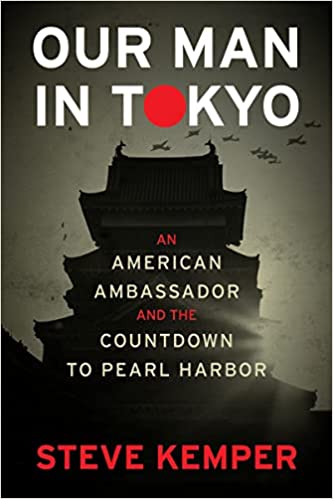
Review and Five Takeaways from Our Man in Tokyo by Steve Kemper

I am avidly interested in reading about the era surrounding World War II. While most of my reading has focused on Germany and the rise of Adolf Hitler, Steve Kemper’s Our Man in Tokyo shifts the lens to the Pacific. The book chronicles the efforts of U.S. Ambassador to Japan Joseph Grew from 1932 to 1941, a critical decade during which the Japanese military seized control of the country’s future. Kemper draws richly from the extensive diaries Grew maintained throughout his ambassadorship, as well as his correspondence, official reports, speeches, and personal reflections.

Grew believed his primary responsibility was to preserve peace between the United States and Japan, which proved to be a monumental and ultimately heartbreaking task. He received little help from his superiors in Washington, D.C., who frequently kept him in the dark regarding critical information and strategy, nor from members of the Japanese government, who repeatedly deceived him.

My Five Takeaways from the Book

  1. The Inevitability of Conflict: War between the United States and Japan was largely inevitable. Japan’s military was eager to expand its empire into China, Singapore, and the wider Far East, while the nation faced critical shortages of oil, food, and other vital resources. Japan’s relentless belligerence, particularly in China, forced the United States to employ trade embargoes and other economic measures to halt its aggression. Ultimately, these measures failed to deter Tokyo; instead, they angered Japanese leadership, who chose to pursue expansion through war.
  2. Intelligence vs. Preparedness: Through sophisticated secret intelligence efforts, the United States was well aware that Japan was planning military strikes and that Pearl Harbor was a potential target. It remains astounding that the U.S. military was so unprepared for the events of December 7, 1941.
  3. The Sidelining of Diplomacy: Washington largely ignored the advice and judgment of Ambassador Joseph Grew. Grew had earned the respect and trust of many influential Japanese leaders and deeply understood Japanese culture—particularly the crucial importance of “saving face.” This history underscores the immense value of diplomacy, a lesson of enduring relevance.
  4. FDR, Hull, and Divergent Strategies: President Franklin D. Roosevelt appeared to make every effort to maintain peace with Japan, though he was undoubtedly distracted by the European theater and the urgent need to support Great Britain against Germany. However, Secretary of State Cordell Hull and other State Department officials did not share Ambassador Grew’s strategies or his nuanced options for preserving peace. Compounding the tension, Japan consistently refused to take responsibility for hundreds of attacks on American citizens and businesses in both China and Japan.
  5. The Double-Edged Sword of Sanctions: Trade embargoes can be powerful tools of statecraft, but they can also provoke targeted nations into military retaliation. When a country is literally starved of the food, oil, and essentials required for survival, economic pressure will eventually drive the aggrieved nation to strike back.

Not the “Greatest Generation”

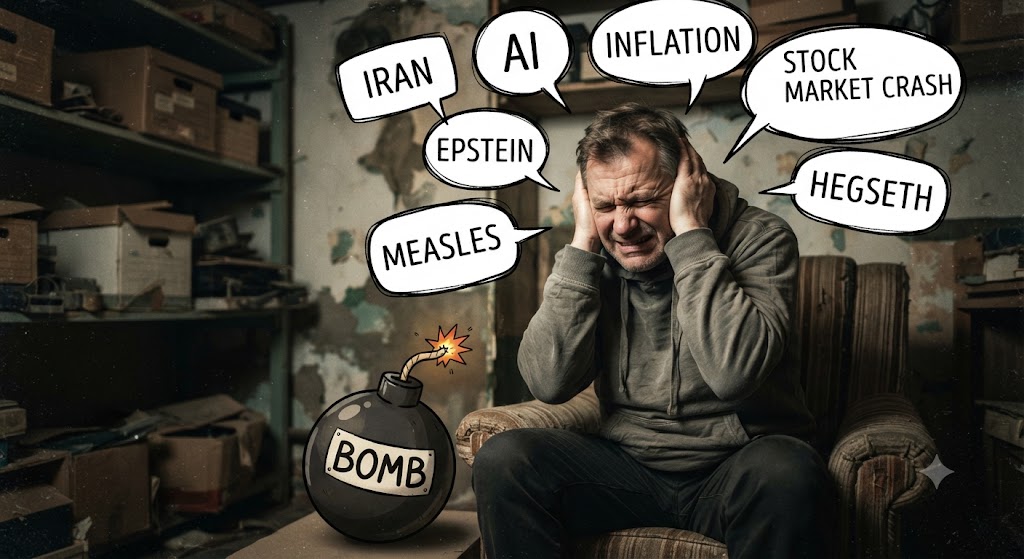
History will not be kind to the people of the United States. We scroll endlessly through our iPhones, binge stale entertainment, and anesthetize ourselves with online gambling, crypto speculation, and relentless consumerism while our culture erodes and our economic and political institutions decay. Future generations will curse us—not for what happened to our country, but for how little we cared.

Aphorisms below that caught my eye and mind and address the insanity of today…

I feel much better, now that I’ve given up hope.

Ashleigh Brilliant

Filling our pockets, we empty our hearts.

Dražen Jergović

Opinions, and not religion, are the opium of the people.

Being open-minded requires a lot of effort. Being narrow-minded is effortless.

Piotr Bardzik

The poor always fight the wars of the rich.

Never hire the best lawyer; the worst judge will be cheaper.

Andrzej Majewski

The truly strong are those who aren’t driven by the need to prove their strength.

Richard Greene

Judge us by how we treat the weak not by how we arm the strong.

Charles R. Castle

To close the deficit we need to raise taxes on 5 out of every 4 Americans.

Oleg Vishnepolsky

The men the American people admire most extravagantly are the most daring liars; the men they detest most violently are those who try to tell them the truth.

H.L Mencken

An Older Man’s Birthday Card to America

Seven Thoughts on America’s 250th Birthday

The United States turns 250 this year. As someone born in 1952, I can’t help but reflect on what I’ve witnessed over the past seven decades. These aren’t political conclusions so much as personal observations from someone who has watched this remarkable country evolve.

1. I believe I saw and experienced the best of America.
My father enlisted in the armed services in 1942 at just 17 years old and fought in the European Theater during World War II. His generation accepted sacrifice as a duty rather than a burden. I sometimes wonder whether my Baby Boomer generation—and those that followed—have fully appreciated the price that was paid to build and preserve this nation.

2. Our citizens deserve better than their leaders.
In my experience, most Americans are decent, hardworking people who want many of the same things: safety, opportunity, and a better future for their families. Too often, however, our political system rewards division instead of service. I suspect the Founding Fathers would be less surprised by disagreement than by the degree of partisanship, distrust, and self-interest that seems to dominate public life today.

3. Respect for America feels diminished.
Perhaps every generation believes the nation’s standing has slipped, but it seems to me that America’s reputation—both at home and abroad—has become more fragile. Friends and allies who once looked to us with confidence now seem more uncertain. Whether deserved or not, that perception should concern all of us.

4. Even great nations can grow old.
At 74, I’ve learned that age brings wisdom, but it can also bring rigidity and decline. Sometimes our country feels that way. We seem weighed down by old arguments, old grievances, and old ways of thinking. America doesn’t need to abandon its principles; it needs an infusion of fresh ideas, empathy, practical problem-solving, and leaders who place country above party.

5. Unity still exists—we just don’t see enough of it.
One of the things that has encouraged me recently is watching Americans rally behind our national teams, particularly in international competitions like the World Cup. For brief moments, politics fades into the background, and we remember that we are cheering for the same flag. I wish those moments weren’t so rare.

6. Washington’s dysfunction has become contagious.
Las Vegas has the saying, “What happens in Vegas stays in Vegas.” I sometimes wish Washington operated under a similar rule. Unfortunately, the anger, cynicism, and partisan warfare that dominate our nation’s capital seem to spill into every community, every family gathering, and every conversation. We would all be better served if more of that stayed inside the Beltway.

7. The years ahead matter more than we may realize.
History reminds us that nations are rarely destroyed from the outside before they weaken from within. I don’t believe America’s greatest threat is another Civil War fought with armies. I worry more about a quieter conflict—one driven by cultural division, economic inequality, religious differences, and our growing inability to disagree without viewing one another as enemies. If we lose our willingness to listen, compromise, and respect one another, we risk losing something just as valuable as territory: our national identity.

As America celebrates its 250th birthday, I remain grateful to have lived here and optimistic enough to believe our best chapters have not necessarily been written. But optimism alone isn’t a strategy. The next generation will inherit the country we choose to build—or neglect—today.

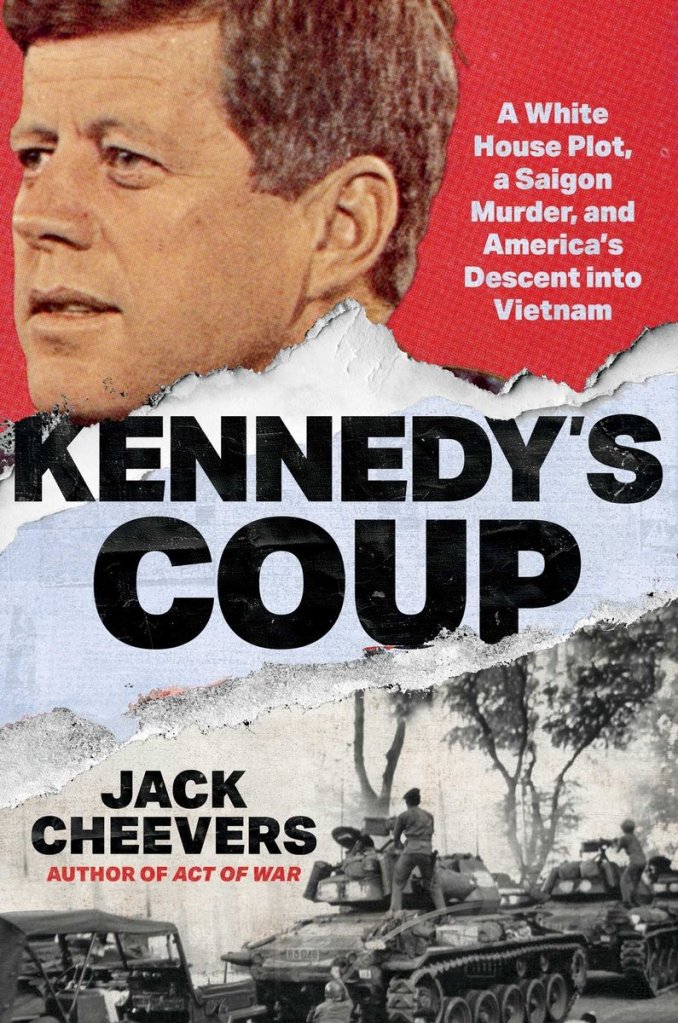
Review of Kennedy’s Coup: A White House Plot, a Saigon Murder, and America’s Descent into Vietnam by Jack Cheevers

This is the best book I have read this year. Although it is more than 600 pages long, it was a surprisingly quick and engaging read because the stories and characters are so compelling. Rather than feeling like a dry history text about the origins of the Vietnam War, it reads more like a well-crafted historical novel.

Eight Observations

  1. The Role of Journalists The book highlights the remarkable influence and adventures of journalists such as David Halberstam, Malcolm Browne, and Neil Sheehan. They took significant professional and personal risks to uncover and report what was actually happening in Vietnam, often in the face of official denials and misinformation.
  2. Failures of American Intelligence The CIA and other intelligence agencies repeatedly failed to adequately understand the political, cultural, and social turmoil unfolding in Vietnam. Their reports often painted an overly optimistic picture that differed sharply from realities on the ground.
  3. Corruption Within the Diem Regime The extraordinary corruption of President Ngo Dinh Diem, his brother Ngo Dinh Nhu, and Madame Nhu is thoroughly documented. The book raises troubling questions about why the United States tolerated and supported this regime for so many years.
  4. Kennedy’s Information Problem President Kennedy struggled to obtain reliable information about events in Vietnam. Conflicting reports came from intelligence agencies, military leaders, cabinet members, journalists, and members of Congress returning from fact-finding trips.
  5. A Turning Point in American Policy According to the book, Kennedy intended to reduce American military involvement and foreign aid following his anticipated reelection in 1964. After Kennedy’s assassination, Lyndon Johnson chose a different path, eventually committing large numbers of American troops to Vietnam. The result was a war that claimed the lives of 58,220 Americans and left more than 300,000 wounded.
  6. A Pattern of Deception The book documents a steady stream of exaggerations, misleading statements, and outright falsehoods from the Diem government, military officials, diplomats, and various so-called experts. These distortions made it difficult for policymakers to make informed decisions.
  7. Misjudging the Enemy One of the recurring themes is the failure of American leaders to anticipate how their adversaries would react. Despite overwhelming military superiority, the United States consistently underestimated the determination, adaptability, and long-term strategy of its opponents.
  8. The Consequences of Regime Change The overthrow of Diem is presented as a critical mistake. American policymakers failed to consider what would follow his removal, and there was no obvious or widely supported successor capable of providing stable leadership.

Jack Cheevers has written a deeply researched and highly readable account of one of the most consequential foreign-policy failures in American history. For readers interested in Vietnam, the Kennedy presidency, Cold War politics, or the dangers of flawed intelligence and political miscalculation, this book is highly recommended.

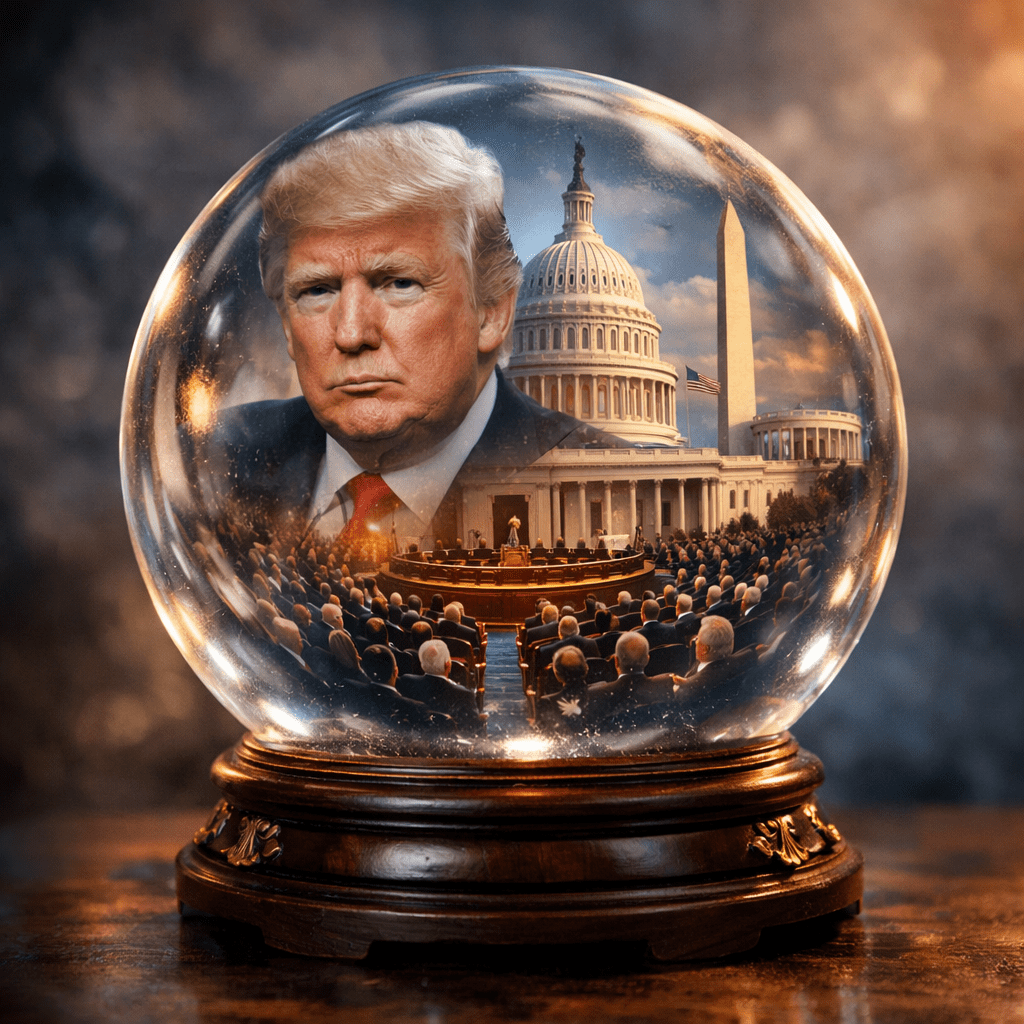
How History May Judge the Trump Era

I will not be alive when historians begin to write definitively about the United States during the Trump era. In truth, I would much rather read about it twenty years after it has ended than live through it as it unfolds. Standing in 2026, I find myself trying to imagine what scholars in 2046 might identify as the defining themes, causes, and consequences of this period. I have no time machine—only conjecture.

My assumption is that the central question historians will grapple with is not simply who Donald Trump was, but how and why American voters enabled the Trump era to occur. Inevitably, comparisons will be drawn to other moments in history when democratic systems elevated leaders who later proved deeply polarizing or destructive. Germany in the 1930s will be one such reference point, though careful historians will also emphasize key differences: Germany’s economic collapse, political fragility, and social despair far exceeded conditions in the United States in 2016.

Several lines of inquiry seem likely to dominate future assessments:

  1. Congressional Enablers
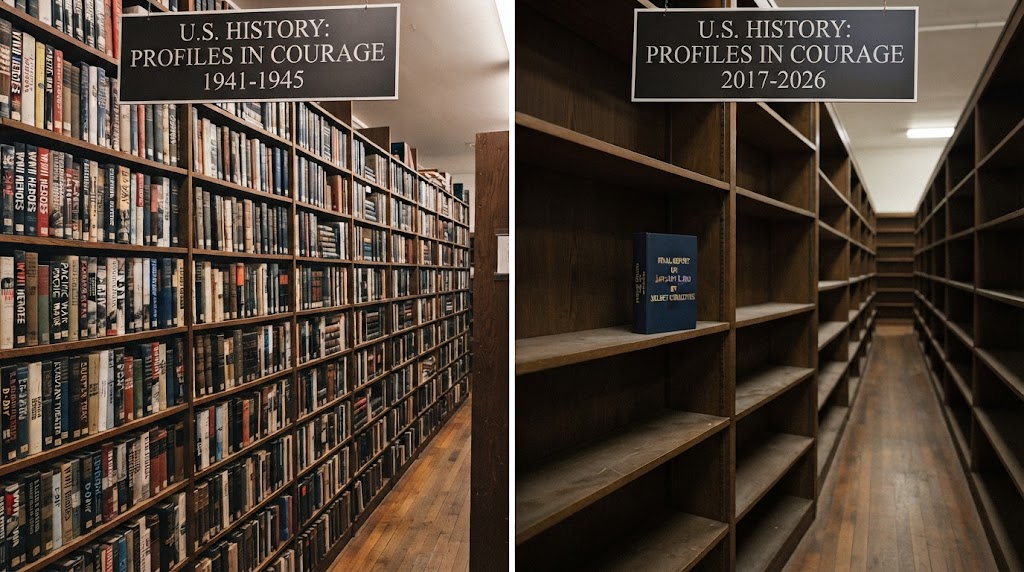
    Trump’s support did not emerge in isolation. Historians will likely examine the role of Republican members of Congress who, with few exceptions, aligned themselves with Trump despite repeated controversies, ethical questions, and institutional challenges. Whether motivated by ideology, fear of political retaliation, or electoral self-preservation, their collective restraint—or lack of resistance—will invite comparison with earlier moments when legislators faced tests of independence and conscience, including those explored in John F. Kennedy’s Profiles in Courage.
  2. The Supreme Court and the Long View
    A twenty-year gap may provide a more balanced framework for evaluating the Trump-era Supreme Court. With time, historians will be better positioned to assess whether the Court’s decisions strengthened constitutional principles, reshaped social norms, or produced unintended consequences that only became visible over decades.
  3. Corporate Power and Quiet Support
    Many business leaders offered tacit or indirect support for Trump’s agenda, particularly where deregulation and tax policy aligned with their interests. Future researchers will likely scrutinize financial records, lobbying efforts, and private communications to better understand the extent to which economic power influenced public policy—details that were not always transparent in real time.
  4. The Press and the Meaning of Truth
    The so-called mainstream press positioned itself largely in opposition to Trump, yet it did so while facing financial decline and growing competition from social media platforms. One enduring issue of the era was the erosion of shared definitions of “truth” and “fact.” Even well-sourced reporting was frequently dismissed as “fake news,” raising long-term questions about public trust, epistemology, and the role of journalism in a fragmented media environment.
  5. Ideological Media and Political Identity
    Conservative media outlets—most notably Fox News, along with a network of right-leaning digital platforms—played a significant role in shaping how events were interpreted by audiences seeking reinforcement of political and cultural identities. Historians may study this ecosystem as a case study in modern persuasion, examining how narrative repetition, grievance framing, and selective information proved highly effective.
  6. Immigration Enforcement and Historical Comparison
    Immigration policy and enforcement will remain one of the most contested aspects of the Trump era. Some commentators drew historical parallels to authoritarian practices of the past, while others argued such comparisons were exaggerated or inappropriate. With the benefit of distance, historians will likely focus on legality, implementation, humanitarian impact, and rhetoric—allowing future generations to judge the fairness and proportionality of those comparisons.

History rarely delivers simple verdicts. It weighs context, consequences, and contradictions. When the Trump era is finally written about with the benefit of time and distance, the most enduring lesson may not center on one man alone, but on the resilience—or fragility—of democratic institutions and the citizens who sustain them.

Image by Chat GPT; content by EAB

Book Review of 1929: Inside the Greatest Crash in Wall Street History – and How It Shattered a Nation by Andrew Ross Sorkin

I’ve been an admirer of Andrew Ross Sorkin’s financial reporting for years, particularly through his work on CNBC, and I previously enjoyed his book Too Big to Fail, a definitive account of the 2008–2009 financial crisis. With that bias admitted upfront, I found 1929 to be an engaging and illuminating read. Though the book is lengthy—about 444 pages—it never feels like a dry history textbook. Instead, it flows with the narrative tension of a novel, making complex financial events accessible and compelling.

A background or interest in finance, economics, or banking certainly enriches the reading experience, but Sorkin’s storytelling makes the material approachable even for those who aren’t steeped in economic jargon.

A Rich, Relevant History

What makes this book especially resonant is how closely the late 1920s echo aspects of our present moment. The U.S. had recently emerged from a pandemic; optimism about growth and technological change was widespread; and the stock market appeared unstoppable. Investors—large and small—took on unprecedented leverage, borrowing heavily to chase rising share prices.

But economic momentum is fragile. Once confidence cracked, the market’s collapse was swift and devastating. The crash wiped out fortunes, triggered a steep economic downturn, and led to widespread unemployment. The government and the Federal Reserve lacked a clear or unified strategy, and their responses were often reactive, hesitant, or contradictory.

Sorkin offers a nuanced view of Herbert Hoover, depicting him not as the caricature of incompetence found in some earlier accounts, but as a leader who recognized the depth of the crisis and attempted—albeit imperfectly—to stem the damage. It’s a more sympathetic portrait than many readers might expect.

Vivid Personalities and Power Players

The book is populated with fascinating figures from finance, government and politics, including:

  • Charles Mitchell, chairman and CEO of National City Bank (a central figure in the era’s excessive speculation)
  • Winston Churchill
  • Franklin Delano Roosevelt
  • Senator Carter Glass
  • Evangeline Adams
  • Herbert Hoover
  • Ferdinand Pecora
  • and many others

Sorkin demonstrates how the interplay of personalities, policies, and economic forces created the conditions for both the boom and the crash. His research is broad, and his interpretations are measured yet insightful.


Reflections on Today’s Economy

Reading about 1929 inevitably led me to think about the state of the economy today. Although history doesn’t repeat itself exactly, the parallels are difficult to ignore.

  • Policy and leadership concerns: I have deep concerns about the current administration’s economic management. Policies such as tariffs continue to ripple through the U.S. and global economies, often harming consumers and industries rather than helping them.
  • Social and economic inequities: Decisions to cut or withhold food aid and other social supports can create long-lasting harm. Tax structures continue to favor the wealthy, while those with the least must rely on charity to meet basic needs.
  • Economic data skepticism: I find it increasingly hard to trust official numbers—whether on inflation, unemployment, or growth—given how politicized and selectively interpreted economic data has become.
  • Uncertain impact of AI: Artificial intelligence is propping up portions of the stock market, but the long-term effects on employment, productivity, and corporate earnings remain unclear. Few leaders or analysts can articulate what the next decade will really look like if the hype fizzles.
  • Declining trust in corporate leadership: Watching CEOs—particularly in tech and finance—publicly defer to political power has shaken my confidence in their judgment. Elon Musk is the most visible example, but he is not alone.
  • The culture of greed: Increasingly, it feels as if greed has become our national creed. Even institutions that purport to offer moral guidance seem more interested in fundraising than fostering compassion or community.

Melancholy Musings

My expectation for those promoting the teaching of the Ten Commandments in schools is that they’ll soon explain how the penalties for breaking them depend on one’s political party, ideology, or religious affiliation.

***

This may be the sorriest era in which to write a decent book or speech, for the mob no longer reads to think but to feel confirmed—and preferably entertained.

***

Commercially, the most successful political and cultural “thought leaders,” pundits, and analysts are those who are first controversial, second entertaining, and a distant third—if ever—wise, prescient, or correct in their pronouncements.

***

Twenty or thirty years from now, history will mock and expose many of today’s cultural, political, and religious heroes and influencers as the charlatans and fools they always were.

***

Once, citizens braved fire hoses, clubs, and bullets to win the rights we now take for granted—laws signed in ink but sealed in blood. Today, those rights are being revised by comfortable hands and poisoned hearts, undone not by courage but by cowardice.

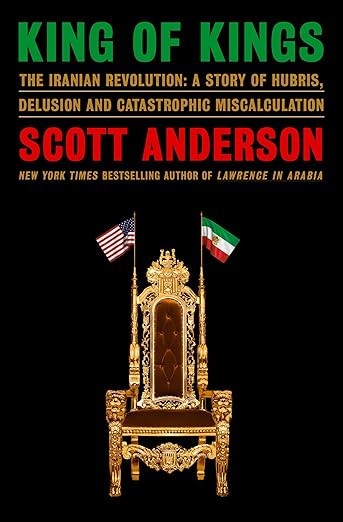
Book Review: King of Kings: The Iranian Revolution: A Story of Hubris, Delusion and Catastrophic Miscalculation by Scott Anderson

After reading this book, it’s easy to understand why U.S. relations with Iran remain so strained and why so much hostility exists toward America. For nearly a century, presidential administrations have made diplomatic blunders, compounded by intelligence failures that shaped disastrous outcomes.

I recently finished Tim Weiner’s The Mission: The CIA in the 21st Century, which documented the CIA’s missteps in Vietnam, Afghanistan, Iran, Iraq, and elsewhere. Anderson’s account shows the same pattern: Did we get anything right?

The intelligence failures in Iran were staggering. Agencies recorded Ayatollah Khomeini’s speeches but never bothered to translate them—missing clear warnings about his intentions. Meanwhile, the U.S. continued to prop up Shah Mohammad Reza Pahlavi, a weak and indecisive ruler despised by his own people. Ironically, his wife, Farah Pahlavi, displayed far more backbone and foresight. Yet to Washington, Iran’s real value was simply the oil beneath its soil.

Equally unconscionable was the way U.S. embassy staff in Tehran were treated as expendable pawns. The Carter administration fully understood the risks—especially after allowing the Shah into the United States—yet left personnel exposed to the fury of revolutionary crowds.

The lack of coordination between diplomatic and intelligence communities in the 1970s was nothing short of criminal. Mixed signals to the Shah, who desperately needed guidance and resolve, only deepened the chaos. Even today, the lingering question remains: Did Ronald Reagan deliberately delay the hostages’ release until after his inauguration?

Anderson does an excellent job highlighting both the heroes and villains of this tragic story. One memorable account involves teacher Michael Metrinko, who earned the respect of his Iranian students by deliberately standing up to—and physically subduing—the toughest among them.

By weaving personal tales with geopolitical history, Anderson makes the Iranian Revolution come alive in all its complexity. The result is a powerful and unsettling reminder of how deeply poor leadership and intelligence failures can alter history.

This is the Week That Was

I’m amused by Trump’s reluctance to release the Epstein files—as if there’s anything left that could truly shock us. His behavior has long been an open book. At this point, what more could possibly lower public opinion of him?

Replace Jerome Powell as head of the Federal Reserve? Makes about as much sense as firing the fire department while a building is still on fire.

The CEO and the HR Director of Astronomer were caught on a kiss cam in a romantic embrace at a Coldplay concert. The CEO is married with children and the HR Director is recently divorced. Due to the public and rather unusual nature of the disclosure of the relationship, this story is all over social media and other news outlets. My guess is that the HR Director will either resign or be let go but that the CEO will keep his job after publicly confessing his infidelities and promising to reform.

Though I’m not a late-night viewer at my age, I recognize that some of the sharpest political and social commentary in recent years has come from the desks of Stephen Colbert, Jimmy Fallon, and especially Jimmy Kimmel. The upcoming end of The Late Show with Colbert marks more than just the close of a program—it signals the fading of a cultural force that once helped us laugh through the chaos.

Review of Buckley: The Life and The Revolution That Changed America by Sam Tanenhaus

Sam Tanenhaus’s nearly 900‑page biography is a major investment of time, and it helps to arrive already curious about—or at least aware of—William F. Buckley Jr. and the post‑war conservative movement he helped shape. For readers who meet that threshold, the book proves surprisingly readable; for those who don’t, the dense historical detail may feel arduous.

Scope and Balance

Tanenhaus is both exhaustive and even‑handed. He neither canonizes nor demonizes his subject, instead cataloguing Buckley’s triumphs alongside his missteps. Critics may bristle at the close attention paid to family “warts,” especially the overbearing father, but the research is meticulous and the portrait persuasive.

Buckley’s Major Misjudgments

  • Foreign‑policy zigzags – Buckley opposed U.S. entry into World War II before Pearl  Harbor yet staunchly backed the Vietnam War.
  • McCarthyism and Watergate – He defended Senator Joe McCarthy and later downplayed Watergate, even championing conspirator Howard Hunt.
  • Civil‑rights resistance – Buckley was late to endorse full political rights for Black Americans, claiming many were unprepared for the franchise.
  • The Edgar Smith debacle – Perhaps his worst lapse: lobbying for the release of convicted murderer Edgar Smith, who soon attacked another woman. Charm and flattery clouded Buckley’s judgement, and basic due diligence was absent.

Admirable Qualities

Despite his blind spots, Buckley inspired loyalty. Friends—ideological allies and foes alike—describe his private warmth, generosity, and wit. His charitable giving was substantial and discreet, and he remained courteous to adversaries off camera.

Education and Talents

An indifferent early student who failed several prep‑school entrance exams, Buckley benefited from a cosmopolitan upbringing in Europe, becoming multilingual. At Yale he honed the dazzling rhetorical style that later defined Firing Line. A true polymath, he wrote gracefully, played concert‑level piano, skippered ocean races, debated ferociously, and chronicled his frenetic routines in the memoir Overdrive.

Personal Speculations

Tanenhaus briefly entertains Gore Vidal’s insinuations about Buckley’s sexuality but unearths no substantial evidence. The Buckley‑Vidal televised clashes, however, remain one of the book’s liveliest threads.

Blind Spots in Business

For all his verbal precision, Buckley was financially inept. National Review survived only through repeated infusions from his father and sympathetic backers; balance sheets mystified him, and bankruptcy loomed more than once.

How the Book Changed My View

I once saw Buckley as an unalloyed Renaissance man. Tanenhaus complicates that picture, revealing antisemitic streaks, chronic resistance to civil rights, and a habit—memorably skewered by Yale philosopher Paul Weiss—of sounding authoritative on books he hadn’t read. In the end, Buckley emerges as brilliant but fallible, magnetic yet blinkered—a man whose revolution reshaped American conservatism while mirroring its contradictions.

Verdict

For readers already engaged with post‑war political history, Tanenhaus offers a definitive, engrossing study. Newcomers to Buckley may wish to sample his columns or television debates first; only then will they fully appreciate the nuance—and magnitude—of this sprawling biography.