Hidden Potential: The Science of Achieving Greater Things by Adam M. Grant (Book Review)

My rating: 4 of 5 stars

Want to reach your potential? Achieve success on your terms? This book offers a variety of strategies to get you there.

There were perspectives on success, learning and improvement that I found interesting and consistent with what I experienced in my life. For example, I wish that I was not so afraid to make mistakes when I was younger. I also wished that I dreamed bigger than I did. I believe its important to have a network of advisors and mentors.

Parts of the book were more interesting to me than others. However it is well written. I particularly enjoyed the stories about Seth Curry and R.A. Dickey and their routes to playing at professional levls in their respective sports. Dickey’s story about how he finally succeeded as a major-league pitcher is particularly inspiring.

Listed below are portions of the book I found worthy of note…

Potential is not a matter of where you start but of how far you travel.

This capacity to absorb, filter and adapt enables sponges to grow and thrive. And it’s a capacity that matters a great deal for humans too.

A key to being a sponge is determining what information to absorb versus what to filter out.

Seek discomfort. Instead of just striving to learn, aim to feel uncomfortable. Pursuing discomfort sets you on faster path to growth. If you want to get it right, it has to first feel wrong.

Seek out new knowledge, skills and perspectives to fuel your growth—-not feed your ego.

Strive for excellence, not perfection. Practice wabi sari, the art of honoring beauty in imperfection. Did you make yourself better today?

Deliberate practice is the structured repetition of a task to improve performance based on clear goals and immediate feedback. Deliberate play = deliberate practice + free play (Seth Curry)

It’s better to disappoint others than to disappoint yourself.

Compete against yourself. The risk of competing against others is that you can win without getting better.

Instead of relying on a single expert or mentor, remember that the best directions come from multiple guides.

Hundreds of experiments show that people improve faster when they alternate between different skills (interleaving).

It turns out that if you are taking a new road, the best experts are often the worst guides. Experts often have an intuitive understanding of a route, but they struggle to articulate all the steps to take.

Intellectuals by Johnson, Paul (1989) (A Book Review)

My rating: 2 of 5 stars

A dozen people picked at random on the street are at least as likely to offer sensible views on moral and political matters as a cross-section of the intelligentsia. But I would go further. One of the principal lessons of our tragic century, which has seen so many millions of innocent lives sacrificed in schemes to improve the lot of humanity, is – – beware intellectuals. Not merely should they be kept well away from the levers of power, they should also be objects of particular suspicion when they seek to offer collective advice. Beware committees, conferences and leagues of intellectuals. Distrust public statements issued from their serried ranks. Discount their verdicts on political leaders and important events. For intellectuals, far from being highly individualistic and non-conformist people, follow certain regular patterns of behavior. Taking as a group, they are often ultra conformist within the circles formed by those whose approval they seek and value.

The quote above is on the last page of the author’s book and is his conclusion based on his review of the lives of many people that could be classified as “Intellectuals.” Those coming under his inspections include Rousseau, Bertrand Russell, Lillian Hellman, Sartre, Ernest Hemingway, Norman Mailer and others. He finds them wanting and points out their particular foibles, weaknesses and sins. Some were actually not so smart at all or what they were reputedly to be. Many were not very good human beings treating the public, friends and family members poorly. Many were inconsistent in their political and philosophical views and proven to be wrong in their opinions. Rousseau, Russell, Hemingway and Mailer were womanizers and treated their wives shabbily. Being a great writer does not translate into being good with money, family life, healthy habits and smart living.

Johnson’s point is that these people may not deserve the pedestal that history or conventional thinking has placed them. They may not be as smart or as notable as they may consider themselves.

Interesting perspectives on interesting people…reads like a National Enquirer expose on the intelligentsia.


View all my reviews

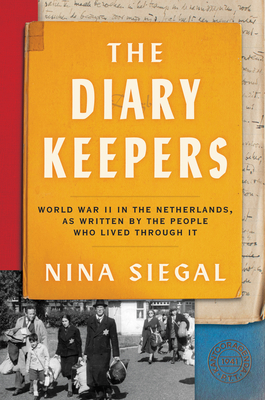
The Diary Keepers: World War II in the Netherlands, as Written by the People Who Lived Through It by Nina Siegal


75% of the Dutch Jewish community perished in the Second World War, while in other western European countries, the proportions were significantly lower. Coincidentally as I read this book, Israel is recovering from terroristic attacks on its citizens.

History has recorded the treatment of Jews by the Nazis from 1933-1945. However this reader was surprised by similar treatment of Jews by the Dutch. The diaries describe how Jews were hunted down and families were separated. Their properties and possessions were seized. They suffered physical beatings and a variety of emotional and mental humiliations.

Some Dutch did their best on hiding Jews or preventing them from being sent outside the country to labor camps and gas chambers. Jews were thrown on trains as cattle. There were vivid descriptions on how they were horribly treated and humiliated.

How could civilized people allows this to happen? Fear of reprisals? Hatred and distrust of Jews?

There were diaries of those who supported Jews and those that supported the Nazis. Their motives are part of the story. The diaries depict stories of both heroism and cowardice. This reader became uncomfortable. Could these same acts happen today? Could they happen in the United States?

History continues to repeat itself…

Very sobering book and surprising as one would expect the Dutch people to be more civilized. Excellent reference book on how a country lives and fares upon occupation by a foreign power.


American Philosophy: Book Review and Notes

This book was a very pleasant surprise. In college, I took a philosophy course that covered Pragmatism and I read books by William James, Charles Sanders Pierce, John Dewey, Josiah Royce etc. Kaag had a strong interest in the American philosophy of the late 19th century and did an excellent job of explaining it so that the general reader could understand it. In addition, he described the personalities and lives of the various philosophers – – many of them had more interesting lives outside of their academic pursuits. Kaag’s research takes place in the abandoned library of William Ernest Hocking. To be honest, reading about someone’s research in a library could be very tedious and boring. But I found it very interesting – –Kaag’s dedication and pursuit of information and material. 

I highlight portions of books I own if I find them informative or interesting. Shown below are some of my notes below:

Pragmatism holds the truth is to be judged on the basis of its practical consequences, on its ability to negotiate an enrich human experience.

“Riches take wings; fame is a breath; love is a cheat; youth and health and pleasure vanish.” William James

Thoreau… had a hunch that frenetic busyness should not be the business of human life, that chatter makes one feel horribly alone, that well-paid jobs are different from “callings.” And that long relationships are not necessarily synonymous with meaningful ones. (Thoreau never married.)

Walking gives one many things, according to Thoreau, but one of its greatest gifts is time.

Socrates stands before his neighbors and says the unthinkable – – that there is something worse than death: living an ugly, wicked, boring life.

The lesson that William James gleaned from evolutionarily theory was of an existential variety – – human life was a natural process that began in the wailing of babies and ended in the pangs of death. In between was the seemingly futile struggle for survival.

In the 17th century the Frenchman (Pascal) argued that in the absence of proof, it is safer to believe in God ( since you lose relatively little if you were wrong) about his existence ( then to adopt atheism) and face eternal damnation on the Day of Judgment.

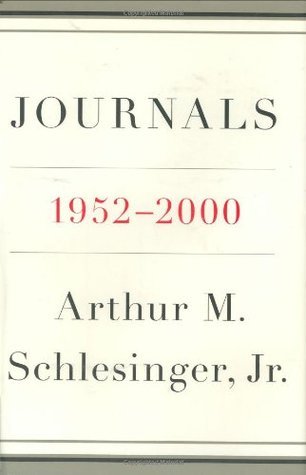
Review: Journals 1952-2000 by Arthur Schlesinger Jr.

In Journals 1952-2000,” Arthur Schlesinger Jr. offers a captivating exploration of American political history spanning the Eisenhower to Clinton administrations. Through his unparalleled connections with U.S. Presidents, foreign leaders, intellectuals, and cultural icons, Schlesinger provides an insider’s perspective on the tumultuous events that shaped the 20th century.

With candor, Schlesinger delves into his personal sentiments, both favorable and critical, towards prominent figures of the era. The admiration for the Kennedy brothers, John and Robert, shines through, while his disillusionment with Lyndon Johnson’s interpersonal approach and bizarre behavior is apparent. Notably, Schlesinger’s palpable disdain for Richard Nixon adds an ironic twist, considering their proximity as neighbors following Nixon’s presidency.

Throughout the book, Schlesinger’s political inclinations come to the fore, as he expresses his reservations about Republican presidents such as Dwight Eisenhower, Ronald Reagan, George W. Bush, and Nixon. His critique extends to a fellow Democrat, Jimmy Carter, revealing Schlesinger’s willingness to evaluate leaders from his own party objectively.

The narrative isn’t limited to policy discussions; Schlesinger enthralls readers with captivating anecdotes, insider gossip, and subtle insinuations involving prominent politicians, particularly those in the nation’s capital. Delicate topics, including the romantic entanglements of President Kennedy, Ted Kennedy, Gary Hart, Bill Clinton, Martin Luther King, and Nelson Rockefeller, are deftly navigated.

A noteworthy revelation is Schlesinger’s subtle hint at the complex relationship between himself, Robert Kennedy, and the enigmatic Marilyn Monroe. His close friendship with Jackie Kennedy also comes to the forefront, offering readers a unique glimpse into her life.

“Journals” serves as a window into Schlesinger’s engagement with pivotal issues of his time, encompassing the Vietnam War, the Cold War, Mideast tensions, diplomatic overtures with Russia and China, and the high-stakes Cuban Missile Crisis. Schlesinger’s multifaceted talents shine as he shares his role in crafting speeches and messages for aspiring Democratic presidential candidates.

Despite its substantial 783-page length, it maintains an engrossing narrative that captivates without causing reader fatigue. The book is both an enjoyable read and an invaluable source of information, making it a compelling recommendation for scholars of presidential history and anyone intrigued by the intricacies of American politics and events from 1952 to 2000.

Review: King-A Life by Jonathan Eig

As I immersed myself in this captivating biography, a whirlwind of emotions, memories, and contemplations flooded my mind. Recalling my teenage years, I realized how little I truly comprehended the magnitude of the civil rights struggle, especially in the deeply segregated South during the 1960s. Although I had heard of Martin Luther King Jr. as a young boy, I had no inkling of the profound impact he would have on our nation’s history.

This book, a compelling account of King’s life, stirred within me a deep sense of shame for the violence and hatred inflicted upon Black individuals due to their skin color and the prejudiced perceptions held by many white people. The author’s vivid descriptions of the bombings that claimed innocent lives, the brutal attacks on peaceful demonstrators by police dogs, and the countless murders committed by racists and law enforcement are a haunting reminder of the dark stain on our collective history.

Undeniably, Martin Luther King Jr. was an extraordinarily brave man—perhaps one of the bravest. Despite being subjected to jail, beatings, threats, and mob attacks, he remained steadfast in his commitment to nonviolence. The author adeptly captures King’s experiences, leaving readers in awe of his unwavering equanimity in the face of such brutality.


Moreover, the book delves into King’s personal flaws, including accusations of numerous affairs. The author, Eig, does not shy away from these indiscretions. It is revealed that King was targeted by the FBI through wiretapping and attempts to blackmail him with incriminating information. The book effectively dispels accusations of King being a communist sympathizer, providing compelling evidence to the contrary.

King faced adversaries from all angles: the FBI, racist politicians and officials, the police, fellow Black individuals who disagreed with his nonviolent philosophy, as well as ministers, church leaders, and conservative commentators who opposed his influence. Even Presidents Kennedy and Johnson, while initially ambivalent about King’s politics and impact on the civil rights movement, became entangled in a complex relationship with him. Johnson’s sentiments towards King soured when the latter publicly voiced his opposition to U.S. involvement in the Vietnam War.

Meticulously researched and skillfully written, this biography stands as the pinnacle of my reading experiences this year. It effortlessly transports readers into the turbulent era of the civil rights movement, providing a profound understanding of the indomitable spirit of Martin Luther King Jr. and the transformative power of his vision.

In conclusion, this book is an absolute must-read, capable of evoking an array of emotions and leaving a lasting impact. I wholeheartedly give it five stars, and then some.

Stolen Focus by Johann Hari (Review)

Strangely enough, I had a hard time focusing on Stolen Focus. I skimmed through the first five chapters of this 14 chapter book. I confess that I focused on chapter topics that interested me and on information that basically reinforced my current views on attention and concentration. Regrettably over the years, my ability to sit still for 60 or 90 minutes and read a book has greatly diminished. To a very large extent, I blame it on the distraction of social media and the Internet.

Hari’s book basically confirmed what I already know – – it is very hard to be focused and to apply attention for any great period of time. Everyone has certain addictions – – for me, its carbohydrates, salt etc. I am easily distracted. As I write this, I hear a TV in my living room, I am mentally composing a checklist of things that I need to do tomorrow and I am thinking about getting ready for a trip next week.

From this book, I learned why I and everyone else become distracted. What I did not necessarily find out was how to eliminate distractions and improve my concentration.

Shown below are my notes from the book:

Teams took ordinary people and got them to read much faster than they ordinarily would; with training, and with practice, it sort of works. They can run their eyes over the words quickly and retain something of what they are saying. But if you do then test them on what they read, you’ll discover that the faster you make them go, the less they will understand. More speed means less comprehension.

Scientists then studied professional speed readers – – and they discovered that even though they are obviously better at it than the rest of us, the same thing happens. This show there’s just a maximum limit for how quickly humans can absorb information, and trying to bust through that barrier simply busts your brain’s abilities to understand it instead.

The scientists investigating this also discovered that if you make people read quickly, they are much less likely to grapple with complex or challenging material. They start to prefer simplistic statements.

Scientists discovered… When people think they are doing several things at once, they are actually – – “juggling.” They are switching back-and-forth. They don’t notice the switching because their brain sort papers it over, to give a seamless experience of consciousness, but what they’re actually doing is switching and reconfiguring their brain moment to moment, task to task and that comes with a cost.

The more he studied flow states, the more Mihaly noticed something else crucial about them. They are extraordinarily fragile and easily disrupted.

When you are approaching death, I thought, you won’t think about your reinforcements – – the likes and retweets – – you’ll think about your moments of flow.

We all have a choice now between two profound forces – – fragmentation, or flow. Fragmentation makes you smaller, shallower, angrier. Flow makes you bigger, deeper, calmer. Fragmentation shrinks us. Flow expands us.

The proportion of Americans to read books for pleasure is now at its lowest level ever recorded. The American Time Use Survey – – which studies a representative sample of 26,000 Americans found that between 2004 and 2017 the proportion of men reading for pleasure had fallen by 40%, while for women, it was down by 29%.

Gallup found that the proportion of Americans who never read a book in any given year tripled between 1978 and 2014. Some 57% of Americans do not even read a single book in a typical year.

… the collapse in reading books is in someways a symptom of our atrophying attention, and in someways a cause of it. It’s a spiral – – as we begin to move from books to screens, we start to lose some of the capacity for the deeper readings that come from books, and that, and turn makes us less likely to read books.

The Creative Act: A Way of Being by Rick Rubin (a review)

My rating: 5 of 5 stars


I found this book to be very inspirational. I write a blog. I write commentary on Pickleball and post it to a community of Pickleball players on Facebook. I maintain a journal. I assist a nonprofit with communications and marketing. I would like to live a more creative life.

There is a lot of good advice and observations to think about. This is almost like a step-by-step handbook on how to find, develop, craft and deliver a work of art whether it is a painting, a book, a song or a building design.

Highly recommended for any writer, musician, painter, architect or anyone desiring to improve their creative abilities. Five star book for this reader.

My notes from this book:

Look for what you notice but no one else sees.

Broadening our practice of awareness is a choice we can make at any moment. It is not a search, though it is stoked by curiosity or hunger. A hunger to see beautiful things, hear beautiful sounds, feel deeper sensations. To learn, and to be fascinated and surprised on a continual basis.

Read the finest literature, watch the masterpieces of cinema, get up close to the most influential paintings, visit architectural landmarks. There is no standard list: no one has the same measures of greatness.

There’s a reason we are drawn 

to gazing at the ocean

It is said that the ocean provide

a closer reflection of who 

we are than any mirror.

If we focus on what’s going on inside our cells – – sensations, emotions, the patterns of our thoughts – – a wealth of material can be found. Our inner world is every bit as interesting, beautiful, and surprising as nature itself. It is, after all, born of nature.

Sometimes disengaging is the best way to engage.

Re-reading even a well understood paragraph or page can be revelatory. New meanings, deeper understandings, inspirations, and nuances arise and come into focus.

Reading, in addition to listening, eating, and most physical activities, can be experienced like driving: we can participate either on auto pilot or with focused attention. So often we sleep walk through our lives. Consider how different your experience of the world might be if you engage in every activity with the attention you might give to landing a plane.

To create space for inspiration, we might consider practices of quieting the mind: meditation, awareness, silence, contemplation, prayer, and any other ritual that helps us fend off distraction

Collecting seeds typically doesn’t involve a tremendous amount of effort. It’s more a receiving of a transmission. A noticing. As if catching fish, we walk to the water, bait the hook, cast the line, and patiently wait. We cannot control the fish, only the presence of our line.

Number one seed, number two experimentation, number three craft and number four completion.

It’s generally preferable to accumulate several weeks or months worth of ideas and then choose which of them to focus on, instead of following an urge or obligation to rush to the finish line with what is in front of us today.

We are performing for an audience of one…

Living in discovery is at all times preferable to living through assumptions.

There is no telling where the next great story, painting, recipe, or business idea is going to come from. Just as a surfer cannot control the waves, artists are at the mercy of the creative rhythms of nature. This is why it’s of such great importance to remain aware and present at all times. Watching and waiting.

Loose Balls: The Short Wild Life of the American Basketball Association by Terry Pluto (Review)

Sports nostalgia tour of the American Basketball Association whose heydays were in the late 60s and 70s. The league had some great players like Dr. J, Rick Barry, George Gervin, Artis Gilmore, Dan Issel and others. Interesting stories about how they tried to create the league. Poor Pat Boone was one of the early investors and almost went broke. There were some smart owners and many greedy ones. George Mikan was the ABA’s first commissioner and insisted that the league’s headquarters be situated in Minnesota where he lived.

So many characters Marvin Barnes, Johnny Neumann, John Brisker etc. played in the league. The book details many of their antics. I remember Rick Mount, one of the best shooting guards in college at Purdue. Unfortunately his college game did not translate that well into the pros.

The financial status of the teams and the league were always in peril. They did not have a national TV contract like the NBA. Many coaches and players suffered returned checks or did not get paid at all.

I did not realize or remember that ABA teams played NBA teams in exhibition games and competed fairly well. There were some excellent ABA coaches including Hubie Brown, Larry Brown, Stan Albeck and Doug Moe. (Even Wilt Chamberlain was an ABA coach but not a very good or devoted one.)

There are a large number of amusing anecedotes and stories. This is a very entertaining sports book about a very interesting time in professional basketball.