Review and Five Takeaways from Our Man in Tokyo by Steve Kemper

I am avidly interested in reading about the era surrounding World War II. While most of my reading has focused on Germany and the rise of Adolf Hitler, Steve Kemper’s Our Man in Tokyo shifts the lens to the Pacific. The book chronicles the efforts of U.S. Ambassador to Japan Joseph Grew from 1932 to 1941, a critical decade during which the Japanese military seized control of the country’s future. Kemper draws richly from the extensive diaries Grew maintained throughout his ambassadorship, as well as his correspondence, official reports, speeches, and personal reflections.

Grew believed his primary responsibility was to preserve peace between the United States and Japan, which proved to be a monumental and ultimately heartbreaking task. He received little help from his superiors in Washington, D.C., who frequently kept him in the dark regarding critical information and strategy, nor from members of the Japanese government, who repeatedly deceived him.
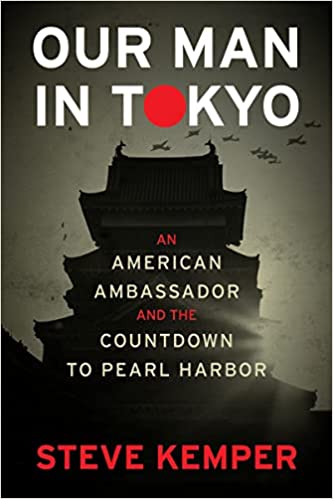
My Five Takeaways from the Book

  1. The Inevitability of Conflict: War between the United States and Japan was largely inevitable. Japan’s military was eager to expand its empire into China, Singapore, and the wider Far East, while the nation faced critical shortages of oil, food, and other vital resources. Japan’s relentless belligerence, particularly in China, forced the United States to employ trade embargoes and other economic measures to halt its aggression. Ultimately, these measures failed to deter Tokyo; instead, they angered Japanese leadership, who chose to pursue expansion through war.
  2. Intelligence vs. Preparedness: Through sophisticated secret intelligence efforts, the United States was well aware that Japan was planning military strikes and that Pearl Harbor was a potential target. It remains astounding that the U.S. military was so unprepared for the events of December 7, 1941.
  3. The Sidelining of Diplomacy: Washington largely ignored the advice and judgment of Ambassador Joseph Grew. Grew had earned the respect and trust of many influential Japanese leaders and deeply understood Japanese culture—particularly the crucial importance of “saving face.” This history underscores the immense value of diplomacy, a lesson of enduring relevance.
  4. FDR, Hull, and Divergent Strategies: President Franklin D. Roosevelt appeared to make every effort to maintain peace with Japan, though he was undoubtedly distracted by the European theater and the urgent need to support Great Britain against Germany. However, Secretary of State Cordell Hull and other State Department officials did not share Ambassador Grew’s strategies or his nuanced options for preserving peace. Compounding the tension, Japan consistently refused to take responsibility for hundreds of attacks on American citizens and businesses in both China and Japan.
  5. The Double-Edged Sword of Sanctions: Trade embargoes can be powerful tools of statecraft, but they can also provoke targeted nations into military retaliation. When a country is literally starved of the food, oil, and essentials required for survival, economic pressure will eventually drive the aggrieved nation to strike back.
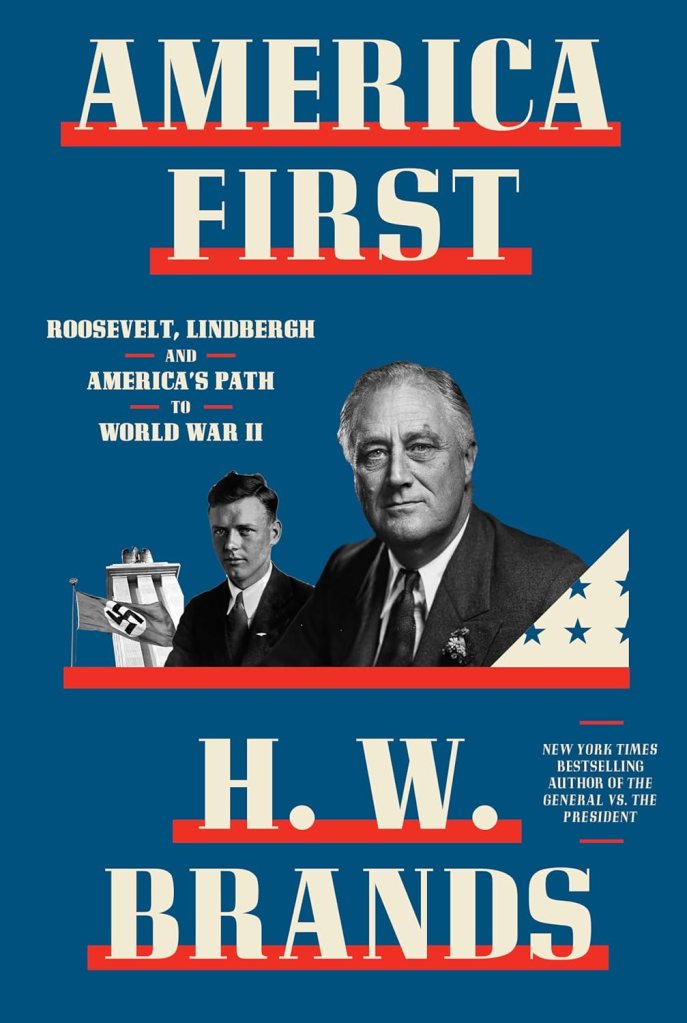
America First: Roosevelt vs. Lindbergh in the Shadow of War by H.W. Brands (Review)


My rating: 4 of 5 stars


On September 1, 1939, fighting broke out in Europe. After the invasion of Poland by Germany, both France and England declared war against the Nazis. Many, if not most Americans, were resistant to participating in a European war. Indeed, there was resistance to even supplying military supplies and other goods to Britain while they basically fought Germany on their own. There was also significant support for the Germany and Hitler’s regime at this time.

Franklin D. Roosevelt managed a fine line. He wished to be re-elected for a third term, but he also understood that Hitler’s goals were not only the conquest of Europe, but world conquest. Charles Lindbergh was an American hero for his exploits about flying across the Atlantic on his own. He and his wife Anne endured the kidnapping and murder of his son in 1932 and this endeared him more to the American public.

Lindbergh opposed US involvement in any war overseas. Lindbergh felt that America was invincible as it was protected by oceans and not vulnerable to air attacks. Lindbergh saw no reason for America to sacrifice its sons in European wars and spoke out strongly against any intervention.

How FDR positioned the United States to prepare for World War II is an interesting story of great judgment and leadership. FDR coordinated closely with Winston Churchill to ensure that Britain had the necessary weapons and materials to survive German assaults. Roosevelt had to skillfully maneuver his aid to Churchill under the watchful eye and some time opposition of a reluctant Congress.

Charles Lindbergh was accused of being an agent and dupe of the German government. There seems to be a little evidence of that. Lindbergh firmly believed that United States could stand on its own and ably defend itself against any foreign attack or invasion. Circumstances and events proved that Lindburgh was incorrect in his analysis but he did volunteer to help the military in any capacity once United States entered the war.

Today there are isolationist policies still being supported. There are many Americans and people in Congress, who do not feel that we should be supporting Ukraine in its battle against Russia and Putin. Are they guilty of being short sighted too? There are some interesting historical similarities there.

This book was well researched and an excellent read. It quotes from Lindbergh’s diaries and provides a good measure of the man and his ambitions. I think that Lindbergh was largely circumspect and responsible in his criticism over American foreign policy. FDR happened to be right in his judgement about Hitler and America’s role in stopping tyranny.


Review: The Fall of the Third Republic: An Inquiry Into the Fall of France in 1940 by William Shirer

Book Review:

This is a very long book, about 1100 pages. But the history and narratives are so compelling, the reader does not mind the mental lifting required. The author was an established and renowned foreign affairs reporter during the 1930s and 1940s. This book is obviously excellently researched and Shirer was reporting from France and Germany prior to the war. His books about Nazi Germany are also compelling history reads.

Shirer also provides an excellent insight into how the war started by examing the behavior of not only France, but also Britian, Germany and Russia.

Why France Fell?

  1. Arrogance: Misguided reliance that things would always stay the same. French politicians and military leaders believing that they had all the right answers and refused to adjust to changing times.
  2. Poor national leadership: Inability to address social inequities, economic problems and the threat of Nazi Germany.
  3. Poor military leadership: Soldiers were not properly trained. “Territory wars” among French generals. Strategy warfare mindset from the 19th century. Poor communication skills among themselves and with the political leadership.
  4. Lack of courage: While many French soldiers fought valiantly, there were many incidents of French soldiers running away from battle and throwing down their weapons and removing their uniforms. These soldiers wanted to go back to their regular lives and not fight in a war they believed was over. They were afraid of German tanks, planes and soldiers.
  5. Appeasement: Both France and Britain did not want war and agreed to whatever demands Hitler made, particularly those made at Munich. Both France and Britian had military opportunities to thwart the German army in 1939 and 1940 but did not have the necessary spine and will to stop Nazi aggression.
  6. French culture: Political extremism and corruption were accepted as norms by the French populace. A national will did not exist to make the necessary political, economic and cultural changes to become a national power. The French people were largely complacent with their history and perceived standing in the world.

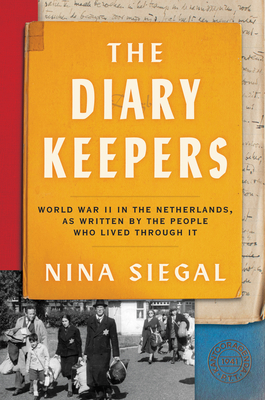
The Diary Keepers: World War II in the Netherlands, as Written by the People Who Lived Through It by Nina Siegal


75% of the Dutch Jewish community perished in the Second World War, while in other western European countries, the proportions were significantly lower. Coincidentally as I read this book, Israel is recovering from terroristic attacks on its citizens.

History has recorded the treatment of Jews by the Nazis from 1933-1945. However this reader was surprised by similar treatment of Jews by the Dutch. The diaries describe how Jews were hunted down and families were separated. Their properties and possessions were seized. They suffered physical beatings and a variety of emotional and mental humiliations.

Some Dutch did their best on hiding Jews or preventing them from being sent outside the country to labor camps and gas chambers. Jews were thrown on trains as cattle. There were vivid descriptions on how they were horribly treated and humiliated.

How could civilized people allows this to happen? Fear of reprisals? Hatred and distrust of Jews?

There were diaries of those who supported Jews and those that supported the Nazis. Their motives are part of the story. The diaries depict stories of both heroism and cowardice. This reader became uncomfortable. Could these same acts happen today? Could they happen in the United States?

History continues to repeat itself…

Very sobering book and surprising as one would expect the Dutch people to be more civilized. Excellent reference book on how a country lives and fares upon occupation by a foreign power.