
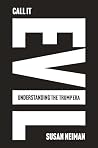
My rating: 2 of 5 stars
As some other Goodreads reviewers have cited, based on the subtitle of the book, I thought this would’ve been an examination of the Trump presidency and the topic of evil. That would’ve been a very interesting book to read. Instead, it drifted to many other topics, not necessarily relevant to Trump or current times and I lost interest in following the varied paths that the reader had to follow. As an aside, an excellent philosophy book usually requires a very slow and concentrated read or reading the book 2 or more times to understand what the author was trying to convey. Regrettably, I do not have the time or mental bandwidth to pursue those types of readings anymore. So my reading may be very unfair to the author, but I really did not get out of it what I expected. Could be my fault? Could be the author’s? Could be a little of both? This is not an easy book to read for the general reader.
Excerpts of Note from the book:
The gap between ideals and reality structures are consciousness of the world. Evil occurs when that gap becomes unacceptable: judged something evil is a way of setting limits to what we’re willing to endure. The language of good and evil is vulnerable to exploitation because it is the most powerful language we have.
Political, economic, and sociological analysis of Trump’s second victory are already appearing, and more are on the way. In all the words written in attempt to understand the present crises, what striking is the scarcity of moral analysis.
Trump and his ilk could never have come to power without one belief: moral concepts are for suckers who don’t know they’re being conned. It’s a very old idea that was expressed by the sophist who taunted Socrates at the beginning of Plato’s Republic.
The evil that threatens us most today is the idea that nothing is evil, for it lulls us into believing that corruption and cruelty are ordinary.
… particularly galling when every politician repeats the legend that the United States is the best of all actual countries. It’s an extraordinary claim to make for a country whose infant mortality rate is higher than that of Belarus or Cuba. The United States ranks 33rd out of 38 OECD countries and life expectancy and has the highest chronic disease burden of any developed nation. Though we spend more per student the most developed countries, US students perform below the OECD average in math and only around the average in reading and science.

