
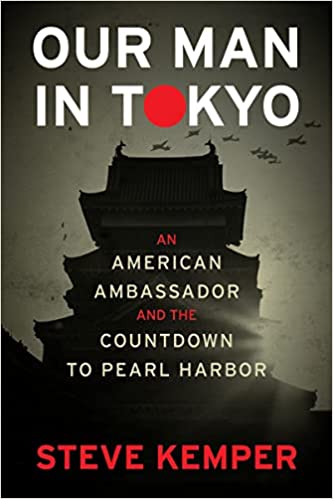
I am avidly interested in reading about the era surrounding World War II. While most of my reading has focused on Germany and the rise of Adolf Hitler, Steve Kemper’s Our Man in Tokyo shifts the lens to the Pacific. The book chronicles the efforts of U.S. Ambassador to Japan Joseph Grew from 1932 to 1941, a critical decade during which the Japanese military seized control of the country’s future. Kemper draws richly from the extensive diaries Grew maintained throughout his ambassadorship, as well as his correspondence, official reports, speeches, and personal reflections.
Grew believed his primary responsibility was to preserve peace between the United States and Japan, which proved to be a monumental and ultimately heartbreaking task. He received little help from his superiors in Washington, D.C., who frequently kept him in the dark regarding critical information and strategy, nor from members of the Japanese government, who repeatedly deceived him.
My Five Takeaways from the Book
- The Inevitability of Conflict: War between the United States and Japan was largely inevitable. Japan’s military was eager to expand its empire into China, Singapore, and the wider Far East, while the nation faced critical shortages of oil, food, and other vital resources. Japan’s relentless belligerence, particularly in China, forced the United States to employ trade embargoes and other economic measures to halt its aggression. Ultimately, these measures failed to deter Tokyo; instead, they angered Japanese leadership, who chose to pursue expansion through war.
- Intelligence vs. Preparedness: Through sophisticated secret intelligence efforts, the United States was well aware that Japan was planning military strikes and that Pearl Harbor was a potential target. It remains astounding that the U.S. military was so unprepared for the events of December 7, 1941.
- The Sidelining of Diplomacy: Washington largely ignored the advice and judgment of Ambassador Joseph Grew. Grew had earned the respect and trust of many influential Japanese leaders and deeply understood Japanese culture—particularly the crucial importance of “saving face.” This history underscores the immense value of diplomacy, a lesson of enduring relevance.
- FDR, Hull, and Divergent Strategies: President Franklin D. Roosevelt appeared to make every effort to maintain peace with Japan, though he was undoubtedly distracted by the European theater and the urgent need to support Great Britain against Germany. However, Secretary of State Cordell Hull and other State Department officials did not share Ambassador Grew’s strategies or his nuanced options for preserving peace. Compounding the tension, Japan consistently refused to take responsibility for hundreds of attacks on American citizens and businesses in both China and Japan.
- The Double-Edged Sword of Sanctions: Trade embargoes can be powerful tools of statecraft, but they can also provoke targeted nations into military retaliation. When a country is literally starved of the food, oil, and essentials required for survival, economic pressure will eventually drive the aggrieved nation to strike back.

