Morning Muses

I can’t get too excited or surprised about Joe Biden providing a pardon for his son Hunter. What does Joe have to lose? He’s not running for President any more and he certainly does not owe the Democratic party any explanation.
***

As I was reading this essay, I nodded my head as this section captured my attitude about politics, the election and Trump…

Not long after the election, I had a conversation with a relative in which she said, in so many words, that she’d given up. She wasn’t worried for herself and her husband; they would be fine, financially and otherwise, whatever Trump did; they were safe within the bubble of professional-class privilege. Yes, she was sad that her children and grandchildren would inherit a worse world now—less-free, more violent, more subject to the ravages of climate change—than would have been the case, she believed, had Trump lost, but she couldn’t take responsibility for that. If the American people were stupid enough to vote for this guy, then they deserved whatever they got, and she wasn’t going to care anymore. She would look out for her own as best she could, and that’s it.

Biden Gives Up On America Noah Millman

***

At my age, I am content to have seen the best of America. I regret that this experience will not be passed down to future generations.
***

Off the top of my head, a partial Cabinet I’d nominate if I was President. Sorry no Fox commentators or former employees.

Attorney General: Lynn Cheney

Secretary of Treasury: Jamie Dimon

Secretary of State: Mitt Romney

Secretary of Defense: Mark Milley

Secretary of Education: Michelle Obama

Administrator of Small Business and Entrepreneurship: Seth Godin

Secretary of Homeland Security: Chris Christie

Secretary of Veterans Affairs: Phil Murphy (current NJ governor)

Director of OMB: Pete Buttigieg

Secretary of Health and Human Services: Mark Cuban

Director of National Intelligence: Jethro Gibbs (I’m kidding)

Press Secretary: Kara Swisher

***

It somewhat amuses me that fans urge the firing of a football coach, who has an excellent win-loss season record but makes the unforgivable mistake of losing a game to a bitter rival. But yet they will show infinite patience by re-electing politicians of poor performance, character and results.
***

I think as you grow older your Christmas list gets shorter because the things you want can’t be bought. 

found on a Facebook post
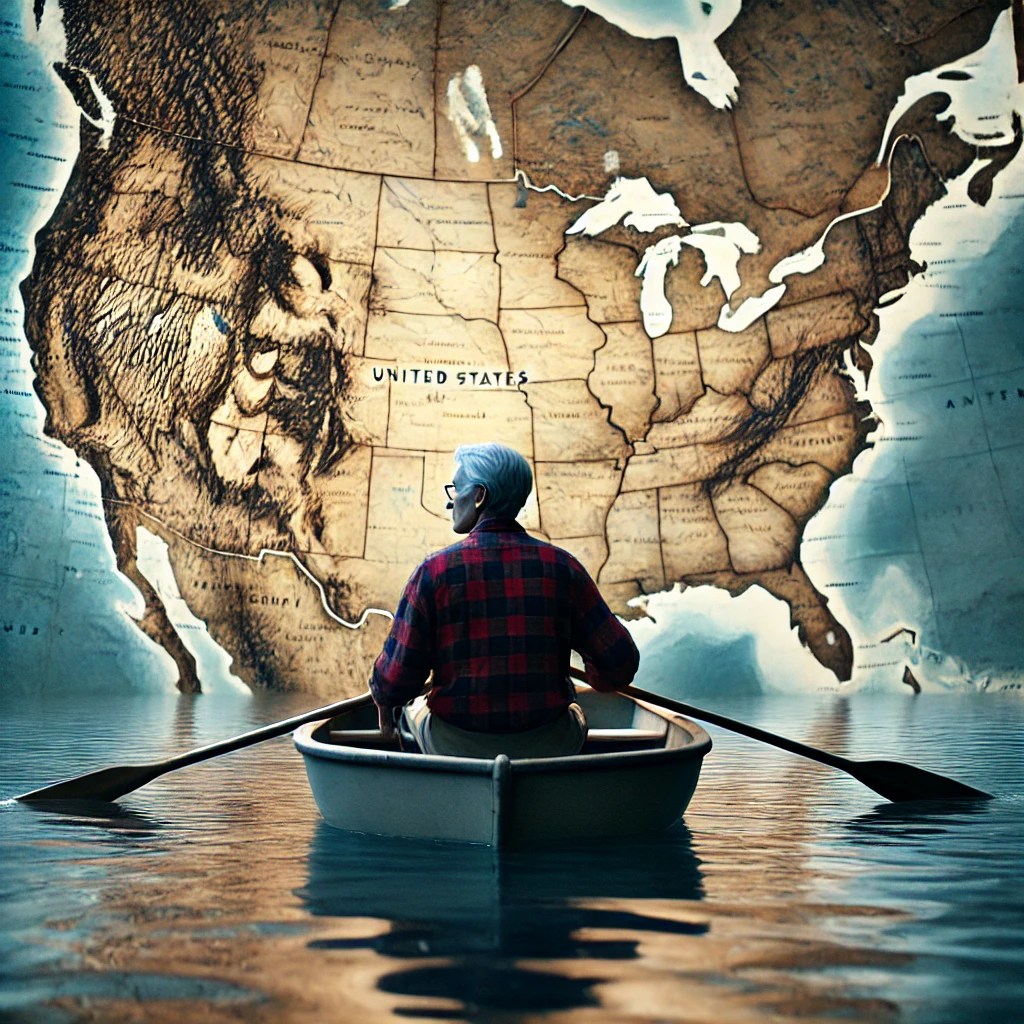
Tending My Fish: Reflections on a Republic in Decline 

As I contemplated last week’s election results, with all their dreary portents for the years ahead, I was reminded of the lament of a Roman senator—his power fading, his influence diminished, as Caesar’s star ascended:  

“I shall tend my fish, study philosophy, and comport myself for death. This republic holds no place for me any longer.”  

(Conspirata: A Novel of Ancient Rome, Robert Harris)  

And then I asked myself, “Does this country hold a place for me? 

The question is not rhetorical. At this late point in my life, I find myself at odds with the culture, principles, and trajectory of the nation I once revered. My beliefs—anchored in reason, history, and an old-fashioned sense of duty—seem increasingly alien in a land preoccupied with spectacle over substance.  

A Discontented Creed  

Consider, for example:  

Religion in Politics: As an agnostic, I believe that the pulpit should stay far away from the podium. Ministers and pastors claiming divine insights on policy strike me as charlatans with better wardrobes. Faith should inspire personal virtue, not dictate public policy.  

Loyalty to Allies: In diplomacy and in life, I value loyalty. A true ally stands by you in both triumph and trial. Yet we seem to cast off old friends—countries and principles alike—as if they were expired coupons.  

Science and Competence: I favor facts over feelings, competence over pretense. But ours is an age where bombast outweighs expertise, and the loudest voice is mistaken for the wisest.  

Reckoning with Our Past: This country’s history is a patchwork of greatness and failure. We have saved nations and crushed dreams, built monuments to liberty and ignored the cries of the oppressed. I believe in confronting our flaws honestly, not whitewashing them with comforting myths—or worse, erasing them entirely in the name of “offense.”  

Respect for Women: Here is a simple proposition: anyone who assaults, demeans, or dehumanizes women is unfit for public office. Full stop. Yet, 52% of white women voters apparently find this a negotiable standard. I am baffled—and disgusted.  

Character Matters: Good judgment, responsibility, empathy, and moral clarity—these should be the cornerstones of a person’s character. Increasingly, though, they are dismissed as relics of a bygone era, sacrificed on the altar of “winning at all costs.”  

A Nation Entertained to Death  The deepest cut of all, perhaps, is that we have traded informed citizenry for the hollow thrills of reality-show governance. Americans now crave entertainment over enlightenment. The morning chatter of Joe and Mika or the smirking commentary of Bill Maher may pass for insight, but to me, they feel like reruns of Neville Chamberlain in Munich, mistaking platitudes for policy while calamity looms.  

The Final Reckoning  

So here I am, like that Roman senator, contemplating my fish and philosophy. The republic of my youth—the one I fought to believe in—is unrecognizable.  

It is a strange thing to feel like an exile in one’s own country, but perhaps the true patriots are always exiles. We stand apart, unwilling to settle for the tawdry spectacle on offer, and dream of something better—a nation of character, competence, and courage.  

Until then, I will tend my fish.

The Myth of American Idealism: How U.S. Foreign Policy Endangers the World by Noam Chomsky and Nathan J. Robinson (Review)

The received wisdom insists that the United States is the tireless champion of democracy and human rights—a paragon of “Wilsonian idealism” and “American exceptionalism.” Noam Chomsky’s and Nathan J. Robinson’s The Myth of American Idealism: How U.S. Foreign Policy Endangers the World eviscerates this comforting narrative. The authors argue that U.S. foreign policy aligns not with noble ideals but with the strategic and economic interests of domestic elites. The result? A history marred by moral indifference, lawlessness, and a ruthless adherence to what Adam Smith once called “the vile maxim of the masters of mankind: All for ourselves and nothing for other people.”

This is not a book for the faint of heart or those who prefer their history wrapped in the star-spangled illusions of Hollywood. It is a damning indictment of U.S. actions abroad, examining case studies from Vietnam to Iraq, Chile to Palestine. The authors spare no sacred cow, exposing the contradictions between America’s lofty rhetoric and its sordid realpolitik.

I approached this book with some skepticism. Chomsky’s political ideology leans further left than my own, and I was wary of polemics. Yet his analysis aligns uncomfortably well with historical evidence. Take, for instance, his examination of U.S. support for Israel. The one-sided nature of American backing—military aid, UN vetoes, and tacit approval of Israeli excesses—has devastated Palestinians while fueling anti-American animus across the Middle East. Chomsky is clear-eyed about the complexities: there are cruel men on both sides of the Israeli-Palestinian divide. But the suffering of millions of innocent Palestinians, bombed, maimed, and displaced, is a humanitarian tragedy in which the United States is deeply complicit.

Equally scathing is his treatment of the Vietnam War—a blunder of monumental proportions. The authors chronicle how leaders lied to the public, sent thousands of soldiers to die needlessly, and plunged the nation into chaos. As someone who lived through that era, I can attest to the war’s divisive impact. For younger readers, this history is essential reading, a sobering reminder of how disastrously foreign policy can go astray when guided by hubris and deceit.

The prose is not exactly uplifting, but it is brutally clarifying. Are we, as Americans, driven by democracy and justice—or by greed and oil? The book challenges readers to reckon with a less flattering version of our heritage, one that calls for reflection rather than whitewashing.

No matter where you fall on the political spectrum, The Myth of American Idealism will provoke thought, discomfort, and perhaps a much-needed reckoning. If you prefer fairy tales about America’s benevolence, look elsewhere. For those willing to confront uncomfortable truths, this book is indispensable.

Today’s NBA Players “Soft?”

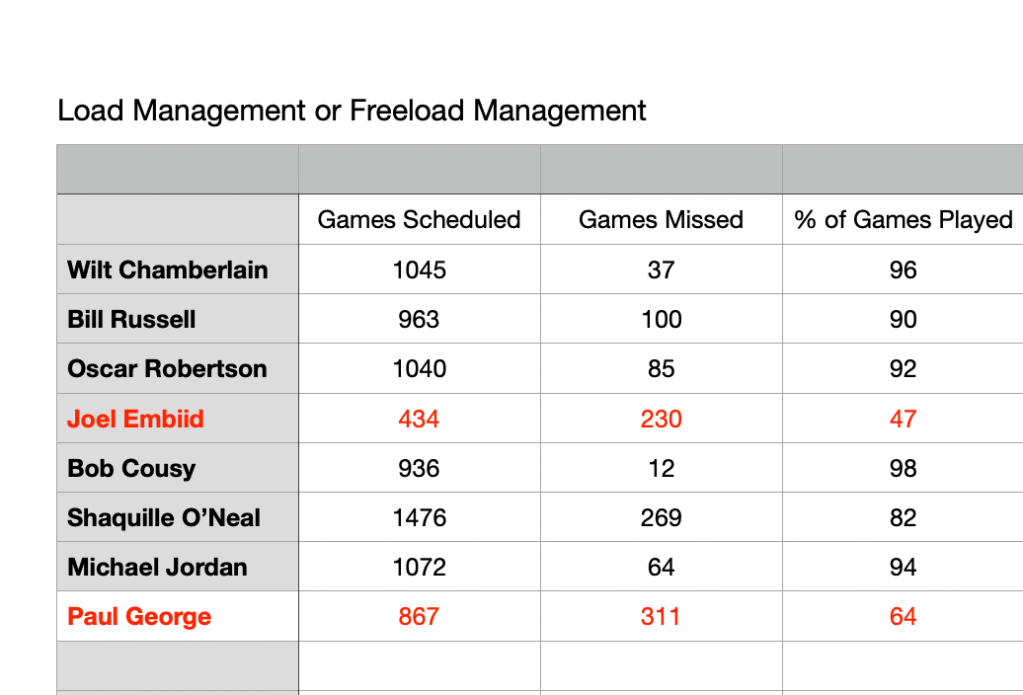
NBA players in the 1960s and 1970s did not have access to trainers, machines, whirlpools, massages, and other current technologies to recover from games. Plus travel was not as comfortable or as convenient for players 50 or 60 years ago. However, despite an 82 game schedule, like today, they did not take days off and they played through minor injuries. There was no “load management” if you played for Red Auerbach or Bill Russell.

The Death Rattle of American Democracy

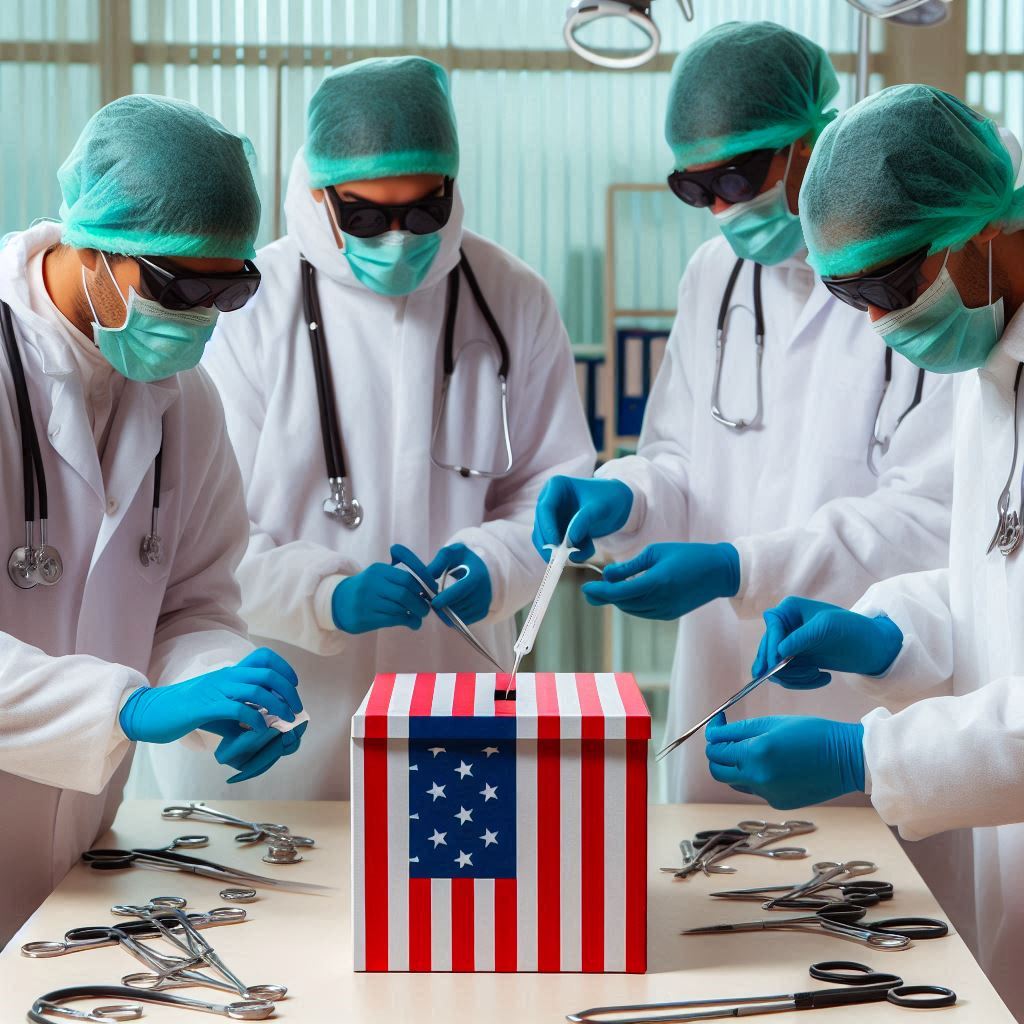
Photo by AI

For decades, America’s democratic process has shown signs of decline. On November 5, 2024, that decline may have reached a fatal turning point. Donald Trump was re-elected as President, marking—some would say—the final blow to a weakened democracy, neglected by its stewards and estranged from its founding principles.

Three pillars are essential for democracy: (1) a transparent, fair election process, (2) qualified candidates, and (3) an informed electorate, capable of choosing wisely. Yet, in today’s climate, who genuinely trusts the judgment of the American voter?

Consider this: The stock market is booming, unemployment is at a historic low, and gas prices are stable. The Biden administration was handling critical issues from Middle Eastern conflicts to Russian aggression against Ukraine. But in this era, good governance and stability didn’t win the day.

Trump’s victory stunned many, especially with his support among white women—53% of whom preferred Trump over Harris, despite his controversial record. These female voters chose a candidate from a party poised to limit their rights, including access to abortion. How did we arrive here?

Leading up to election night, the media portrayed Trump’s campaign as a dwindling force, with sparse rally turnouts and low energy, contrasted by the enthusiastic crowds at Kamala Harris’s events. Yet, in the end, reality defied expectations. Were these rallies misreported, or did the media miss the sentiment driving Trump’s base?

For those disappointed by the outcome, here’s a light-hearted note: maybe it’s time to book a one-way ticket before January 20, 2025. Think Liz Cheney, Robert De Niro, Jimmy Kimmel, Hillary Clinton, and others at odds with the new direction of our country.

Hitler’s rise in 1933-34 has long fascinated historians. He exploited public discontent, channeling German frustrations into loyalty to his cause, much as Trump does today. As we brace for the next four years—or more—it’s clear that we are living in historic, if challenging, times.

National Election Forecast: Dark Clouds and Stormy

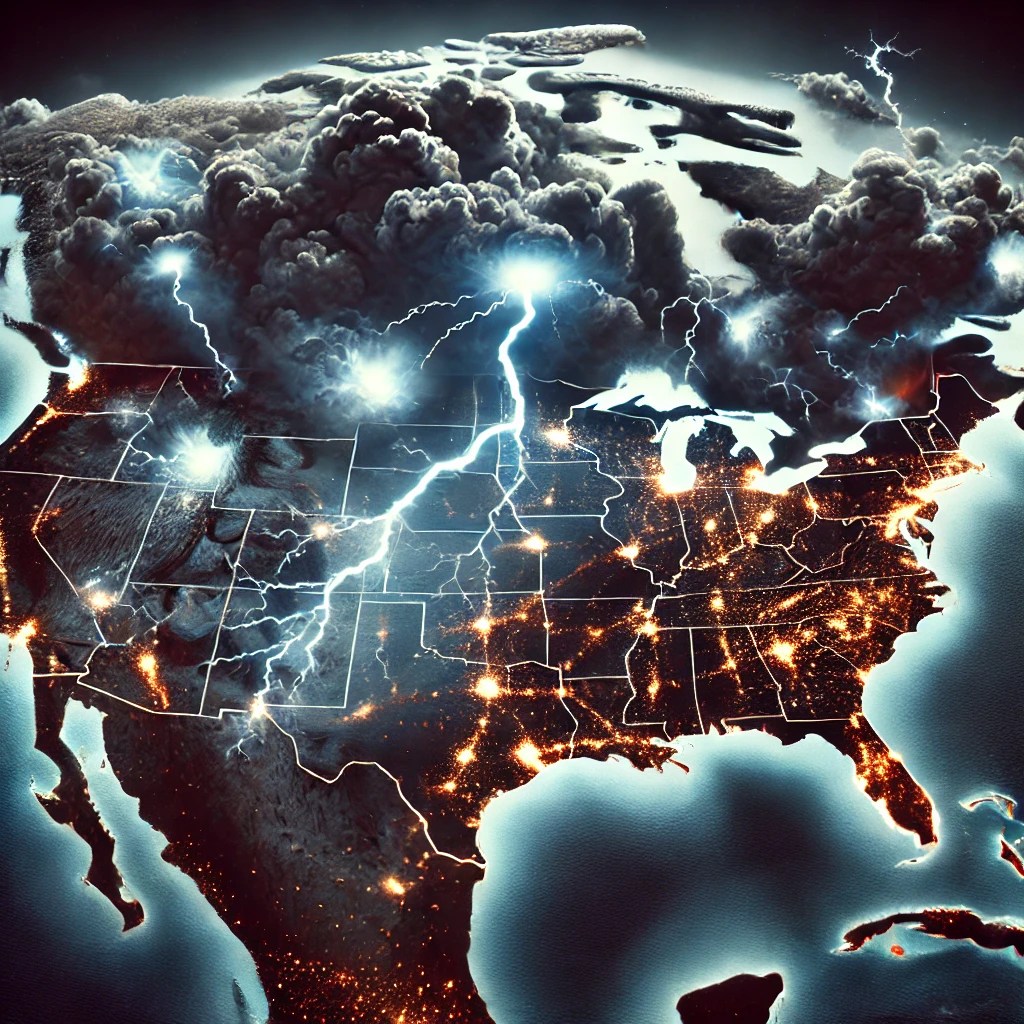
The best possible result from election day would be Kamala Harris winning the popular vote by greater than 4% and easily winning the electoral college. If that doesn’t happen, expect another 60 to 90 days of political turmoil from lawsuits, appeals, allegations of election fraud and sporadic acts of violence that will surpass the chaos of January 6, 2021.

***

I don’t need polls to tell me the definite “Losers” in this election: civility, truth, integrity, candor and self-respect.

***

This is the 18th presidential election of my lifetime. I don’t remember anything about my first two elections (Dwight Eisenhower in 1952 and 1956.) Certainly a different time regarding morals and acceptable behavior in politics in my youth. For example, I don’t think that a candidate who was found liable for sexual assault or being a convicted felon awaiting sentencing, would even get a whiff at being a candidate for national office in 1960.

***

If Kamala loses, I expect to read countless articles and criticisms on how she ran her campaign. Based on my observations, she ran a fairly positive campaign that exhibited a lot of enthusiam and energy.

***

Now we leave it up to the judgement of voters… why does this make me so apprehensive and discouraged?

Rhetorical Question??

Interesting question or admission from Fox News host Bret Baier in his “debate” with Kamala Harris yesterday…

At one point, Bret Baier asked Vice President Harris what she made of such a large number of Americans expressing support for former President Trump, while the two candidates remained largely close in polling, asking her, “Are they stupid?”

Pigskin Punditry

From my couch seat, I must admit that I find college football to be more entertaining and interesting than watching professional football.

***

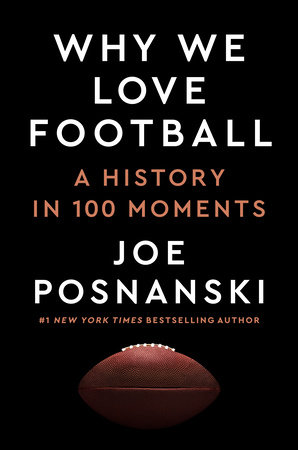
I read and enjoyed Why We Love Football: A History in 100 Moments by Joe Posnanski. Here is my quick review of the book:

Brief capsules (1-4 pages) of 100 pro, college and high school football moments that makes the sport special. Five of the 100 moments were about the Philadelphia Eagles: 1. Chuck Bednarik’s hit on NY Giants Frank Gifford; 2. Fans throwing snowballs at Santa; 3. Miracle at the Meadowlands (Herman Edwards returning late game fumble vs Giants); 4. DeSean Jackson returning late game punt vs. Giants; and 5. Philly Special from the Super Bowl game vs. the Patriots.

There are a lot of great stories, some deserving of additional length and elaboration. For this football fan of many decades, it was a quick nostalgic trip through my memories of memorable football experiences.

I would be interested in reading his similar themed book on baseball based on how I enjoyed this work.

***

If Deshaun Watson of the Cleveland Browns tried out as QB for the University of Texas, he might make fourth string.
***

Cleveland could be a three point underdog if they played Texas.

***

Nick Sirianni has not made many friends among the local and national media or the football fans of the Philadelphia Eagles. There are calls to fire Sirianni now and not let him finish the season. But who would replace him? Is there a “coach in waiting” on the Eagles staff? Some experts are touting Bill Bellichek but I think he is an awful fit for the football culture in Philadelphia. I expect with the talent and relatively easy schedule the Eagles have, they should make the playoffs. If they don’t, then let’s revisit Siranni’s tenure in Philly.

***

I read an article by a Temple alumnus who feels that the university should terminate its college football program because of the very poor on-field results and the lack of support and attendance from students, alumni and football fans. I concur. I also think that Rutgers University football should take a step or two back. I am not at the point where they should stop playing football, but they should consider competing at a lower level. I am not sure what football conference is appropriate for the school, but the Big 10 was and still remains a gigantic leap of faith. Possibly the greatest challenge for Rutgers football is finding a quarterback that you can build an offense around. In the 30–40 years that I have been watching Rutgers football, I can only recall maybe two, maybe three quarterbacks, who were good. The rest have been largely mediocre or awful. I recall many years ago being at a high school football game where a Rutgers coach was scouting for a quarterback. I did not think that any of the quarterbacks playing on the two teams were good enough to be recruited for a major college football program and expressed that to him. I made a suggestion to the coach about another local player who did wind up playing at a Division I school at quarterback. I hope that the Rutgers scouting program has improved greatly since that time.

***