The CNN anchor (Jake Tapper) then played video from the shooting in which someone was heard calling Renee Good “f*cking b*tch” after ICE agent Jonathan Ross, fired at least three shots.
“Is that Agent Ross’s voice calling Renee Good a f*cking b*tch?” Tapper asked.
“I can’t determine which one it is, but it could be, sir,” Kristi Noem replied.
I have made previous year end predictions with modest success: 2023 predictions, 2024 predictions, and 2025 predictions. Some of my predictions are based on reason and some are based on hope and some tongue in cheek..
The world as we know it will change dramatically as AI advances and credible evidence of UAPs accumulates. The most profound disruptions will affect what we believe we know about science—particularly physics—and religion.
Kaitlyn Collins of CNN will try to secure the first interview with an ET.
Donald Trump will leave office by the end of 2026, ostensibly for health reasons.
A market correction of roughly 25% will occur in early 2026. A modest rebound will follow later in the year, but it will not recover the initial losses. AI will fail to deliver the financial returns many corporations expect, and large investments will produce disappointing profits.
By the end of 2026, unemployment will rise to between 5.5% and 5.8%.
Continued global distrust of the United States will push allies toward deeper economic and strategic alignment with China. Within three to five years, China—not the U.S.—will be the dominant economic, business, and political power. The U.S. will become an even greater political pariah, particularly if it engages Venezuela militarily or continues to inadequately support Ukraine. Should Ukraine be forced into a highly unfavorable settlement with Russia, it will represent a diplomatic and military defeat for the United States greater than Vietnam, with longer-lasting consequences.
Fear of major losses in the November 2026 midterms will trigger a reinvigoration of Republican members of Congress. Many current Trump administration cabinet members will be fired or pressured to resign due to scandal or incompetence. Congressional Republicans will withdraw institutional protection from failing officials.
Rising ticket prices and escalating sports-network subscription costs will provoke a fan backlash, reducing attendance and interest across major sports. Fans will increasingly feel that on-field and on-court performance does not justify the expense. ESPN, in particular, will regret its deal with WWE.
Taylor Swift will marry Travis Kelce. Tabloid reports of separation and divorce will soon follow.
Democrats will regain control of the House in November 2026, though by narrower margins than currently predicted.
Gun violence will continue unabated. Regardless of how horrific individual events become, no meaningful gun-control legislation will be enacted.
No Super Bowl celebration parade down Broad Street in Philadelphia in 2026.
Yearly Social Security increases are not keeping up with increasing rise in inflation. The senior citizen constituency will become an important political force in 2026 and 2028, one that the Republican Party can no longer be assured of their support.
“I’m as mad as hell, and I’m not going to take this anymore!” —Howard Beale (Peter Finch), Network (1976)
WTF
Pete Hegsmith, meet Heinz-Wilhelm Eck.
Oberleutnant Heinz-Wilhelm Eck was a German U-boat commander who, in 1943, ordered his crew to machine-gun the survivors of a Greek steamer they had just sunk. Tried by the British in 1945, he was convicted of war crimes and executed.
One might imagine that the Secretary of War—and the uniformed brass surrounding him—would possess at least a passing acquaintance with the Hague and Geneva Conventions and the protections afforded to shipwrecked survivors. But apparently not. Instead, we are offered the “fog of war” as a catch-all excuse for killing helpless castaways, as if confusion somehow ennobles idiocy.
In my lifetime, Presidents have made some ghastly cabinet appointments—some incompetent, some malevolent, some simply stupid. The current administration appears determined to check all three boxes with gusto.
Sleepy Joe
Not long ago, pundits and political Cassandras wrote breathless tomes about President Joe Biden’s alleged cognitive unraveling. Democrats engaged in public self-flagellation, blaming one another for not confronting his fading vigor. Republicans snickered with schoolyard delight about his age and apparent frailty.
The ink is scarcely dry on those volumes, and yet one hears comparatively little about the mental and physical disarray of Donald J. Trump.To their perverse credit, Trump and his entourage are not bothering to hide anything. The public has front-row seats to his naps during cabinet meetings, his deranged social-media dispatches, and his endless stream of misstatements delivered with the confidence of a man who has never troubled himself with facts. His sneering insult at a female reporter—calling her “piggy”—barely registered as a scandal, landing with all the outrage of a damp tissue dropped on a sidewalk.
Americans are apparently meant to sleep serenely knowing that a man of Trump’s “unmatched intellect, tireless stamina, and unimpeachable judgment” has his hand on the nuclear button. Sweet dreams.
Epstein Files
The furor over the Epstein files has quieted to a dull hum. Every day, whether through Machiavellian design or sheer gonzo incompetence, the Trump administration generates enough scandal and spectacle to bump Epstein to the back pages.
Most Americans understand perfectly well what Trump may fear in further disclosures. Yet a sizable portion of the MAGA faithful will excuse anything—anything—no matter how sordid. Trump was found liable for sexual assault and it barely dented his presidential campaign.
As for me, I have exhausted the lower bounds of my opinion of Donald Trump. There is nothing—absolutely nothing—he could do that would surprise me anymore. His behavior long ago slipped the surly bonds of shame.
Was Tuesday, November 4 a political turning point—something akin to the Battle of Midway in 1942? Early in World War II, the United States absorbed one devastating blow after another, beginning with Pearl Harbor and continuing through a string of losses across the Pacific. Then came Midway: a battle whose full significance wasn’t immediately recognized, but which, in hindsight, marked the moment when momentum quietly shifted. The war was far from won, but the tide had stopped running entirely against the United States.
It’s tempting to wonder whether this week’s Democratic victories in New Jersey, Virginia, California, New York City, and elsewhere represent a similar inflection point. American politics in recent years has felt like a series of shocks and retreats for Democrats and for voters who oppose Donald Trump. And like an adversary who seems immune to normal political gravity, Trump has survived scandals and crises that would have ended the careers of most public officials.
Whether these election results signal a broader reversal of fortunes—or merely a brief pause in the storm—is impossible to know. It’s not hard to imagine Trump and his allies resorting to increasingly extreme measures to influence or undermine next year’s midterms. As with Midway, the meaning of this moment will only become clear in retrospect. For now, all we can say is that the political seas may be shifting, and time will tell in which direction they flow.
In professional wrestling parlance, a “heel turn” occurs when the heroic figure (the face) does something unexpectedly cruel or out of character, transforming into a villain.
In a recent Ryder Cup tournament—where U.S. golfers compete against their European counterparts—the American crowd became so boisterous, rude, and insulting that several European golfers said they would never return to the United States. Rory McIlroy, one of the world’s top players, said he and his wife endured personal insults and even had drinks poured on them.
Years ago, the U.S. brand was that of the world’s leading democracy. Now, foreigners see chaos in the manhunt and detention of immigrants and the deployment of soldiers in major U.S. cities. We are viewed as selfish and destructive, especially in light of new tariffs. I don’t see a “face turn” for America anytime soon.
Ironically, Marjorie Taylor Greene seems to be attempting her own heel-to-face transformation—saying and doing things that suggest a rebranding effort, however implausible.
The arrogance of Pam Bondi testifying before the Senate oversight committee reminded me of certain high-ranking Nazi officials at the Nuremberg Trials—lying and obfuscating to save themselves.
Can one win the Nobel Peace Prize while presiding over a civil war?
I agree with Jessica Tarlov, the moderate voice on Fox News’ The Five, who expressed surprise that there hasn’t been a stronger national reaction to ICE’s actions and the deployment of soldiers to “blue city” locations. My sense is that the Baby Boom generation—now mostly passive—would have been far more disruptive if these events had occurred 40 or 50 years ago.
What could possibly go wrong sending the military and National Guard into U.S. cities? Remember Kent State?
There’s growing fury over the pending release of the Epstein files. Many believe Donald Trump will be prominently named among those accused of sexual misconduct with underage girls. I confess to some cynicism: if such evidence emerged, the Republican Party and MAGA movement might simply try to lower the age of consent.
Our inability to have children has been my wife’s and my greatest life regret. Yet, given how American culture and politics have deteriorated, that regret feels less sharp. Perhaps it was a blessing.
I spend much of my time reading or listening to financial analysts about the current and future state of the U.S. economy. There’s no consensus. While some investors thrive in the stock market, many Americans are struggling with rising costs for food, health insurance, prescriptions, and other essentials. Trump’s tariffs are beginning to bite. As a senior on a fixed income, I know I’ll have to tighten my belt in 2026.
While I’m not happy, I feel great sympathy for those in their 20s and 30s who are trying to build careers under the shadow of artificial intelligence. They must now question the value of a college degree: Is the time and money worth it? The average first-time homebuyer is now 38 years old.
If someone is a struggling comedian or athlete, I’d understand their choice to perform at Saudi-sponsored events. But most of the entertainers and athletes going there are already wealthy—well-positioned to follow their conscience and decline the money.
I once dismissed talk of “blue-state secession” as fanciful. Now, I’m not so sure.
As Mother Jones editor Clara Jeffery recently wrote:
“So far this year has been marked by a collective action problem. Media conglomerates, law firms, universities, banks, CEOs—too many powerful institutions have failed to meet the moment. That’s why people across the country, desperate for pushback against Trump’s autocracy, have embraced Newsom’s redistricting plan. With Trump provocatively sending troops into blue cities, and using rescission and shutdowns to claw back funds from blue states, it’s time to turn the tables. Soft secession, powered by the ambitions of blue-state governors, could become the proving ground for a new confederacy. Hopefully the threat of CalExit or a new Union will be enough. But that such extreme measures might be necessary to ensure that American democracy shall not perish from the earth is becoming more self-evident with every passing day.”
I once thought the Constitution, the rule of law, and basic common sense would protect this country from political chaos, the way the French believed the Maginot Line would shield them from invasion in 1940. The French were wrong—and so was I. What I did not anticipate was the near-total surrender of many corporate leaders to the political pressures of the Trump administration.
The word “hero” has been so cheapened in the past eight years that the bar hasn’t just been lowered—it’s been buried underground.
Before his death, I knew little about Charlie Kirk beyond a handful of YouTube clips where he “debated” college students. His philosophy struck me as shallow, reactionary, and hostile to nearly every step of progress made since the 1960s—civil rights, women’s rights, gay marriage. To me, he seemed like this generation’s David Duke.
As much as I would love to be a historian looking back at this moment from 20 or 30 years in the future, that’s exactly how much I despise living through the chaos in real time.
Strangely enough, comedians have become the most responsible and courageous voices in these perilous times, while many of our politicians and representatives play the role of clowns.
Now, with Jimmy Kimmel’s indefinite suspension, we’ll see whether the promised economic and cultural backlash against Disney, ABC, and their affiliates materializes. As for Kimmel himself, I would not be surprised if he decides not to return at all to his show.
I’d say this analysis from outside the United States and about the United States is dead on and reflects my thinking about the end of the American dream. I don’t think things will change, certainly not for the better. My sense is that there will be a “Civil War” in this country and it probably has already started.
The United States is a dangerously volatile country. There has always been a palpable element of derangement in its social order. It has a record of assassinations and attempted assassinations, and a perennial problem with violent crime which is matched by almost no other first world country. But what is happening now feels different: apocalyptic and inexorable. And the reason it cannot be stopped is that the people, both the population at large and those who are supposed to be in charge, do not want it to stop whatever they may claim.
If they sincerely wanted to put an end to it, they could do so in a moment of reasonable consensus. But they have consistently resisted any attempt to enforce standards or controls on the virulent social media activity which is undermining the real freedoms they revere. So the tide of what would once have been called “extremism” – the incitement of violence and the perpetration of blind hatred – are now the accepted currency of political discourse.
Janet Dailey The American Dream is ending in a Psychotic Breakdown The Telegraph
At 73, this Labor Day weekend makes me wonder: How many summers do I have left?
I don’t miss the heat or humidity of summer. I miss the sunlight—the early sunrises, the lingering evenings. A metaphor, perhaps, for life’s stages.
Leisure reading is fading. Only 16% of Americans read regularly for pleasure—down from 28% in 2003. In the UK, just 41% of parents read daily to toddlers, compared with 64% in 2012.
I wandered into a Barnes & Noble last week, my first visit in over a year. Chairs and cozy nooks were gone—B&N is all business now. I left without a book. Even their sale couldn’t entice me; I balk at paying more than $20 for a hardcover.
On my nightstand:
King of Kings: The Iranian Revolution—A Story of Hubris, Delusion and Catastrophic Miscalculation by Scott Anderson
Miracles and Wonder: The Historical Mystery of Jesus by Elaine Pagels
Haruki Murakami once wrote:
“If you only read the books that everyone else is reading, you can only think what everyone else is thinking.”
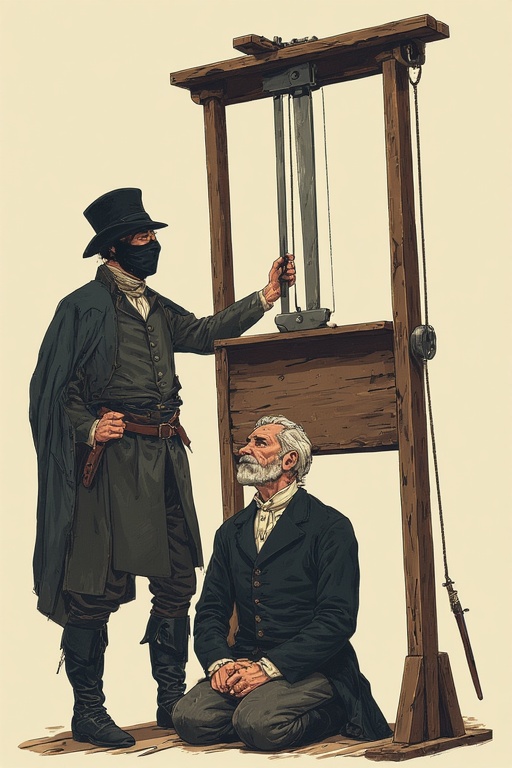
Mortality hovers. I don’t fear death, but I do fear dying. Sometimes I feel like a man with his head beneath a guillotine, staring at the blade. I’ve been fortunate with health, but around me I see friends whose luck has run out. The blade will fall on me too.
Meanwhile, the U.S. falters. Ineptitude, cowardice, hubris—displayed daily. A recent New York Times photo showed India’s Modi with Putin and Xi, a tableau of shifting power. It captured the failure of American diplomacy and leadership. One man bears much of the blame: Donald Trump. As summer declines, so does America as it retreats further into the darkness.
I’m amused by Trump’s reluctance to release the Epstein files—as if there’s anything left that could truly shock us. His behavior has long been an open book. At this point, what more could possibly lower public opinion of him?
Replace Jerome Powell as head of the Federal Reserve? Makes about as much sense as firing the fire department while a building is still on fire.
The CEO and the HR Director of Astronomer were caught on a kiss cam in a romantic embrace at a Coldplay concert. The CEO is married with children and the HR Director is recently divorced. Due to the public and rather unusual nature of the disclosure of the relationship, this story is all over social media and other news outlets. My guess is that the HR Director will either resign or be let go but that the CEO will keep his job after publicly confessing his infidelities and promising to reform.
Though I’m not a late-night viewer at my age, I recognize that some of the sharpest political and social commentary in recent years has come from the desks of Stephen Colbert, Jimmy Fallon, and especially Jimmy Kimmel. The upcoming end of The Late Show with Colbert marks more than just the close of a program—it signals the fading of a cultural force that once helped us laugh through the chaos.
Alzheimer’s research in peril. Will Trump budget cuts set progress back by decades? President Trump wants to cut the budget of the National Institutes of Health by 40%. I would think that a man approaching 80 years of age and reputedly evidencing signs of dementia would want enormous amounts of money directed to finding a cure or treatment and quickly. For all the 65 and over voters who voted for Trump last year, here is what your support is getting you – – the possibility of a horrible ending of your life. If you have ever had a family member or friend who had Alzheimer’s, you realize how tragic and devastating this disease is.
Catholic Bishops Try to Rally Opposition to Trump’s Immigration Agenda President Trump got 64% of the white Catholic vote as many bishops and priests urged support for him primarily to overturn Roe v. Wade. My admonition to the bishops: you reap what you sow. Too late now that the Trump Genie is out of the bottle. Your support helped uncap the bottle.


 Esot-eric