If you look back at your life and have no regrets, that should be your biggest regret.
***
In the past, character made heroes; today, heroes are made of characters.
***
Old adage: “The only thing necessary for the triumph of evil is for good men to do nothing.”
Current adage: The only thing necessary for the triumph of good is for evil men to do nothing.
***
True love makes unbearable life circumstances bearable.
***
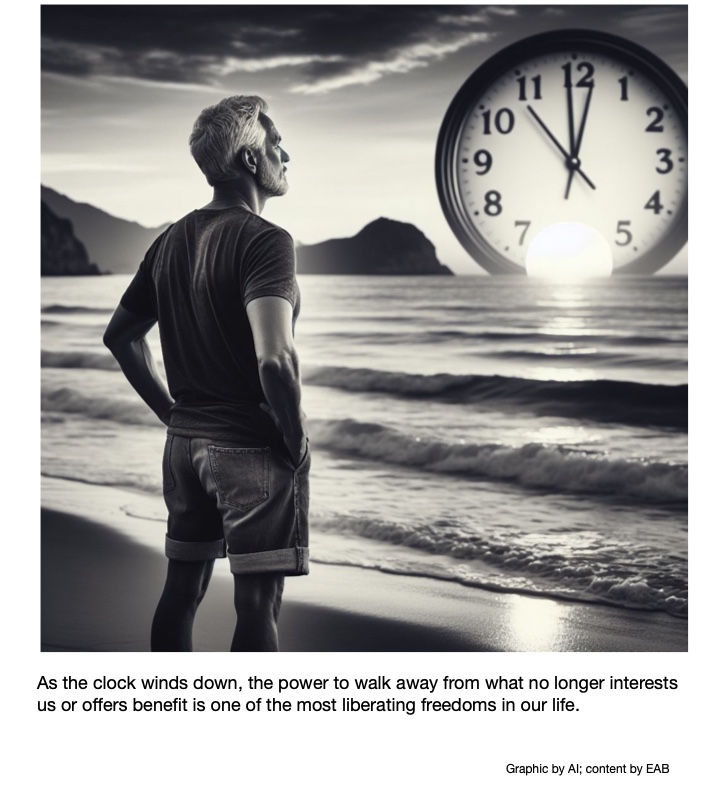
The bucket list of old age often reveals not future dreams, but past joys now out of reach.
***
I’ve reached the semifinals of the senior musical chairs championship—a game where the chairs disappear, the music dies, and the last one standing still loses… just more slowly than the rest.
***
My pickleball mantra (thanks to Toby Keith)
I ain’t as good as I once was, but I’m as good once as I ever was
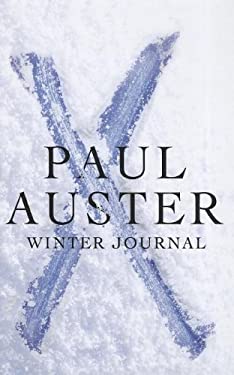
I first read this book in 2012 when I was 60 years old. It had a profound effect on me then. My fears of getting older were starting. Reading this book at 72, I have a new appreciation for Auster’s messaging on aging, death and memories. The tale is sobering, not depressing. Auster had an interesting story to tell about his life’s experiences.
“Winter Journal” is a deeply personal memoir published in 2012, written when Auster was 64 years old. Auster begins by documenting his bodily sensations and physical experiences, starting with a detailed account of his mother’s death and moving through various moments of his life. He explores personal traumas, near-death experiences, and significant physical memories that have shaped his understanding of himself.
The memoir covers several key themes: mortality, aging, memory, and personal history.
List of my favorite excerpts below:
Your bare feet on the cold floor as you climb out of bed and walk to the window. You are 64 years old. Outside, the air is gray, almost white, with no sun visible. You ask yourself: How many mornings are left?
Nevertheless, there are things that you miss from the old days, even if you have no desire to see those days return. The ring of the old telephones, the clacking of typewriters, milk and bottles, baseball without designated hitters, vinyl records, galoshes, stockings, and garter belts, black and white movies, heavyweight champions,… basketball before the three-point shot, contempt for authority.
Your birthday has come and gone. 64 years old now, inching ever closer to senior citizenship, to the days of Medicare and Social Security benefits, to a time when more and more of your friends will have left you. So many of them are gone already – –but just wait for the deluge that is coming.
That is why you will never forget these words, which were the last words spoken to one of your friends by his dying father: “Just remember, Charlie, “he said “never pass up an opportunity to piss.” And so the wisdom of the ages is handed down from one generation to the next.
Joubert: The end of life is bitter. Less than a year after writing those words, at the age of 61, which must’ve seemed considerably older in 1815 then it does today, he jotted down a different and far more challenging formulation about the end of life: One must die, lovable (if one can.)
We can deal with this anxiety individually by living a day at a time, being present to what the day has to offer. If there is no sickness or any other problem, we can enjoy the day. Some people project themselves into a debilitating future and live in the anxiety of imagined woes to come.
***
I don’t care what the calendar says. I have a strong youthful component in me, and often that person in his 40s seems to inhabit my body. Even when I look in the mirror, I sometimes manage to see more of the 40 year old man than the one who is 76. I’ve always been a strong believer in illusions.
***
Simple, ordinary activities can improve your health and ease the black bile of melancholy that afflicts many older people. Take that walk in the woods, look for a sparkling lake or river, and don’t spend much time with negative people. We don’t realize how important it is to rely on nature for our health and mood, to think about the kind of people we have around us, and to understand the value of gardens and trees.
***
The older years offer a perfect time to reflect more often, more deeply and more seriously on these important aspects of life. Of course, we need to begin this kind of reflection in our youth, but it can reach its depth in old age. Being part of a culture that has lost interest in profound ideas and intense reflection on experience makes aging more difficult.
***
Being an elder not only helps other people find guidance and wisdom, but it also gives the older person added reason for living. It may be the final act of a generous and thoughtful life. It is service taken to the last moment and done with a special authority and dedication it helps if the older person consciously adopts the role of elder. I could say from my own experience that a certain point people begin to treat you as an elder and look for benefits that you may be able to give them.
***
The poet Maya Angelou once wrote: “I’ve learned that people will forget what you said, people will forget what you did, but people will never forget how you made them feel.” Thus legacy is a matter of the heart. It’s not an idea but a feeling connected to largely invisible people, it’s a special way of loving, and if there is anything that could make growing old more pleasurable, it would be to discover new ways to love.
***
Reflection – – the first stage for an ordinary person is reading or listening to someone else offer an understanding of events. You listen or read and make those ideas your own in your own way. The second stage of reflection is conversation. You make a point to speak with people who have something worthwhile to say and with whom you enjoy speaking. A third stage of reflection is to find some effective mode in which you can express yourself it could be writing of various forms – – journals poems, essays, fiction…
***
My Review of the Book
I am a bit of a cynic. Books like these discussing getting older are often written with the goal to alleviate the concerns and fears of elderly people as they approach death. The objectives when you get into your 70s and 80s are to find interests and things that will motivate you to stay alive or at least maintain your enthusiasm for healthy living.
While one can try to maintain a healthy attitude about life in your 70s and 80s, what’s more important are the states of your mind and your body. It’s critically important that you are not alone and that you do have some type of social network that hopefully includes family and friends.
It’s a comforting book with some useful bromides about topics like overcoming melancholy and leaving legacies. I don’t think there is one philosophy or set of rules to follow in life after 70. One of the things that I try to adjust to is the declining control I have in the direction of my life. I don’t have the physical, intellectual or mental energy I had a year ago and I expect that to continue to decline.
The worst personal rejections come when those who meant so much to you show how little you meant to them.
Relationship neutron bomb—I survive but the friendship, memories, interest and good feelings don’t.
“How long have you known him? “Fifteen years.” “What’s the one thing we should know about him if we offer him the job?” She lowered her head smiling. Pausing for a moment she then stared hard at the questioner and warned, “He doesn’t suffer fools gladly.”
At the precipice, my muscles and sinews struggled mightily to pull up the rope. With each slight pull, I felt a great weight at the end of the rope. With one last desperate pull of strength, I was able to reach the end of the rope. To my shock, there was no one, nothing attached. I had struggled desperately at great effort to save what I thought valuable, but it did not exist, it was imaginary.
Photo by Dids-Pexels
Her silence to my inquiry communicated nothing but told me everything.
In my youth I read a book about Vince Lombardi, the fabled coach of the Green Bay Packers. Lombardi was able to motivate a mediocre or average team to world championships in pro football. One of his favorite motivational methods was to urge his team towards “the big push” by exerting more effort.” Lombardi employed this motivation towards the end of the season when winning games were critical if they were to get into the playoffs.
When a class paper needed to be written in a few days or having to cram for upcoming exams I used to amuse my college classmates by solemnly announcing that it was time for “the big push.” I also used this as a rallying cry in a tightly contested sporting event to finish strong at the finish. This was useful at the end of a 5 or 10K race so I could summon the energy to sprint not jog at the finish line. Partly motivation, partly advisory, “the big push” was my mantra when there was little time, and significant effort needed to be extended as an assignment, a project, a finish line or objective was imminently due.
I remember blearily typing a college paper (this was before computers and word processors) the night before it was due. My fingers cramped up from all the typing and my brain froze from fatigue. The words blurred into the paper and I could barely keep my eyes open. I learned my lesson. (No, reader, it was not to wait until the last minute but to find a girlfriend who could type my papers a lot faster than I could.)
Photo by Vlad Chetan-Pixels
The mantra followed me into my career. How many times sensitive projects and assignments required me to expend a lot of effort and time at the end to successfully complete it? I confess that the mantra often was a result of procrastination on my part.
One of the benefits when retiring is that the corporate big push disappears. No work deadlines! No demands from bosses to be met! No late and hurried meetings! No changes at the eleventh hour or rushing to edit/revise a spreadsheet, presentation, flowchart or report.
So does “the big push” disappear at retirement??
The answer is “No.” In fact the mantra becomes more incessant, more personal and more time sensitive.
In our younger days, our efforts were largely to fulfill or meet the expectations of others (employer, client, manager). The target dates for completion could be arbitrarily changed. When we stop working, our focus is on fulfilling our personal dreams and goals. Maybe there were things we put off while working and did not have the time to do. Along with a Medicare card and social security check, retirement provides a mental bucket list of plans and dreams to get checked off. For many of us, this list includes travel, cruises, adventure, relocation, endless golf and pickleball, philanthropy, and more quality time with family, children, grandchildren and friends.
Regrettably there is no guarantee particularly as one gets older that the vagaries of time, good health, capacity and circumstance won’t interfere with our plans. For example, my stepfather intended to fish and live down the shore when he retired. Unfortunately he had health issues with his heart and with cancer and he never fully realized his dreams dying only a few years after his retirement.
My closest friend’s parents died relatively early. He is obsessed with living as fully as he can daily. He doesn’t need to say the bigpush mantra, he lives it. Life and experience have taught him the uncertainty of guaranteed future time and opportunity.
Many of us want not only to pursue our pleasures and hobbies but to leave a legacy, whether it is a result of our charity or community efforts or to serve as an example to our children or grandchildren. This is our big push, indeed it may be our final big push. Let’s not look back at this time with regret but with satisfaction that we used the time and opportunities we had to enjoy life and make life enjoyable and better for others.
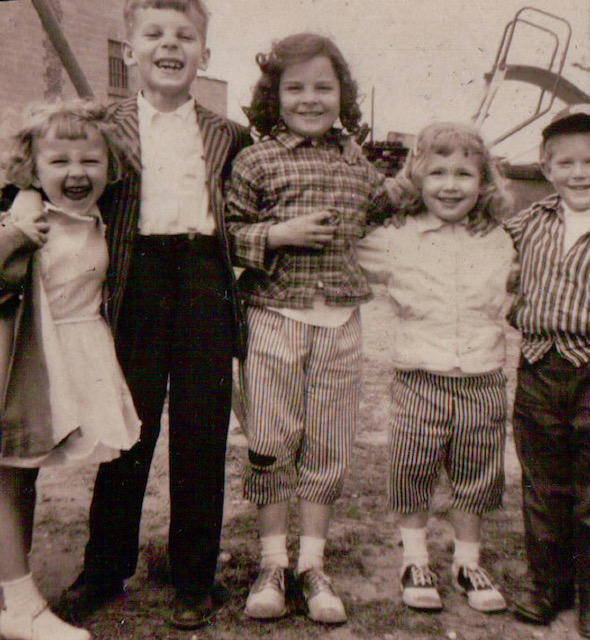
From left to right, Sandra, Eric, Joanne and two other unnamed cousins
Feeling wistful, ruminative and a bit thankful…
If life is a train ride, my station may be coming up soon. Regrettably most of us don’t know when our ride will end. A few friends and family members have disembarked too early, leaving me sitting sadly alone in the train car.
All of us have an “aha” or life changing moment. Mine occurred on the morning of February 14, 1960 when I was told about my father’s sudden death. At age 7, I learned about impermanence, self reliance and responsibility. Some people never receive those insights no matter their age.
I have not measured my life’s success based on my net worth, corporate executive titles or possessions I owned. Simply I wanted to be the best husband, son, brother, uncle and friend I could be. Largely that meant I needed to be “present” when someone needed help or encouragement.
My 44 years of marriage to a wonderful woman represents the best decision and greatest commitment of my life. The joy and love from this woman more than offset any disappointments, failures, and travails I have experienced. Life does not always offer an easy road but I am grateful for my constant and supportive companion.
Some of my life’s biggest disappointments, socially and in business, were as a result of women. This is not an indictment of women as much it shows my lowered expectations of the words, promises and actions of my brother man.
Coincidentally, but not surprising, my biggest supporters and influencers, in my youth, were women. Besides my wife Chris, my sister Sandra was a source of encouragement, love and motivation. Sandra’s death twenty seven years ago is my greatest personal loss.
Two biggest trends in my lifetime: (1) the explosion, breadth and advancement of technology in business and personal life and (2) the disintegration, coarseness and division of our politics and civility.
I have no heirs but I am sad about the type of world that my generation is leaving to those generations behind us. We’ve left them problems with government debt, climate change, rebuilding infrastructure, improving public education etc. Those are issues that we should have been focusing on instead of building walls, creating conspiracy theories and disputing fair elections.
I was looking at some pictures of birthday parties for me or cousins when I was 6 or 7. The black and white pictures were a bit faded, many of my family in the photo are deceased but the memories remain. Was there anything more exciting for a young boy or girl than to look forward to a birthday party with friends and family?
The basic evidence of humanity among people is simply sharing a smile.
I’ve lived 25,202 days. That’s a lot of opportunities to appreciate sunsets, sunrises, great conversations, varied travel experiences, meet new friends, and make social and business contributions. Success and appreciation of life are often measured by how close our results = opportunities.
Sign of the Times: We need a Facebook prompt to remember and celebrate a friend or relative’s birthday.
Why is it that despite much improved personal training and sports medicine that today’s pitchers can’t go beyond five innings and basketball players can only play half a season?
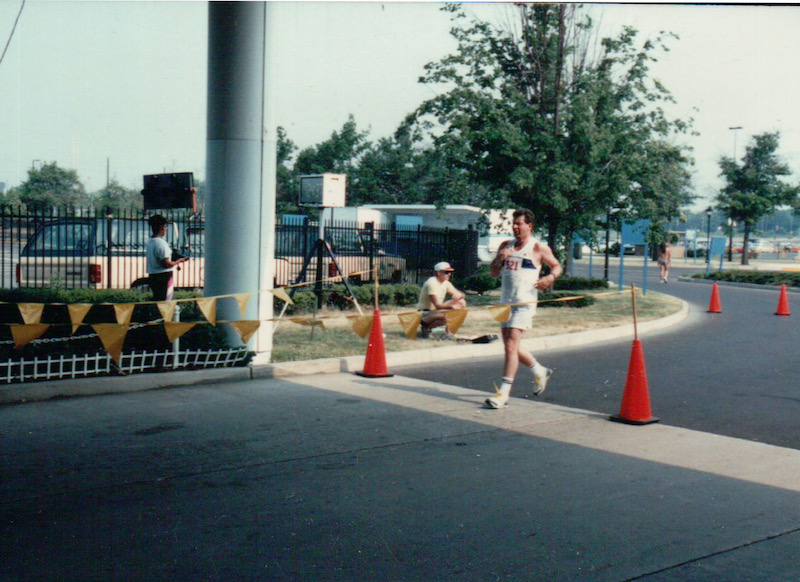
In my younger days, I ran 5K and 10K races. When I was able to see the finish line from a distance, I needed to make a decision. Do I finish the race strong with a last minute spurt or do I comfortably finish at a relaxed pace? My decision was not based on winning any medals or prizes as I was a “back in the pack” runner. My decision was personal, primarily based on how much energy I had left in my legs and what I wanted to accomplish in terms of my own goals. I mostly competed with myself and was interested in seeking improved race times.
As one gets older in life, there are a number of finish lines that need to be crossed. Generally, the first finish line is the end of your career or business. For many, the decision on how we finish that race is not made by them. Some don’t get the opportunity to finish but are pulled aside and told their race is over. The lucky get to finish the race on their own terms and with the plaudits and appreciation of their fellow employees and partners. They leave with a sense of satisfaction of a race well run.
Young people are not concerned with finish lines. They are at the beginning or mid-way point of their race. Time is on their side – – they have the energy, ability and opportunity to run more laps and circle the field if they are so inclined. They are in the early stages of a life marathon with many miles to go.
As I have gotten older, I appreciate that a final finish line may be looming. I don’t know its distance but I sense its presence. There are no mile markers in the final finish line. I still have the ability to decide if I want to walk or jog in my last miles or finish with a burst of speed and vigor. There won’t be spectators to cheer me on. How I finish that race will largely be my decision. There are no medals to win. But there is one more chance to make a difference in my life and maybe someone else’s. One more opportunity to overcome a challenge or make a contribution. One more opportunity to achieve a life well run…





 Esot-eric