Aging: Holding Grief and Gratitude in the Same Hand

Turn and face the strange

Ch-ch-changes

Pretty soon now you’re gonna get older

Time may change me

But I can’t trace time

Changes

Song by David Bowie

Aging has a way of humbling even the most optimistic among us.

Next month I turn 74, and for years I quietly congratulated myself on holding up pretty well. I could still move easily, climb stairs without thinking about it, keep my balance, and stay mentally sharp. On the pickleball courts, I was competing three or four times a week with players much younger than I was. More than a few people kindly told me I looked younger than my age, and I was happy to believe them.

It is easy, when things are going well, to assume the good years will simply continue.

But somewhere in your late 60s or 70s, you begin to understand that aging is rarely dramatic at first. It arrives in increments. A little stiffness here. A slower recovery there. An ache that stays longer than it should. Then one day you realize something that once seemed temporary may now be part of the landscape.

People often describe retirement in three stages: go-go, slow-go, and no-go. The transition between them can be subtle. You do not wake up one morning suddenly old. Instead, certain abilities quietly begin negotiating their exit.

Recently, my right knee decided to begin those negotiations.

After weeks of soreness that I stubbornly diagnosed myself as tendonitis, I finally visited a sports doctor. The X-rays showed moderate osteoarthritis. Nothing catastrophic. No immediate talk of knee replacement. But still, it felt like an announcement: the machinery is wearing down.

For someone who depends on pickleball and walking not simply for exercise, but for emotional balance, that diagnosis carried weight.

With unexpected free time from not playing pickleball, I found myself taking inventory of other signs of aging that I usually keep in the background.

Image by ChatGPT

A dental cap came loose and revealed a badly decayed tooth underneath. At my age, even dental decisions begin sounding like financial planning meetings. A root canal, implant, and crown can cost thousands of dollars, and older people inevitably start doing quiet actuarial math in their heads. How much repair makes sense? How long do we plan for? Younger people rarely think this way. Older people almost always do.

Then there is the mirror.

The thick brown curly hair of my youth has surrendered to gray, thinning strands and a growing bald spot my barber diplomatically works around. The vanity of youth fades eventually, partly by wisdom and partly by necessity. Thankfully, age gives us permission to laugh a little more gently at ourselves.

Sleep has also become an unpredictable companion. I may spend eight hours in bed, but much of it is restless. The afternoons often require a long nap that steals time from walks, errands, conversations, and sunlight. Leg cramps arrive without invitation. Energy has become something to manage instead of something to assume.

My hearing is not what it once was either, likely the accumulated result of decades spent playing music too loudly. I know hearing aids are probably in my future, although I keep hoping technology will improve while prices come down. In the meantime, selective hearing has certain advantages, especially during television news broadcasts.

The larger fear, however, is not physical decline. It is cognitive decline.

My mother spent the final years of her life slowly losing her memory, orientation, and independence. Watching someone you love drift away mentally while remaining physically present leaves a permanent impression. Many people my age carry similar memories of parents, spouses, siblings, or friends.

That experience changes how you look at your own aging.

At 74, I occasionally catch myself wondering whether I am forgetting too much, concentrating less effectively, or slowing down mentally. Some slowing is normal, of course. Aging is not a disease; it is simply life continuing forward. Still, the fear of losing oneself mentally remains one of the shadows that follows many older people quietly through their days.

And yet, perspective matters.

I live among many people my age facing challenges far greater than mine — walkers, surgeries, chronic pain, serious illnesses, loss of spouses, and profound limitations. Compared to many, I remain fortunate. I still have mobility, independence, friendships, and moments of joy that arrive unexpectedly and regularly.

That realization tempers self-pity.

Aging, I am learning, is partly about adaptation. Over the years I have already surrendered running, basketball, and tennis. Perhaps more losses will come. But there is still pleasure in movement, conversation, books, music, laughter, and ordinary mornings that begin without catastrophe.

Pickleball and walking remain especially important to me because they provide more than exercise. They create rhythm, structure, companionship, and peace of mind. Losing some ability does not necessarily mean losing oneself entirely, although it can feel that way in moments of frustration.

Perhaps the real challenge of growing older is learning how to hold gratitude and grief in the same hand.

We mourn what the body once did effortlessly. But we also gain perspective, patience, and a sharper awareness that time is precious. The days matter more because we know they are finite.

David Bowie was right. Time changes us all.

The trick, maybe, is not resisting those changes with bitterness, but facing them with as much grace, humor, realism, and appreciation as we can manage.
Lessons from the Final Moments

We rarely know when we are sharing the last conversation, the last laugh, or the last look with someone we love. Sometimes death announces itself with months of warning; other times it slips in like a thief, stealing a life in the space between heartbeats. Over the years, I have stood at the bedsides and shared the dinners that turned out to be final moments. These are the stories of my aunt, my sister, my stepfather, my mother—and of a Valentine’s Day in childhood that taught me the lesson I carry still: tomorrow is never promised.

Aunt Irene’s Peace

My Aunt Irene was plagued with poor health, especially heart issues in her fifties. She endured multiple heart attacks—just as nearly all her brothers and sisters did, including my father, who died at 35.

For years, Irene feared death, understandably so given her condition and the string of family losses she had endured. Then, one day at a family function, she pulled me aside with an urgency I’ll never forget.

She told me she no longer feared dying.

During one of her heart attacks, she had what the medical profession would call a near-death experience—but to her, it was entirely real. She said she saw and spoke with loved ones who had already passed, including my father, with whom she had been very close. She described it as a place of pure peace, tranquility, and happiness.

Because of that experience, she was no longer afraid—and she wanted me to understand that I should never fear death either. My father gave my aunt his house when her marriage failed and she needed a home for her and her three children. I think she felt duty bound to pass on something that would guide me as I got older.

She died peacefully a few months after sharing her feelings with me.

My Sister’s Ominous Reading

In January 1995, my sister Sandra died at just 38 years old during brain surgery to remove a growing tumor near her optic nerves. The main fear had been the risk of blindness. I don’t recall any great concern that she might not survive the surgery. A few months before the surgery, she and some of her friends had gone to dinner, followed by a visit to a psychic.

The psychic read cards for each of her friends with ease and everyone marvelled and laughed at their future predictions—until it was Sandra’s turn. The psychic’s demeanor changed. She looked unsettled and while staring at the cards said she could not see Sandra’s future. Sandra’s psychic session ended abruptly. I hold no firm beliefs on psychics or their practice but I found this a cautionary tale. Was it coincidence? Or a warning? The unsettling moment stayed with Sandra’s friends long after she was gone.

One Last Look

Two days before her surgery, my wife and I hosted Sandra, her husband, her daughter, and my mother for dinner. Sandra showed no visible fear and instead focused on how long her recovery would take. However I was deeply worried, but Sandra teased me when my wife mentioned I’d gone to Mass earlier that day. I had not been at Mass in years and had no great belief in prayer.

When dinner was over and Sandra left, she got into her car and stared at me for a long, deliberate moment as she drove away. My wife and mother noticed it too. At the time, our greatest fear was that she might go blind; I thought perhaps she was memorizing my face just in case.

We shared that one last look before she died.

My Stepfather’s Last Words

In his final months, my stepfather’s body was ravaged by cancer. He lost 100 pounds, was confined to bed, drifted in and out of awareness, and could no longer communicate. Hospice care became his world.

On his last day, I had to put an oxygen mask on him because the visiting technician was too shaken by his condition to do it. I secured the mask, and to my shock, my stepfather lifted it, looked me directly in the eyes, and asked, in a clear, steady voice, “What’s next?” I was stunned and offered that the mask would let him breath easier.

He hadn’t spoken coherently in months. He was comatose. Yet, in that moment, he seemed alert to fully understand where he was—and what was coming. He passed away a few hours after his last words.

A Fleeting Return

My mother’s final years were spent in an assisted living facility. Dementia robbed her of clarity, recognition, and the gentle temperament she had always carried. Most days she didn’t know me, my sister, or even her best friend of 50 years.

Visits were often an exercise in quiet heartbreak. But one afternoon, perhaps a month before she died, she surprised me. She knew exactly who I was. She spoke with complete lucidity, telling me she was scared, that she missed her home, and that she hated being a burden. She even apologized for her condition—as if she had caused it.

For a brief, shining moment, she was herself again. I thought of taking her home. But within minutes, the light in her eyes faded, the fog returned, and she was gone from me once more, though her body lived on a few more weeks. I remember that I cursed God for what had been done to my mother and to all the other helpless people that I saw in that assisted living home.

The Valentine’s Day Card

In the winter of 1960, when I was seven, my parents were heading out to a Valentine’s Day party. I had made a card for my mother and gave it to her gladly. I had also made one for my father—but I was angry with him for some reason, and I withheld it.

As they put on their coats, something inside me changed. I handed my father his card. He opened it, smiled, kissed my forehead, and said, “I’ll see you tomorrow.”

But I never saw him again. He died that night of a heart attack at age 35.

I have often thought of that moment. Had I let my anger win, the guilt of my last act toward him being one of rejection would have been unbearable. Instead, I learned—at the age of seven—that tomorrow is never guaranteed, and the chance to make amends may never come again.

In all these moments—some peaceful, some mysterious, some unbearably sad—the same truth emerges:
Life is fragile. Goodbyes can be sudden. And sometimes, in the quiet between breaths, there is a chance to speak the words that matter most.

So say them now—while you still can.

Summer Requiem

 “Nobody on the road / Nobody on the beach / I feel it in the air / The summer’s out of reach / Empty lake, empty streets”

Boys of Summer, Don Henley

73 summers have come and gone. How many summers do I have left?

Summer inspires so many remembrances of lost family and friends who shared picnics, swimming, birthday parties and vacations. Though summer fades, my love and gratitude for the joy shared in those moments never do.

Life is what is measured between summers.

The gentle sound of ocean waves softly lapping against the shore calms my heart and soothes my soul.

As summer fades, I find myself yearning for the waning light, the warmth it brings, and the endless possibilities it once promised.

Oh, if only I could capture the memories of my youth—riding a rickety boardwalk roller coaster, savoring the sticky sweetness of cotton candy, stealing glances and shy smiles on the boardwalk, and diving for a spike in a game of beach volleyball.

Summer inspires the beginning of so many love stories. There is no better season to be in love.

I am a child of summer, born under the sun’s warm embrace, comforted by soft breezes that once swayed the curtains as I napped in peaceful contentment.

The Truth, The Truth, You can’t Handle the Truth

And, nobody died in the Holocaust either. That’s the truth. It should happen. Six million Jews should die right now cause they cause all the problems in the world. But, it never happened.”
Roseanne Barr

“COVID-19 attacks certain races disproportionately,” COVID-19 is targeted to attack Caucasians and black people. The people who are most immune are Ashkenazi Jews and Chinese.”“We don’t know whether it was deliberately targeted or not but there are papers out there that show the racial or ethnic differential and impact.”
RFK Jr.

“That [the war in Ukraine] does nothing to protect our borders, and that’s your hard-earned tax dollars. We’re funding them with equipment, we’re funding them with ammunition…Biden’s war in Ukraine, a proxy war with Russia, has depleted our military. Our military is the weakest it has been in decades and decades.”
Marjorie Taylor Greene

“Millions of illegal aliens have stormed across our borders, it is an invasion, like a military invasion. Our rights and liberties are being torn to shreds. Your country is being turned into a third-world hellhole, run by censors, perverts, criminals and thugs.”
Donald Trump

“Rosa Parks didn’t sit in the back, and neither am I gonna sit in the back.”
George Santos

Years, maybe it was decades ago, politicians, public officials, commentators and celebrities were much more circumspect in their public comments and behavior than their counterparts currently. It seems that chronic stupidity and ill behavior go unpunished. Instead, it gains you more poll points from your party’s voting base, gets you invitations to speak on talk shows and can be a stepping stone to having your own talk show or podcast.

In today’s media, stupid is overwhelming smart. Politicians, political commentators and many news organizations lie with impunity. Very few liars and incompetent people are punished or lose their jobs. Maybe the last time something like that happened occurred with Sarah Palin in 2008.

Today we have Marjorie Taylor Greene, Lisa Boebert, Matt Gaetz, Tommy Tuberville, Tucker Carlson, Jim Jordan, George Santos and countless others who are free to lie, slander and exaggerate. The public does not punish them. In many cases, a good portion of the public supports “a narrative” that gives weight to their slanted political, religious, cultural and prejudicial views.

I’m not sure the exact date when public discourse died but I’d say life support was pulled around 2016. That’s about the same time that the political IQ of this country fell into mid two digits. It’s still plunging…

We’re Toast

Coronavirus has killed over 1.01 million Americans. 74.2 million people voted for Donald Trump in 2020. What’s the greatest national tragedy? At least, we have developed vaccines and other medical protocol to control a pandemic. The Trump plague will be with us for decades and will not just affect us but future generations too.

After his testimony at the January 6 Congressional hearing on how Trump pressured him to appoint phony electors, Rusty Bowers, the Arizona House Speaker said a truly remarkable thing. He said that he would vote for Trump again.

Really?

You’ve just testified how Trump tried to override an accurate and legal election result plus you witnessed the storming of the Capitol fomented by Trump and you would vote for him again?

For a man who has witnessed 70 years of American history, these are very depressing times. While advances in technology, medicine and science have largely been mind boggling positive, our national politics, culture, civility, judgment and educational systems have remarkably declined.

We are a country that cannot agree on facts, science, history, truth and the meaning of decency. Civil conversations today? How? We are cursed liked the workers on The Tower of Babel, unable to communicate civilly or constructively. No greater example of this is to watch a session of Congress or a political debate. Or better yet, postings on social media…

So now there is a “wailing and gnashing of teeth” about this week’s Supreme Court rulings? Did you really expect the wisdom of Solomon to emanate from men and a woman appointed by a failed businessman, corrupt politician and reality star? Democrats, liberals and journalists expecting a different result are as naive as the stupidity passed on by the Court.

While I appreciate the calls to vote out pro-life politicians and pack the Supreme Court, to quote Carole King, “And it’s too late, baby, now it’s too late.” You are now at the mercy of a noted judicial scholar and husband of Ginni Thomas and at least four or five others who have an agenda to roll back social and racial justice progress for the past seventy years.

My guess is the current furor over the abortion rights decision will sadly dissipate. There may be some demonstrations and continued expressions of anger and grief. Do I think abortion rights will be the focal point of a national referendum? Maybe. Our national memory is very short. We’ve already largely forgotten the young children massacred at Uvalde. As their dust was scattered in Texas, so was our national attention.

Congress congratulated themselves for passing a paltry gun control bill that was quickly offset by the Supreme Court’s decision to strike down laws limiting guns in public places. So the Supreme Court is taking us back into the 50’s. No, not the 1950s but the 1850s.

I have read a number of books about Nazi Germany from 1933 to 1945. What strikes me is the utter denial of the German people as to what was going on particularly as it related to the inhumane treatment of European Jews and the curtailement of civil liberties for many groups. We seem to be in a similar state of denial. There is no unity. There are very few principles that we agree upon. Very few shared sacrifices. We are led by old people with their old ideas and prejudices. I keep waiting for new leadership by a younger generation.

Until this happens, We’re toast!

I Got Your Message

The person who I am writing about is a “friend” for about 20 years. I expected that she would be a friend till I died. For some reason, she has not responded to my e-mails or my invitation to have lunch. I’m stunned. She was so helpful to me at different turbulent periods in my life, notably when Chris had breast cancer. Not the first time I have experienced this where I feel frozen out.

******

Geez, it sure has been awhile since we last spoke
So I called your cell phone hoping to catch up.
No answer.
So I left you a short message asking you to call back when you had the time.
No response.

I figured you missed my phone message so I texted you.
I know you are busy but I was counting on you seeing my text
So I drafted a short message asking you contact me when you had the time hoping to catch up.
No response.

We always remembered each other’s birthday so I e-mailed a funny card
I figured you were busy but I was sure this would brighten your day and spark a reply
I included a short message with the card asking you contact me when you had the time.
No response.

No response to my phone message, text and e-mail, so I wrote a personal letter
I figured that even if you were busy, you would take the time to read of my confusion and disappointment on your non-response when you had downtime.
I ended the letter asking you to contact me
No response.

A few months later, I had lunch with another mutual friend
Aware of my numerous efforts to contact you, I was asked,
”Did you ever receive a response from all the texts and messages you sent?
“Sadly I did,” I replied.

Resonance

Words, phrases, ideas and thoughts of resonance…

“Moving on, after all, is the favorite American activity. And technology has exacerbated our twitchy consciousness and sensationalist culture. We now live in a world of nothing but distractions, with a blizzard of stimuli.”
Kim and Pete, or Vladimir and Volodymyr? NYT Maureen Dowd 4/10/22

“Judge Ketanji Brown Jackson today became the first Black woman to be confirmed to the Supreme Court, in case you’re wondering why the flag over the Fox News building is at half-staff.” — SETH MEYERS

“Today’s today’s housing market has become a game of musical chairs due mostly to the significant inventory shortage,” said Ken H Johnson a real estate economist at Florida Atlantic university. “No one wants to be holding equity, but the trade-offs, moving to a lower cost part of the country, overpaying to own or over paying to rent, are not very attractive.”

“For years, exercise scientists tried to quantify the ideal “dose” of exercise for most people. They finally reached a broad consensus in 2008 with the Physical Activity Guidelines for Americans, which were updated in 2018 after an extensive review of the available science about movement, sitting and health. In both versions, the guidelines advised anyone who was physically able to accumulate 150 minutes of moderate exercise every week, and half as much if it is intense.”

Is 30 Minutes of Exercise a Day Enough? NYT Gretchen Reynolds 4/6/22

“Liberalism’s most important selling point remains the pragmatic one that has existed for centuries: its ability to manage diversity in pluralistic societies. Yet there is a limit to the kinds of diversity that liberal societies can handle. If enough people reject liberal principles themselves and seek to restrict the fundamental rights of others, or if citizens resort to violence to get their way, then liberalism alone cannot maintain political order. And if diverse societies move away from liberal principles and try to base their national identities on race, ethnicity, religion, or some other, different substantive vision of the good life, they invite a return to potentially bloody conflict. A world full of such countries will invariably be more fractious, more tumultuous, and more violent.”

A Country of Their Own:Liberalism Needs the Nation Foreign Affairs Francis Fukuyama

It’s Your Friends Who Break Your Heart

It’s Your Friends Who Break Your Heart by Jennifer Senior in The Atlantic is a timely article for me. The subtitle of the article suggests that “The older we get, the more we need our friends—and the harder it is to keep them.” I can’t agree more! I might add that it’s not only friends who can break your heart but family too. The pain is indistinguishable.

It is a long article but worth reading. I have listed points of the article that I agree with and are worth sharing…

“You lose friends to marriage, to parenthood, to politics—even when you share the same politics.”

“The unhappy truth of the matter is that it is normal for friendships to fade, even under the best of circumstances. The real aberration is keeping them.”

“You lose friends to success, to failure, to flukish strokes of good or ill luck. One could argue that modern life conspires against friendship, even as it requires the bonds of friendship all the more.”

“Most of withered friendships can be chalked up to this terrible tendency …not to reach out.”

“This is, mind you, how most friendships die, according to the social psychologist Beverley Fehr: not in pyrotechnics, but a quiet, gray dissolve. It’s not that anything happens to either of you; it’s just that things stop happening between you.”

Waxing Nostalgic II

“The Greek word for “return” is nostos. Algos means “suffering.” So nostalgia is the suffering caused by an unappeased yearning to return.” 

― Milan Kundera, Ignorance

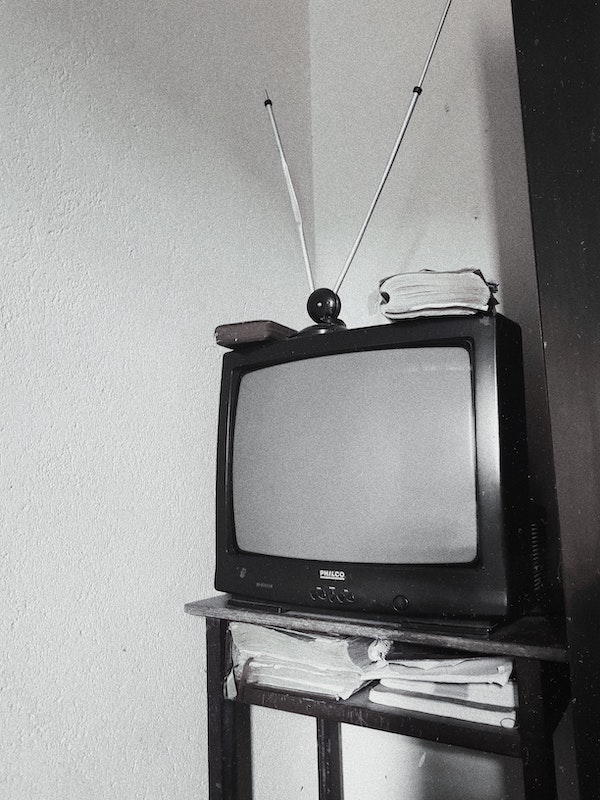
The Andy Griffith Show, Hogan’s Heroes, Match Game 75, Barney Miller…these are all 1960 and 1970 television shows enjoying a revival. Many viewers, generally in the Medicare and Social Security eligible categories, are eschewing current produced media fare for TV shows of their younger years.

Why? The reasons may vary but for many it’s a portal to a simpler time with less stress and drama. People need a break from Covid 19, Trump rants, smarmy Fox commentators and an endless stream of violence, disasters and deaths on their TVs and computer screens.

Photo by Andre Moura Pixels

I too pine for simpler times and have compiled a short list of memories, places and people that take me back to a simpler time.

  1. Cherry Hill Mall food court with Nathans, Arthur Teachers and Bassetts Turkey
  2. Drive-In movies
  3. Emma Peel
  4. Local minor league hockey (Jersey Devils, Ramblers)
  5. Walter Cronkite, Peter Jennings and Chet Huntley
  6. Extensive coverage of college and high school sports by local papers
  7. Fish’s (Abe Vigoda) asides on Barney Miller
  8. Summer League Basketball at Wood and Memorial Parks (Cinnaminson NJ)
  9. “Missed by that much”
  10. Pat Paulsen running for President
  11. Gladys Ormphby and Tyrone on Laugh In
  12. Barbi Benton
  13. U.S. Pro Indoor Tournament at Spectrum
  14. Chief Jay Strongbow
  15. Lindsey Nelson and Ray Scott announcing college and professional football games
  16. Old Republican party (Everett Dirksen, Hugh Scott, Gerald Ford)
  17. Apologies
  18. Soupy Sales
  19. By Saam and Richie Ashburn broadcasting Phillies games
  20. Petula Clark
  21. Diving horse at Steel Pier
  22. Sparklers
  23. Tinsel
  24. Hill Street Blues
  25. John Larroquette’s (Dan Fielding) leers on Night Court
  26. Mike Wallace interviews on 60 Minutes
  27. Playboy interviews
  28. Sport magazine
  29. Archie Bunker
  30. Phyllis George
  31. The Grassroots

Reader, how many from this list do you remember and know?

Finish Line

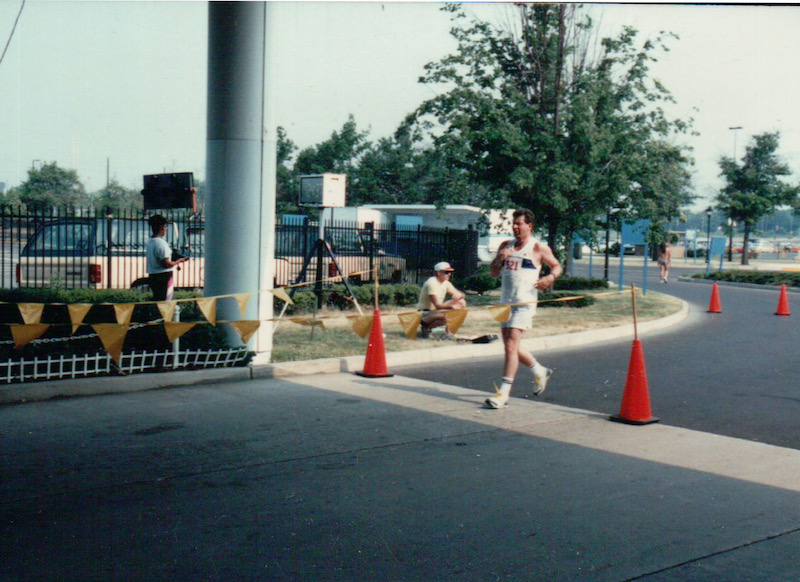
In my younger days, I ran 5K and 10K races. When I was able to see the finish line from a distance, I needed to make a decision. Do I finish the race strong with a last minute spurt or do I comfortably finish at a relaxed pace? My decision was not based on winning any medals or prizes as I was a “back in the pack” runner. My decision was personal, primarily based on how much energy I had left in my legs and what I wanted to accomplish in terms of my own goals. I mostly competed with myself and was interested in seeking improved race times.

As one gets older in life, there are a number of finish lines that need to be crossed. Generally, the first finish line is the end of your career or business. For many, the decision on how we finish that race is not made by them. Some don’t get the opportunity to finish but are pulled aside and told their race is over. The lucky get to finish the race on their own terms and with the plaudits and appreciation of their fellow employees and partners. They leave with a sense of satisfaction of a race well run.

Young people are not concerned with finish lines. They are at the beginning or mid-way point of their race. Time is on their side – – they have the energy, ability and opportunity to run more laps and circle the field if they are so inclined. They are in the early stages of a life marathon with many miles to go.

As I have gotten older, I appreciate that a final finish line may be looming. I don’t know its distance but I sense its presence. There are no mile markers in the final finish line. I still have the ability to decide if I want to walk or jog in my last miles or finish with a burst of speed and vigor. There won’t be spectators to cheer me on. How I finish that race will largely be my decision. There are no medals to win. But there is one more chance to make a difference in my life and maybe someone else’s. One more opportunity to overcome a challenge or make a contribution. One more opportunity to achieve a life well run…