Deemed a modern classic, The Year of Magical Thinking is exquisitely written, deeply poignant—and I hated reading it. I rushed through its pages the way one might rush through the receiving line at a funeral: dutifully, respectfully, but eager to escape the suffocating air of grief.
Didion’s account of the sudden death of her husband and the parallel ordeal of her daughter’s illness feels both raw and composed, intimate yet universal. Her prose opens old wounds you thought had long scarred over. As I read, her words didn’t just tell her story—they resurrected mine.
I found myself silently comparing her losses to my own. Everyone, I suspect, has this book somewhere inside them, but few can articulate sorrow with Didion’s precision and restraint. Like her, I have often wondered whether I could have done more—whether I might have eased my mother’s suffering as dementia slowly erased her, or somehow saved my sister, who died suddenly before reaching forty. The helplessness still stings decades later.
Grief is a solitary ritual. When my father died of a heart attack at thirty-five, I was seven. There were no tears, no tantrums—just the quiet acceptance of a boy who learned too early that life can vanish mid-sentence.
As Didion’s pages turned, I realized I was no longer reading her memoir but reliving my own: the hospital rooms, the whispered prayers, the hollow silences after the machines stopped.
Didion’s The Year of Magical Thinking is a Pandora’s box of 227 pages. Once opened, it releases everything you thought you had buried—grief, guilt, love, regret—and leaves you to reckon with the consequences.
We rarely know when we are sharing the last conversation, the last laugh, or the last look with someone we love. Sometimes death announces itself with months of warning; other times it slips in like a thief, stealing a life in the space between heartbeats. Over the years, I have stood at the bedsides and shared the dinners that turned out to be final moments. These are the stories of my aunt, my sister, my stepfather, my mother—and of a Valentine’s Day in childhood that taught me the lesson I carry still: tomorrow is never promised.
Aunt Irene’s Peace
My Aunt Irene was plagued with poor health, especially heart issues in her fifties. She endured multiple heart attacks—just as nearly all her brothers and sisters did, including my father, who died at 35.
For years, Irene feared death, understandably so given her condition and the string of family losses she had endured. Then, one day at a family function, she pulled me aside with an urgency I’ll never forget.
She told me she no longer feared dying.
During one of her heart attacks, she had what the medical profession would call a near-death experience—but to her, it was entirely real. She said she saw and spoke with loved ones who had already passed, including my father, with whom she had been very close. She described it as a place of pure peace, tranquility, and happiness.
Because of that experience, she was no longer afraid—and she wanted me to understand that I should never fear death either. My father gave my aunt his house when her marriage failed and she needed a home for her and her three children. I think she felt duty bound to pass on something that would guide me as I got older.
She died peacefully a few months after sharing her feelings with me.
My Sister’s Ominous Reading
In January 1995, my sister Sandra died at just 38 years old during brain surgery to remove a growing tumor near her optic nerves. The main fear had been the risk of blindness. I don’t recall any great concern that she might not survive the surgery. A few months before the surgery, she and some of her friends had gone to dinner, followed by a visit to a psychic.
The psychic read cards for each of her friends with ease and everyone marvelled and laughed at their future predictions—until it was Sandra’s turn. The psychic’s demeanor changed. She looked unsettled and while staring at the cards said she could not see Sandra’s future. Sandra’s psychic session ended abruptly. I hold no firm beliefs on psychics or their practice but I found this a cautionary tale. Was it coincidence? Or a warning? The unsettling moment stayed with Sandra’s friends long after she was gone.
One Last Look
Two days before her surgery, my wife and I hosted Sandra, her husband, her daughter, and my mother for dinner. Sandra showed no visible fear and instead focused on how long her recovery would take. However I was deeply worried, but Sandra teased me when my wife mentioned I’d gone to Mass earlier that day. I had not been at Mass in years and had no great belief in prayer.
When dinner was over and Sandra left, she got into her car and stared at me for a long, deliberate moment as she drove away. My wife and mother noticed it too. At the time, our greatest fear was that she might go blind; I thought perhaps she was memorizing my face just in case.
We shared that one last look before she died.
My Stepfather’s Last Words
In his final months, my stepfather’s body was ravaged by cancer. He lost 100 pounds, was confined to bed, drifted in and out of awareness, and could no longer communicate. Hospice care became his world.
On his last day, I had to put an oxygen mask on him because the visiting technician was too shaken by his condition to do it. I secured the mask, and to my shock, my stepfather lifted it, looked me directly in the eyes, and asked, in a clear, steady voice, “What’s next?” I was stunned and offered that the mask would let him breath easier.
He hadn’t spoken coherently in months. He was comatose. Yet, in that moment, he seemed alert to fully understand where he was—and what was coming. He passed away a few hours after his last words.
A Fleeting Return
My mother’s final years were spent in an assisted living facility. Dementia robbed her of clarity, recognition, and the gentle temperament she had always carried. Most days she didn’t know me, my sister, or even her best friend of 50 years.
Visits were often an exercise in quiet heartbreak. But one afternoon, perhaps a month before she died, she surprised me. She knew exactly who I was. She spoke with complete lucidity, telling me she was scared, that she missed her home, and that she hated being a burden. She even apologized for her condition—as if she had caused it.
For a brief, shining moment, she was herself again. I thought of taking her home. But within minutes, the light in her eyes faded, the fog returned, and she was gone from me once more, though her body lived on a few more weeks. I remember that I cursed God for what had been done to my mother and to all the other helpless people that I saw in that assisted living home.
The Valentine’s Day Card
In the winter of 1960, when I was seven, my parents were heading out to a Valentine’s Day party. I had made a card for my mother and gave it to her gladly. I had also made one for my father—but I was angry with him for some reason, and I withheld it.
As they put on their coats, something inside me changed. I handed my father his card. He opened it, smiled, kissed my forehead, and said, “I’ll see you tomorrow.”
But I never saw him again. He died that night of a heart attack at age 35.
I have often thought of that moment. Had I let my anger win, the guilt of my last act toward him being one of rejection would have been unbearable. Instead, I learned—at the age of seven—that tomorrow is never guaranteed, and the chance to make amends may never come again.
In all these moments—some peaceful, some mysterious, some unbearably sad—the same truth emerges: Life is fragile. Goodbyes can be sudden. And sometimes, in the quiet between breaths, there is a chance to speak the words that matter most.
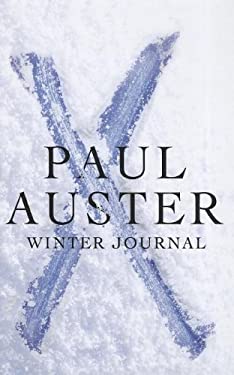
I first read this book in 2012 when I was 60 years old. It had a profound effect on me then. My fears of getting older were starting. Reading this book at 72, I have a new appreciation for Auster’s messaging on aging, death and memories. The tale is sobering, not depressing. Auster had an interesting story to tell about his life’s experiences.
“Winter Journal” is a deeply personal memoir published in 2012, written when Auster was 64 years old. Auster begins by documenting his bodily sensations and physical experiences, starting with a detailed account of his mother’s death and moving through various moments of his life. He explores personal traumas, near-death experiences, and significant physical memories that have shaped his understanding of himself.
The memoir covers several key themes: mortality, aging, memory, and personal history.
List of my favorite excerpts below:
Your bare feet on the cold floor as you climb out of bed and walk to the window. You are 64 years old. Outside, the air is gray, almost white, with no sun visible. You ask yourself: How many mornings are left?
Nevertheless, there are things that you miss from the old days, even if you have no desire to see those days return. The ring of the old telephones, the clacking of typewriters, milk and bottles, baseball without designated hitters, vinyl records, galoshes, stockings, and garter belts, black and white movies, heavyweight champions,… basketball before the three-point shot, contempt for authority.
Your birthday has come and gone. 64 years old now, inching ever closer to senior citizenship, to the days of Medicare and Social Security benefits, to a time when more and more of your friends will have left you. So many of them are gone already – –but just wait for the deluge that is coming.
That is why you will never forget these words, which were the last words spoken to one of your friends by his dying father: “Just remember, Charlie, “he said “never pass up an opportunity to piss.” And so the wisdom of the ages is handed down from one generation to the next.
Joubert: The end of life is bitter. Less than a year after writing those words, at the age of 61, which must’ve seemed considerably older in 1815 then it does today, he jotted down a different and far more challenging formulation about the end of life: One must die, lovable (if one can.)
I hear voices from my past from many people who are no longer alive. They walk along side me and we share memories and words from years and many decades ago. I remember their faces, their smiles and I feel their love as I take my final steps on my earthly journey.
“True equanimity arises when we embrace the flow of life without being swept away by its currents.” – Ram Dass
In memory of two high school classmates who recently died…
As we grow older, we descend like a starship pulling from the gravity of our youthful endeavors, and settle into the “orbit of mortality.”
The sounds of ocean waves lapping along the shore, like hymns from a church organ evoke peace and soulful contemplation.
There is no better sedative than sitting on the couch, cool drink in hand and dozing off to one of my wife’s Hallmark movies.
How I look forward to summer! By July 1, how I look forward to autumn!
My True Confession: I never flirted with a woman I desired. AI version: Desire unspoken, a confession true: I never flirted, yet yearned for you.
Three mindsets of a life long athlete: in youth, WIN; in good health, COMPETE; in old age, PARTICIPATE.
I was surprised to hear of the current writers’ strike in movies and TV. Based on what I view on the screen, I thought their work stoppage began in 1990.
Future historians will equate January 6, 2021 as this era’s Fort Sumter, the start of a new civil war.
Once I lived in a time of firsts, first grade, first date, first kiss, first love, first job, first house… Youth created the illusion of an unlimited future and an infinity of repeat experiences, opportunities and time.
Now I exist in a time of lasts, last job, last meeting, last look, last conversation, last vacation, last healthy day, last goodbyes, last breath… Realities of limited time and few opportunities…No guarantees that tomorrow will be the same as today. Or that I may have a tomorrow. Moments may never repeat. Family and friends may leave me. Or I leave them.
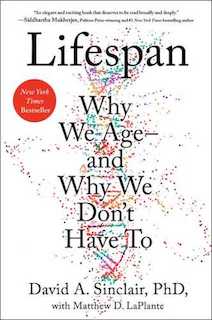
If you are over 50 years old, this book is an excellent resource related to your health, general fitness and quality of life.
I have included some excerpts for the book as my notes and reference:
I believe that aging is a disease. I believe it is treatable. I believe we can treat it within our lifetimes. And in doing so, I believe, everything we know about human health will be fundamentally changed.
There are some simple tests to determine how biologically old you probably are. The number of push-ups you can do is a good indicator. If you are over 45 and can do more than 20, you are doing well. The other test of age is the sitting rising test. Sit on the floor, barefooted, with the legs crossed. Lean forward quickly and see if you can get up in one move. A young person can. A middle-age person typically needs to push off with one of their hands. An elderly person often needs to get onto one knee.
There’s also a difference between extending life and prolonging vitality. We’re capable of both, but simply keeping people alive – – decades after their lives have been defined by pain, disease, frailty, and immobility – – is no virtue.
Multiple “hallmarks” of aging: Genomic instability caused by DNA damage Attrition of the protective chromosomal endocaps, the telomeres Alterations to the epigenome that controls which genes are turned on and off Loss of healthy protein maintenance, known as proteostatis Deregulated nutrient sensing caused by metallic changes Mitochondrial dysfunction Accumulation of senescent zombielike cells that inflame healthy cells Exhaustion of stem cells Altered intercellular communication and the production of inflammatory molecules
Youth—broken DNA genome instability— disruption of DNA packaging and gene regulation (the epigenome)— loss of cell identity —cellular senescence— disease— death
The older we get, the less it takes for an injury or illness to drive us to our deaths. We are pushing closer and closer to the precipice until it takes nothing more than a gentle went to send us over. This is the very definition of frailty.
When we stay healthy and vibrant, as long as we feel young physically and mentally, our age doesn’t matter. That’s true whether you are 32, 52, or 92. Most middle-aged and older adults in the United States report feeling 10 to 20 years younger than their age, because they feel healthy. And feeling younger than your age predicts lower mortality and better cognitive abilities later in life.
After 25 years of researching aging and having read thousands of scientific papers, if there is one piece of advice I can offer, one sure fire way to stay healthy longer, one thing you can do to maximize your lifespan right now, it’s this: eat less often.
The important thing is not just what we eat but the way we eat. Many of the centenarians have spent their lives eschewing a morning meal. They generally eat their first small meal of the day around noon, then share a larger meal with their families at twilight. In this way, they typically spend 16 hours or more of each day without eating.
According to one study funded by the Centers for Disease Control and Prevention and published in 2017, individuals who exercise more – – the equivalent of at least a half hour of jogging five days a week – –have telomeres that appear to be nearly a decade younger than those who live a more sedentary life.
One recent study found that those who ran 4-5 miles a week – – for most people, that’s an amount of exercise that can be done in less than 15 minutes per day – – reduce the chance of death from a heart attack by 45% and all cause mortality by 30%.
It’s high intensity interval training (HIIT) the sort that significantly raises your heart and respiration rates— that engages the greatest number of health promoting genes and more of them in older exercisers.
A study of more than 41,000 metformin users between the ages of 68 and 81 concluded that metformin reduced the likelihood of dementia, cardiovascular disease, cancer, frailty, and depression, and not by a small amount.
People taking metformin were living notably healthier lives – – independent, it seemed, of its affects on diabetes.
The beauty of metformin is that it impacts many diseases. Through the power of AMPK activation, it makes more NAD and turns on sirtuins and other defenses against aging as a whole -– engaging the survival circuit upstream of these conditions, ostensibly slowing the loss of epi-genetic information and keeping metabolism in check, so all organs stay younger and healthier.
Like most people, I don’t want unlimited years, just ones filled with less sickness and more love. And for most of those I know who are engaged in this work, the fight against aging is not about ending death; it’s about prolonging healthy life and giving more people the chance to meet death on far better terms – – indeed, on their own terms. Quickly and painlessly. When they are ready.
Either by refusing the treatments and therapies at all for a prolong healthy life or accepting those interventions and then deciding to leave whenever the time is right, no one who has returned what they have been given should have to stay on this planet if he or she does not wish to do so. And we need to begin the process of developing the cultural, ethical, and legal principles that will allow that to happen.
The most impressive NCAA college basketball player this year is a woman, Paige Bueckers who plays for Connecticut. Only a freshman, she seems to be a better all around game than Diana Taurasi, who I had considered the best women’s college basketball player that I have seen.
***
With the announcement of the resignation of Roy Williams at North Carolina, the five best college basketball coaches in my lifetime:
John Wooden
Mike Krzyzewski
Dean Smith
Roy Williams
Jay Wright (this choice may be a bit premature but I wanted a Big 5 coach on my list)
***
I would not need to sit on a jury for an hour, a day, a month, two months or however long the trial of Derek Chauvin in the murder of George Floyd takes. I had the correct verdict figured out in nine minutes and 29 seconds.
***
Many years ago I bought and read a book by Lawrence Shames and Peter Barton titled Not Fade Away: A Short Life Well Lived. This book reflects the thoughts, actions and philosophies of Barton, a successful businessman who was dying from cancer in his early 50s. Barton began his book, “There’s not one thing I regret or wish I could redo. There’s not one thing I wished I done, and didn’t. I’m contented and fulfilled.“
Barton died at age 51.
Here are some sections of the book I have underlined as constant reference as I get older…
“The stories of our lives have a due date, like books at the library.
A problem that can be fixed by money… is not a problem.
If I have anything at all to teach about life, it probably comes down to these two simple but far-reaching notions:
Recognizing the difference between a dumb risk and a smart one, and
Understanding when you need to change direction, and having the guts to do it.
I promised myself that I wouldn’t have a bad day for the rest of my life. If someone was wasting my time, i’d excuse myself and walk away. If a situation bothered me or refused to get resolved, I’d shrug and move on. I’d squander no energy on petty annoyances, poison no minutes with useless regret.
I would only work for someone I thought was wildly smart.
Duration, for him (Barton), is no longer quite the same as it is for most of us; he sees time not in terms of days or hours but in episodes of energy, bursts of attention.
There’s just one final thing I want to say. Probably it’s how everyone wants to be remembered. But that’s OK. I’ve said from the start that I make no claim of being special; I’m just one more person dying, revisiting his life. I think my father would’ve said the same thing, in the same words, If he had had the time. It’s simply this: I really tried. I did my best.”
***
Coincidently I have just finished a book by William R. Irvine titled the Stoic Challenge: A Philosopher’s Guide to Becoming Tougher, Calmer and More Resilient. I reommend the book. Barton epitomizes the stoic philosophy that Irvine promotes. Barton comments on his acceptance of his diagnosis and prognosis, “My frame of mind was something I could still control,. Doing so would be a sort of victory I was not accustomed to valuing – – a totally inward, private victory – – but a legitimate accomplishment nevertheless. I resolved to control my own discomfort, to rise above them if I possibly could. In doing so, I came to understand the deep truth that, while pain may be unavoidable, suffering is largely optional.“



 Esot-eric