
Of all advice offered to seniors, none may be more foolish than “act your age.”
EAB 9/28/25
Author: Eric
INTJ personality. Jack of many trades, master of some. Former banker, consultant, technical writer, marketing manager, infopreneur and communications manager, now retired. Eclectic and sometimes eccentric. Cynical and often critical.
From Maginot to Meltdown: Watching the Guardrails Collapse

I once thought the Constitution, the rule of law, and basic common sense would protect this country from political chaos, the way the French believed the Maginot Line would shield them from invasion in 1940. The French were wrong—and so was I. What I did not anticipate was the near-total surrender of many corporate leaders to the political pressures of the Trump administration.
The word “hero” has been so cheapened in the past eight years that the bar hasn’t just been lowered—it’s been buried underground.
Before his death, I knew little about Charlie Kirk beyond a handful of YouTube clips where he “debated” college students. His philosophy struck me as shallow, reactionary, and hostile to nearly every step of progress made since the 1960s—civil rights, women’s rights, gay marriage. To me, he seemed like this generation’s David Duke.
As much as I would love to be a historian looking back at this moment from 20 or 30 years in the future, that’s exactly how much I despise living through the chaos in real time.
Strangely enough, comedians have become the most responsible and courageous voices in these perilous times, while many of our politicians and representatives play the role of clowns.
Now, with Jimmy Kimmel’s indefinite suspension, we’ll see whether the promised economic and cultural backlash against Disney, ABC, and their affiliates materializes. As for Kimmel himself, I would not be surprised if he decides not to return at all to his show.
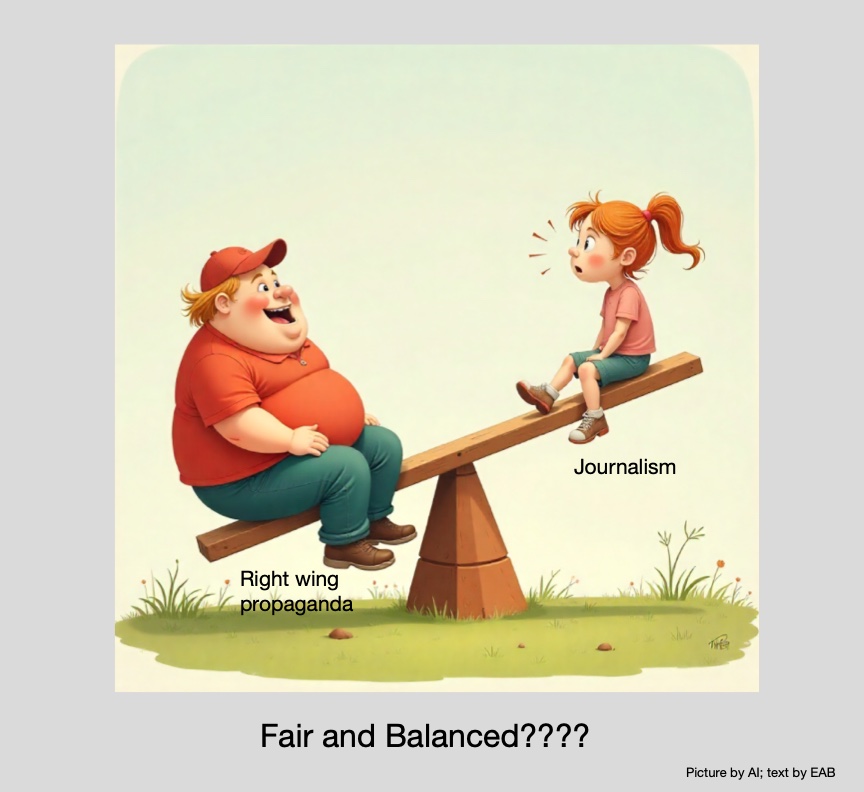
Fair and Balanced??
Fox News Channel host Brian Kilmeade apologized for advocating for the execution of mentally ill homeless people in a discussion on the network last week, saying his remark was “extremely callous.” (Still has his job)
MSNBC fired its senior political analyst Matthew Dowd after he suggested on air that the slain conservative activist Charlie Kirk’s own radical rhetoric may have contributed to the shooting that killed him.
Civil War??
I’d say this analysis from outside the United States and about the United States is dead on and reflects my thinking about the end of the American dream. I don’t think things will change, certainly not for the better. My sense is that there will be a “Civil War” in this country and it probably has already started.
The United States is a dangerously volatile country. There has always been a palpable element of derangement in its social order. It has a record of assassinations and attempted assassinations, and a perennial problem with violent crime which is matched by almost no other first world country. But what is happening now feels different: apocalyptic and inexorable. And the reason it cannot be stopped is that the people, both the population at large and those who are supposed to be in charge, do not want it to stop whatever they may claim.
If they sincerely wanted to put an end to it, they could do so in a moment of reasonable consensus. But they have consistently resisted any attempt to enforce standards or controls on the virulent social media activity which is undermining the real freedoms they revere. So the tide of what would once have been called “extremism” – the incitement of violence and the perpetration of blind hatred – are now the accepted currency of political discourse.
Janet Dailey The American Dream is ending in a Psychotic Breakdown The Telegraph
Book Review: King of Kings: The Iranian Revolution: A Story of Hubris, Delusion and Catastrophic Miscalculation by Scott Anderson
After reading this book, it’s easy to understand why U.S. relations with Iran remain so strained and why so much hostility exists toward America. For nearly a century, presidential administrations have made diplomatic blunders, compounded by intelligence failures that shaped disastrous outcomes.
I recently finished Tim Weiner’s The Mission: The CIA in the 21st Century, which documented the CIA’s missteps in Vietnam, Afghanistan, Iran, Iraq, and elsewhere. Anderson’s account shows the same pattern: Did we get anything right?
The intelligence failures in Iran were staggering. Agencies recorded Ayatollah Khomeini’s speeches but never bothered to translate them—missing clear warnings about his intentions. Meanwhile, the U.S. continued to prop up Shah Mohammad Reza Pahlavi, a weak and indecisive ruler despised by his own people. Ironically, his wife, Farah Pahlavi, displayed far more backbone and foresight. Yet to Washington, Iran’s real value was simply the oil beneath its soil.
Equally unconscionable was the way U.S. embassy staff in Tehran were treated as expendable pawns. The Carter administration fully understood the risks—especially after allowing the Shah into the United States—yet left personnel exposed to the fury of revolutionary crowds.
The lack of coordination between diplomatic and intelligence communities in the 1970s was nothing short of criminal. Mixed signals to the Shah, who desperately needed guidance and resolve, only deepened the chaos. Even today, the lingering question remains: Did Ronald Reagan deliberately delay the hostages’ release until after his inauguration?
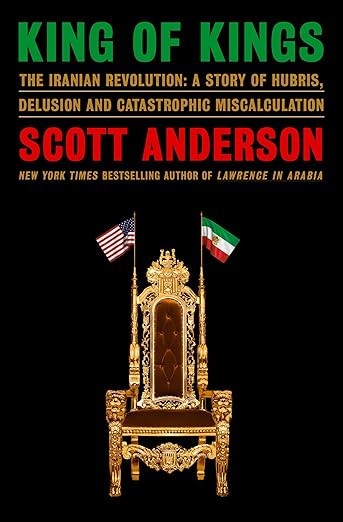
Anderson does an excellent job highlighting both the heroes and villains of this tragic story. One memorable account involves teacher Michael Metrinko, who earned the respect of his Iranian students by deliberately standing up to—and physically subduing—the toughest among them.
By weaving personal tales with geopolitical history, Anderson makes the Iranian Revolution come alive in all its complexity. The result is a powerful and unsettling reminder of how deeply poor leadership and intelligence failures can alter history.
Book Review: Miracles and Wonder: The Historical Mystery of Jesus by Elaine Pagels
As an agnostic, I opened this book hoping it might shift my faith-doubt meter. It didn’t. Perhaps I expected too much.
Elaine Pagels, a distinguished scholar of religion, offers a deeply researched exploration of the history, culture, and legends surrounding Jesus. She examines familiar themes—the virgin birth, Jesus as prophet, miracles, crucifixion, and resurrection—while weaving in theories, conjectures, and historical possibilities. At times, though, her inquiry stops short of resolution, leaving questions dangling.
She does not shy away from provocative possibilities: Was Mary a prostitute? Was Jesus the illegitimate son of a Roman soldier? Was Jesus even buried after crucifixion, or left, like most executed criminals of the era, to scavenging animals?

Pagels acknowledges that the gospels themselves—written decades after Jesus’ death—are a blend of myth, storytelling, and propaganda designed to win followers. Yet she ends with a surprisingly devotional note: “The point is clear as a lightning flash; God can make a way out of no way.” She praises the gospels for offering what humanity craves most—an outburst of hope.
That left me puzzled. How much of Jesus’ life was historical, and how much was invention? If much of it was propaganda, why cling to its hope-filled message? For me, the book opened doors, raised intriguing questions, and stirred thought—but ultimately left me standing where I began.
To Lob or Not to Lob
There are five dreaded labels in the pickleball world that no one wants to wear: sandbagger, hooker (that’s a cheater on line calls, for the uninitiated), poacher, banger, and—my personal cross to bear—lobber.
Now, I can’t speak for the first four, but I’ve earned a reputation for being that last one. Yes, I lob. Sometimes more than once. Occasionally more than “socially acceptable.”
One of my partners recently suggested that I might want to cut back. Apparently, I’ve been annoying some of my fellow players. The eye rolls and glares haven’t escaped me, and I’ll admit I’ve even apologized a few times for exceeding the unofficial “lob quota.”
But here’s the thing: the lob is not the weak, outdated, sneaky shot it was once considered. Years ago, pros and commentators sneered at it. You almost never saw it on the big stage. Today? Pros lob often, and they lob well. It’s a legitimate strategy—a way to reset a point or outwit opponents who camp at the kitchen line like they’ve paid rent there.
At 73, I don’t have the hand speed or footwork of a 30-year-old tournament player. Just as a pitcher with a fading fastball learns to mix in more curveballs and off-speed junk, I mix in more lobs. For me, it’s both a survival tool and an offensive weapon.
If I lob you, take it as a compliment: it means I think you’re good enough to deserve it.
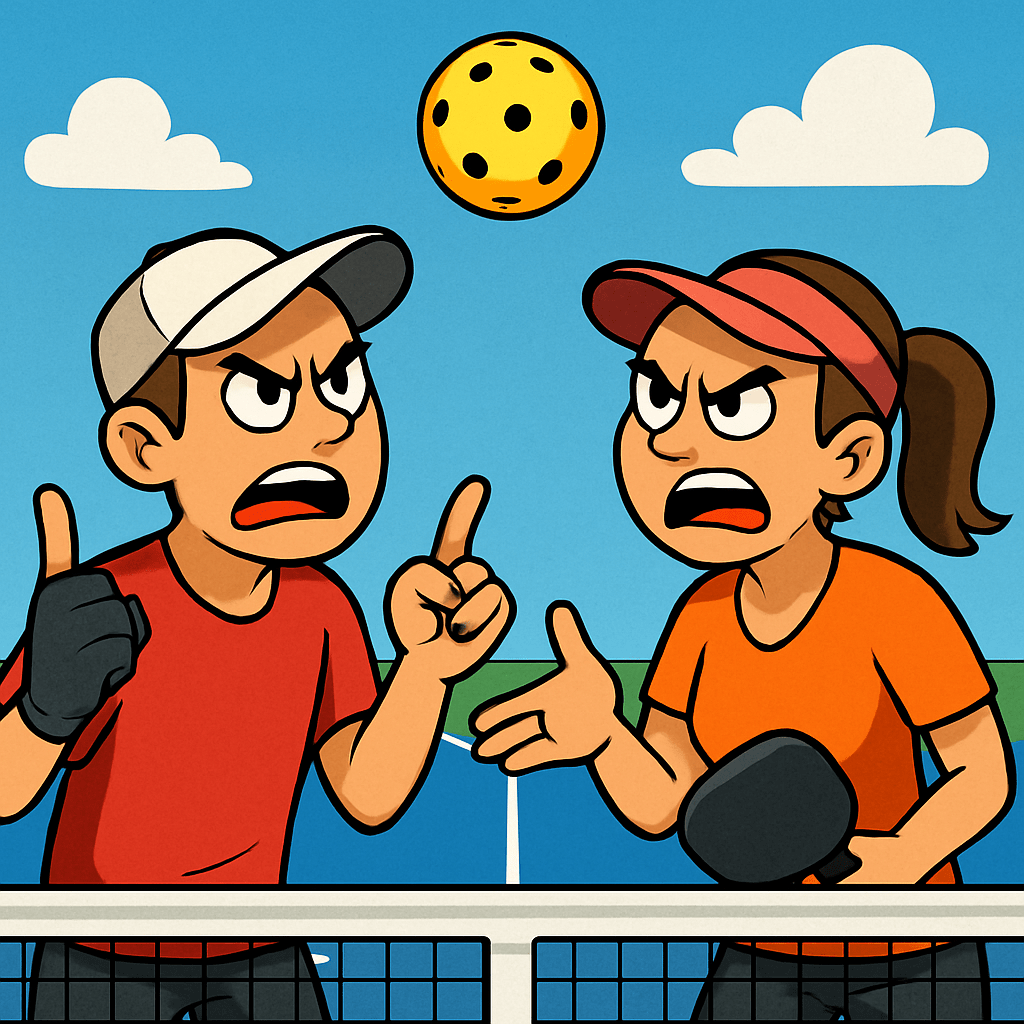
That said, I try to be mindful. I don’t lob against beginners, players with mobility challenges, or anyone who tells me they just don’t want to chase them down. I do not use the sun as my secret doubles partner, I do my best not to lob into it deliberately. (Though, if I see a wide-open chance for a clean winner? Sorry, I’m taking it. I’m not that saintly.)
At this point in my pickleball journey, I want opponents to bring their best game against me—lobs, drop shots, body-bag drives, all of it. It’s part of what makes pickleball fun and unpredictable. And when the day comes that I can no longer compete, I’ll gladly hang up my paddle and write about pickleball instead of playing it. Or maybe I’ll take up chess—where, mercifully, no one will complain about a well-timed lob
From Sunlight to Shadows
At 73, this Labor Day weekend makes me wonder: How many summers do I have left?
I don’t miss the heat or humidity of summer. I miss the sunlight—the early sunrises, the lingering evenings. A metaphor, perhaps, for life’s stages.
Leisure reading is fading. Only 16% of Americans read regularly for pleasure—down from 28% in 2003. In the UK, just 41% of parents read daily to toddlers, compared with 64% in 2012.
I wandered into a Barnes & Noble last week, my first visit in over a year. Chairs and cozy nooks were gone—B&N is all business now. I left without a book. Even their sale couldn’t entice me; I balk at paying more than $20 for a hardcover.
On my nightstand:
- King of Kings: The Iranian Revolution—A Story of Hubris, Delusion and Catastrophic Miscalculation by Scott Anderson
- Miracles and Wonder: The Historical Mystery of Jesus by Elaine Pagels
Haruki Murakami once wrote:
“If you only read the books that everyone else is reading, you can only think what everyone else is thinking.”
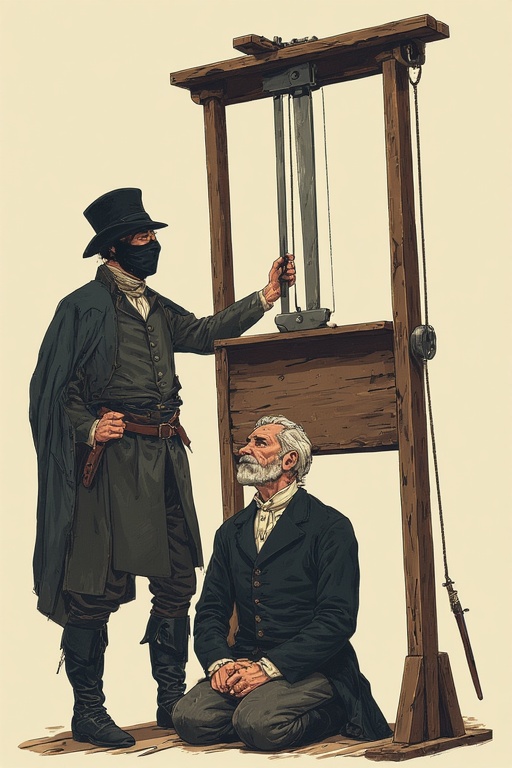
Mortality hovers. I don’t fear death, but I do fear dying. Sometimes I feel like a man with his head beneath a guillotine, staring at the blade. I’ve been fortunate with health, but around me I see friends whose luck has run out. The blade will fall on me too.
Meanwhile, the U.S. falters. Ineptitude, cowardice, hubris—displayed daily. A recent New York Times photo showed India’s Modi with Putin and Xi, a tableau of shifting power. It captured the failure of American diplomacy and leadership. One man bears much of the blame: Donald Trump. As summer declines, so does America as it retreats further into the darkness.
Best Six Philosophy Books of My Lifetime
When religion failed to be an adequate guide on how to live and conduct oneself, I became interested in philosophy. I don’t pretend to be particularly wise or that I have conducted myself in life to a high standard, but these books provided some inspiration and guidance based on reason and common sense.
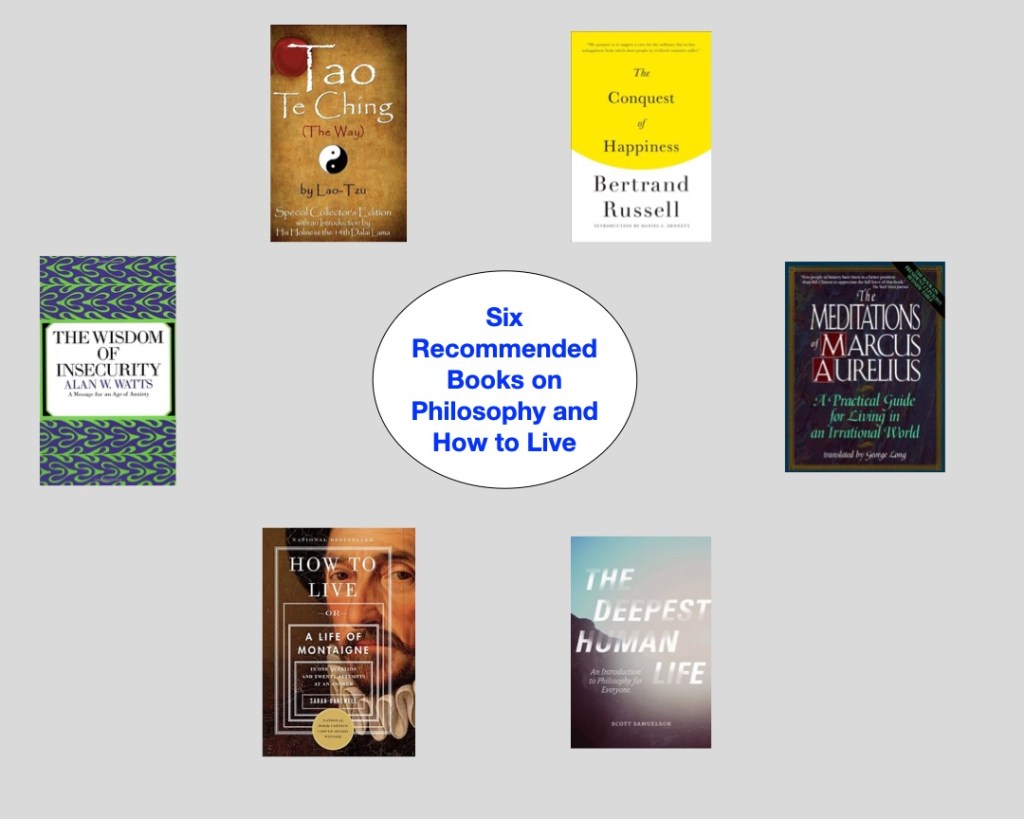
Because life is sweet, we do not want to give it up, and yet the more we become involved in it, the more we are trapped, limited and frustrated. We love it and hate it at the same time. We fall in love with people and possessions, only to be tortured by anxiety for them.
The Wisdom of Insecurity by Alan Watts
Chase after money and security and your heart will never unclench. Care about people’s approval and you will be their prisoner.
Tao Te Ching Translated by Stephen Mitchell
The wise man thinks about his troubles, only when there is some purpose in doing so; at other times, he thinks about other things, or, if it is night, about nothing at all.
The Conquest of Happiness by Bertrand Russell.
The best way of avenging one self is not to become like the wrong doer.
Meditations by Marcus Aurelius.
Lessons from the Final Moments
We rarely know when we are sharing the last conversation, the last laugh, or the last look with someone we love. Sometimes death announces itself with months of warning; other times it slips in like a thief, stealing a life in the space between heartbeats. Over the years, I have stood at the bedsides and shared the dinners that turned out to be final moments. These are the stories of my aunt, my sister, my stepfather, my mother—and of a Valentine’s Day in childhood that taught me the lesson I carry still: tomorrow is never promised.
Aunt Irene’s Peace
My Aunt Irene was plagued with poor health, especially heart issues in her fifties. She endured multiple heart attacks—just as nearly all her brothers and sisters did, including my father, who died at 35.
For years, Irene feared death, understandably so given her condition and the string of family losses she had endured. Then, one day at a family function, she pulled me aside with an urgency I’ll never forget.
She told me she no longer feared dying.
During one of her heart attacks, she had what the medical profession would call a near-death experience—but to her, it was entirely real. She said she saw and spoke with loved ones who had already passed, including my father, with whom she had been very close. She described it as a place of pure peace, tranquility, and happiness.
Because of that experience, she was no longer afraid—and she wanted me to understand that I should never fear death either. My father gave my aunt his house when her marriage failed and she needed a home for her and her three children. I think she felt duty bound to pass on something that would guide me as I got older.
She died peacefully a few months after sharing her feelings with me.
My Sister’s Ominous Reading
In January 1995, my sister Sandra died at just 38 years old during brain surgery to remove a growing tumor near her optic nerves. The main fear had been the risk of blindness. I don’t recall any great concern that she might not survive the surgery. A few months before the surgery, she and some of her friends had gone to dinner, followed by a visit to a psychic.
The psychic read cards for each of her friends with ease and everyone marvelled and laughed at their future predictions—until it was Sandra’s turn. The psychic’s demeanor changed. She looked unsettled and while staring at the cards said she could not see Sandra’s future. Sandra’s psychic session ended abruptly. I hold no firm beliefs on psychics or their practice but I found this a cautionary tale. Was it coincidence? Or a warning? The unsettling moment stayed with Sandra’s friends long after she was gone.
One Last Look
Two days before her surgery, my wife and I hosted Sandra, her husband, her daughter, and my mother for dinner. Sandra showed no visible fear and instead focused on how long her recovery would take. However I was deeply worried, but Sandra teased me when my wife mentioned I’d gone to Mass earlier that day. I had not been at Mass in years and had no great belief in prayer.
When dinner was over and Sandra left, she got into her car and stared at me for a long, deliberate moment as she drove away. My wife and mother noticed it too. At the time, our greatest fear was that she might go blind; I thought perhaps she was memorizing my face just in case.
We shared that one last look before she died.
My Stepfather’s Last Words
In his final months, my stepfather’s body was ravaged by cancer. He lost 100 pounds, was confined to bed, drifted in and out of awareness, and could no longer communicate. Hospice care became his world.
On his last day, I had to put an oxygen mask on him because the visiting technician was too shaken by his condition to do it. I secured the mask, and to my shock, my stepfather lifted it, looked me directly in the eyes, and asked, in a clear, steady voice, “What’s next?” I was stunned and offered that the mask would let him breath easier.
He hadn’t spoken coherently in months. He was comatose. Yet, in that moment, he seemed alert to fully understand where he was—and what was coming. He passed away a few hours after his last words.
A Fleeting Return
My mother’s final years were spent in an assisted living facility. Dementia robbed her of clarity, recognition, and the gentle temperament she had always carried. Most days she didn’t know me, my sister, or even her best friend of 50 years.
Visits were often an exercise in quiet heartbreak. But one afternoon, perhaps a month before she died, she surprised me. She knew exactly who I was. She spoke with complete lucidity, telling me she was scared, that she missed her home, and that she hated being a burden. She even apologized for her condition—as if she had caused it.
For a brief, shining moment, she was herself again. I thought of taking her home. But within minutes, the light in her eyes faded, the fog returned, and she was gone from me once more, though her body lived on a few more weeks. I remember that I cursed God for what had been done to my mother and to all the other helpless people that I saw in that assisted living home.
The Valentine’s Day Card
In the winter of 1960, when I was seven, my parents were heading out to a Valentine’s Day party. I had made a card for my mother and gave it to her gladly. I had also made one for my father—but I was angry with him for some reason, and I withheld it.
As they put on their coats, something inside me changed. I handed my father his card. He opened it, smiled, kissed my forehead, and said, “I’ll see you tomorrow.”
But I never saw him again. He died that night of a heart attack at age 35.
I have often thought of that moment. Had I let my anger win, the guilt of my last act toward him being one of rejection would have been unbearable. Instead, I learned—at the age of seven—that tomorrow is never guaranteed, and the chance to make amends may never come again.
In all these moments—some peaceful, some mysterious, some unbearably sad—the same truth emerges:
Life is fragile. Goodbyes can be sudden. And sometimes, in the quiet between breaths, there is a chance to speak the words that matter most.
So say them now—while you still can.
 Esot-eric