Alzheimer’s research in peril. Will Trump budget cuts set progress back by decades? President Trump wants to cut the budget of the National Institutes of Health by 40%. I would think that a man approaching 80 years of age and reputedly evidencing signs of dementia would want enormous amounts of money directed to finding a cure or treatment and quickly. For all the 65 and over voters who voted for Trump last year, here is what your support is getting you – – the possibility of a horrible ending of your life. If you have ever had a family member or friend who had Alzheimer’s, you realize how tragic and devastating this disease is.
Catholic Bishops Try to Rally Opposition to Trump’s Immigration Agenda President Trump got 64% of the white Catholic vote as many bishops and priests urged support for him primarily to overturn Roe v. Wade. My admonition to the bishops: you reap what you sow. Too late now that the Trump Genie is out of the bottle. Your support helped uncap the bottle.
When stupid people get together, they tend to elect stupid candidates. Those candidates, once in office, appoint other stupid people to help them mismanage the government. Naturally, stupid politicians make stupid decisions. And stupid decisions, like a biblical plague rain chaos and destruction on everything they touch.
That, in a nutshell, is a brisk and brutal diagnosis of our current political condition.
But what about the so-called smart people? Are they truly intelligent if they keep letting the proudly ignorant run the country—and ruin their lives in the process? A genius who surrenders the steering wheel to a blindfolded clown isn’t a genius at all; he’s just a polite passenger on the road to nowhere.
There was once a time when a stupid person had the humility to recognize he needed the expertise of smarter minds. That time has passed. Today, asking for advice is seen as weakness, and expertise is treated with the same suspicion once reserved for door-to-door preachers. Guardrails? Who needs ’em when you’ve got overconfidence and a social media following?
The rise of stupidity in America isn’t a fluke—it’s a feature. For at least a quarter century, our culture has glorified the simple-minded and vilified the competent. Stupidity has become endearing, even charming. Meanwhile, intellect and nuance are treated as elitist sins. Smart people are mocked, threatened, canceled (by both the woke and the anti-woke), and exiled from conversations (and decisions) they might actually improve.
So what happens? Smart people stop running for office. They quit their jobs. They retreat from the public square. Why volunteer for a high-stakes pie-throwing contest where the prize is harassment and the consolation is a subpoena? When idiocy becomes fashionable, intelligence becomes a liability.
If democracy dies in darkness, it may also perish in stupidity—with a laugh track.
Reading the news is not necessarily the best way to start your day…
“Big, beautiful” tax bill would add $2.4 trillion to US debts, CBO says.
Trump bans 12 countries’ citizens from entering the US.
Emergency Abortions: The Trump administration announced that it had revoked a Biden administration requirement that hospitals provide emergency abortions to women whose health is in peril, including in states where abortion is restricted or banned.
Too many Christians are transforming Christianity into a vertical faith, one that focuses on your personal relationship with God at the expense of the horizontal relationship you have with your neighbors. Selfishness Is Not a Virtue David French NYT 6/5/25
The consumer goods giant Procter & Gamble said on Thursday that it would cut 7,000 jobs globally over the next two years, or 6 percent of its total work force, as it seeks to reorganize amid uncertainty caused by President Trump’s trade war.
A federal judge in Colorado on Wednesday temporarily blocked the Trump administration from deporting the wife and children of the Egyptian man charged with attacking an event in Boulder, Colo., honoring hostages in Gaza….“Punishing individuals for the alleged actions of their relatives is a feature of premodern justice systems or police state dictatorships, not democracies,” (Eric Lee, Attorney for the family)
But with the Trump administration slashing spending on science, Dr. Patapoutian’s federal grant to develop new approaches to treating pain has been frozen. In late February, he posted on Bluesky that such cuts would damage biomedical research and prompt an exodus of talent from the United States. Within hours, he had an email from China, offering to move his lab to “any city, any university I want,” he said, with a guarantee of funding for the next 20 years…Applications from China and Europe for graduate student or postdoctoral positions in the United States have dropped sharply or dried up entirely since President Trump took office. The number of postdocs and graduate students in the United States applying for jobs abroad has spiked.
When the current Congress was convened in January, there were nearly 120 members who were 70 or older — 86 in the House, including nonvoting delegates, and 33 in the Senate. This number, which is unmatched in modern history, included 14 octogenarians in the House, five in the Senate, and 91-year-old Senator Charles E. Grassley, Republican of Iowa.“Big, beautiful” tax bill would add $2.4 trillion to US debts, CBO says.
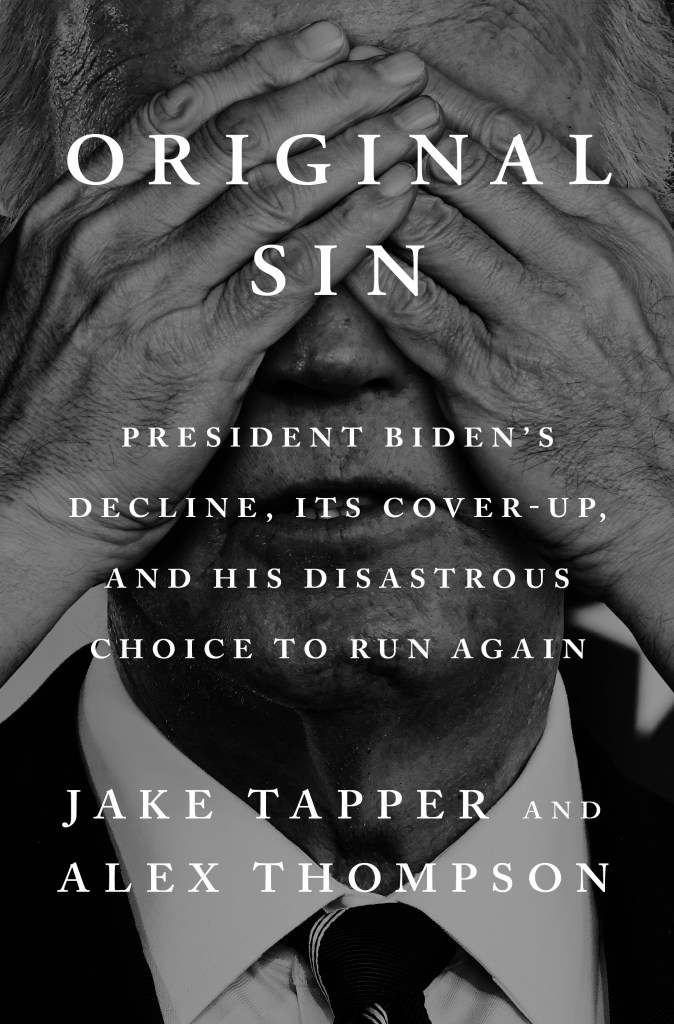
This book is well-written, compelling, and—most notably—largely uncontested. I’ve read and heard very little pushback on the specific facts or episodes it reveals, which suggests that authors Alex Thompson and Jake Tapper did their journalistic homework. The anger it has generated seems not to concern the accuracy of its content, but rather the timing of its release—particularly among Biden loyalists, who view it as a betrayal during a time when the President is reportedly battling stage four colon cancer.
Others, more detached, wonder aloud why this information wasn’t brought to light sooner—why major media outlets, especially CNN, did not explore or disclose the full extent of President Biden’s physical and cognitive decline during his time in office. That is perhaps the most damning question of all.
This is an important book. It speaks to an uncomfortable truth that extends far beyond one man: the American political establishment, across all branches, has proven remarkably inept at addressing questions of age, health, and capacity among its senior-most officials. From the silent frailty of Dianne Feinstein to the vanished vigor of Ruth Bader Ginsburg, we’ve seen what happens when ego and denial—both personal and institutional—take precedence over public responsibility.
Perhaps the quintessential case of this phenomenon was Woodrow Wilson’s second term. After a debilitating stroke, Wilson was essentially incapacitated. His wife, Edith, barred access to him, managed his communications, and in effect acted as President. It was a quiet coup by pillow and teacup. The Republic endured, but barely.
There are shades of Edith Wilson in Jill Biden. She appears to have acted as her husband’s chief protector—controlling access, managing his schedule, shielding him from the press, and preserving the illusion of a functioning presidency. In her role as spouse, that’s understandable. In her unelected role as a shadow gatekeeper to the Commander-in-Chief, it is far more problematic. One might say she acted out of love; but in doing so, she may have done a grave disservice not just to Joe, but to the country.
The book should be read not as a political hit job, but as a cautionary tale—a sobering account of what happens when the reality of aging is denied, hidden, or downplayed in a role where vitality, decisiveness, and mental clarity are non-negotiable. The tragic erosion of strength and cognition in old age is painful to witness in any context. But when the individual in decline is the President of the United States, the stakes are exponentially higher.
Being President is not a part-time job. And yet, this administration’s inner circle seemed intent on turning it into a 10 a.m. to 4 p.m. desk duty—often with questionable results. The staff’s attempts to mask or manage the President’s decline weren’t just misguided; they were reckless. Shame on them. Shame on the senior Democrats who knew the truth and said nothing. And shame, too, on the partisans who savaged the few journalists who dared to report what millions of Americans could plainly see.
Modest Proposals for Reform
The republic deserves better than this. Here are a few modest proposals to restore some measure of honesty and responsibility to our political gerontocracy:
Mandatory retirement at 78 for all members of Congress and Supreme Court justices. This would mean the last year someone could run for the Senate would be age 73; for the House, age 76.
Presidential retirement at 78. If a sitting President reaches that age during their term, the Vice President should assume office.
Lower the minimum age to run for President to 32. Why 35, anyway? If you’re old enough to command a drone strike, you’re old enough to command the White House.
Annual cognitive testing starting at age 68 for any sitting President, Supreme Court justice, or member of Congress, with results made public. Transparency, like sunlight, is the best disinfectant.
And What of Donald Trump?
Let us not delude ourselves. The other septuagenarian (now octogenarian) candidate is not immune to the same questions. A similar book could be written—perhaps will be written—about Donald Trump’s own health, mental acuity, and fitness for office. The signs are there, albeit in a different key.
One would hope that, should Trump become clearly unfit for office due to health reasons, the wise and the decent would persuade him to step aside. But hoping for wise and decent behavior in American politics is a bit like hoping the Mississippi River will reverse course out of courtesy.
We are a nation now ruled by its elders, but without the wisdom such a gerontocracy is supposed to confer. Instead, we cling to figureheads and fictions, while truth sits ignored in the wings—sometimes until it’s too late. Original Sin may not be a comfortable read, but it is a necessary one.
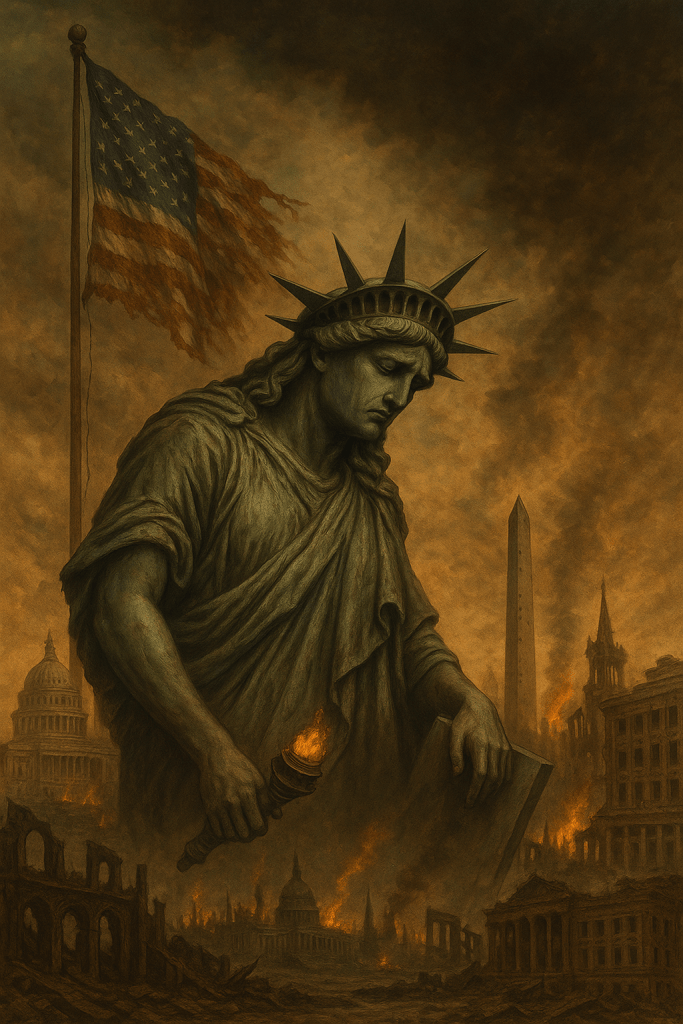
The United States national anthem, once a bold hymn to liberty, has withered into a dirge, reflecting a nation that has traded democracy and reason for spectacle and hollow slogans.
H.L. Mencken’s Notes on Democracy was written about 100 years ago, yet the reader will be struck by how sharply his observations on 1920s politics and culture mirror the political landscape of today.
Mencken’s caustic style and biting sarcasm run throughout the book. He held little confidence in the judgment and wisdom of his fellow citizens, particularly regarding politics and voting, as evidenced by this remark:
“Democracy is a pathetic belief in the collective wisdom of individual ignorance. No one in this world, so far as I know—and I have researched the records for years, and employed agents to help me—has ever lost money by underestimating the intelligence of the great masses of the plain people. Nor has anyone ever lost public office thereby.”
Mencken’s disdain was not reserved solely for the electorate. He was equally unforgiving when it came to the judgment and competence of elected leaders, describing their primary motivation with brutal clarity:
“It is his business to get and hold his job at all costs. If he can hold it by lying, he will hold it by lying; if lying peters out, he will try to hold it by embracing new truths.
One quote in particular struck me—written a century ago, yet hauntingly apt in describing the Trump administration’s approach to governance:
“No man would want to be President of the United States in strict accordance with the Constitution. There is no sense of power in merely executing laws; it comes from evading or augmenting them.”
The relevance of Mencken’s skepticism and critique of American democracy is both startling and disheartening. His writing is a reminder that the flaws he saw in the democratic process and its leaders are not new—they are simply dressed in the colors of each era. We could certainly use more writers and journalists like Mencken today: fearless in their observations, unyielding in their criticism, and unafraid to expose the flaws in both our political culture and the electorate that sustains it.
There is little doubt that investigative reporting, journalism, and legacy media are under full-scale assault. When politicians or public figures are confronted with articles or reporting that challenge their narratives, they are quick to sneer, “fake news.” In Murder the Truth: Fear, the First Amendment, and a Secret Campaign to Protect the Powerful, David Enrich details the escalating legal and political efforts to undermine press freedoms in the United States. These efforts, he explains, are largely initiated and financed through right-wing groups and MAGA followers.
One glaring example of this shift is the recent resignation of Bill Owens, executive producer of 60 Minutes. Owens cited that “over the past months, it has become clear that I would not be allowed to run the show as I have always run it, to make independent decisions based on what was right for 60 Minutes, right for the audience.” This resignation is symptomatic of a larger fear permeating newsrooms. Newspapers like The Washington Post and The Los Angeles Times have even become hesitant to make political endorsements. Fear of lawsuits, loss of subscriptions, and dwindling advertising revenue have left many media organizations wary of publishing anything that might stir controversy. As a result, crucial stories and investigations—those that expose government corruption, public official malfeasance, and corporate irresponsibility—often remain buried, locked away in the dead files of an editor’s desk drawer.
More than 2500 newspapers in the United States have stopped publishing in the past two decades, a rate of about two per week. Most counties in the United States are no longer home to any daily papers, and many surviving outlets have been gutted by layoffs and other cost-cutting. 70 million Americans live in what researchers have dubbed “news deserts.”
As staffing at local newspapers, declines, mayoral races, become less competitive, and voter turnout wins. Misinformation spreads. Politicians and other public figures are rarely held to account for lies and misdeeds. Today, state, legislators, city Council members, and small town mayors – – not to mention companies that pollute or mistreat workers or sell dangerous products – –are operating with a degree of invisibility and impunity that they have not enjoyed in a century
This book contains interesting stories and analysis of several free speech battles including:
Sarah Palin vs. The New York Times Donald Trump’s Lawsuits Against Media Entities Dominion Voting Systems vs. Fox News Hulk Hogan vs. Gawker Melania Trump vs Daily Mail
Enrich’s book may come too late to reverse this tide, but it serves as critical research for future historians who will undoubtedly question how a nation that once prided itself on free speech allowed censorship and political pressure to erode First Amendment guarantees.
An excellent read. Highly recommended for anyone who values a free and independent press.
I can understand Trump’s desire to have the title of Pope. It would confirm at least in his own mind, his infallibility.
Recommend listening to Is the Sun Setting on America’s Financial Empire? | The Ezra Klein Show for an interesting discusssion between Ezra Klein and Kenneth Rogoff, a former chief economist at the International Monetary Fund and a professor of economics at Harvard University on Trump’s tariff policy and its implications for the U.S. dollar and economy. Rogoff is rather blunt about how moronic the current economic path is.
I believe that our freedoms include the right to die with dignity. If an individual who is cogent and psychologically stable believes that she has lived life well, that her life is complete and that her future will not bring improvement or joy, she should have the right to make the decision to terminate her life. Period. Joan Temko Anyon San Francisco
Daniel Kahneman’s Decision: A Debate About Choice in Dying NYT
For those who have not seen it, I hardly recommend viewing Four Seasons, a romantic comedy movie from 1981 starring Alan Alda, Carol Burnett, Jack Weston and Rita Marino. I looked forward to the reprise of Four Seasons, 2025 Netflix version starring Steve Carell, Tina Fey, Will Forte and Kerri Kenney-Silver. However, I found the 2025 version to be dark, depressing and not very funny. The one bright spot in the movie was the acting of Steve Carell, whose character in the movie was most entertaining of the seven characters featured.
Maybe the most irritating commercials that I see on TV come from injury lawyers who probably boast of exorbitant cash settlements they get for their injured clients. Who winds up paying for these exorbitant cash settlements? The insurance companies? Not really. Consumers are on the hook for paying huge cash settlements as our annual auto insurance premiums continue to rise exponentially.
“Changing your mind once about a theory, an investment, or a person, is healthy. Changing your mind twice is not.” Nassim Nicholas Taleb



 Esot-eric