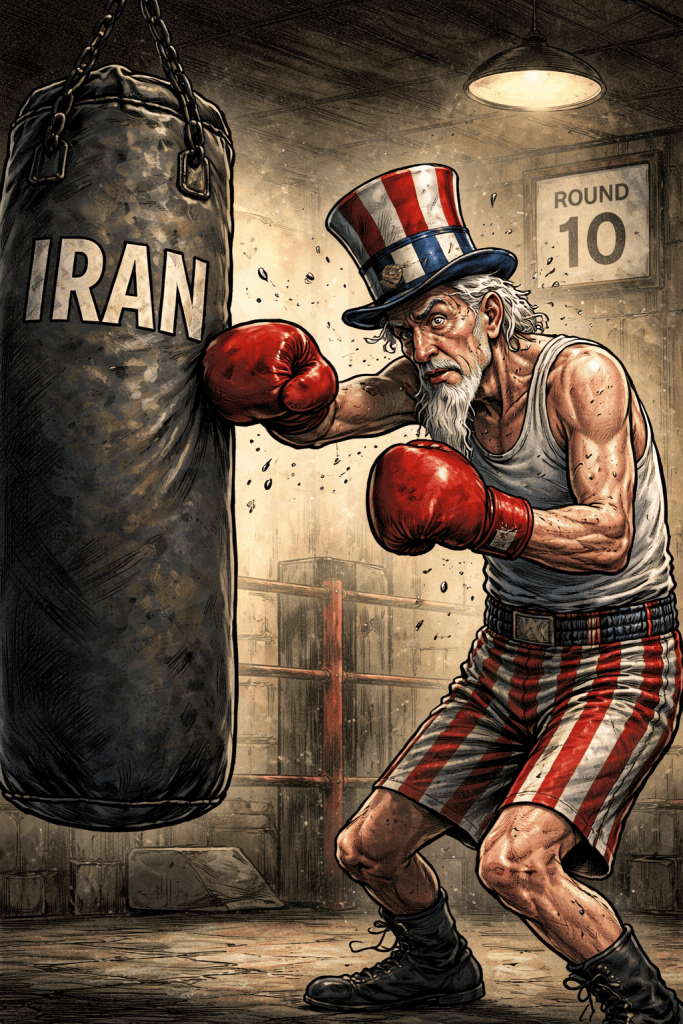
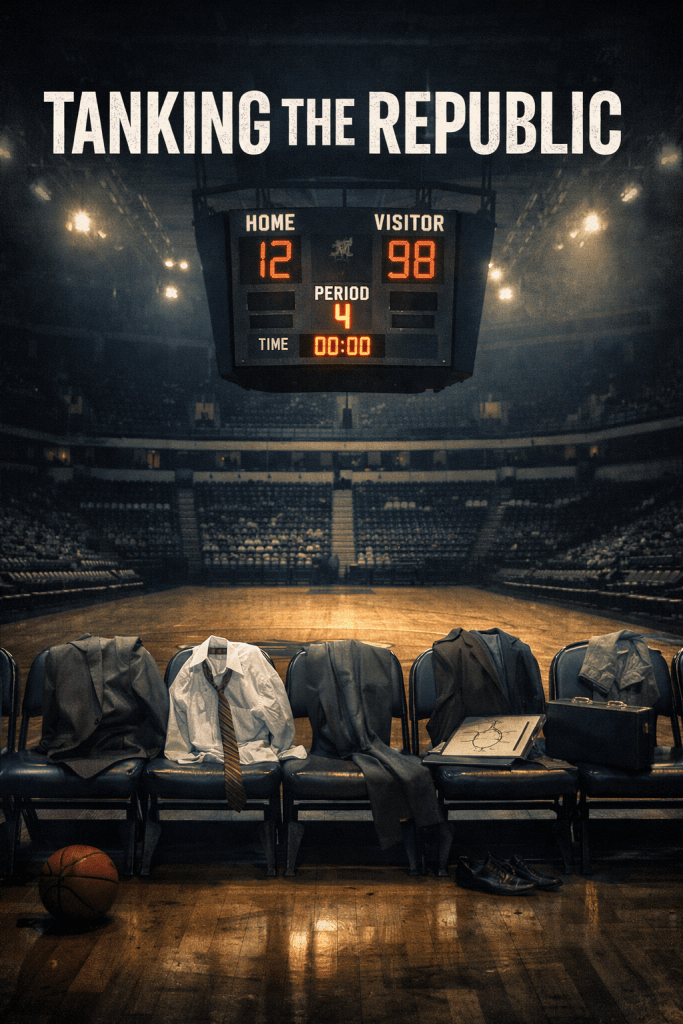
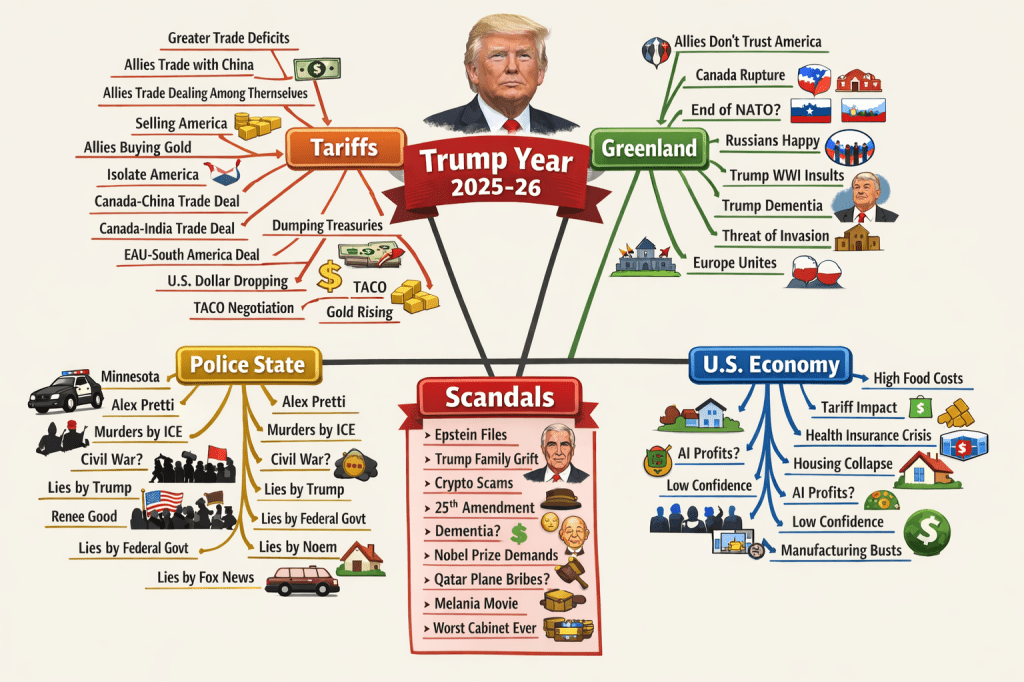
Tried to get CHAT GPT to create a mind map of the destructive whirlwind that is the Trump administration based on information I provided. It understood about 75% of what I was looking for. I enjoy infographics and illustrations and I will work to improve my efforts in those areas.
As an aside, very concerned around developments of the declining U.S. dollar. Shows declining confidence by investors inside and outside the United States. Treasuries provide the funds needed to fund our government and essentially, the American lifestyle.
Trump’s enduring legacy is not an institutional structure, but rather a highly toxic culture that has been adopted by many of the president’s followers and will live on after he is gone. Threats against Greenland, NATO, and individual European countries mean that no ally will be able to trust commitments made by the United States again.
Discourse by government officials has been degraded. Cabinet officers and press secretaries know that they don’t have to respond to questions they don’t like because they can simply insult the questioner. And companies will understand that they need to seek individual favors rather than general policies governing entire sectors.
I will not be alive when historians begin to write definitively about the United States during the Trump era. In truth, I would much rather read about it twenty years after it has ended than live through it as it unfolds. Standing in 2026, I find myself trying to imagine what scholars in 2046 might identify as the defining themes, causes, and consequences of this period. I have no time machine—only conjecture.
My assumption is that the central question historians will grapple with is not simply who Donald Trump was, but how and why American voters enabled the Trump era to occur. Inevitably, comparisons will be drawn to other moments in history when democratic systems elevated leaders who later proved deeply polarizing or destructive. Germany in the 1930s will be one such reference point, though careful historians will also emphasize key differences: Germany’s economic collapse, political fragility, and social despair far exceeded conditions in the United States in 2016.
Several lines of inquiry seem likely to dominate future assessments:
Congressional Enablers Trump’s support did not emerge in isolation. Historians will likely examine the role of Republican members of Congress who, with few exceptions, aligned themselves with Trump despite repeated controversies, ethical questions, and institutional challenges. Whether motivated by ideology, fear of political retaliation, or electoral self-preservation, their collective restraint—or lack of resistance—will invite comparison with earlier moments when legislators faced tests of independence and conscience, including those explored in John F. Kennedy’s Profiles in Courage.
The Supreme Court and the Long View A twenty-year gap may provide a more balanced framework for evaluating the Trump-era Supreme Court. With time, historians will be better positioned to assess whether the Court’s decisions strengthened constitutional principles, reshaped social norms, or produced unintended consequences that only became visible over decades.
Corporate Power and Quiet Support Many business leaders offered tacit or indirect support for Trump’s agenda, particularly where deregulation and tax policy aligned with their interests. Future researchers will likely scrutinize financial records, lobbying efforts, and private communications to better understand the extent to which economic power influenced public policy—details that were not always transparent in real time.
The Press and the Meaning of Truth The so-called mainstream press positioned itself largely in opposition to Trump, yet it did so while facing financial decline and growing competition from social media platforms. One enduring issue of the era was the erosion of shared definitions of “truth” and “fact.” Even well-sourced reporting was frequently dismissed as “fake news,” raising long-term questions about public trust, epistemology, and the role of journalism in a fragmented media environment.
Ideological Media and Political Identity Conservative media outlets—most notably Fox News, along with a network of right-leaning digital platforms—played a significant role in shaping how events were interpreted by audiences seeking reinforcement of political and cultural identities. Historians may study this ecosystem as a case study in modern persuasion, examining how narrative repetition, grievance framing, and selective information proved highly effective.
Immigration Enforcement and Historical Comparison Immigration policy and enforcement will remain one of the most contested aspects of the Trump era. Some commentators drew historical parallels to authoritarian practices of the past, while others argued such comparisons were exaggerated or inappropriate. With the benefit of distance, historians will likely focus on legality, implementation, humanitarian impact, and rhetoric—allowing future generations to judge the fairness and proportionality of those comparisons.
History rarely delivers simple verdicts. It weighs context, consequences, and contradictions. When the Trump era is finally written about with the benefit of time and distance, the most enduring lesson may not center on one man alone, but on the resilience—or fragility—of democratic institutions and the citizens who sustain them.
My thoughts to a friend about the Greenland situation…
I sometimes wonder whether people at the White House read the news, particularly the business and financial news. For example, they would see that China and Canada have entered major trade agreements, now viewed as a new strategic partnership. The European Union and various South American countries have also just entered into a landmark trade agreement. They might also want to check out who currently holds our US treasuries. After Japan and China, the next eight countries are European and the Cayman Islands. I don’t think you want to piss off people who are holding your paper. I don’t think you also want to piss off countries who will tell you to take your military bases and troops and get the hell out. The rest of the world, particularly our allies are moving on. They can’t trust us and by “us” I mean the government and the American voters who enabled all this. What moves this government is not diplomacy but money and finance and our leverage on those matters are thinning.
The CNN anchor (Jake Tapper) then played video from the shooting in which someone was heard calling Renee Good “f*cking b*tch” after ICE agent Jonathan Ross, fired at least three shots.
“Is that Agent Ross’s voice calling Renee Good a f*cking b*tch?” Tapper asked.
“I can’t determine which one it is, but it could be, sir,” Kristi Noem replied.
I have made previous year end predictions with modest success: 2023 predictions, 2024 predictions, and 2025 predictions. Some of my predictions are based on reason and some are based on hope and some tongue in cheek..
The world as we know it will change dramatically as AI advances and credible evidence of UAPs accumulates. The most profound disruptions will affect what we believe we know about science—particularly physics—and religion.
Kaitlyn Collins of CNN will try to secure the first interview with an ET.
Donald Trump will leave office by the end of 2026, ostensibly for health reasons.
A market correction of roughly 25% will occur in early 2026. A modest rebound will follow later in the year, but it will not recover the initial losses. AI will fail to deliver the financial returns many corporations expect, and large investments will produce disappointing profits.
By the end of 2026, unemployment will rise to between 5.5% and 5.8%.
Continued global distrust of the United States will push allies toward deeper economic and strategic alignment with China. Within three to five years, China—not the U.S.—will be the dominant economic, business, and political power. The U.S. will become an even greater political pariah, particularly if it engages Venezuela militarily or continues to inadequately support Ukraine. Should Ukraine be forced into a highly unfavorable settlement with Russia, it will represent a diplomatic and military defeat for the United States greater than Vietnam, with longer-lasting consequences.
Fear of major losses in the November 2026 midterms will trigger a reinvigoration of Republican members of Congress. Many current Trump administration cabinet members will be fired or pressured to resign due to scandal or incompetence. Congressional Republicans will withdraw institutional protection from failing officials.
Rising ticket prices and escalating sports-network subscription costs will provoke a fan backlash, reducing attendance and interest across major sports. Fans will increasingly feel that on-field and on-court performance does not justify the expense. ESPN, in particular, will regret its deal with WWE.
Taylor Swift will marry Travis Kelce. Tabloid reports of separation and divorce will soon follow.
Democrats will regain control of the House in November 2026, though by narrower margins than currently predicted.
Gun violence will continue unabated. Regardless of how horrific individual events become, no meaningful gun-control legislation will be enacted.
No Super Bowl celebration parade down Broad Street in Philadelphia in 2026.
Yearly Social Security increases are not keeping up with increasing rise in inflation. The senior citizen constituency will become an important political force in 2026 and 2028, one that the Republican Party can no longer be assured of their support.
Was Tuesday, November 4 a political turning point—something akin to the Battle of Midway in 1942? Early in World War II, the United States absorbed one devastating blow after another, beginning with Pearl Harbor and continuing through a string of losses across the Pacific. Then came Midway: a battle whose full significance wasn’t immediately recognized, but which, in hindsight, marked the moment when momentum quietly shifted. The war was far from won, but the tide had stopped running entirely against the United States.
It’s tempting to wonder whether this week’s Democratic victories in New Jersey, Virginia, California, New York City, and elsewhere represent a similar inflection point. American politics in recent years has felt like a series of shocks and retreats for Democrats and for voters who oppose Donald Trump. And like an adversary who seems immune to normal political gravity, Trump has survived scandals and crises that would have ended the careers of most public officials.
Whether these election results signal a broader reversal of fortunes—or merely a brief pause in the storm—is impossible to know. It’s not hard to imagine Trump and his allies resorting to increasingly extreme measures to influence or undermine next year’s midterms. As with Midway, the meaning of this moment will only become clear in retrospect. For now, all we can say is that the political seas may be shifting, and time will tell in which direction they flow.
Patient Name: Uncle Sam Age: 249 years Date of Birth: July 4, 1776 Location: United States of America
Chief Complaint:
Progressive systemic decline characterized by political arrhythmia, social inflammation, moral neuropathy, and chronic division.
Medical History:
Patient presents with metastatic ideological cancer, first detected in 2017 following years of untreated inflammation from greed, corruption, and truth decay. A brief remission was noted, but malignancy has since spread to vital organs including the Judicial System, Congress, and National Conscience.
Patient also suffers from acute historical amnesia, with repeated lapses in memory regarding equal rights, freedom of the press, and separation of church and state. Increasing episodes of selective recall noted, often triggered by political self-interest and social media exposure.
In 2020, the patient contracted COVID-19, complicated by political co-infection. Though vaccinated, his recovery was hampered by widespread disinformation and refusal among many cells to follow treatment protocols. Residual scarring remains in the respiratory and trust systems.
Patient also exhibits chronic income disparity, hypertension of hostility, and arteriosclerosis of empathy, limiting blood flow to compassion and understanding.
Psychiatric History:
Patient demonstrates paranoid delusions, convinced that enemies lurk within rather than abroad. Displays mood instability, alternating between manic displays of nationalism and depressive bouts of self-loathing.
Once socially active, the patient is now increasingly isolated from former allies and global partners. Exhibits projection, blaming others for self-inflicted wounds.
Recent assessments reveal addiction to misinformation and dopamine dependency on outrage-based media. Sleep cycle disrupted due to 24-hour news exposure and endless campaigning.
Family History:
Descended from immigrants, now expresses hostility toward relatives of similar lineage. Strained relationship with younger generations due to generational and cultural disconnect.
Current Medications:
Denial (high dosage)
Partisan rhetoric (administered hourly)
Corporate lobbying (self-prescribed)
Occasional dose of hope and activism, though compliance inconsistent
Vital Signs:
Pulse: Erratic (divided between left and right chambers)
Blood Pressure: Elevated due to constant internal conflict
Temperature: Rising globally
Vision: Impaired by polarization
Hearing: Selective—responds mainly to echo chambers
Heart: Enlarged historically, now showing signs of hardening
Prognosis:
Guarded to poor. Survival depends on:
Aggressive treatment of ideological malignancy
Coronary transplant (restore compassion and moral circulation)
Rehabilitation therapy to strengthen backbone and restore balance
Cognitive behavioral therapy to reverse chronic denial and historical amnesia
Detoxification from greed, fear, and misinformation
Long-term infusion of education, empathy, and critical thinking
Summary:
Patient remains in critical but not terminal condition. Though his immune system of democracy is weakened, the antibodies of truth, courage, and civic duty still circulate—albeit faintly. Immediate intervention is required to prevent full organ failure of the Republic.
In professional wrestling parlance, a “heel turn” occurs when the heroic figure (the face) does something unexpectedly cruel or out of character, transforming into a villain.
In a recent Ryder Cup tournament—where U.S. golfers compete against their European counterparts—the American crowd became so boisterous, rude, and insulting that several European golfers said they would never return to the United States. Rory McIlroy, one of the world’s top players, said he and his wife endured personal insults and even had drinks poured on them.
Years ago, the U.S. brand was that of the world’s leading democracy. Now, foreigners see chaos in the manhunt and detention of immigrants and the deployment of soldiers in major U.S. cities. We are viewed as selfish and destructive, especially in light of new tariffs. I don’t see a “face turn” for America anytime soon.
Ironically, Marjorie Taylor Greene seems to be attempting her own heel-to-face transformation—saying and doing things that suggest a rebranding effort, however implausible.
The arrogance of Pam Bondi testifying before the Senate oversight committee reminded me of certain high-ranking Nazi officials at the Nuremberg Trials—lying and obfuscating to save themselves.
Can one win the Nobel Peace Prize while presiding over a civil war?
I agree with Jessica Tarlov, the moderate voice on Fox News’ The Five, who expressed surprise that there hasn’t been a stronger national reaction to ICE’s actions and the deployment of soldiers to “blue city” locations. My sense is that the Baby Boom generation—now mostly passive—would have been far more disruptive if these events had occurred 40 or 50 years ago.
What could possibly go wrong sending the military and National Guard into U.S. cities? Remember Kent State?
There’s growing fury over the pending release of the Epstein files. Many believe Donald Trump will be prominently named among those accused of sexual misconduct with underage girls. I confess to some cynicism: if such evidence emerged, the Republican Party and MAGA movement might simply try to lower the age of consent.
Our inability to have children has been my wife’s and my greatest life regret. Yet, given how American culture and politics have deteriorated, that regret feels less sharp. Perhaps it was a blessing.
I spend much of my time reading or listening to financial analysts about the current and future state of the U.S. economy. There’s no consensus. While some investors thrive in the stock market, many Americans are struggling with rising costs for food, health insurance, prescriptions, and other essentials. Trump’s tariffs are beginning to bite. As a senior on a fixed income, I know I’ll have to tighten my belt in 2026.
While I’m not happy, I feel great sympathy for those in their 20s and 30s who are trying to build careers under the shadow of artificial intelligence. They must now question the value of a college degree: Is the time and money worth it? The average first-time homebuyer is now 38 years old.
If someone is a struggling comedian or athlete, I’d understand their choice to perform at Saudi-sponsored events. But most of the entertainers and athletes going there are already wealthy—well-positioned to follow their conscience and decline the money.
I once dismissed talk of “blue-state secession” as fanciful. Now, I’m not so sure.
As Mother Jones editor Clara Jeffery recently wrote:
“So far this year has been marked by a collective action problem. Media conglomerates, law firms, universities, banks, CEOs—too many powerful institutions have failed to meet the moment. That’s why people across the country, desperate for pushback against Trump’s autocracy, have embraced Newsom’s redistricting plan. With Trump provocatively sending troops into blue cities, and using rescission and shutdowns to claw back funds from blue states, it’s time to turn the tables. Soft secession, powered by the ambitions of blue-state governors, could become the proving ground for a new confederacy. Hopefully the threat of CalExit or a new Union will be enough. But that such extreme measures might be necessary to ensure that American democracy shall not perish from the earth is becoming more self-evident with every passing day.”