2026 Predictions: Hold on to your Seats!

I have made previous year end predictions with modest success: 2023 predictions, 2024 predictions, and 2025 predictions. Some of my predictions are based on reason and some are based on hope and some tongue in cheek..

The world as we know it will change dramatically as AI advances and credible evidence of UAPs accumulates. The most profound disruptions will affect what we believe we know about science—particularly physics—and religion.

Kaitlyn Collins of CNN will try to secure the first interview with an ET.

Donald Trump will leave office by the end of 2026, ostensibly for health reasons.

A market correction of roughly 25% will occur in early 2026. A modest rebound will follow later in the year, but it will not recover the initial losses. AI will fail to deliver the financial returns many corporations expect, and large investments will produce disappointing profits.

By the end of 2026, unemployment will rise to between 5.5% and 5.8%.

Continued global distrust of the United States will push allies toward deeper economic and strategic alignment with China. Within three to five years, China—not the U.S.—will be the dominant economic, business, and political power. The U.S. will become an even greater political pariah, particularly if it engages Venezuela militarily or continues to inadequately support Ukraine. Should Ukraine be forced into a highly unfavorable settlement with Russia, it will represent a diplomatic and military defeat for the United States greater than Vietnam, with longer-lasting consequences.

Fear of major losses in the November 2026 midterms will trigger a reinvigoration of Republican members of Congress. Many current Trump administration cabinet members will be fired or pressured to resign due to scandal or incompetence. Congressional Republicans will withdraw institutional protection from failing officials.

Rising ticket prices and escalating sports-network subscription costs will provoke a fan backlash, reducing attendance and interest across major sports. Fans will increasingly feel that on-field and on-court performance does not justify the expense. ESPN, in particular, will regret its deal with WWE.

Taylor Swift will marry Travis Kelce. Tabloid reports of separation and divorce will soon follow.

Democrats will regain control of the House in November 2026, though by narrower margins than currently predicted.

Gun violence will continue unabated. Regardless of how horrific individual events become, no meaningful gun-control legislation will be enacted.

No Super Bowl celebration parade down Broad Street in Philadelphia in 2026.

Yearly Social Security increases are not keeping up with increasing rise in inflation. The senior citizen constituency will become an important political force in 2026 and 2028, one that the Republican Party can no longer be assured of their support.

Heel Turns and Blue Secession

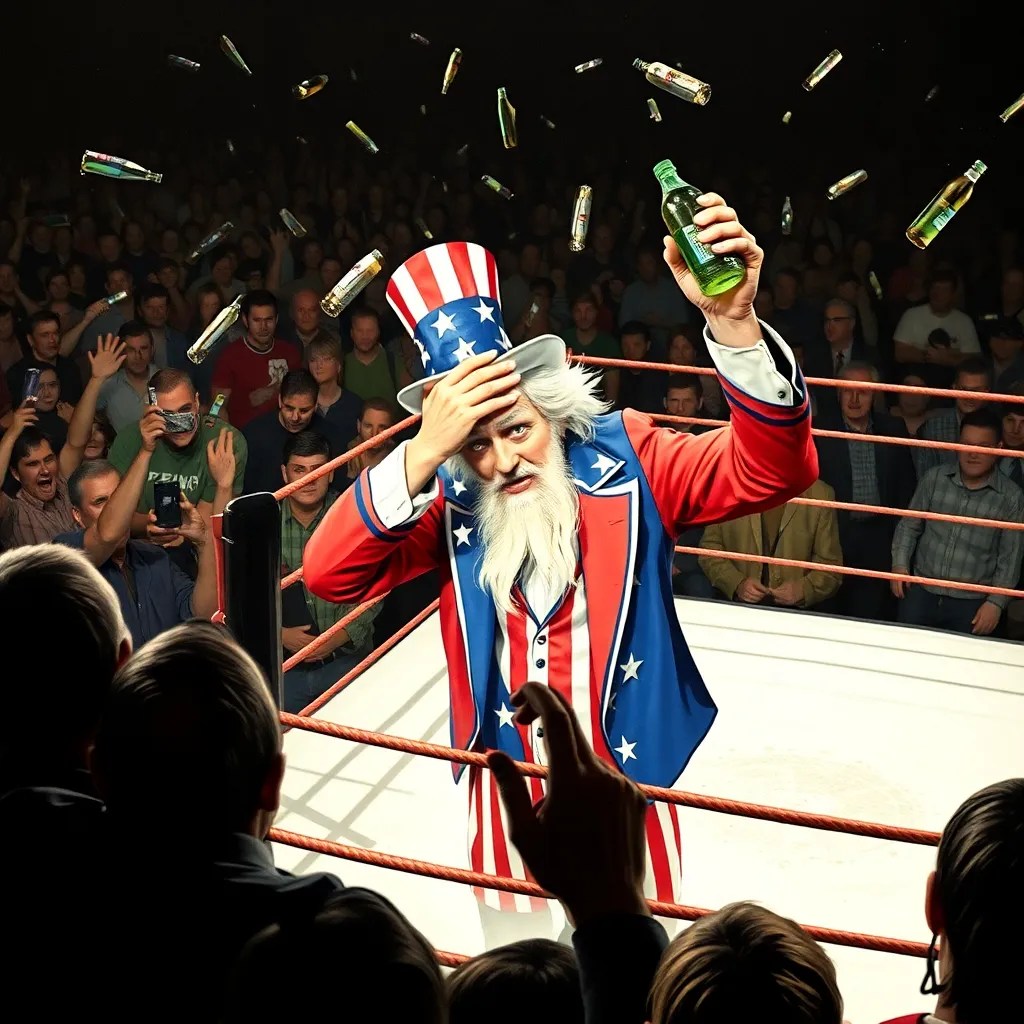
In professional wrestling parlance, a “heel turn” occurs when the heroic figure (the face) does something unexpectedly cruel or out of character, transforming into a villain.

In a recent Ryder Cup tournament—where U.S. golfers compete against their European counterparts—the American crowd became so boisterous, rude, and insulting that several European golfers said they would never return to the United States. Rory McIlroy, one of the world’s top players, said he and his wife endured personal insults and even had drinks poured on them.

Years ago, the U.S. brand was that of the world’s leading democracy. Now, foreigners see chaos in the manhunt and detention of immigrants and the deployment of soldiers in major U.S. cities. We are viewed as selfish and destructive, especially in light of new tariffs. I don’t see a “face turn” for America anytime soon.

Ironically, Marjorie Taylor Greene seems to be attempting her own heel-to-face transformation—saying and doing things that suggest a rebranding effort, however implausible.

The arrogance of Pam Bondi testifying before the Senate oversight committee reminded me of certain high-ranking Nazi officials at the Nuremberg Trials—lying and obfuscating to save themselves.

Can one win the Nobel Peace Prize while presiding over a civil war?

I agree with Jessica Tarlov, the moderate voice on Fox News’ The Five, who expressed surprise that there hasn’t been a stronger national reaction to ICE’s actions and the deployment of soldiers to “blue city” locations. My sense is that the Baby Boom generation—now mostly passive—would have been far more disruptive if these events had occurred 40 or 50 years ago.

What could possibly go wrong sending the military and National Guard into U.S. cities? Remember Kent State?

There’s growing fury over the pending release of the Epstein files. Many believe Donald Trump will be prominently named among those accused of sexual misconduct with underage girls. I confess to some cynicism: if such evidence emerged, the Republican Party and MAGA movement might simply try to lower the age of consent.

Our inability to have children has been my wife’s and my greatest life regret. Yet, given how American culture and politics have deteriorated, that regret feels less sharp. Perhaps it was a blessing.

I spend much of my time reading or listening to financial analysts about the current and future state of the U.S. economy. There’s no consensus. While some investors thrive in the stock market, many Americans are struggling with rising costs for food, health insurance, prescriptions, and other essentials. Trump’s tariffs are beginning to bite. As a senior on a fixed income, I know I’ll have to tighten my belt in 2026.

While I’m not happy, I feel great sympathy for those in their 20s and 30s who are trying to build careers under the shadow of artificial intelligence. They must now question the value of a college degree: Is the time and money worth it? The average first-time homebuyer is now 38 years old.

If someone is a struggling comedian or athlete, I’d understand their choice to perform at Saudi-sponsored events. But most of the entertainers and athletes going there are already wealthy—well-positioned to follow their conscience and decline the money.

I once dismissed talk of “blue-state secession” as fanciful. Now, I’m not so sure.

As Mother Jones editor Clara Jeffery recently wrote:

“So far this year has been marked by a collective action problem. Media conglomerates, law firms, universities, banks, CEOs—too many powerful institutions have failed to meet the moment. That’s why people across the country, desperate for pushback against Trump’s autocracy, have embraced Newsom’s redistricting plan. With Trump provocatively sending troops into blue cities, and using rescission and shutdowns to claw back funds from blue states, it’s time to turn the tables. Soft secession, powered by the ambitions of blue-state governors, could become the proving ground for a new confederacy. Hopefully the threat of CalExit or a new Union will be enough. But that such extreme measures might be necessary to ensure that American democracy shall not perish from the earth is becoming more self-evident with every passing day.”


Maybe it is time for a soft secession??

Playing with “White House” Money

I’ll admit it: I wasn’t the most attentive economics student in college. But recent events have forced me into a crash course in tariffs, trade, the stock market—and most urgently—the U.S. Treasury market.

These aren’t abstract terms anymore. I’ve been following the conversations—some sober, some frantic—coming from economists, traders, financial analysts, and CEOs. What stands out is how few of them support our current approach to tariffs. I hesitate to call it a “policy.” It feels more like something made up on the fly.

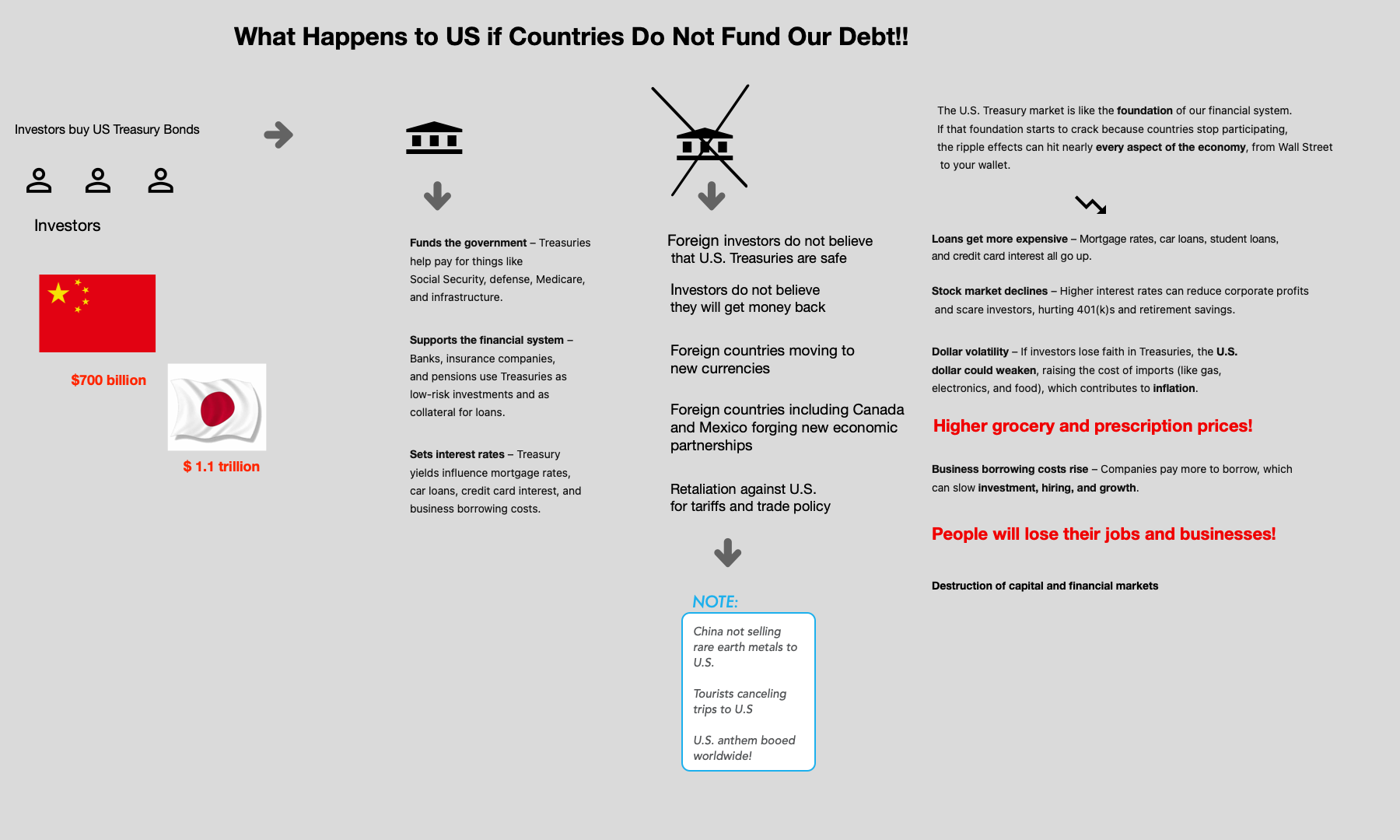
President Trump has been lucky in the past. He was rescued by his father’s money and banks willing to take risks that didn’t always pan out. He wasn’t so lucky in the casino business, and I don’t think he realizes he’s holding a weak hand in the high-stakes game of tariffs. When countries like China and Japan begin offloading U.S. Treasuries, it’s not just a financial maneuver—it’s a warning. They’re saying loud and clear: you’re not playing with our house money.

Let’s be honest: America is losing friends. Longtime allies are distancing themselves. They were stunned when Trump won reelection last November—and outright furious when “Liberation Day” was declared weeks ago. While Congress, the courts, and much of the press seem hesitant to challenge him, our international allies are not. They’re making new economic and diplomatic arrangements—and the U.S. is no longer on the guest list.

This has consequences. If foreign investors stop buying U.S. Treasury bonds—or worse, start selling them—our ability to fund government programs, including Social Security, is at risk. No one will be spared the fallout. It’s hard to believe our leaders don’t grasp how dangerous this path is.

And it may already be too late. Confidence in the U.S. has taken a major hit. There are reports of Canadian tourists canceling trips here—more signs of the growing unease.

If you’re a CEO or business owner, how can you plan with any confidence when the rules of the game keep shifting? The White House seems deaf to the frustration coming from both abroad and increasingly from within our own borders.

Democrats and critics are pinning their hopes on the 2026 midterms. But if this trajectory continues, I worry about what condition the country will be in by then.

And what about the seniors who voted for Trump? How do they feel now that Social Security offices are closing and workers are being laid off? When the Commerce Secretary brushed off concerns about late checks—suggesting a delay of a week or so would be no big deal—I wanted to shout: Wanna bet?

There’s a lot of noise out there. A lot of shouting, marching, hand-wringing. But not a lot of clarity or direction. Sometimes, it feels like we’ve passed the point of no return. Judging by the way our allies are behaving, they seem to think we already have.

Times Out

The Sunday New York Times remains one of life’s pleasures. I do miss reading the enormous print edition of the paper with the magazine but at least the online edition still suffices. Shown below are a book I’d like to read and useful analysis and advice from various columnists.

Flesh

by David Szalay

Szalay’s new novel traces the life of a young man in Hungary who eventually makes his way to England, following him from troubled youth to immigrant success to tragic fall. Each chapter provides glimpses of the major stages of adulthood — first love, marriage, parenthood — interwoven with intervals of aimlessness, reinvention and grief. With cool detachment, Szalay offers observations on both the complicated self and the unpredictable world surrounding it.

***

Our current antiglobal moment could last for a long time. Illiberalism is alive and strong. Comparisons that once seemed incendiary or irresponsible now seem obvious. As in the 1930s, minority groups are being scapegoated as symbols and causes of globalization’s ills. For Jews then, read migrants or trans people now. Mr. Trump’s imminent betrayal of Ukraine suggests that we are moving rapidly through the 1930s and have already arrived in 1938. That’s when Western leaders in Munich decided to allow Hitler to dismember one of Europe’s few remaining democracies, Czechoslovakia. It was not worth risking lives over “a quarrel in a faraway country, between people of whom we know nothing,” reasoned the dangerously reasonable Neville Chamberlain. Less than one year later, Hitler browbeat the president of what remained of Czechoslovakia into accepting a complete occupation of his country.

Russia’s invasion of Ukraine was a déjà vu moment for historians of World War II. Will Greenland and Canada become the next Czechoslovakia and Poland?

Globalization Is Collapsing. Brace Yourselves.
By Tara Zahra
Dr. Zahra is a professor of history at the University of Chicago and has written extensively about globalization’s first collapse.

***

A 20 minute agility workout to improve balance

***

Instead of following the standard guidance to keep withdrawals to 4 percent of the balance in your retirement account, then adjust annually for inflation, you might forgo the inflation raise when stock prices are falling, Dr. Pfau said. Or you can install so-called guardrails, limiting withdrawals to, say, 3 percent in bad years for stocks but taking out, perhaps, 5 percent when the market is surging.

How to Protect Your Retirement Savings Now as Markets Plunge by Diane Harris

***

My problem is with Trump’s magical thinking that you just put up walls of protection around an industry (or our whole economy) and — presto! — in short order, U.S. factories will blossom and make those products in America at the same cost with no burden for U.S. consumers.

For starters, that view completely misses the fact that virtually every complex product today — from cars to iPhones to mRNA vaccines — is manufactured by giant, complex, global manufacturing ecosystems. That is why those products get steadily better and cheaper. Sure, if you are protecting the steel industry, a commodity, our tariffs might quickly help. But if you are protecting the auto industry and you think just putting up a tariff wall will do it, you don’t know anything about how cars are made. It would take years for American car companies to replace the global supply chains they depend on and make everything in America. Even Tesla has to import some parts.

I Just Saw the Future. It Was Not in America. Thomas L. Friedman

Start of the Rout?

If America is a stock, is it time to dump it and sell?

Like the ouroboros, I believe Big Tech is eating itself alive with its component companies throwing more and more cash at investments in one another that are most likely to generate less and less of a return. Monday’s correction shows that our financial markets — and possibly your retirement portfolio — may be starting to reflect an understanding of this dynamic. New York Times 1/28/25 I Study Financial Markets. The Nvidia Rout Is Only the Start. Mihir A. Desai is a professor at Harvard Business School and Harvard Law School.

If Trump’s all-in-on-fossil-fuels, “drill, baby, drill” rallying cry — at the dawn of this era of artificial intelligence, electric vehicles, batteries and autonomous cars — really becomes our strategy, it will not make America great again. But it will definitely help make China great again. New York Times 1/28/25 Trump Is Going Woke Thomas Friedman

The bond market is telling us something about the dawn of the second Trump presidency, and it’s not pretty….Most of the policies proposed by President Trump, from tariffs to additional fiscal stimulus to deportations that tighten the labor market, are expected to add to inflation. And to the degree they are enacted, they will combine with an inflation rate that has declined rapidly, but which remains above the Federal Reserve’s target and is still higher than it was during most of the decade leading up to the pandemic. Rising long-term rates are bad for businesses and households that need to borrow, since the cost of loans such as mortgages and auto loans are directly linked to 10-year Treasury yields. New York Times 1/29/25 Trump’s Plans Are Already Making Your Life More Expensive Rebecca Patterson (is an economist and market strategist)

Crash Landing: The Inside Story of How the World’s Biggest Companies Survived an Economy on the Brink by Liz Hoffman (Review)

My rating: 5 of 5 stars

A compelling narrative about how various CEOs, politicians and business leaders manuevered companies, industries and the U.S. economy during the pandemic. Bill Ackman was able to foresee the future and made billions in profits. Other CEOs struggled to keep their companies afloat and needed loans and financing from the government to survive.

Hoffman presents a study of various approaches of crisis management from the perspectives of different industries (hotel, airlines, auto, financial services etc.) The book was very well written. You do not have to be a MBA student to grasp the precarious situations companies were in during the first months of the pandemic.

Government and specifically President Trump were not very helpful. Trump exhibited zero leadership skills during this crisis and his only concern was getting re-elected. However Steve Mnuchin, Secretary of the Treasury, did exhibit some initiative and acumen in working with various CEOs during the crisis.

The reader realizes that a lot of money was thrown against this pandemic to save companies and also to assist workers and the public to survive. How much of this effort was prudent and effective may be worth another book.

If you read and enjoyed Too Big to Fail by Andrew Ross Sorkin about the financial crisis of 2008-2009, you will like this book too.


View all my reviews

What Me Worry?

Some of the headlines just for today:

Trump retweets video saying “only good Democrat is dead Democrat”…

“Haven’t seen black people this upset in 20 years” Van Jones

Total jobless claims top 40 million

Fed: Sharp decline in May leaves business is pessimistic about recovery

Stressed out front line nurses admit they are at breaking point with 68% planning to quit their jobs

United States deaths: 101,573

Q1 contraction worse than thought

The former Minneapolis police officer seen in the video with his knee on Floyd’s neck had 18 prior complaints filed against him

Governor declares state of emergency in Minneapolis

As US deaths top 100,000, Trump’s virus task force is curtailed

A GOP lawmaker had the virus,  Nobody told Democrats exposed to him.

California is re-opening too quickly, posing “very serious risk,” health officer warns

Jim Cramer says market still in for a “rough ride,” suggest sticking with remote tech stocks.

“Sorry, no mask allowed”: Some businesses pledge to keep our customers who cover their faces


Zero Interest Rates, Zero Confidence

Disclaimer: I am not an economist nor possess any special knowledge of economics or finance.

As I write: the number of coronavirus infections worldwide is 169,552. 6,516 people worldwide have died. In the United States, approximately 3485 people have been infected with coronavirus. 65 people in the United States have died. Widespread testing has not taken place in the United States so the infection rate numbers are expected to rise dramatically.

The Dow Jones average is 23,185 or about a 21.5% drop from its high in February. The S&P is 2711 and has declined 20.1% from its high in February.

The federal reserve has reduced interest rates to 0%.

The following analysis represents my thinking and should not be used as a guide for investing etc.

What does this interest rate cut mean?

  1. It is the last remaining bullet in the Fed arsenal and intended to bolster the faltering stock market and economy, as I indicated in the summary above, Both indices have dropped over 20% since their highs last month. Many financial experts are expecting another 20-25% drop given the projected rise of the coronavirus infections and further disruptions to businesses and the U.S. economy in general. There are some financial analysts insisting that the stock market will come roaring back by the end of the year and recover much of its 2020 losses. I doubt it. One also needs to see the rate of recovery accomplished in China and Europe. If you have pulled out of the stock market and are now in cash, you are very limited as to how you can earn a return.
  2. Reflects the politicization of the Fed. President Trump has insisted on lower interest rates and just yesterday threatened to remove Chairman Powell from his job. The president is ever mindful that the November election is less than eight months and how a recession will adversely affect his chances of being reelected. Trump has done a very poor job of communicating what measures need to be taken and has miscommunicated the severity and urgency of this emergency. I would not be shocked that Trump would not be re-nominated as the GOP candidate if the country experiences higher than projected infections and death within the next four months. Seniors and retired people (part of the Trump base) will be panicked when their investment funds settle to significant losses.
  3. Trump’s priorities are investors and stock prices. He is leaving the dirty work of dealing with managing the pandemic and health issues to state governors and local communities. He has no choice. Trump has no bench of competent leaders or administrators to guide his actions. His “by the seat of his pants” decisions on travel bans have angered our allies and American citizens caught in Europe.
  4. Reflects the realization that the coronavirus emergency is not a two week or one month issue. There are no quick fixes and this virus will not disappear overnight. It is going to have a bad long term effect on the economy, corporations, small businesses and workers.
  5. Confirmation that the economy is not well and that strong measures were needed to prop it up. Seems obvious to me that many businesses are going to require bail outs in order to survive if the length of the coronavirus bands continue past May. Due to lower sales and cash flow issues, businesses will be forced to access available lines of credit creating capital and risk management concerns for banks and financial institutions. Airlines and the cruise industries are looking at 3-6 months minimum of travel dislocations and cancellations. Regrettably individuals who will become unemployed will also be accessing their available credit card lines of credit but they will not be receiving any bailout money from the government other than temporary unemployment insurance.

Stock Market Graph.jpg

6. The country is seeking a hero, someone who displays competence, communication skills and leadership. Don’t be surprised if the next serious Presidential candidate comes from a governor who protects his state and ensures that the necessary medical care and resources are available. (Cuomo from NY??)


Tuesday November 3, 2020

Author’s Note: Science fiction? Horror? Or Cautionary Tale? You the reader decide…

He awakened, startled by the noise outside. It was 3:00 AM. Normally he would be up and writing his first tweet. However no one wanted to hear from him anymore. Even the Fox Morning show was not taking his calls. Here it was the morning of a scheduled election day that was not going to take place. “Too dangerous” he argued and the election date was postponed. Plus his septuagenarian opposition candidate had contracted the virus and now was in serious condition. He wondered about the crowd outside – – it still sounded very loud and angry. Thankfully he was able to count on the military to place a perimeter around the White House grounds. That did not stop a few people from attempting to breach the White House grounds. Occasionally there was a sound of gunfire and the smell of tear gas. He remembered videos of the last days of Hitler hunkered down in his Berlin bunker while Russian troops closed in. It wasn’t tanks or troops he was avoiding but the utter catastrophe that was occurring during his watch. He was alone. His wife and young son sought refuge in a Caribbean island that had not been affected by the virus. 

How could things go so wrong and so quickly in nine months! He was assured by people in his administration that there was no huge threat to the American people. Regrettably those people were not scientists nor were they medical experts who could’ve provided the proper expertise and advice. His initial primary concern was the falling stock market and its effect on the economy and on his reelection chances. He now regretted the cuts to the budgets of the CDC and other medical projects. Testing for the virus had been delayed and many low income individuals with no health insurance could not afford the $3,000 charge and did not get tested. Maybe the Medicare for All was not such a bad idea?

The catastrophe started slow. He even bragged that this was all a hoax and that the virus would disappear shortly. However pockets of infection started to grow at a steady pace. Once infection pockets were found in large cities like New York, Chicago, Los Angeles and Atlanta, the virus spread rapidly. Just about every state with a large population center  was overwhelmed with sick and infected. The stock market mirrored the infection rate plaguing the country. The Dow dropped below 2500 and continues to decline. The Fed attempted to staunch the bleeding and even dropped to negative rates at his insistence but all it did was panic investors more. No one was worried about their 401Ks anymore.

He initially appointed his vice president to spearhead the effort to manage the crisis. But with each report of a 25,000 or more dying, he appointed new people starting with his son in law and then a Fox News personality to take over crisis management. In desperation he asked his daughter to take over but she also fled to an island resort not affected by the virus. Responsible people avoided him and his administration as much as they did the virus.

Being a germaphobe, he was always skittish around people with coughs and colds. He curtailed any outside campaigning or outside exposure when the rate of infections rose dramatically in the spring. No more MAGA rallies. No golf outings. He had found it hard to find people to play golf with when the infection rates spiked. Except for Lindsey. Even the summer national party conventions were cancelled for health concern reasons.

The infection rate overwhelmed hospitals and medical capabilities. Many doctors, first responders and nurses were among the first victims of the rising infection rate as protocols had not been adequately developed or communicated. Those doctors and health officials who did not die found themselves too sick to treat other patients. Infected people, usually the elderly, passed away in their homes. They received no medication and no treatment. He realized that he lost the country when even Fox News broadcast pictures of elderly people dying uncared in nursing homes.

For those who did not have the virus, life was very hard with plenty of disruptions. There were food shortages as many stores and groceries were closed. There was no gas for cars. Most civil and government services were suspended or terminated. No mail was being delivered. Law enforcement and the judicial system ground to a halt. Violent crime rose dramatically everywhere. Desperate people seeking food, medication and household supplies preyed on those neighbors who had them. Banks and the financial systems were at a standstill. ATMs did not dispense cash. The country was in financial, commercial and social gridlock.

City streets were largely empty. Those who were seen walking wore masks. Places where people tended to congregate socially were closed including churches, movie theaters, malls, restaurants and gyms. Neighbors stayed to themselves in their homes fearful to venture outdoors. Schools and universities closed in the Spring and remained closed. Unemployment exceeded Depression era levels. Manufacturing plants were shuttered. The service industry ground to a halt. No pizza deliveries. Fast food chains were dark. If you had problems with your internet or cable, there were no home repair calls.

There were no diversions to distract those who were still healthy from all the bad news. The World Series was completed overseas in Aruba. The college and professional football seasons had been cancelled. There was a limited Olympics in late summer but U.S. athletes were prohibited from entering Japan, the site of the games.  As a further insult, Mexico and Canada blocked their borders to prevent Americans from coming in. Countries around the world including China, Japan and South Korea did not allow flights emanating from the United States. Mexico was beefing up their borders to keep Americans out and planning to build a wall.

His poll numbers were in the low single digits. His businesses suffered too. His resorts and golf courses were closed. Diplomats and business people were no longer making any reservations at his hotels. It seemed the only business being done was by some of his prayer partners who were urgently requesting seed money through various media ads to prop up their flagging enterprises. A donation of $1,000 was guaranteed to protect you from the virus, or if you were infected, to survive it.

The Federal government was bankrupt, financially, morally and in operation. State and local governments were left to deal with the catastrophes. Some states also issued their own travel restrictions prohibiting citizens from “high risk” areas from coming into the state. There were countless stories of citizens and charities taking care of the sick and dying and attempting to rebuild. The virus adversely infected the American immune system  but did not destroy the American spirit.

He grimly understood that he did achieve one thing that many in the country had insisted upon. He leveled the playing field between rich and poor. The virus did not differentiate between those who had money or did not. Some of the rich tried to flee to other countries but found themselves turned away. He sighed. All of this was Obama’s fault. He did reach out to the former President but Obama did not take his call.

He realized that his aide and butler had not knocked on his bedroom door to deliver briefing papers that he rarely read and breakfast. No more McDonald meals as the local store was closed. He poked his head out his bedroom door and saw there was no activity, no one in sight, not even Secret Service. He turned on the TV but it was not working. He could not access his Twitter account either. Suddenly, the din from the crowd outside was being replaced with a rumble by the gates…

1918_flu_outbreak_RedCrossLitterCarriersSpanishFluWashingtonDC.jpg