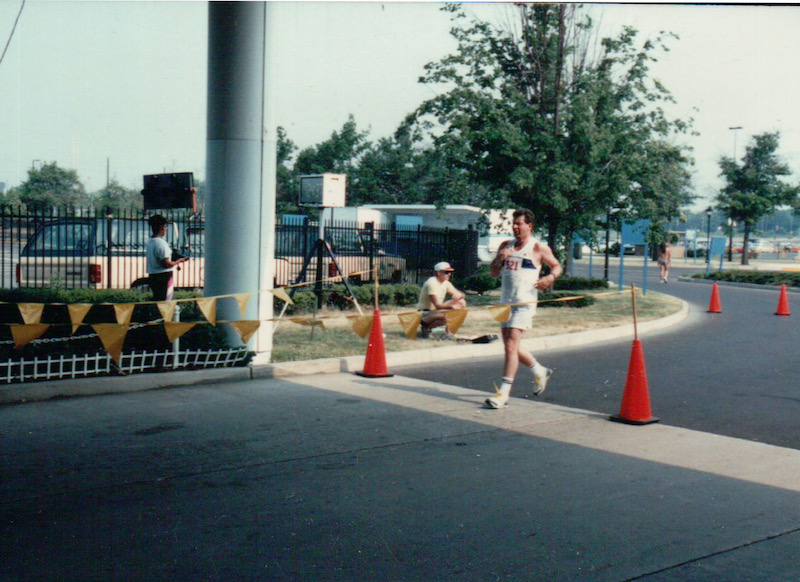
In my younger days, I ran 5K and 10K races. When I was able to see the finish line from a distance, I needed to make a decision. Do I finish the race strong with a last minute spurt or do I comfortably finish at a relaxed pace? My decision was not based on winning any medals or prizes as I was a “back in the pack” runner. My decision was personal, primarily based on how much energy I had left in my legs and what I wanted to accomplish in terms of my own goals. I mostly competed with myself and was interested in seeking improved race times.
As one gets older in life, there are a number of finish lines that need to be crossed. Generally, the first finish line is the end of your career or business. For many, the decision on how we finish that race is not made by them. Some don’t get the opportunity to finish but are pulled aside and told their race is over. The lucky get to finish the race on their own terms and with the plaudits and appreciation of their fellow employees and partners. They leave with a sense of satisfaction of a race well run.
Young people are not concerned with finish lines. They are at the beginning or mid-way point of their race. Time is on their side – – they have the energy, ability and opportunity to run more laps and circle the field if they are so inclined. They are in the early stages of a life marathon with many miles to go.
As I have gotten older, I appreciate that a final finish line may be looming. I don’t know its distance but I sense its presence. There are no mile markers in the final finish line. I still have the ability to decide if I want to walk or jog in my last miles or finish with a burst of speed and vigor. There won’t be spectators to cheer me on. How I finish that race will largely be my decision. There are no medals to win. But there is one more chance to make a difference in my life and maybe someone else’s. One more opportunity to overcome a challenge or make a contribution. One more opportunity to achieve a life well run…
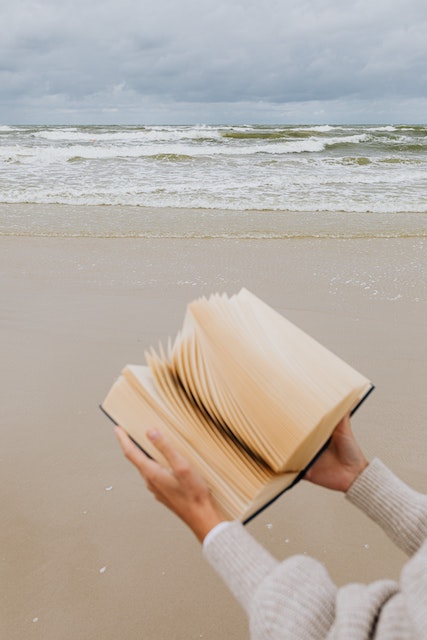
With the start of the summer season, in addition to reaching for the sun tan lotion, many are looking for a good beach read. I have listed a few of my favorite novels that I recommend.
Picture by Karolina Grabowski (Pexels)
Dear Committee Members (Julie Schumaker) I found this book very funny about an acerbic professor in a small midwestern college. The recommendations he writes for students applying for jobs and post graduate school are hilarious.
Epitaph :The OK Corral (Mary Doria Russell) Historical fiction centering on the interesting lives and legends of Wyatt Earp and Doc Holliday.
The End of October (Lawrence Wright) This novel was written prior to the Covid 19 pandemic. Amazing how much the author got right about what actually happened.
Talk to Me (John Kenney) How one man’s public fall from grace leads him back to his family, and back to the man he used to be.
Fleishmann Is In Trouble (Taffy Brodesser Akner) Adventures of a man recently separated with two kids and a missing wife trying to figure out the rest of his life.
Babbitt (Sinclair Lewis) A classic. Written in 1920, this satirical novel about a man’s midlife crisis easily applies to today.
Forever and a Day (Anthony Horowitz) James Bond novel about his early spy adventures.
The Last Days of Night (Graham Moore) Historical fiction. Young lawyer thrown into one of the biggest legal battles in business, the patent around the light bulb.
Conclave (Robert Harris) Scandal, violence, sex, deception…and this is a novel about a papal election.
Our Souls at Night (Kent Haruf) Sentimental story about two elderly and lonely people dealing withe past and trying to work out their futures. Not my type of story generally but very compelling.
Disclosure (Michael Crichton) I literally did not put this book down until I finished it. A married male executive charges sexual harassment against his female boss, who also used to be his girlfriend. However he is being set up as a scapegoat in a corporate power play. Lots of corporate hijinks, politics and deception. Michael Douglas and Demi Moore starred in the movie version.
More reflections, thoughts, perspectives and broodings on being older. You can find earlier and similar posts here and here.
Old age: Current age + 10 years; Youth: Current age – 10 years.
***
You can only break my heart, once.
***
The ratio of laughter to tears narrows as one ages.
***
2:00 a.m. : (age 18) = 10:00 p.m. : (age 60+)
***
The penultimate expression of acquired wisdom is when we value health over wealth.
***
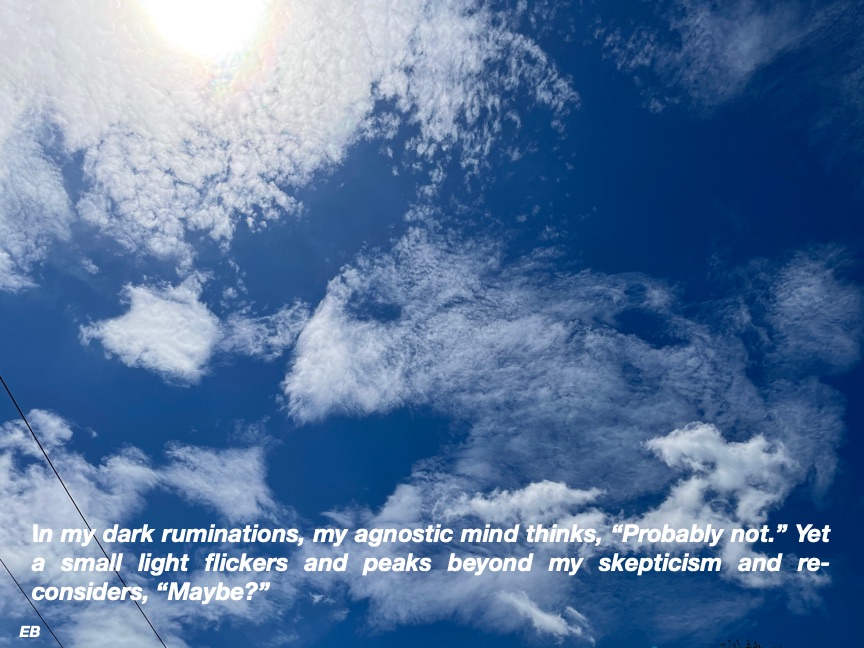
The value of what we don’t know > the value of what we do know.
***
Britain’s greatest export was The Beatles.
***
Baseball is this nation’s passed time.
***
Picture by Keegan Houser (Pixels)
Many of our sweetest memories generally have a soundtrack playing in the recesses of our mind.
***
Investing today is like playing a game at the carnival fair. You know the odds are stacked against you but the allure of winning a proverbial stuffed animal is too strong.
***
I wish I had a penny for each time a person changed the channel or fast forwarded a program on their remote or Roku. Within a day or two, I would be richer than Jeff Bezos.
***
Mother’s and Father’s Day is “Memorial Day” for many of us.
***
Our portals in time travel include old polaroid pictures, a yearbook and ticket stubs from a decades old concert or sporting event.
***
Do we ever really “grow up”?
***
Not sure that this applies to many 1960’s era football stars, but Jim Brown definitely could have played into today’s NFL.
***
In addition to Medicare and Social Security, one of the unheralded benefits for seniors are naps.
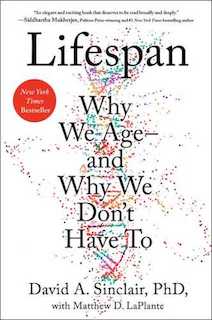
If you are over 50 years old, this book is an excellent resource related to your health, general fitness and quality of life.
I have included some excerpts for the book as my notes and reference:
I believe that aging is a disease. I believe it is treatable. I believe we can treat it within our lifetimes. And in doing so, I believe, everything we know about human health will be fundamentally changed.
There are some simple tests to determine how biologically old you probably are. The number of push-ups you can do is a good indicator. If you are over 45 and can do more than 20, you are doing well. The other test of age is the sitting rising test. Sit on the floor, barefooted, with the legs crossed. Lean forward quickly and see if you can get up in one move. A young person can. A middle-age person typically needs to push off with one of their hands. An elderly person often needs to get onto one knee.
There’s also a difference between extending life and prolonging vitality. We’re capable of both, but simply keeping people alive – – decades after their lives have been defined by pain, disease, frailty, and immobility – – is no virtue.
Multiple “hallmarks” of aging: Genomic instability caused by DNA damage Attrition of the protective chromosomal endocaps, the telomeres Alterations to the epigenome that controls which genes are turned on and off Loss of healthy protein maintenance, known as proteostatis Deregulated nutrient sensing caused by metallic changes Mitochondrial dysfunction Accumulation of senescent zombielike cells that inflame healthy cells Exhaustion of stem cells Altered intercellular communication and the production of inflammatory molecules
Youth—broken DNA genome instability— disruption of DNA packaging and gene regulation (the epigenome)— loss of cell identity —cellular senescence— disease— death
The older we get, the less it takes for an injury or illness to drive us to our deaths. We are pushing closer and closer to the precipice until it takes nothing more than a gentle went to send us over. This is the very definition of frailty.
When we stay healthy and vibrant, as long as we feel young physically and mentally, our age doesn’t matter. That’s true whether you are 32, 52, or 92. Most middle-aged and older adults in the United States report feeling 10 to 20 years younger than their age, because they feel healthy. And feeling younger than your age predicts lower mortality and better cognitive abilities later in life.
After 25 years of researching aging and having read thousands of scientific papers, if there is one piece of advice I can offer, one sure fire way to stay healthy longer, one thing you can do to maximize your lifespan right now, it’s this: eat less often.
The important thing is not just what we eat but the way we eat. Many of the centenarians have spent their lives eschewing a morning meal. They generally eat their first small meal of the day around noon, then share a larger meal with their families at twilight. In this way, they typically spend 16 hours or more of each day without eating.
According to one study funded by the Centers for Disease Control and Prevention and published in 2017, individuals who exercise more – – the equivalent of at least a half hour of jogging five days a week – –have telomeres that appear to be nearly a decade younger than those who live a more sedentary life.
One recent study found that those who ran 4-5 miles a week – – for most people, that’s an amount of exercise that can be done in less than 15 minutes per day – – reduce the chance of death from a heart attack by 45% and all cause mortality by 30%.
It’s high intensity interval training (HIIT) the sort that significantly raises your heart and respiration rates— that engages the greatest number of health promoting genes and more of them in older exercisers.
A study of more than 41,000 metformin users between the ages of 68 and 81 concluded that metformin reduced the likelihood of dementia, cardiovascular disease, cancer, frailty, and depression, and not by a small amount.
People taking metformin were living notably healthier lives – – independent, it seemed, of its affects on diabetes.
The beauty of metformin is that it impacts many diseases. Through the power of AMPK activation, it makes more NAD and turns on sirtuins and other defenses against aging as a whole -– engaging the survival circuit upstream of these conditions, ostensibly slowing the loss of epi-genetic information and keeping metabolism in check, so all organs stay younger and healthier.
Like most people, I don’t want unlimited years, just ones filled with less sickness and more love. And for most of those I know who are engaged in this work, the fight against aging is not about ending death; it’s about prolonging healthy life and giving more people the chance to meet death on far better terms – – indeed, on their own terms. Quickly and painlessly. When they are ready.
Either by refusing the treatments and therapies at all for a prolong healthy life or accepting those interventions and then deciding to leave whenever the time is right, no one who has returned what they have been given should have to stay on this planet if he or she does not wish to do so. And we need to begin the process of developing the cultural, ethical, and legal principles that will allow that to happen.
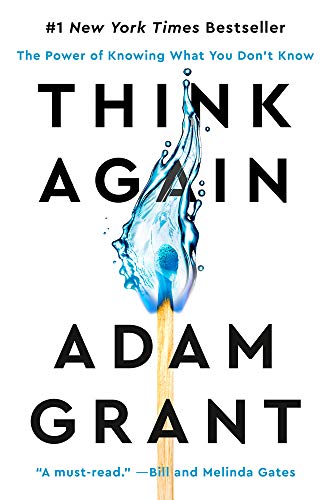
This is a very useful book especially given the current fractious times that we live in. My guess is just about all of us needs to spend some time “re-thinking.” As the author correctly points out, “We live in an increasingly divisive time. For some people a single mention of kneeling during the national anthem is enough to end a friendship. For others a single ballot at a voting booth is enough to end the marriage. Calcified ideologies are tearing American culture apart.”
Re-thinking is not only useful for politics and debate but for every aspect of your life, including financial management, marriage, children, career, social relationships etc.
Grant provides a number of interesting people, scenarios and examples where re-thinking took place with very positive results. Probably the best example was the black musician Daryl Davis who persuaded white supremacists to abandon not only their membership in the Ku Klux Klan but more importantly their racist outlooks.
This is an important book that all of us could benefit from.
I have included some of my notes from the book:
This book is an invitation to let go of knowledge and opinions that are no longer serving you well, and to anchor your sense of self in flexibility rather than consistency.
Part of the problem is cognitive laziness. Some psychologists point out that we are mental misers: we often prefer the ease of hanging onto old views over the difficulty of grappling with new ones.
Most of us take pride in our knowledge and expertise, and in staying true to our beliefs and opinions. That makes sense in a stable world, where we get rewarded for having conviction and our ideas. The problem is that we live in the rapidly changing world, where we need to spend as much time rethinking as we do thinking. ( e.g. Mike Lazardis BlackBerry CEO)
Research reveals that the higher you score on an IQ test, the more likely you are to fall for stereotypes, because you’re faster at recognizing patterns. And recent experiments suggest that the smarter you are, the more you might struggle to update your beliefs.
When we are in scientific mode, we refuse to let our ideas become ideologies. We don’t start with answers or solutions; we lead with questions and puzzles.
We should all be able to make a long list of areas where we are ignorant. Recognizing our shortcomings opens the door to doubt.
In a meta-analysis of 95 studies involving over 100,000 people, women typically underestimated their leadership skills, while men overestimated their skills.
David Dunning and Justin Kruger published a modest report on skill and confidence that would soon become famous. They found that many situations, those who can’t… Don’t know they can’t. It’s when we lack confidence that we are most likely to be brimming with overconfidence.
Patient mortality rates in hospitals seem to spike in July, when new residents take over. It’s not their lack of skill alone that proves hazardous; it’s there over estimation of that skill.
“Arrogance is ignorance plus conviction.” Tim Urban
Achieving excellence in school often requires mastering old ways of thinking. Building an influential career demands new way of thinking.
Valedictorians aren’t likely to be the future’s visionaries education researcher Karen Arnold explains. They typically settle into the system instead of shaking it up.
Good teachers introduce new thoughts, but great teachers introduce new ways of thinking. Ultimately education is more than the information we accumulate in our heads. It’s the habits we develop as we keep revising our drafts and the skills we build to keep learning.
Takeaways: Think like a scientist. When you start forming an opinion, resist the temptation to preach, prosecute or politick. Define your identity in terms of values, not opinions. Seek out information that goes against your views. Embrace the joy of being wrong. Build a challenge network, not just a support network. Learn something new from each person you meet. Ask “what evidence would change your mind?” Make time to think again.


 Esot-eric