2026 Predictions: Hold on to your Seats!

I have made previous year end predictions with modest success: 2023 predictions, 2024 predictions, and 2025 predictions. Some of my predictions are based on reason and some are based on hope and some tongue in cheek..

The world as we know it will change dramatically as AI advances and credible evidence of UAPs accumulates. The most profound disruptions will affect what we believe we know about science—particularly physics—and religion.

Kaitlyn Collins of CNN will try to secure the first interview with an ET.

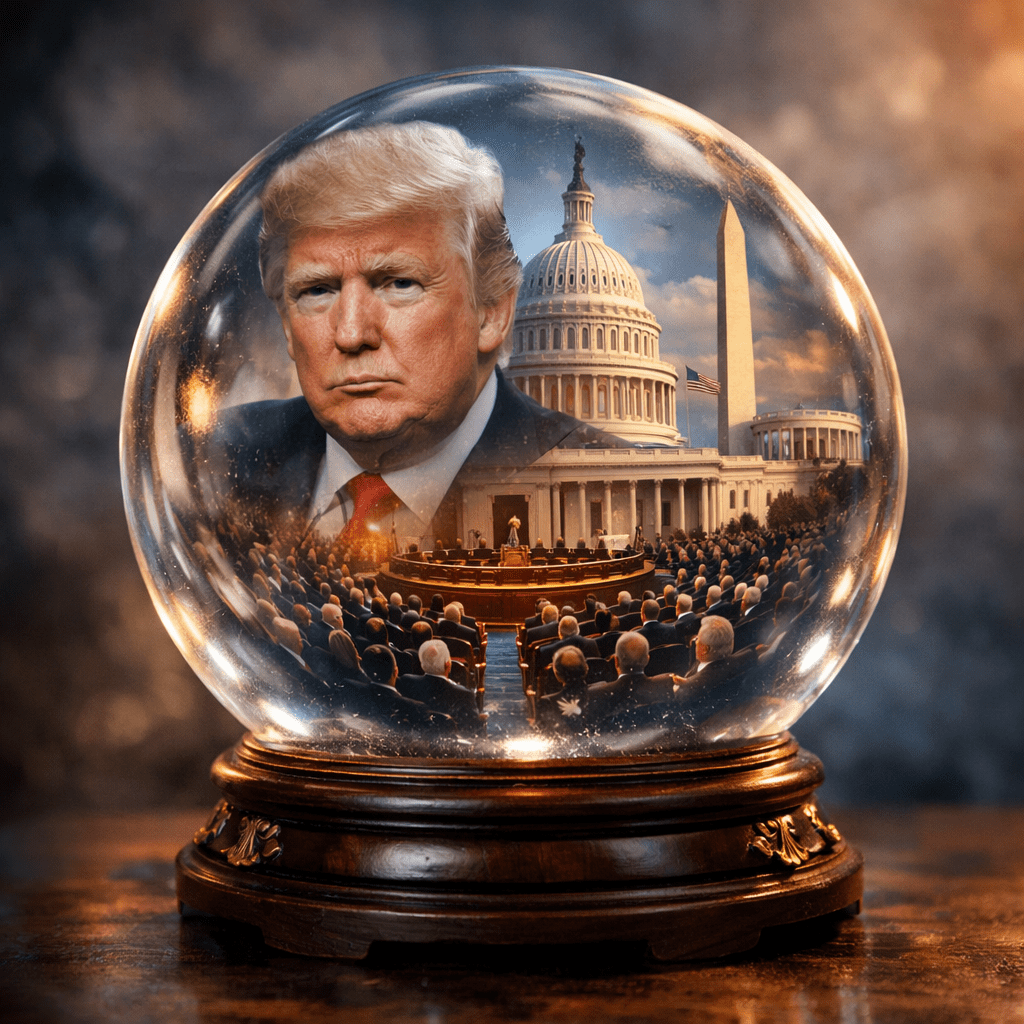
Donald Trump will leave office by the end of 2026, ostensibly for health reasons.

A market correction of roughly 25% will occur in early 2026. A modest rebound will follow later in the year, but it will not recover the initial losses. AI will fail to deliver the financial returns many corporations expect, and large investments will produce disappointing profits.

By the end of 2026, unemployment will rise to between 5.5% and 5.8%.

Continued global distrust of the United States will push allies toward deeper economic and strategic alignment with China. Within three to five years, China—not the U.S.—will be the dominant economic, business, and political power. The U.S. will become an even greater political pariah, particularly if it engages Venezuela militarily or continues to inadequately support Ukraine. Should Ukraine be forced into a highly unfavorable settlement with Russia, it will represent a diplomatic and military defeat for the United States greater than Vietnam, with longer-lasting consequences.

Fear of major losses in the November 2026 midterms will trigger a reinvigoration of Republican members of Congress. Many current Trump administration cabinet members will be fired or pressured to resign due to scandal or incompetence. Congressional Republicans will withdraw institutional protection from failing officials.

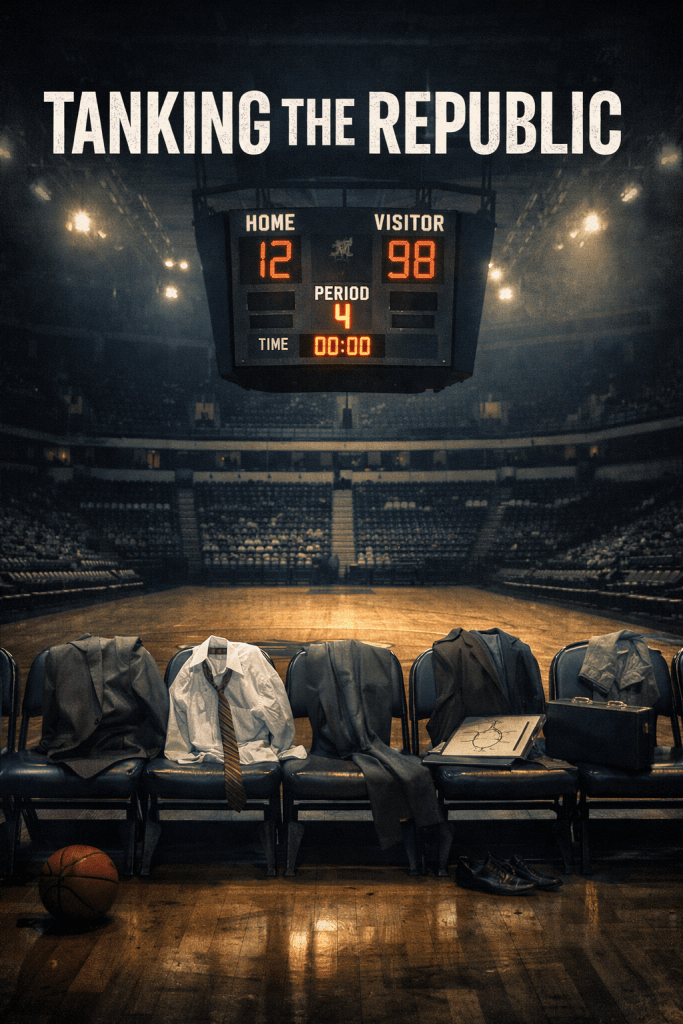
Rising ticket prices and escalating sports-network subscription costs will provoke a fan backlash, reducing attendance and interest across major sports. Fans will increasingly feel that on-field and on-court performance does not justify the expense. ESPN, in particular, will regret its deal with WWE.

Taylor Swift will marry Travis Kelce. Tabloid reports of separation and divorce will soon follow.

Democrats will regain control of the House in November 2026, though by narrower margins than currently predicted.

Gun violence will continue unabated. Regardless of how horrific individual events become, no meaningful gun-control legislation will be enacted.

No Super Bowl celebration parade down Broad Street in Philadelphia in 2026.

Yearly Social Security increases are not keeping up with increasing rise in inflation. The senior citizen constituency will become an important political force in 2026 and 2028, one that the Republican Party can no longer be assured of their support.

Shipwrecked Ethics in Stormy Political Seas

“I’m as mad as hell, and I’m not going to take this anymore!”
—Howard Beale (Peter Finch), Network (1976)

WTF

Pete Hegsmith, meet Heinz-Wilhelm Eck.

Oberleutnant Heinz-Wilhelm Eck was a German U-boat commander who, in 1943, ordered his crew to machine-gun the survivors of a Greek steamer they had just sunk. Tried by the British in 1945, he was convicted of war crimes and executed.

One might imagine that the Secretary of War—and the uniformed brass surrounding him—would possess at least a passing acquaintance with the Hague and Geneva Conventions and the protections afforded to shipwrecked survivors. But apparently not. Instead, we are offered the “fog of war” as a catch-all excuse for killing helpless castaways, as if confusion somehow ennobles idiocy.

In my lifetime, Presidents have made some ghastly cabinet appointments—some incompetent, some malevolent, some simply stupid. The current administration appears determined to check all three boxes with gusto.


Sleepy Joe

Not long ago, pundits and political Cassandras wrote breathless tomes about President Joe Biden’s alleged cognitive unraveling. Democrats engaged in public self-flagellation, blaming one another for not confronting his fading vigor. Republicans snickered with schoolyard delight about his age and apparent frailty.

The ink is scarcely dry on those volumes, and yet one hears comparatively little about the mental and physical disarray of Donald J. Trump.To their perverse credit, Trump and his entourage are not bothering to hide anything. The public has front-row seats to his naps during cabinet meetings, his deranged social-media dispatches, and his endless stream of misstatements delivered with the confidence of a man who has never troubled himself with facts. His sneering insult at a female reporter—calling her “piggy”—barely registered as a scandal, landing with all the outrage of a damp tissue dropped on a sidewalk.

Americans are apparently meant to sleep serenely knowing that a man of Trump’s “unmatched intellect, tireless stamina, and unimpeachable judgment” has his hand on the nuclear button. Sweet dreams.


Epstein Files

The furor over the Epstein files has quieted to a dull hum. Every day, whether through Machiavellian design or sheer gonzo incompetence, the Trump administration generates enough scandal and spectacle to bump Epstein to the back pages.

Most Americans understand perfectly well what Trump may fear in further disclosures. Yet a sizable portion of the MAGA faithful will excuse anything—anything—no matter how sordid. Trump was found liable for sexual assault and it barely dented his presidential campaign.

As for me, I have exhausted the lower bounds of my opinion of Donald Trump. There is nothing—absolutely nothing—he could do that would surprise me anymore. His behavior long ago slipped the surly bonds of shame.

Eric’s Rules (Takeoff from Gibbs’ Rules NCIS)

Rule 1: Don’t chase what you can’t catch.

Rule 2: Never step into a crowded elevator or an empty restaurant.

Rule 3: Never call customer service on a weekend.

Rule 4: Expect that every simple issue will take two, maybe three, maybe six or more calls.

Rule 5: Learn to say “thank you” in different languages.

Rule 6: Never let a friend—or anyone you love—cry alone.

Rule 7: Want a spiritual experience? Sit alone in a quiet church one hour before services. When services start, leave.

Rule 8: When you’re troubled, walk to the nearest bar. Don’t go in. Walk home.

Rule 9: Never stop a friend from repeating an old story.

Rule 10: Avoid fast-food joints or stores where no one on staff is sporting gray hair.

Book Review of 1929: Inside the Greatest Crash in Wall Street History – and How It Shattered a Nation by Andrew Ross Sorkin

I’ve been an admirer of Andrew Ross Sorkin’s financial reporting for years, particularly through his work on CNBC, and I previously enjoyed his book Too Big to Fail, a definitive account of the 2008–2009 financial crisis. With that bias admitted upfront, I found 1929 to be an engaging and illuminating read. Though the book is lengthy—about 444 pages—it never feels like a dry history textbook. Instead, it flows with the narrative tension of a novel, making complex financial events accessible and compelling.

A background or interest in finance, economics, or banking certainly enriches the reading experience, but Sorkin’s storytelling makes the material approachable even for those who aren’t steeped in economic jargon.

A Rich, Relevant History

What makes this book especially resonant is how closely the late 1920s echo aspects of our present moment. The U.S. had recently emerged from a pandemic; optimism about growth and technological change was widespread; and the stock market appeared unstoppable. Investors—large and small—took on unprecedented leverage, borrowing heavily to chase rising share prices.

But economic momentum is fragile. Once confidence cracked, the market’s collapse was swift and devastating. The crash wiped out fortunes, triggered a steep economic downturn, and led to widespread unemployment. The government and the Federal Reserve lacked a clear or unified strategy, and their responses were often reactive, hesitant, or contradictory.

Sorkin offers a nuanced view of Herbert Hoover, depicting him not as the caricature of incompetence found in some earlier accounts, but as a leader who recognized the depth of the crisis and attempted—albeit imperfectly—to stem the damage. It’s a more sympathetic portrait than many readers might expect.

Vivid Personalities and Power Players

The book is populated with fascinating figures from finance, government and politics, including:

  • Charles Mitchell, chairman and CEO of National City Bank (a central figure in the era’s excessive speculation)
  • Winston Churchill
  • Franklin Delano Roosevelt
  • Senator Carter Glass
  • Evangeline Adams
  • Herbert Hoover
  • Ferdinand Pecora
  • and many others

Sorkin demonstrates how the interplay of personalities, policies, and economic forces created the conditions for both the boom and the crash. His research is broad, and his interpretations are measured yet insightful.


Reflections on Today’s Economy

Reading about 1929 inevitably led me to think about the state of the economy today. Although history doesn’t repeat itself exactly, the parallels are difficult to ignore.

  • Policy and leadership concerns: I have deep concerns about the current administration’s economic management. Policies such as tariffs continue to ripple through the U.S. and global economies, often harming consumers and industries rather than helping them.
  • Social and economic inequities: Decisions to cut or withhold food aid and other social supports can create long-lasting harm. Tax structures continue to favor the wealthy, while those with the least must rely on charity to meet basic needs.
  • Economic data skepticism: I find it increasingly hard to trust official numbers—whether on inflation, unemployment, or growth—given how politicized and selectively interpreted economic data has become.
  • Uncertain impact of AI: Artificial intelligence is propping up portions of the stock market, but the long-term effects on employment, productivity, and corporate earnings remain unclear. Few leaders or analysts can articulate what the next decade will really look like if the hype fizzles.
  • Declining trust in corporate leadership: Watching CEOs—particularly in tech and finance—publicly defer to political power has shaken my confidence in their judgment. Elon Musk is the most visible example, but he is not alone.
  • The culture of greed: Increasingly, it feels as if greed has become our national creed. Even institutions that purport to offer moral guidance seem more interested in fundraising than fostering compassion or community.

Lueur d’ espoir (Glimmer of Hope)

Was Tuesday, November 4 a political turning point—something akin to the Battle of Midway in 1942? Early in World War II, the United States absorbed one devastating blow after another, beginning with Pearl Harbor and continuing through a string of losses across the Pacific. Then came Midway: a battle whose full significance wasn’t immediately recognized, but which, in hindsight, marked the moment when momentum quietly shifted. The war was far from won, but the tide had stopped running entirely against the United States.

It’s tempting to wonder whether this week’s Democratic victories in New Jersey, Virginia, California, New York City, and elsewhere represent a similar inflection point. American politics in recent years has felt like a series of shocks and retreats for Democrats and for voters who oppose Donald Trump. And like an adversary who seems immune to normal political gravity, Trump has survived scandals and crises that would have ended the careers of most public officials.

Whether these election results signal a broader reversal of fortunes—or merely a brief pause in the storm—is impossible to know. It’s not hard to imagine Trump and his allies resorting to increasingly extreme measures to influence or undermine next year’s midterms. As with Midway, the meaning of this moment will only become clear in retrospect. For now, all we can say is that the political seas may be shifting, and time will tell in which direction they flow.

Book Review: The Year of Magical Thinking by Joan Didiot

Deemed a modern classic, The Year of Magical Thinking is exquisitely written, deeply poignant—and I hated reading it. I rushed through its pages the way one might rush through the receiving line at a funeral: dutifully, respectfully, but eager to escape the suffocating air of grief.

Didion’s account of the sudden death of her husband and the parallel ordeal of her daughter’s illness feels both raw and composed, intimate yet universal. Her prose opens old wounds you thought had long scarred over. As I read, her words didn’t just tell her story—they resurrected mine.

I found myself silently comparing her losses to my own. Everyone, I suspect, has this book somewhere inside them, but few can articulate sorrow with Didion’s precision and restraint. Like her, I have often wondered whether I could have done more—whether I might have eased my mother’s suffering as dementia slowly erased her, or somehow saved my sister, who died suddenly before reaching forty. The helplessness still stings decades later.

Grief is a solitary ritual. When my father died of a heart attack at thirty-five, I was seven. There were no tears, no tantrums—just the quiet acceptance of a boy who learned too early that life can vanish mid-sentence.

As Didion’s pages turned, I realized I was no longer reading her memoir but reliving my own: the hospital rooms, the whispered prayers, the hollow silences after the machines stopped.

Didion’s The Year of Magical Thinking is a Pandora’s box of 227 pages. Once opened, it releases everything you thought you had buried—grief, guilt, love, regret—and leaves you to reckon with the consequences.

Wisdom that Caught My Eye and Brain

900,000 vs 9.

It takes about 900,000 minutes to become a board-certified dermatologist. At that point, you might be very skilled and well-informed.

It takes less than nine minutes to make your patient feel seen, understood and reassured.

If you skip the 9 minutes, you wasted the 900,000.

Seth Godin

——

Late Night is Dying Because of the Format Not The Hosts

With the death of vaudeville and variety shows, you can observe how new technologies change the economic landscape of media and narrow viewers’ tastes. With vaudeville, it was motion pictures, and with variety shows, it was cable TV. With late-night, it’s playing out over the internet and social media.

——

Gambling Is Killing Sports and Consuming America

Gambling doesn’t just sponsor sports games. It shapes them, deciding which matchups are worth watching and how players are covered. Gambling doesn’t just buy ads. It owns sports networks, producing shows that prod fans to bet ever more.

Today, the gambling companies wield far more power over sports than the leagues or team owners ever did. News media outlets have criticized commissioners, players and executives for decades. But I can’t recall a single major sports broadcast program or publication willing to take gambling companies on directly. My friends in sports journalism tell me this is the one topic they can’t speak up about — not without risking their careers.

Joon Lee