I got it. We have experienced some really dumb men and women in Washington and national politics. Borowitz picked on Reagan but at least Reagan had some very wise and experienced people on his staff and Cabinet. Contrast the quality of intelligence and expertise with the various iterations of the Trump cabinet.
Dan Quayle, Sarah Palin, George W. Bush and of course “The Donald” are cited in the book as national embarrassments. The dumbest candidate of all time was not mentioned in the book, Herschel Walker. Walker was outed for paying for an abortion after he claimed that he did not. This font of sanctimony is decidedly pro-life. He has consistently lied about his education and credentials. Yesterday he received a standing ovation from members of the First Baptist Church of Atlanta.
There were various spokespeople who went on news shows to defend him. Who is dumber? Walker or the people who still support him?
Borowitz’s book was meant as satire. I saw no humor in his stories. It was depressing. So very few of the people profiled by the author read books. Aides could not dumb down information for Reagan or Trump.
Unless you have been in a cave or quarantined for 40 years, most of the stories in the book have already been reported. This is not a book for Republicans. There are a number of Democrats who have experienced issues with judgment but not like the GOP.
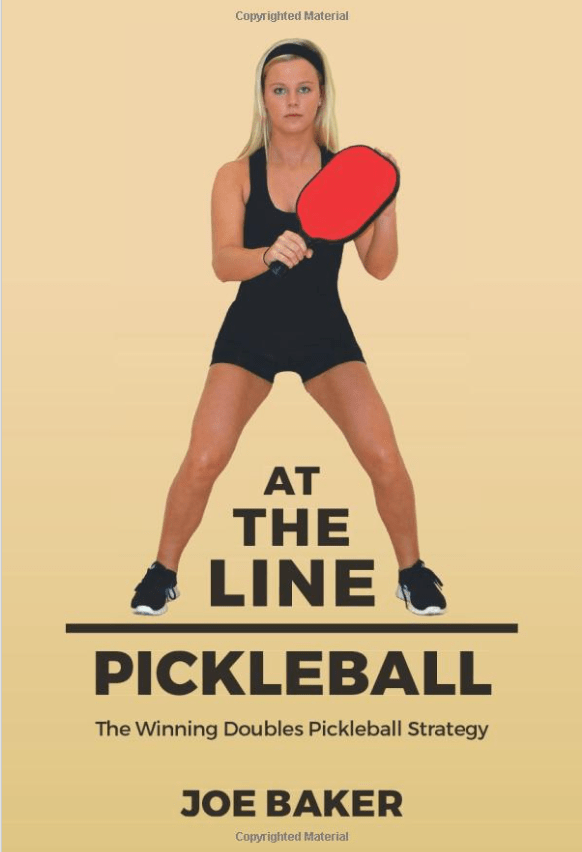
This is the first book of what I am sure will be many published in the future that I have read on how to improve one’s pickleball strokes, strategies and play. I have been playing pickleball for about four years and much of this book serves as a reminder of things that I should already be doing. This book is an excellent instruction tool and introduction for Beginners and an effective refresher course and guide for Intermediates and above. The instructions are easy to follow and the author includes pictures and diagrams for further clarity.
FYI: Baker has created and posted useful YouTube videos on pickleball tips if you are not inclined to read the book...
Listed below are 41 takeaways from the book that I found helpful to me and I think would be beneficial for other players…
1.The basic strategy of pickleball can be summarized in just a few sentences: (1) get your team fully forward as quickly as possible,(2) keep the other team back as long as possible. (3) if you have to hit up on the ball, which is almost always, hit soft shots designed to bounce before being returned. (4) If all players get fully forward, keep the ball low until a put away opportunity arises.
2. Don’t hit the ball to players. Instead hit the ball to open spaces to make your opponents run or reach.
3. Always look for the down the middle opportunity, as this is a much higher percentage shot than a down the sideline shot.
4. As far as shot depth goes, aim at the depth of your opponent’s feet. That is, don’t provide a shot that can be volleyed back, and don’t provide a shot that bounces well in front of your opponent.
5. About the best thing you can do for your game is to learn how to make drop shots into the kitchen.
6. Intermediate skill play: more than half of the rallies are over with five shots or fewer and this includes the serve. About 70% of rallies are over after six shots. The service fault rate for the 3.0 skill level is about 3.5%. The best strategy is just to aim for the middle of the box.
7. The old rule thumb is that if you have to hit up on the ball, hit softly, aiming to keep the ball in or near the kitchen area. If you can hit down on the ball, you may hit hard.
8. The smash shot is best directed to an unreachable open space. However if there is no such space, the smash should be directed to the area of a player with the least time to react: the near player, not the deep player.
9. The server and the server’s partner should both be behind the baseline. Make sure you and your partner wait behind the baseline until your opponent hits the service return shot before moving into the court. If you step into the court when serving move back behind the baseline after making the serve. A big mistake is moving forward too early and then retreating to field a shot.
10. An ideal serve, if it can be made consistently, it’s fast and deep and usually directed at the receivers backhand. However, not faulting is key. Until you get really consistent, do not attempt to serve fast or deep, and do not attempt to add spin. Just focus on hitting the target: the middle of the box.
11. The player returning this serve should typically be 18 to 30 inches behind the baseline.
12. The team at the net has a huge strategic advantage over opponents who are in the backcourt. Net players have more angles and shot placement options than players who are deep in the court, and they can defend their court better than players who are deep.
13. A beauty of being at the net is that the net shields your feet.
14. For a right handed player, shots that land outside the left heel are nearly impossible to field.
15. Never give your opponent a ball in the air (a ball he or she can volley back) unless it is intended to defeat his or her reaction time or it’s a deep lob. Taking the ball in the air versus letting it bounce helps minimize your opponent’s forward progress.
16. When dinking, it’s OK to hit toward a kitchen sideline. When trying to hit a drop shot into the kitchen, it’s OK to hit toward a kitchen sideline. However, long shots directed toward sidelines outside the kitchen have too much of a risk of going out of bounds and are low percentage shots. Top players rarely attempt such long shots.
17. You must stay linked to your partner, never more than 6 to 7 feet away from your partner to form a wall. Slide and reposition the wall after each hit of a ball.
18. Reduce flubs and mis-hits that usually go into the net. Flubs normally result from hitting the ball outside of the paddle sweet spot or off-center. Flubs or mis-hits often result from not watching the ball.
19. Pregame communications: if not already known, ask or advice your partner about opponent strengths and weaknesses. Issues such as poor mobility, inferior dinking ability, poor lobbing skills, slow hands and poor third shot capability should be communicated.
20. Yell “mine” or “yours” unless the shot is extremely obvious. Yell “no” to your partner if you see a shot going out of bounds. Yell “switch” if you’re fielding a lob that goes over your partner’s head. This means that you and your partner will switch sides…
21. When dinking, you should try to stay as far forward as possible, in other words, just behind the no volley zone line. Your toes should only be an inch or two behind the line. Crosscourt dinks are more forgiving for both height and depth and they are usually more difficult to attack than those that come from straight across. Also it’s a mistake to dink to the forehand of the person right across from you as this provides a set up for a straight on attack. About 75% of flubbed dink shots that go into the net occur when a player is trying to field a dink that is low into the backhand.
22. Dinking targets: basically you don’t hit directly to your opponents. Instead you hit between them or towards sidelines.
23. Stay compressed in basketball like ready position. When you are compressed, you can move fast and quickly volley back shots that are directed at your feet. If you are standing straight up, you may have difficulty defending against shots that are aimed at your feet.
24. When you get pulled out near the net, hit crosscourt into the kitchen if possible.
25. In the dinking game, it’s best to continuously stress your opponent, making him or her reach, move or scramble. It’s not wise to give an easy dink shot to the opponent directly across from you. Especially avoid hitting it to his or her forehand because it sets up a rather easy attack shot.
26. When playing, keep most shots to your opponents backhand because this will create the highest number of flubs and make aggression more difficult. Stay linked to your partner and slide the wall in relation to the position of the ball.
27. Even the best players, when they launch a fastball attack, will lose the rally about 30% of the time they try. Generally speaking, whenever you have a shot that gives a better than even a chance that you could shut down a rally with it being in your favor, you should make the shot.
28. This statistic is this: among advanced players, if you start the fast game and you fail to defeat your opponents reaction time with your first shot, your chance of winning the rally is about 28%.
29. Hit your fastball to a location that forces an awkward hit… A popular goal is to jam the opponent’s dominant side. This means directing the ball to the right hip pocket or right shoulder of a right handed player. This forces the defender into a high elbow or chicken wing arm position usually leading to a weak return or pop up.
30. When in a fastball fight – – – and especially if you are starting it – – – you should generally fight with the near opponent, not with the far opponent. The near opponent has less time to react.
31. When fully up to the net, keep the paddle up, above your waist, and in front of you with the head of the paddle above your wrist.
32. The main root cause of many of unforced errors is the use of force exactly opposite of what it should be used. In other words, players hit hard when they should be hitting soft and vice versa.
33. A return of serve that is deep is better than a return that is fast because the deep shot makes the critical third shot more difficult. You’ll get better depth accuracy and precision with a slow arcing return then you will with a flat trajectory fastball return.
34. In general, you should get the lobs that go over your partner’s head and vice versa.
35. For a 4.0 level and below players, the overhead smash leads directly to the loss of the rally for the smasher about 28% of the time. Why? Often the smasher tries for too much, too much angle or too much depth.
36. When you and your opponents are close to the non-volley zone line, the best put away smash strategy is to angle it down to the feet. If you are forward and your opponents are back, your best put away smash opportunity is to angle the shot to make it unreachable. It helps if the ball is off center because it gives you an even better angle.
37. When you are at the non-volley zone line, any fastball coming your way that is shoulder height or higher will likely go out of bounds. So starting out, get out of the way of any fast shot at shoulder height or higher and watch the results.
38. On the return of serve, the failure rate at the 3.0 skill level is about 8%. The most frequent fault is having the ball go into the net and the main root cause behind us is trying to use too much power. Provide enough arc to clear the net easily and avoid using more power than it takes to hit this target. The target is to aim at or near the center of the non kitchen area.
39. When hitting to a banger, try to keep most or all shots to the banger’s backhand and to the left heel target.
40. Rather than taking risks with aggression, very often the best strategy is to simply continue to return the ball to your opponent. Under such a strategy, an impatient or less skilled opponent will usually be the first to fault.
41. The ideal strategic arrangement is for you and your partner to play parallel and at the net that will keeping your opponents deep in the court. Therefore your strategy is to get your team to the net while keeping your opponents away from it.
Great storytelling. Beautiful writing. Stoner is an early to mid 20th century “Job” handling life issues involving marriage, career, family, moral dilemmas and ambition. Stoner is a sympathetic and tragic character. I have read and re-read this book 6 times.
Best business related book that I have read this year…This book is an indictment of Jack Welch, “welchism” and capitalism in general. Jack Welch is not here to defend himself but the author presents a very compelling narrative supported by numbers that Welch was very overrated as a CEO, role model and strategist.
Welch quelched efforts at innovation, long term planning and corporate responsibility so he can meet or exceed quarterly numbers. Welch’s primary business objectives were to please his stockholders and become very personnaly wealthy.
Very well written book. Interesting stories and business analysis…Good investment of my book purchase…
Notes from the book:
Welch employed three main tools in his crusade: downsizing, dealmaking, and financialization.
Welch developed a new policy, colloquially known as “rank and yank.” Each year, managers rated their employees. Those who were in the bottom 10 percent were let go.
GE stock fell 80 percent in the years after Welch retired, becoming the worst performer in the Dow Jones Industrial Average.
Welchism has at its heart the conviction that companies must prioritize profits for shareholders above all else, that executives are entitled to enormous wealth and minimal accountability, and that everyday employees deserve nothing more than their last paycheck.
From runaway climate change to steep inequality, to hollowed-out communities abandoned by companies seeking cheap labor elsewhere, it can at times seem like corporations do as much harm as they do good.
The chief executive of a major American company now makes in one year what it would take a typical worker in that company 320 years to earn.
This is a badly needed book for me personally. At 70, I have memory issues, mainly forgetting someone’s name or being unable to remember the correct term or word. I fear dementia as I get older after seeing what my mother experienced before she died. I was looking for exercises and insights into improving my memory and this book provides it. Excellent tips on exercise, diet, and naps to improve your cognitive skills.
My notes from the book:
Pictures are easier to commit to memory than words. This is based on the fact that the brain wasn’t designed for reading words; reading doesn’t come naturally. We have to be taught how to read, while we require no instruction to form mental images of the objects and people around us.
We now know that memory depends on associations rather than single words. Each word has to be put in context and associated with other words or phrases in order to form a memory for later retrieval. So your best chance of remembering is to enlist the brain’s powers of association.
Another highly effective technique for improving your memory is to keep retesting yourself on the material you want to remember. Even after you have learned something, your long-term memory for it will be strengthened if you repeatedly challenge yourself to recall it again and again.
Based on the older adult risk factor, I advise all of my patients to abstain completely from alcohol at age seventy at the latest. By sixty-five years of age or older, people possess fewer neurons than they did only a few years earlier. So it makes sense to eliminate alcohol at a time in life when it’s necessary to conserve as many neurons as possible.
Fiction, on the other hand, requires the reader to proceed from beginning to end while retaining in working memory the various characters and plot developments.
Incidentally, I have noticed over my years as a neurologist and neuropsychiatrist that people with early dementia, as one of the first signs of the encroaching illness, often stop reading fiction.
For some reason, our brain is better at recalling losses and failings rather than positive experiences.
Naps too exert a positive influence on memory. Naps lasting anywhere from thirty minutes to an hour and a half have been shown to increase later recall for information encoded prior to the nap.
The key to successful napping is waking up more empowered than you felt before the nap.
Dark chocolate enhances episodic memory.
This serves as another reminder that anything that gets one up and about and focuses attention, however briefly, will prove beneficial. At the deepest level, physical activity of any sort promotes synaptic and cognitive resilience.
This book has been on my bookshelf for decades. I have read or skimmed through this book dozens if not hundreds of times. I have yellow highlighted much of the book. I think that everyone should read the first chapter of this book for Watts’s brilliance and insights into reality. Considering that this book was published over 70 years ago, it’s amazing that the insights are certainly relevant for today’s world. For sure, the world has not become more secure since 1951, but significantly much less.
This book tries to address an issue that was relevant in the past and is certainly relevant in our present time. How are we to find security in peace of mine in a world who is very nature is insecurity, impermanence, and unceasing change?
Watts’s book serves as a guide for life – – how to approach it rationally and wisely. This book has had a profound effect on my life. Both uncomfortable and settling, it has provided some perspective to me on my philosophy of living. In a sense, this book became my Bible.
Listed below are some nuggets of wisdom from the book…
By all outward appearances are life is a spark of light between one eternal darkness and another.
If happiness always depends on something expected in the future, we are chasing a will-o’-the-wisp that ever excludes our grasp, until the future, and ourselves, vanish into the abyss of death.
However long postponed, everything composed must decompose.
When belief in the eternal becomes impossible, and there is only the poor substitute of belief in believing, men seek their happiness in the joys of time.
This kind of living in the fantasy of expectation rather than the reality of the present is the special trouble of those businessman who live entirely to make money. They fail to live because they are always preparing to live.
To be happy, we must have what we cannot have. In men, nature has conceived desires which is impossible to satisfy.
¨We fall in love with people and possessions only to be tortured by anxiety for them.
Human desire tends to be insatiable. We are so anxious for pleasure that we can never get enough of it.
I purchased this book at Barnes and Noble so I hoped I made a good reading investment. This is a gritty, violent and dark 007 adventure. No tropical island scenarios and his love interest was almost passionless.
The book starts off with the funeral of M reportedly killed by 007. Following the Ian Fleming template, the story starts off somewhat slowly. Bond has to pretend that he is still under the control of the brainwashing he received from the Russians earlier.
007 ’s mission is to find out what the huge plans are to upset East-West relations. This story takes place in 1964 where there is turmoil in the Russian government under Chairman Khrushchev. Bond is aided by a Russian doctor Katya Leonova who was involved in the brainwashing of Bond.
I liked the storyline. Like I mentioned there were parts of the book that moved slowly. I was more interested in what the characters did and said as opposed to the architecture and history of buildings that Bond visited.
This is old time Bond not the Bond played by Daniel Craig or the latest Bond movies. No special gadgets. No technology. A 1964 Cold War thriller…
I chose this book because I had read and enjoyed Quiet, a book about introverts, written by the author. With that being said, I skimmed through much of the book. However I did pick up some personal insights, many of which are not surprising to me. For example, based on her Bittersweet quiz, I have a bittersweet state of mind. Or let’s just say, that I can be a very sensitive and empathetic man. As the author points out, when you experience something like a personal tragedy early in your life as I did, you tend to accept sorrow and longing.
The author also suggests that whatever paying you cannot get rid of, make it your creative offering. I do this primarily through my writing.
I can’t say this book will provide you solace or relieve your pain if you are in sorrow or mental distress. But it may explain how you feel or could feel…
Shown below are my notes from the book:
This book is about the melancholic direction, which I call the “bittersweet”: a tendency to states of longing, pregnancy and sorrow; and acute awareness of passing time; and they curiously piercing joy at the beauty of the world. The bitter sweet is also about the recognition that light and dark, birth and death—-bitter and sweet are forever paired.
Most of all, bitter sweetness shows us how to respond to pain: by acknowledging it, and attempting to turn it into art, the way musicians do, or healing, or innervation, or anything else that nourishes the soul. If we don’t transform our sorrows and longings, we can end up inflicting them on others via abuse, domination, neglect but if we realize that all humans know – – or world now – – loss and suffering, we can turn toward each other.This idea of transforming pain into creativity, transcendence and love is the heart of this book.
It’s long been known that the vagus nerve is connected to digestion, sex, and breathing – – to the mechanics of being alive. But in several replicated studies, Keltner discovered another of its purposes: when we witness suffering, our vagus nerves make us care. If you see a photo of a man wincing in pain, or a child weeping for her dying grandmother, your vagus nerve will fire.
Then, the reminder that we have no missing half. “Here’s a little bit of darkness,” he warns. We need to accept that there is no partner who would understand the whole of us, who will share all our of our tastes in large and small areas. Ultimately, it is always a percentage of compatibility we will only ever achieve.
Even in the healthiest relationships, belonging often returns. In these unions, you can raise children, if you want you can share inside jokes, favorite vacation spots, mutual admiration, and a bed; you can search the streets of a brand new city for a heating pad when you’re traveling and your partners back goes out. In the best relationships, you can still, every so often, go to the moon and back. But most likely your relationship will be an asymptote of the thing you long for. As LVL says, “those who search for intimacy with others are reacting to this longing. They think another human will fulfill them. But how many of us have actually ever been totally fulfilled by another person? Maybe for a while, but not forever. We want something more fulfilling more intimate.
Whatever pain you can’t get rid of, make it your creative offering.
Angelou (Maya) story suggests, many people respond to loss by healing in others the wounds they themselves have suffered. Angelou did this through writing, but the process takes many forms. Indeed, the “wounded healer,” a term coined by the psychologist Carl Jung in 1951, is one of humanities oldest archetypes.
What are you longing for?
To find out how bitter sweet you are…¨
Do you tear up easily at touching TV commercials?
Are you especially moved by old photographs? ¨
Do you react intensely to music, art or nature?
Do you feel elevated by sad music? ¨
Do you tend to see the happiness and sadness in things, all at once?
Does the word poignant especially resonate with you? When you have conversations with close friends, are you drawn to talking about their past or current troubles?
Voltaire’s observation: “history never repeats itself; man always does.“ The lowest income households in the United States on average spend $412 a year on lotto tickets, four times the amount of those in the highest income groups. 40% of Americans cannot come up with $400 in an emergency. Which is to say: Those buying $400 in lottery tickets are by and large the same people who say they can’t come up with $400 in an emergency.
Years ago I asked economist Robert Schiller, who won the Nobel prize in economics what do you want to know about investing that we can’t know? “The exact role of luck and successful outcomes,“ he answered.
The difficulty in identifying what is luck, what is skill, and what is risk is one of the biggest problems we face when trying to learn about the best way to manage money.
What Gupta and Madoff did is something different. They already had everything: unimaginable wealth, prestige, power, freedom. And they threw it all away because they wanted more. They had no sense of enough.
Reputation is invaluable. Freedom and independence are invaluable. Family and friends are invaluable. Being loved by those who you want to love you is invaluable. Happiness is invaluable.
Good investing is not necessarily about making good decisions. It’s about consistently not screwing up.
At the Berkshire Hathaway shareholder meeting in 2013 Warren Buffett said he’s owned 400 to 500 stocks during his life and made most of his money on 10 of them. Charlie Munger followed up: “If you remove just a few of Berkshire‘s top investments, its long-term track record is pretty average.“
The highest form of wealth is the ability to wake up every morning and say, “I can do whatever I want today.“
Controlling your time is the highest dividend money pays.
No one is impressed with your possessions as much as you are.
Savings in the bank that earn 0% interest might actually generate an extraordinary return if they give you the flexibility to take a job with a lower salary but more purpose, or wait for investment opportunities that come when those without flexibility turn desperate.
Having more control over your time and options is becoming one of the most valuable currencies in the world.
The most important driver of anything tied to money is the stories people tell themselves and the preferences they have for goods and services. Those things don’t tend to sit still. They change with culture and generation. They’re always changing and always will.
History can be a misleading guide to the future of the economy and stock market because it doesn’t account for structural changes that are relevant to today’s world.
The most important part of every plan is planning on your plan not going according to plan.
German tanks at Stalingrad – – field mice had nested inside the vehicles and eaten away installations covering the electrical systems. (No one had planned for this risk, hence German tanks were inoperative.)
The more you want something to be true, the more likely you are to believe a story that overestimates the odds of it being true.
Manage your money in a way that helps you sleep at night. Use money to gain control over your time.
Effectively all of our net worth is a house, a checking account and some Vanguard index funds. One of my deeply held investing beliefs is that there is little correlation between investment effort and investment results. The reason is because the world is driven by tales – – a few variables account for the majority of returns. (Author describing his financial management.)
What a fascinating and enlightening book! I had seen the Baldwin/Buckley debate at Cambridge on YouTube so I was at least familiar with that event. However, I was not familiar with the backstories regarding the two men and how they influenced the civil rights movement. Buccola’s book provides an excellent historical context around the debate. I am somewhat ashamed to admit that I was not familiar with Mr. Baldwin’s contributions regarding the civil rights movement. Baldwin was certainly a very persuasive and excellent spokesman for civil rights.
I was familiar with Mr. Buckley, particularly through his TV show Firing Line which I watched in my much younger years. Though I did not always agree (or understand) Mr. Buckley’s point of view, I was always impressed by his articulateness, vocabulary and presentation. However after reading this book, I am not so impressed by Mr. Buckley. I had no idea about his views regarding civil rights and blacks as human beings. I know it was a different time and many people shared Mr. Buckley’s opinion that the civil rights movement was proceeding too quickly. But I ascribed more intelligence, judgment and reasoning to Mr. Buckley that he deserved. This book opened my eyes to this part of history that I missed.
According to the author, Mr Baldwin’s opinion of William F. Buckley was much harsher…
“Buckley, Baldwin believed, knew better and had the ability to exert a considerable amount of influence in the world. Indeed, Buckley’s work as a guardian of white supremacy was, from Baldwin’s perspective, more sinister than that of the most hardened racists in American politics. Time and again, Buckley’s ends were the same as the racist demagogues he was always sure to condemn; his primary objection to these men was the means they chose to use on behalf of ‘the cause of white people.’ For these reasons, Baldwin concluded, some of the blood shed as a result of the American racial nightmare was on Buckley’s hands.”
The author points out this warning for American politics today…
“The price of victory, though, has been incredibly high. The American Right seems to be in much the same place today as where it found itself over half a century ago. To achieve overwhelming power, conservatives have had to rely on the political energy provided by racial resentment and status anxiety. Much like Buckley, many conservative elites find reliance on such energy unseemly, but they cling to it because they know it gives life to their agenda. For the American Right, the price of power has been a deal with the devil of white supremacy. This was true in Buckley’s time, and itis true in our own.”
The book is about 400 pages. If you only have limited time, read the transcript of the debate at Cambridge found in the Appendix of the book.



 Esot-eric