Great Advice for College Grads (and Everyone Else)

I am passing on excerpts from an article written by Bret Stephens who is an Opinion columnist for The New York Times. Stephens is writing about what he would say at a commencement speech.

I’d urge them to do everything they can to cultivate an inner life, especially since social media is always trying to suck it out of them. Commit great poems to heart, starting with those by Gerard Manley Hopkins and Edna St. Vincent Millay. Recite them aloud on solitary walks. Compose dirty limericks in your head. Read more for pleasure, less for purpose. Read, immediately, Marguerite Yourcenar’s “Memoirs of Hadrian.” Imitate the writers or artists you most admire; you’ll find your own voice and style in all the ways your imitation falls short. Don’t post self-indulgent glam shots of yourself on Instagram, and please stop photographing your damn meals.

Also: Think of TikTok as your generation’s cocaine and get off it. Work hard on keeping a few good friendships, not gaining thousands of followers. Eschew envy, cynicism and virtue signaling. Ponder the meaning of the word “hineni.” Make only enough money so that you don’t have to think about it much. Preserve an independence of mind and spirit, and nurture a contrarian opinion or two, especially if it goes against your own political side.

Reserve the right to change your mind — and really do it from time to time. Never join a cause if you aren’t fully familiar with the argument against it. Heed the words of Rabbi Hillel: “Where there are no men, be thou a man.” Or woman. Don’t equate success with fame or fame with happiness. Find your core satisfaction in a soul mate, not a career. Laugh more, mostly at yourself.

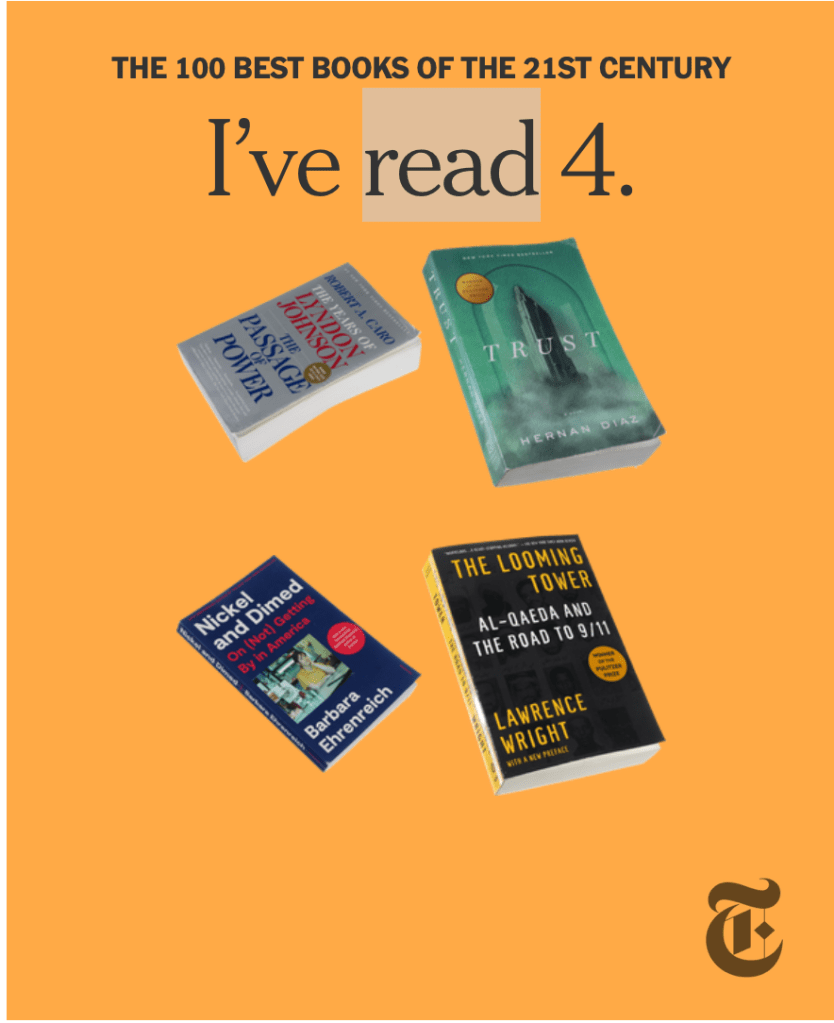
Review: The Fall of the Third Republic: An Inquiry Into the Fall of France in 1940 by William Shirer

Book Review:

This is a very long book, about 1100 pages. But the history and narratives are so compelling, the reader does not mind the mental lifting required. The author was an established and renowned foreign affairs reporter during the 1930s and 1940s. This book is obviously excellently researched and Shirer was reporting from France and Germany prior to the war. His books about Nazi Germany are also compelling history reads.

Shirer also provides an excellent insight into how the war started by examing the behavior of not only France, but also Britian, Germany and Russia.

Why France Fell?

  1. Arrogance: Misguided reliance that things would always stay the same. French politicians and military leaders believing that they had all the right answers and refused to adjust to changing times.
  2. Poor national leadership: Inability to address social inequities, economic problems and the threat of Nazi Germany.
  3. Poor military leadership: Soldiers were not properly trained. “Territory wars” among French generals. Strategy warfare mindset from the 19th century. Poor communication skills among themselves and with the political leadership.
  4. Lack of courage: While many French soldiers fought valiantly, there were many incidents of French soldiers running away from battle and throwing down their weapons and removing their uniforms. These soldiers wanted to go back to their regular lives and not fight in a war they believed was over. They were afraid of German tanks, planes and soldiers.
  5. Appeasement: Both France and Britain did not want war and agreed to whatever demands Hitler made, particularly those made at Munich. Both France and Britian had military opportunities to thwart the German army in 1939 and 1940 but did not have the necessary spine and will to stop Nazi aggression.
  6. French culture: Political extremism and corruption were accepted as norms by the French populace. A national will did not exist to make the necessary political, economic and cultural changes to become a national power. The French people were largely complacent with their history and perceived standing in the world.

“Have you no sense of decency…”

I was thinking about this complaint directed at senator Joseph McCarthy, about 70 years ago by Joseph Welch, who was an attorney for the Army during Senate hearings. I was reading and listening to some of the testimony by Stormy Daniels in today’s trial. I understand that the former president Trump was quite agitated while listening to the testimony of a porn star regarding his rendezvous and sexual affair with her.

I never understood why Trump, his lawyers, his family, and any supporters that he may have, did not try to work out a deal with the Attorney General. I don’t understand why the Republican party would not try to work out some type of exit plan as they did for Richard Nixon in 1974. It just seems to me that some type of deal could be worked out that Trump would plead guilty to certain charges, pay fines and apologize for his misbehaviors. In return for a pardon, Trump would no longer be involved in politics, specifically running for any political office. Trump would be “exiled” to Mar-a-Lago.

Instead, his wife, family, and the country are subjected to a circus, ill behavior, misdeeds, criminality, early dementia, and sexual misconduct. Why would any decent man put his family through this? Does he really want to be president that badly? I guess the answer is yes.

I understand that there were gallows humor among the press corp about what they made experience if Trump is elected president this November. I do not think it is so far-fetched that he will seek revenge on those who have mocked him and attempted to put him in jail.

There is so much talk about the potential ramifications and possible violence if Trump was ever put in jail. I wonder if people considered how things might go if he is not.

I am so tired of all this. We have so many challenges and we are wasting precious time dealing with the delusions Donald Trump.

For God sakes, please somebody make a deal and end this national nightmare…

How to Fail a Job Interview(s)

Just when I though Lauren Boebert and Marjorie Taylor Greene had locked up the crazy vote, then comes along…

Tim Scott, the Republican senator from South Carolina, was asked five times on a national news broadcast, if he would accept the election results this November. Five times, Scott, obfuscated, spun, and flat out refused to give a yes or no answer. I think there is a huge character flaw in anyone who wants to be Donald Trump’s vice presidential candidate. However, give it to Scott, he gave a great audition to Trump on how little personal integrity he had and would do and say just about anything to be on the Trump ticket. However I question whether hard-core MAGA supporters would vote for a black man, no matter how many times he prostrates himself in front of his leader.

Another reputed candidate to be Trump’s running mate is South Dakota’s Governor Kristi Noem. Kristi is already in hot water for her admission in a book she wrote that she killed a puppy because she felt it was untrainable. She has stumbled publicly in trying to justify her abhorrent behavior. This weekend, she was also asked on a national news program, whether she ever met with North Korea’s leader Kim Jong Un as she claimed in the same book. Again, Miss Noem, spun, swerved, and refused to answer the question after being asked it a number of times. Miss Noem makes Sarah Palin look like Condoleezza Rice in comparison. There are already Saturday Night Live and comedic skits about Miss Noem, and there would certainly be a lot more if she was the vice presidential nominee.

No News is Good News

Every local newscast starts off with stories of violence, shootings, stabbings, murder…I wait till the second half of the telecast to catch Sports and Weather.

No matter how wrong or warped your vision of the world is, there is some venue or fool that will feed you misinformation and further your delusions.

We are verbally and visually assaulted by lies, exaggerations, and rampant stupidity that we have become inured to them. You can’t shock me anymore by a news host or politician saying something incredibly stupid.

A President of the United States has the right to assassinate his or her rivals?? This craziness was actually discussed as a serious matter in the Supreme Court!

2020 may have been the last Presidential election that was legitimate. And despite its proven legitimacy, maybe a 1/3 or more of this country’s voters still feel that it was rigged., based on nothing but an old man’s rants as he faces prison.

On CNN: Kaitlan Collins interviewing Bill Barr about his support for Donald Trump.

KAITLAN COLLINS: “So just to be clear, you’re voting for someone who you believe tried to subvert the peaceful transfer of power that can’t even achieve his own policies, that lied about the election, even after his attorney general told him that the election wasn’t stolen. And as the former chief law enforcement in this country, you’re going to vote for someone who is facing 88 criminal counts.”

Running in Flow

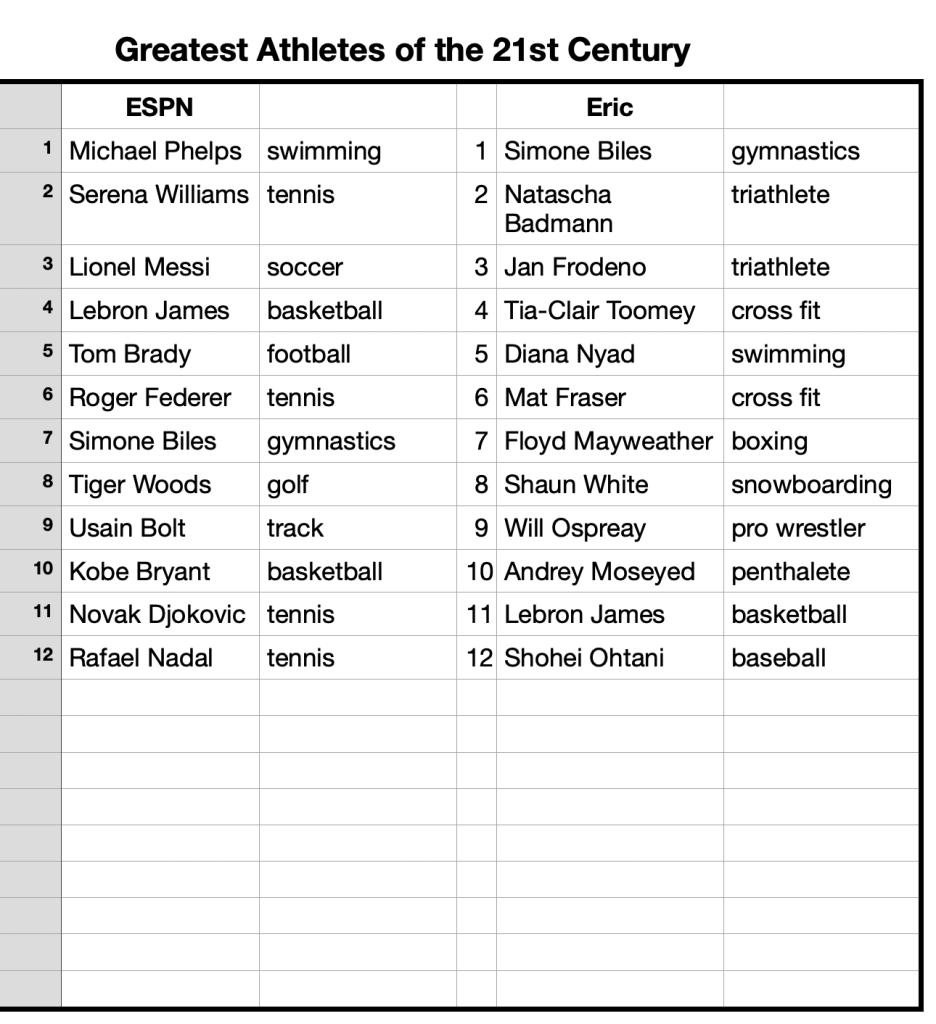
“My favorite athletic moment wasn’t part of any competition. I must have been around 30 years old when I went out for a long run. At that time, my running pace was probably around eight minutes per mile. I didn’t have a particular route or distance in mind; my usual runs were between 3.0 to 3.5 miles. I remember how, if I missed a few days of running, I didn’t feel like myself—I became anxious and discontented.

Then, one Saturday morning, something remarkable happened. I set out and ended up running about 10 effortless miles. It was as if I was in a state of flow; I had no idea I could run that far. I even felt like I could have gone another 2.5 to 3 miles if I had wanted to. I tackled uphill and downhill segments, varying my pace effortlessly. My body, mind, and spirit were completely aligned. It was a rare moment of synergy that I’ve seldom felt in any other activity.

If I had a time machine, I would gladly go back to that moment, that place, just to experience that level of health, happiness, and contentment again.”

No Debate about No Debates

Reports suggest that the five major broadcast and cable news networks are advocating for televised debates between President Biden and former President Donald J. Trump ahead of Election Day. However, it’s time to reconsider the value of such debates, particularly involving Trump.

Let’s be frank: a debate featuring Donald Trump tends to resemble a WWE event promo more than a substantive political discussion. His approach lacks preparation and substance, often devolving into insults and misinformation. The 2016 debates between Trump and Hillary Clinton showcased this stark contrast in demeanor and knowledge. While Clinton demonstrated a grasp of issues, Trump stumbled through with little coherence.

The 2020 debate between Trump and Biden was a debacle, failing to offer meaningful insights into policy or voter concerns. In fact, it only served to highlight the degradation of presidential debates into spectacles of theatrics rather than platforms for informed discourse.

One might argue that the last truly substantive presidential debate occurred between JFK and Richard Nixon in 1960. Since then, debates have become increasingly staged, manipulated, and divorced from genuine discussion.

In today’s political landscape, debates are marred by handlers, opportunities for misinformation, and outright falsehoods. It’s understandable why networks may view them as entertainment, but for voters seeking genuine insights, they offer little substance.

(Idea and initial content drafted by Eric Burleigh, edits suggested by AI)

Fluke: Chance, Chaos, and Why Everything We Do Matters by Brian Klaas (Reader’s Notes)

I really didn’t get too much out of this book until the last chapter where these notes come from. Some good insights and ideas listed below:

We toil in a quixotic frenzy, to squeeze the last cold drop off efficiency from corporate strategies, life hacks, and to do lists, a drive-through strategy to living. Do more, even if you enjoy each bit less. Life’s victories have become, to many, eliminating moments of slow, quiet reverence and replacing them with hyper productive multitasking as we chase Sisyphean goals that will never be enough to satiate us. It feels, too many of us, like a checklist existence. But our greatest moments are often the least efficient, those fleeting experiences in which our desires to achieve are put on hold, and the prize is just a moment of ecstatic being.

This is the paradox of 21st-century life: staggering prosperity seems to be tethered to surging rates of alienation, despair, and existential precariousness. Humans have constructed the most sophisticated civilizations ever to grace to planet, but countless millions need to medicate themselves to cope with living within them.

This is a despair of our own making, according to the German sociologist Harmut Rosa, not because of technology, but because of a futile yearning to make the world controllable. Relationships become a means to an end, reducing a magically networked existence into mere “networking.”

Countless distant decisions, accidents – – happy and not – – separated by space and time, come together in ways that we could never anticipate, and our lives changed because of them. It can be comforting to accept what we truly are: a cosmic fluke, networked atoms infused with consciousness, drifting on a sea of uncertainty.

A world without lived mystery would be a cold, disembodied one, in which we drift through life never surprised, never pausing to contemplate how nature spun us into its endlessly intricate web, never overwhelmed with an existential sense of awe.

It’s humbling to recognize that you’re not the conductor of the symphony but rather one vibrating string within it. The truth situates us within something vast and unknown. We can’t know where we are going, or why we are here (if there is any reason.) It leads us to three of the most important words in existence: I don’t know.

What happens when we can give up a bit of control and let ourselves drift and explore a bit more without direction? We know – – with clear evidence – – that moments of diversion, in which idleness envelops us, and our minds linger away from directed action, are often moments of brilliance.