Could Not Say It Better Myself

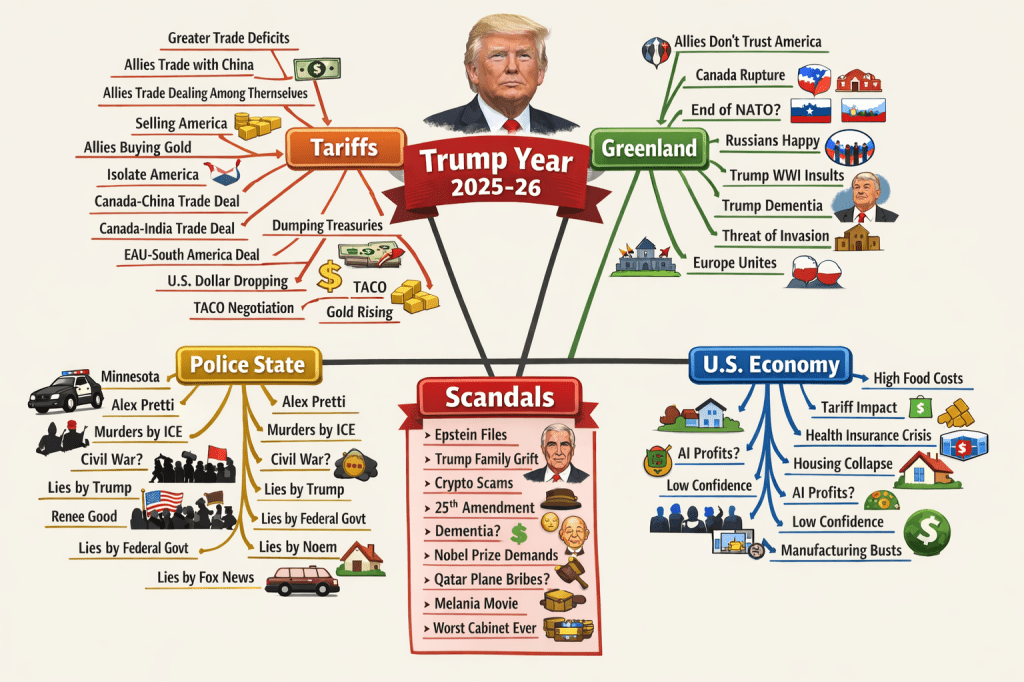
Trump’s enduring legacy is not an institutional structure, but rather a highly toxic culture that has been adopted by many of the president’s followers and will live on after he is gone. Threats against Greenland, NATO, and individual European countries mean that no ally will be able to trust commitments made by the United States again.

Discourse by government officials has been degraded. Cabinet officers and press secretaries know that they don’t have to respond to questions they don’t like because they can simply insult the questioner. And companies will understand that they need to seek individual favors rather than general policies governing entire sectors.

Francis Fukuyama.

How History May Judge the Trump Era

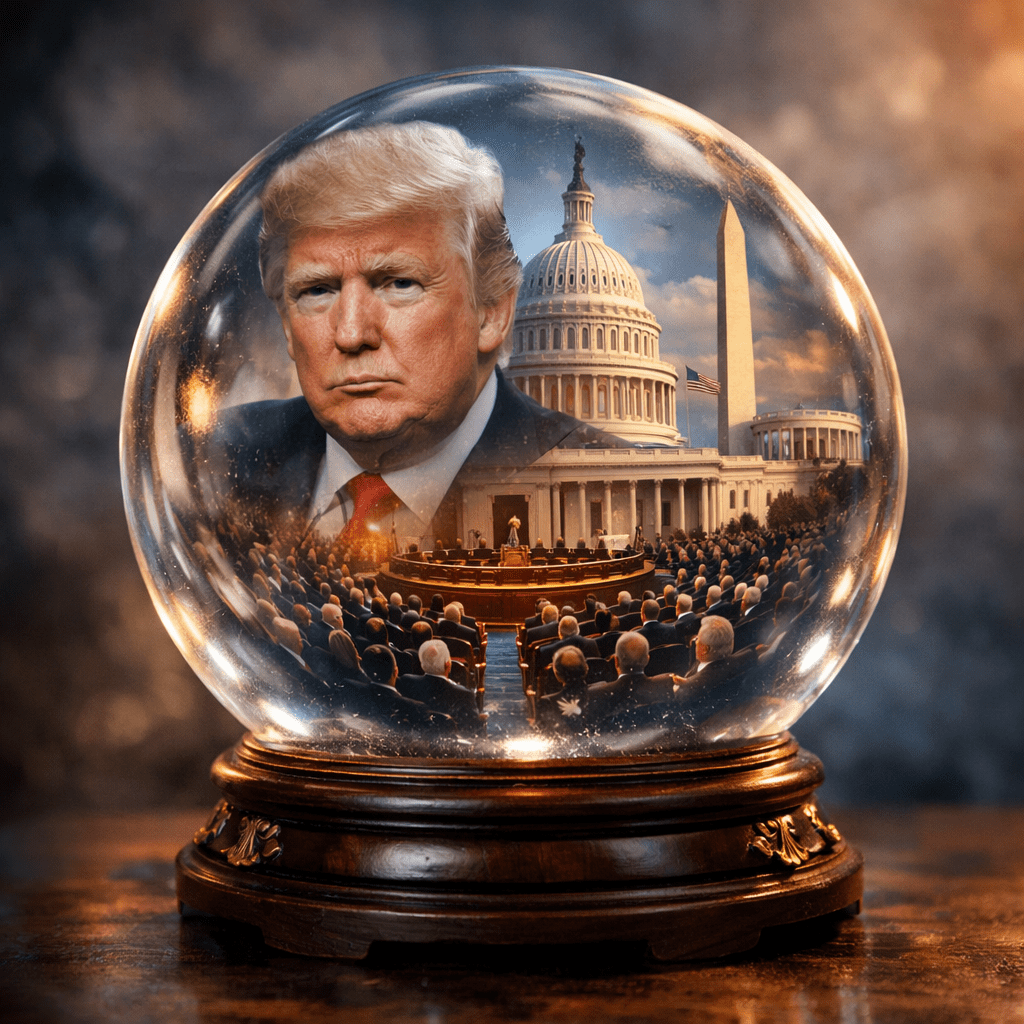
I will not be alive when historians begin to write definitively about the United States during the Trump era. In truth, I would much rather read about it twenty years after it has ended than live through it as it unfolds. Standing in 2026, I find myself trying to imagine what scholars in 2046 might identify as the defining themes, causes, and consequences of this period. I have no time machine—only conjecture.

My assumption is that the central question historians will grapple with is not simply who Donald Trump was, but how and why American voters enabled the Trump era to occur. Inevitably, comparisons will be drawn to other moments in history when democratic systems elevated leaders who later proved deeply polarizing or destructive. Germany in the 1930s will be one such reference point, though careful historians will also emphasize key differences: Germany’s economic collapse, political fragility, and social despair far exceeded conditions in the United States in 2016.

Several lines of inquiry seem likely to dominate future assessments:

  1. Congressional Enablers
    Trump’s support did not emerge in isolation. Historians will likely examine the role of Republican members of Congress who, with few exceptions, aligned themselves with Trump despite repeated controversies, ethical questions, and institutional challenges. Whether motivated by ideology, fear of political retaliation, or electoral self-preservation, their collective restraint—or lack of resistance—will invite comparison with earlier moments when legislators faced tests of independence and conscience, including those explored in John F. Kennedy’s Profiles in Courage.
  2. The Supreme Court and the Long View
    A twenty-year gap may provide a more balanced framework for evaluating the Trump-era Supreme Court. With time, historians will be better positioned to assess whether the Court’s decisions strengthened constitutional principles, reshaped social norms, or produced unintended consequences that only became visible over decades.
  3. Corporate Power and Quiet Support
    Many business leaders offered tacit or indirect support for Trump’s agenda, particularly where deregulation and tax policy aligned with their interests. Future researchers will likely scrutinize financial records, lobbying efforts, and private communications to better understand the extent to which economic power influenced public policy—details that were not always transparent in real time.
  4. The Press and the Meaning of Truth
    The so-called mainstream press positioned itself largely in opposition to Trump, yet it did so while facing financial decline and growing competition from social media platforms. One enduring issue of the era was the erosion of shared definitions of “truth” and “fact.” Even well-sourced reporting was frequently dismissed as “fake news,” raising long-term questions about public trust, epistemology, and the role of journalism in a fragmented media environment.
  5. Ideological Media and Political Identity
    Conservative media outlets—most notably Fox News, along with a network of right-leaning digital platforms—played a significant role in shaping how events were interpreted by audiences seeking reinforcement of political and cultural identities. Historians may study this ecosystem as a case study in modern persuasion, examining how narrative repetition, grievance framing, and selective information proved highly effective.
  6. Immigration Enforcement and Historical Comparison
    Immigration policy and enforcement will remain one of the most contested aspects of the Trump era. Some commentators drew historical parallels to authoritarian practices of the past, while others argued such comparisons were exaggerated or inappropriate. With the benefit of distance, historians will likely focus on legality, implementation, humanitarian impact, and rhetoric—allowing future generations to judge the fairness and proportionality of those comparisons.

History rarely delivers simple verdicts. It weighs context, consequences, and contradictions. When the Trump era is finally written about with the benefit of time and distance, the most enduring lesson may not center on one man alone, but on the resilience—or fragility—of democratic institutions and the citizens who sustain them.

Image by Chat GPT; content by EAB

Greenland

My thoughts to a friend about the Greenland situation…

I sometimes wonder whether people at the White House read the news, particularly the business and financial news. For example, they would see that China and Canada have entered major trade agreements, now viewed as a new strategic partnership. The European Union and various South American countries have also just entered into a landmark trade agreement. They might also want to check out who currently holds our US treasuries. After Japan and China, the next eight countries are European and the Cayman Islands. I don’t think you want to piss off people who are holding your paper. I don’t think you also want to piss off countries who will tell you to take your military bases and troops and get the hell out. The rest of the world, particularly our allies are moving on. They can’t trust us and by “us” I mean the government and the American voters who enabled all this. What moves this government is not diplomacy but money and finance and our leverage on those matters are thinning.

I’m Sick of Stupid Too

“I’m sick of stupid” U.S. Sen. Thom Tillis, a North Carolina Republican

Texas A&M Forbids A Plato Reading In An Intro Philosophy Course

Trump’s ‘Superstar’ Appellate Judges Have Voted 133 to 12 in His Favor

Smithsonian Removes Label Noting Trump Impeachments

Trump’s Venezuela, Greenland threats make Canada fear it’s next

State Department warns ‘leave Venezuela now’ as militias hunt US citizens

Rightwing bloggers and Maga minions: meet the Trump-loving Pentagon press corps

Trump Orders Top Army Officials to ‘Draw Up Plan’ to Invade Greenland: Report

‘See What Happens!’ ICE Boss Dares Philly Sheriff to Arrest Agents After Saying They ‘Don’t Want This Smoke’

The CNN anchor (Jake Tapper) then played video from the shooting in which someone was heard calling Renee Good “f*cking b*tch” after ICE agent Jonathan Ross, fired at least three shots.

“Is that Agent Ross’s voice calling Renee Good a f*cking b*tch?” Tapper asked.

“I can’t determine which one it is, but it could be, sir,” Kristi Noem replied.

CNN

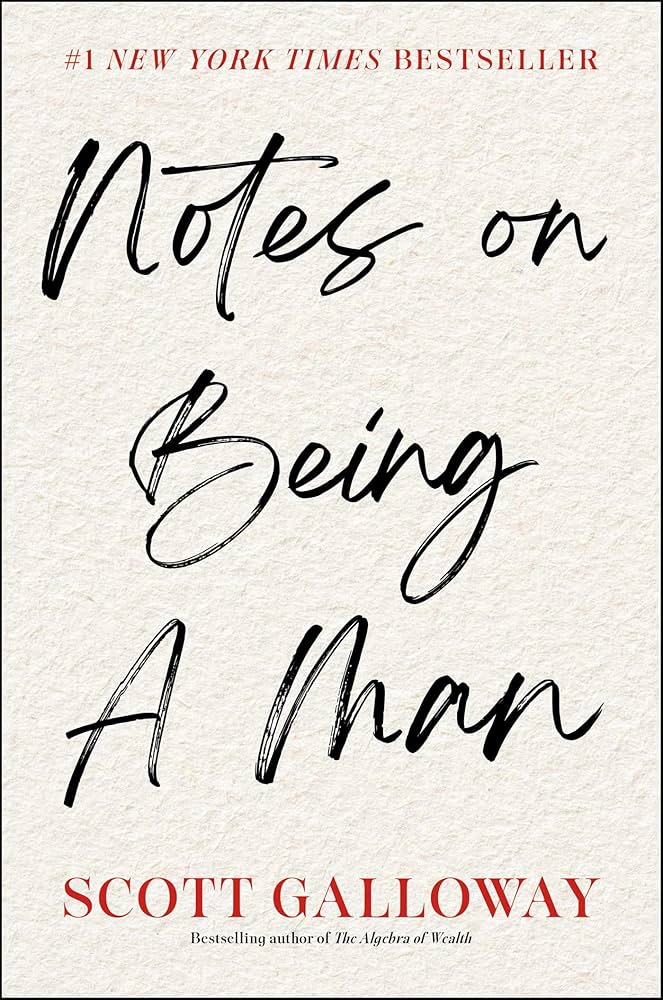
Books and Reading: My Lifetime Passion

Of the last fifty books I’ve read, forty came from my local library and ten from Kindle. I didn’t buy a single physical book in 2025. When I do purchase a Kindle title, I rarely pay more than $2.99. That number feels less like thrift and more like a verdict on how I now value books: still important, but no longer precious objects.

I wandered into Barnes & Noble twice this past year. Both times I walked out empty-handed. The books that were heavily discounted held no appeal, and the books I might have been interested in weren’t discounted at all. The store felt less like a literary crossroads and more like a museum gift shop—pleasant to browse, but disconnected from my reading life.

When I’m looking for something new to read, I rely on a small, familiar circle: The New York Times Sunday Book Review, Kirkus Reviews, or Goodreads review.

 1929: Inside the Greatest Crash in Wall Street History–and How It Shattered a Nation by Andrew Ross Sorkin is the only current New York Times nonfiction bestseller I’ve read. I have no interest in the other titles on the list. The hardcover fiction list holds even less appeal; I haven’t read—and don’t intend to read—any of those books.

What surprises me most is not my indifference to bestseller lists, but how little conversation books generate anymore. I honestly can’t remember the last time someone recommended a book to me, or when I had a real discussion with another person about something we’d both read. Books seem to have slipped quietly out of our shared conversations.

That feels especially strange when I think back to being ten or eleven years old, roaming the Pennsauken Library in search of the next Hardy Boys, Tom Swift, or Chip Hilton book. I wish I had even a quarter of the excitement I felt then—the sense of urgency, discovery, and possibility that came with finding the next volume in a series. Reading was once a small, private adventure that somehow felt enormous.

At seventy-three, reading is harder in ways that have nothing to do with motivation. My mind doesn’t focus for long stretches. My eyes tire quickly. Cataracts and floaters dull the sharpness of the page. And beyond the physical changes, there’s the persistent feeling that many books now trigger: been there, done that. As one gets older, interest naturally drains from subjects that once felt endlessly compelling—politics, sports, business, self-improvement, psychology, religion. Not because they don’t matter, but because their patterns repeat.

There’s also the sense that books—especially those about current events, politics, or celebrities—have lost some of their gravity. So much of their content is given away in advance through interviews, podcasts, op-eds, and promotional appearances that the book itself feels like an afterthought, a bound summary of things already half-known.

And yet, despite all of this, I keep reading. Maybe not with the hunger of a child or the ambition of a younger adult, but with a quieter persistence. The library card still works. The Kindle still lights up. And every now and then, a book manages to cut through the fatigue and familiarity, reminding me why reading mattered in the first place—and why it still does, even now.