At 73, this Labor Day weekend makes me wonder: How many summers do I have left?
I don’t miss the heat or humidity of summer. I miss the sunlight—the early sunrises, the lingering evenings. A metaphor, perhaps, for life’s stages.
Leisure reading is fading. Only 16% of Americans read regularly for pleasure—down from 28% in 2003. In the UK, just 41% of parents read daily to toddlers, compared with 64% in 2012.
I wandered into a Barnes & Noble last week, my first visit in over a year. Chairs and cozy nooks were gone—B&N is all business now. I left without a book. Even their sale couldn’t entice me; I balk at paying more than $20 for a hardcover.
On my nightstand:
King of Kings: The Iranian Revolution—A Story of Hubris, Delusion and Catastrophic Miscalculation by Scott Anderson
Miracles and Wonder: The Historical Mystery of Jesus by Elaine Pagels
Haruki Murakami once wrote:
“If you only read the books that everyone else is reading, you can only think what everyone else is thinking.”
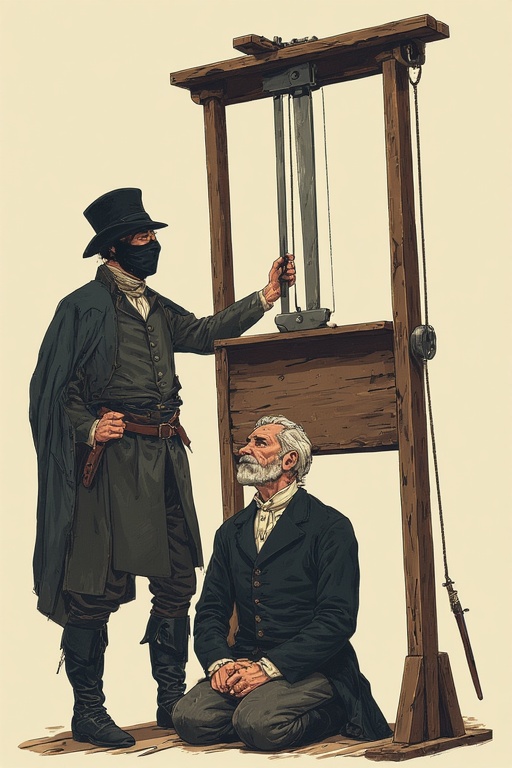
Mortality hovers. I don’t fear death, but I do fear dying. Sometimes I feel like a man with his head beneath a guillotine, staring at the blade. I’ve been fortunate with health, but around me I see friends whose luck has run out. The blade will fall on me too.
Meanwhile, the U.S. falters. Ineptitude, cowardice, hubris—displayed daily. A recent New York Times photo showed India’s Modi with Putin and Xi, a tableau of shifting power. It captured the failure of American diplomacy and leadership. One man bears much of the blame: Donald Trump. As summer declines, so does America as it retreats further into the darkness.
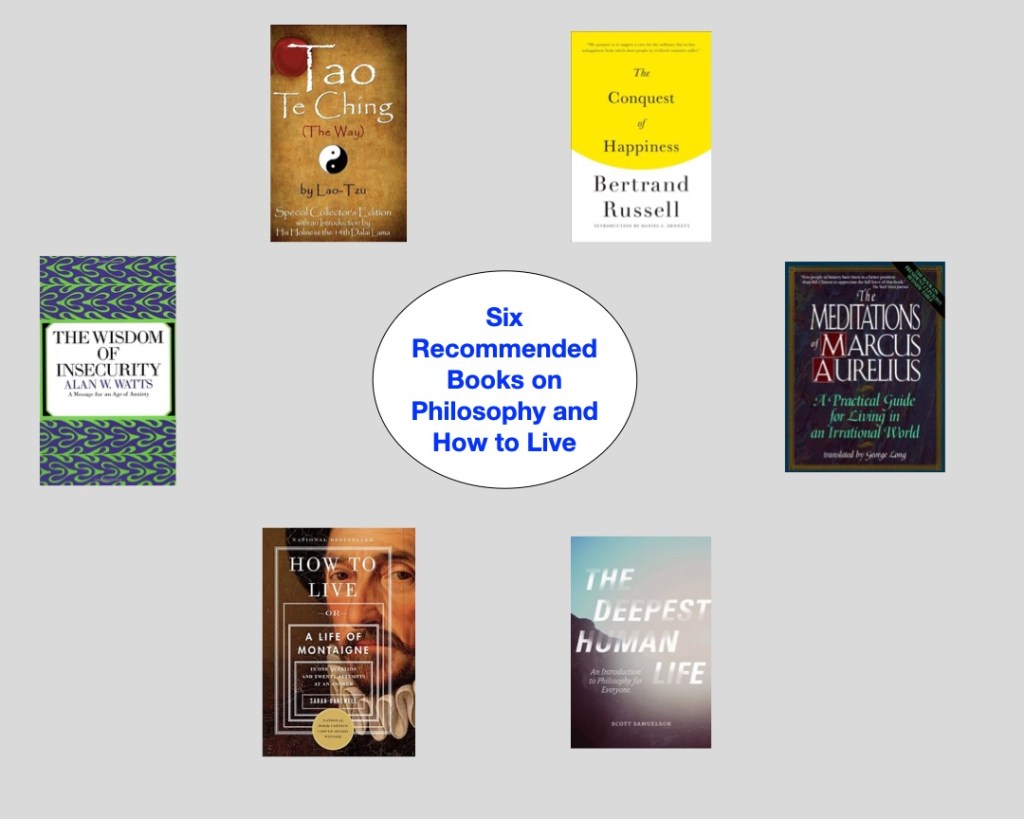
When religion failed to be an adequate guide on how to live and conduct oneself, I became interested in philosophy. I don’t pretend to be particularly wise or that I have conducted myself in life to a high standard, but these books provided some inspiration and guidance based on reason and common sense.
Because life is sweet, we do not want to give it up, and yet the more we become involved in it, the more we are trapped, limited and frustrated. We love it and hate it at the same time. We fall in love with people and possessions, only to be tortured by anxiety for them.
The Wisdom of Insecurity by Alan Watts
Chase after money and security and your heart will never unclench. Care about people’s approval and you will be their prisoner.
Tao Te Ching Translated by Stephen Mitchell
The wise man thinks about his troubles, only when there is some purpose in doing so; at other times, he thinks about other things, or, if it is night, about nothing at all.
The Conquest of Happiness by Bertrand Russell.
The best way of avenging one self is not to become like the wrong doer.
We rarely know when we are sharing the last conversation, the last laugh, or the last look with someone we love. Sometimes death announces itself with months of warning; other times it slips in like a thief, stealing a life in the space between heartbeats. Over the years, I have stood at the bedsides and shared the dinners that turned out to be final moments. These are the stories of my aunt, my sister, my stepfather, my mother—and of a Valentine’s Day in childhood that taught me the lesson I carry still: tomorrow is never promised.
Aunt Irene’s Peace
My Aunt Irene was plagued with poor health, especially heart issues in her fifties. She endured multiple heart attacks—just as nearly all her brothers and sisters did, including my father, who died at 35.
For years, Irene feared death, understandably so given her condition and the string of family losses she had endured. Then, one day at a family function, she pulled me aside with an urgency I’ll never forget.
She told me she no longer feared dying.
During one of her heart attacks, she had what the medical profession would call a near-death experience—but to her, it was entirely real. She said she saw and spoke with loved ones who had already passed, including my father, with whom she had been very close. She described it as a place of pure peace, tranquility, and happiness.
Because of that experience, she was no longer afraid—and she wanted me to understand that I should never fear death either. My father gave my aunt his house when her marriage failed and she needed a home for her and her three children. I think she felt duty bound to pass on something that would guide me as I got older.
She died peacefully a few months after sharing her feelings with me.
My Sister’s Ominous Reading
In January 1995, my sister Sandra died at just 38 years old during brain surgery to remove a growing tumor near her optic nerves. The main fear had been the risk of blindness. I don’t recall any great concern that she might not survive the surgery. A few months before the surgery, she and some of her friends had gone to dinner, followed by a visit to a psychic.
The psychic read cards for each of her friends with ease and everyone marvelled and laughed at their future predictions—until it was Sandra’s turn. The psychic’s demeanor changed. She looked unsettled and while staring at the cards said she could not see Sandra’s future. Sandra’s psychic session ended abruptly. I hold no firm beliefs on psychics or their practice but I found this a cautionary tale. Was it coincidence? Or a warning? The unsettling moment stayed with Sandra’s friends long after she was gone.
One Last Look
Two days before her surgery, my wife and I hosted Sandra, her husband, her daughter, and my mother for dinner. Sandra showed no visible fear and instead focused on how long her recovery would take. However I was deeply worried, but Sandra teased me when my wife mentioned I’d gone to Mass earlier that day. I had not been at Mass in years and had no great belief in prayer.
When dinner was over and Sandra left, she got into her car and stared at me for a long, deliberate moment as she drove away. My wife and mother noticed it too. At the time, our greatest fear was that she might go blind; I thought perhaps she was memorizing my face just in case.
We shared that one last look before she died.
My Stepfather’s Last Words
In his final months, my stepfather’s body was ravaged by cancer. He lost 100 pounds, was confined to bed, drifted in and out of awareness, and could no longer communicate. Hospice care became his world.
On his last day, I had to put an oxygen mask on him because the visiting technician was too shaken by his condition to do it. I secured the mask, and to my shock, my stepfather lifted it, looked me directly in the eyes, and asked, in a clear, steady voice, “What’s next?” I was stunned and offered that the mask would let him breath easier.
He hadn’t spoken coherently in months. He was comatose. Yet, in that moment, he seemed alert to fully understand where he was—and what was coming. He passed away a few hours after his last words.
A Fleeting Return
My mother’s final years were spent in an assisted living facility. Dementia robbed her of clarity, recognition, and the gentle temperament she had always carried. Most days she didn’t know me, my sister, or even her best friend of 50 years.
Visits were often an exercise in quiet heartbreak. But one afternoon, perhaps a month before she died, she surprised me. She knew exactly who I was. She spoke with complete lucidity, telling me she was scared, that she missed her home, and that she hated being a burden. She even apologized for her condition—as if she had caused it.
For a brief, shining moment, she was herself again. I thought of taking her home. But within minutes, the light in her eyes faded, the fog returned, and she was gone from me once more, though her body lived on a few more weeks. I remember that I cursed God for what had been done to my mother and to all the other helpless people that I saw in that assisted living home.
The Valentine’s Day Card
In the winter of 1960, when I was seven, my parents were heading out to a Valentine’s Day party. I had made a card for my mother and gave it to her gladly. I had also made one for my father—but I was angry with him for some reason, and I withheld it.
As they put on their coats, something inside me changed. I handed my father his card. He opened it, smiled, kissed my forehead, and said, “I’ll see you tomorrow.”
But I never saw him again. He died that night of a heart attack at age 35.
I have often thought of that moment. Had I let my anger win, the guilt of my last act toward him being one of rejection would have been unbearable. Instead, I learned—at the age of seven—that tomorrow is never guaranteed, and the chance to make amends may never come again.
In all these moments—some peaceful, some mysterious, some unbearably sad—the same truth emerges: Life is fragile. Goodbyes can be sudden. And sometimes, in the quiet between breaths, there is a chance to speak the words that matter most.
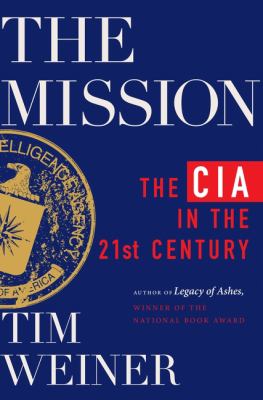
Tim Weiner’s The Mission is a sobering account of the CIA’s role in America’s foreign policy missteps and disasters in the 21st century. Drawing from extensive research, Weiner chronicles the agency’s involvement in 9/11, the failed search for weapons of mass destruction, the wars in Afghanistan and Iraq, the hunt for Osama bin Laden, CIA-led torture programs, intelligence scandals, and the rise of authoritarian threats from Russia and China.
This is a meticulously documented narrative by an author who previously wrote a highly regarded history of the CIA. His deep dive into the post-Cold War era exposes not just institutional failures, but also the personal hubris and political dysfunction that have plagued U.S. intelligence efforts for decades.
My key takeaways:
Lack of Trust and Influence: The CIA has long struggled to earn respect from Presidents and Congress. Time and again, its expertise was dismissed or ignored, and its assessments branded as unreliable.
The Bush Administration’s Failures: The book paints a particularly damning portrait of the Bush era. Following 9/11, President Bush, Dick Cheney, Condi Rice and Donald Rumsfeld failed to provide clear leadership. Their decisions around Afghanistan and Iraq were marked by confusion, overreach, and incompetence.
Torture and Moral Failure: The CIA’s use of torture—sanctioned by the Bush administration—was both brutal and ineffective. Weiner describes techniques that border on the medieval, with little intelligence gained and great moral cost.
Civilian Casualties and Poor Strategy: U.S. policies led to the deaths of countless innocent civilians. Nation-building efforts were hollow and often reduced to buying influence with cash, with no sustainable long-term strategy.
Leadership Void: Successive CIA directors often lacked the competence or temperament needed for the job. David Petraeus, once seen as a reformer, was undone by scandal and the mishandling of classified information.
Enemies Within: Some of the most troubling stories involve not foreign adversaries, but Americans working within the intelligence community– “evil doers.”
Russia and Trump: The book raises urgent concerns about Vladimir Putin’s manipulation of Donald Trump. While some critics view Weiner’s treatment of Trump as partisan, his claims are backed by specific examples of erratic behavior and questionable judgment.
China’s Strategic Gains: The author also warns about China’s aggressive espionage efforts, including theft of data, intellectual property, and personal information—threats that continue to grow.
Final Thought:
Weiner’s central question—What exactly is the CIA’s mission?—remains disturbingly unclear. The agency’s goals seem to shift with political winds rather than strategic foresight. If the U.S. is to effectively combat terrorism and the evolving threats posed by Russia, China, North Korea, and others, we need a vastly improved intelligence apparatus—one built on clear purpose, strong leadership, and accountability.

 Esot-eric