I have made previous year end predictions with modest success: 2023 predictions, 2024 predictions, and 2025 predictions. Some of my predictions are based on reason and some are based on hope and some tongue in cheek..
The world as we know it will change dramatically as AI advances and credible evidence of UAPs accumulates. The most profound disruptions will affect what we believe we know about science—particularly physics—and religion.
Kaitlyn Collins of CNN will try to secure the first interview with an ET.
Donald Trump will leave office by the end of 2026, ostensibly for health reasons.
A market correction of roughly 25% will occur in early 2026. A modest rebound will follow later in the year, but it will not recover the initial losses. AI will fail to deliver the financial returns many corporations expect, and large investments will produce disappointing profits.
By the end of 2026, unemployment will rise to between 5.5% and 5.8%.
Continued global distrust of the United States will push allies toward deeper economic and strategic alignment with China. Within three to five years, China—not the U.S.—will be the dominant economic, business, and political power. The U.S. will become an even greater political pariah, particularly if it engages Venezuela militarily or continues to inadequately support Ukraine. Should Ukraine be forced into a highly unfavorable settlement with Russia, it will represent a diplomatic and military defeat for the United States greater than Vietnam, with longer-lasting consequences.
Fear of major losses in the November 2026 midterms will trigger a reinvigoration of Republican members of Congress. Many current Trump administration cabinet members will be fired or pressured to resign due to scandal or incompetence. Congressional Republicans will withdraw institutional protection from failing officials.
Rising ticket prices and escalating sports-network subscription costs will provoke a fan backlash, reducing attendance and interest across major sports. Fans will increasingly feel that on-field and on-court performance does not justify the expense. ESPN, in particular, will regret its deal with WWE.
Taylor Swift will marry Travis Kelce. Tabloid reports of separation and divorce will soon follow.
Democrats will regain control of the House in November 2026, though by narrower margins than currently predicted.
Gun violence will continue unabated. Regardless of how horrific individual events become, no meaningful gun-control legislation will be enacted.
No Super Bowl celebration parade down Broad Street in Philadelphia in 2026.
Yearly Social Security increases are not keeping up with increasing rise in inflation. The senior citizen constituency will become an important political force in 2026 and 2028, one that the Republican Party can no longer be assured of their support.
My expectation for those promoting the teaching of the Ten Commandments in schools is that they’ll soon explain how the penalties for breaking them depend on one’s political party, ideology, or religious affiliation.
***
This may be the sorriest era in which to write a decent book or speech, for the mob no longer reads to think but to feel confirmed—and preferably entertained.
***
Commercially, the most successful political and cultural “thought leaders,” pundits, and analysts are those who are first controversial, second entertaining, and a distant third—if ever—wise, prescient, or correct in their pronouncements.
***
Twenty or thirty years from now, history will mock and expose many of today’s cultural, political, and religious heroes and influencers as the charlatans and fools they always were.
***
Once, citizens braved fire hoses, clubs, and bullets to win the rights we now take for granted—laws signed in ink but sealed in blood. Today, those rights are being revised by comfortable hands and poisoned hearts, undone not by courage but by cowardice.
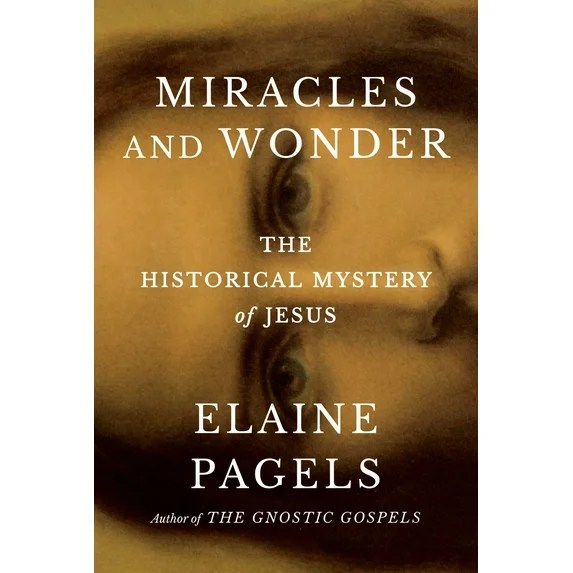
As an agnostic, I opened this book hoping it might shift my faith-doubt meter. It didn’t. Perhaps I expected too much.
Elaine Pagels, a distinguished scholar of religion, offers a deeply researched exploration of the history, culture, and legends surrounding Jesus. She examines familiar themes—the virgin birth, Jesus as prophet, miracles, crucifixion, and resurrection—while weaving in theories, conjectures, and historical possibilities. At times, though, her inquiry stops short of resolution, leaving questions dangling.
She does not shy away from provocative possibilities: Was Mary a prostitute? Was Jesus the illegitimate son of a Roman soldier? Was Jesus even buried after crucifixion, or left, like most executed criminals of the era, to scavenging animals?
Pagels acknowledges that the gospels themselves—written decades after Jesus’ death—are a blend of myth, storytelling, and propaganda designed to win followers. Yet she ends with a surprisingly devotional note: “The point is clear as a lightning flash; God can make a way out of no way.” She praises the gospels for offering what humanity craves most—an outburst of hope.
That left me puzzled. How much of Jesus’ life was historical, and how much was invention? If much of it was propaganda, why cling to its hope-filled message? For me, the book opened doors, raised intriguing questions, and stirred thought—but ultimately left me standing where I began.
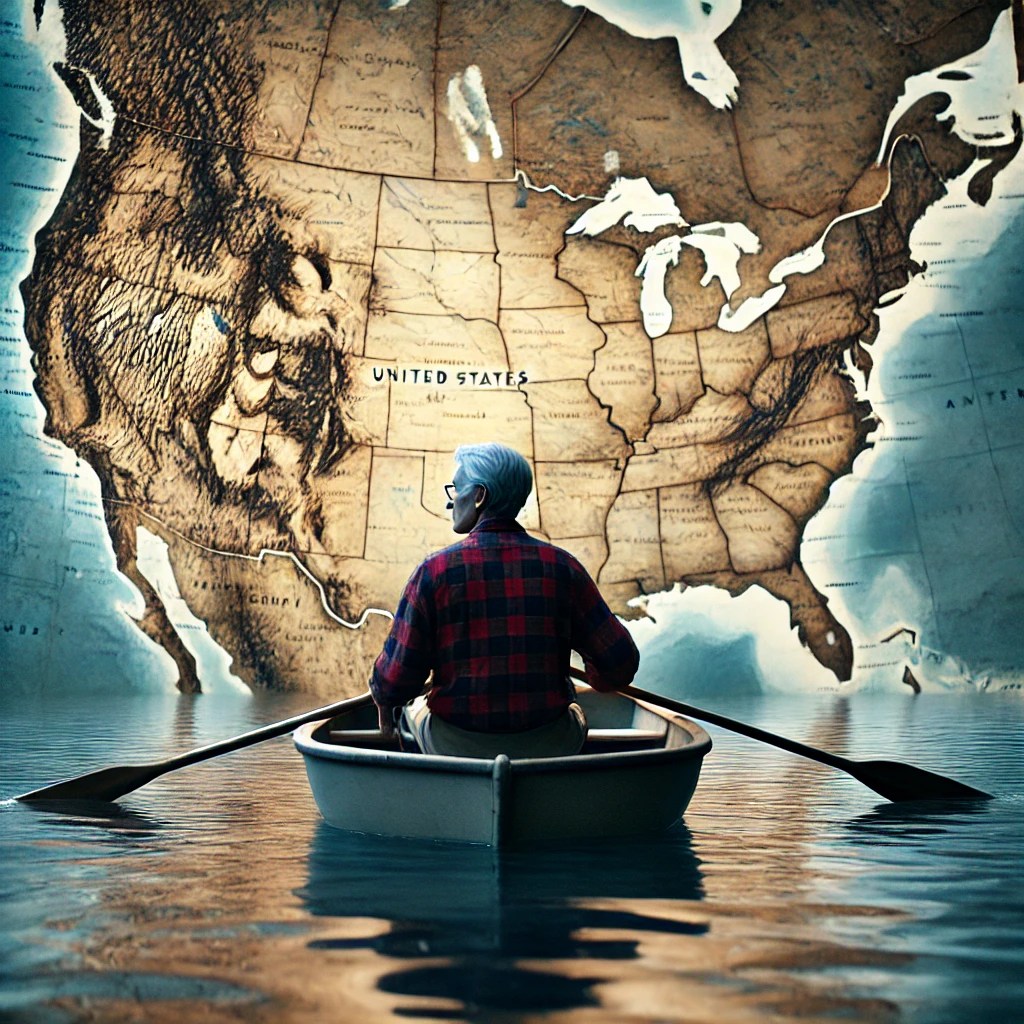
As I contemplated last week’s election results, with all their dreary portents for the years ahead, I was reminded of the lament of a Roman senator—his power fading, his influence diminished, as Caesar’s star ascended:
“I shall tend my fish, study philosophy, and comport myself for death. This republic holds no place for me any longer.”
(Conspirata: A Novel of Ancient Rome, Robert Harris)
And then I asked myself, “Does this country hold a place for me?
The question is not rhetorical. At this late point in my life, I find myself at odds with the culture, principles, and trajectory of the nation I once revered. My beliefs—anchored in reason, history, and an old-fashioned sense of duty—seem increasingly alien in a land preoccupied with spectacle over substance.
A Discontented Creed
Consider, for example:
Religion in Politics: As an agnostic, I believe that the pulpit should stay far away from the podium. Ministers and pastors claiming divine insights on policy strike me as charlatans with better wardrobes. Faith should inspire personal virtue, not dictate public policy.
Loyalty to Allies: In diplomacy and in life, I value loyalty. A true ally stands by you in both triumph and trial. Yet we seem to cast off old friends—countries and principles alike—as if they were expired coupons.
Science and Competence: I favor facts over feelings, competence over pretense. But ours is an age where bombast outweighs expertise, and the loudest voice is mistaken for the wisest.
Reckoning with Our Past: This country’s history is a patchwork of greatness and failure. We have saved nations and crushed dreams, built monuments to liberty and ignored the cries of the oppressed. I believe in confronting our flaws honestly, not whitewashing them with comforting myths—or worse, erasing them entirely in the name of “offense.”
Respect for Women: Here is a simple proposition: anyone who assaults, demeans, or dehumanizes women is unfit for public office. Full stop. Yet, 52% of white women voters apparently find this a negotiable standard. I am baffled—and disgusted.
Character Matters: Good judgment, responsibility, empathy, and moral clarity—these should be the cornerstones of a person’s character. Increasingly, though, they are dismissed as relics of a bygone era, sacrificed on the altar of “winning at all costs.”
A Nation Entertained to Death The deepest cut of all, perhaps, is that we have traded informed citizenry for the hollow thrills of reality-show governance. Americans now crave entertainment over enlightenment. The morning chatter of Joe and Mika or the smirking commentary of Bill Maher may pass for insight, but to me, they feel like reruns of Neville Chamberlain in Munich, mistaking platitudes for policy while calamity looms.
The Final Reckoning
So here I am, like that Roman senator, contemplating my fish and philosophy. The republic of my youth—the one I fought to believe in—is unrecognizable.
It is a strange thing to feel like an exile in one’s own country, but perhaps the true patriots are always exiles. We stand apart, unwilling to settle for the tawdry spectacle on offer, and dream of something better—a nation of character, competence, and courage.
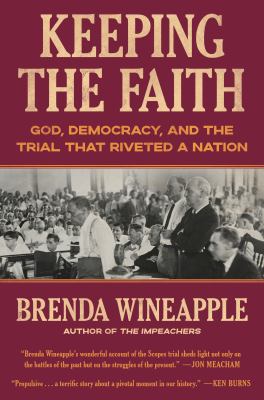
Before reading this book, I was already intrigued by the Scopes trial, having encountered it through reading Inherit the Wind by Lawrence and Lee in my youth and viewing the film adaptation starring Spencer Tracy as Clarence Darrow.
This book captivated me, not just with the story of the Scopes trial itself but also with the rich background it provides on the cultural and political climate in America leading up to the trial. The country was grappling with racism, antisemitism, women’s disenfranchisement, and a stark divide between the North and South. Religious leaders were increasingly uneasy with the rise of science, and efforts to suppress scientific education in schools were prevalent—an issue that resonates even today.
Wineapple profiles three key figures of the era: Clarence Darrow, H.L. Mencken, and William Jennings Bryan. These profiles were the highlight for me. All three were intelligent, influential, articulate, and deeply flawed. Their strong beliefs on issues like racism, antisemitism, and religion shaped their actions.
Bryan, a staunch defender of the Bible, believed its teachings should be taken literally. His speeches and sermons, especially in the South, were widely popular. Despite three failed presidential campaigns, his political ambition never waned.
Darrow and Mencken, both agnostics, were critical of religious hypocrisy. Liberals in their politics, they used their legal and journalistic skills to push their principles. It’s fascinating that Bryan, Darrow, and Mencken ended up at the center of such a pivotal cultural and political moment.
Reading this book made me reflect on how much progress the United States has—or hasn’t—made in areas like racism, antisemitism, and the influence of religion in education, law, and politics. The challenges to science that existed in the 1920s are still relevant today.
I highly recommend this book as an insightful snapshot of American culture and politics in the 1920s and is still happening today.
Saturday Night will always remain burned in my memory as long as I live, as being the day when I heard the most religion preached, and the least practiced.
I am a huge Bill Maher fan. I’ve been watching Politically Incorrect since it debuted in 1993. Maher could be considered the Will Rogers of today’s culture. But Maher is more cutting, dynamic, controversial and cynical than Rogers ever was. Plus Maher has met plenty of people he did not like. Maher’s style is more like H.L. Mencken. Maher and Jon Stewart are the rational minds and voices that Americans need badly.
I’d recommend Maher’s books of essays about politics, media, cancel culture, Trump, education and civil war etc. to anyone interested in current events, history and politics. But I understand that 40% of the country might prefer to listen to Greg Gutfield and The Five. Their loss! I find Maher to be a very fair interviewer on his show, civil and willing to give opposite views from him a fair hearing.
Read the varied essays at your leisure. Maher incorporates humor with his opinions and criticisms. Try it, you may like it…
I have posted some excerpts that caught my eye and mind…
A job in Congress is just so much better than racking the weights at CrossFit, which is what Marjorie Taylor Greene did before she set her crazy eyes on the prize. And once you get the gig, it’s yours for life. The re-election rate in the house for incumbents in 2022 was 95% – – that’s better job security than a pedophile priest has.
Everybody keeps asking, how could a guy (George Santos) like this happen?” I’ll tell you how: because no one cares anymore about substance. It’s all tribalism. The only thing that matters is “is he on our team?” Is he doing our schtick?” Santos is just the first one to realize you could do both sides’ schtick and get away with it because people have completely tuned out anything that doesn’t already fit their narrative.
Americans are far too dim and distracted to responsibly make a (voting) choice in just weeks or even months. Americans actually think it’s a brag to say that they’re cynical about politics and therefore don’t follow it. Don’t flatter yourself. Cynical comes when you know too much; you, on the other hand, haven’t bothered to learn anything.
This country simply has no education standards anymore – – they will let you out of a public high school and give you a diploma and you don’t have to actually know anything. Which used to be a mission of schools: knowing things.
Facebook, Instagram, TikTok – – these are not places to read in the sense of garnering real and valuable information; they are what replaced reading so you’d have more time to take pictures of your dick. Sorry, but staring at your phone doesn’t make you a reader anymore than watching fireworks makes you an astronomer, or getting a tramp stamp makes you ass a museum.
Trump calls the Mueller report “the crazy Mueller report, “and in a way he’s right, because it’s over 400 pages detailing terrible crimes by a corrupt president, yet Mueller doesn’t prosecute. If Dostoevsky had written this report, it would be called “Crime and no Punishment.”
In fact, I wouldn’t be surprised if Trump nicknamed his penis “Mike Pence” because it’s not hung like it should be.
Our economy no longer creates a middle class, it sucks it dry. Sometimes “middle class” just means you’re poor but you don’t do meth. And remember, this is the good economy, where 40% of Americans can’t afford a $400 emergency expense and 50 million have nothing saved for retirement. Sorry, but it is not middle-class when your retirement plan is a lotto ticket.
When did the American business model switch from honestly selling you a product to tricking the consumer who doesn’t read the fine print? You ever wonder, “Why is my cell phone contract longer than a CVS receipt?” If you forget to turn off “data roaming” and you go to Vancouver for the weekend, Verizon gets to keep your children. This is the way we do business, and it’s all based on the cynical premise of you fucking up: that they can wear you down, confuse you or count on you to forget.
Before we tackle any of our daunting specific problems here in America, we have to figure out how a country can solve any problem if so, many of its people are so intractably,, astoundingly, mind numbingly stupid. And I’m not saying that as hyperbole or just out of frustration. I mean this country just might be empirically, verifiably too fucking dumb to continue as an ongoing enterprise.
Colleges have turned into giant, luxury daycare centers with overpaid babysitters anxious to indulge every student whim.
Every year at graduation time we witnessed the ritual of commencement addresses, when America’s overrated, gas bags, and wisdom-free celebrities are invited by star fucking universities to come to their school and tell a bunch of spoiled, stoned, debt laden brats things like “You’re only limit is your own imagination” and The world will be a better place for having you in it.”
Before the Internet, you only had to put up with your wingnut uncle on Thanksgiving. Now he’s forwarding you proof that Trump won Arizona and Epstein was murdered by the QAnon shaman. The street corner nut with the sandwich board used to be laughed at; now he’s linked to.
Do you know the reason why advertisers in this country love the 18 to 34 demographic? Because it’s the most gullible. A third of people under 35 say they’re in favor of abolishing the police – – not defunding, but doing away with a police force altogether, which is less of a policy position, and more of a leg tattoo. 36% of millennials think it might be a good idea to try communism.
Is there anything more self-defeating than not using old people as a resource? Not taking advantage of their accumulated knowledge? Everywhere else in the world elders are sought for guidance. In America, elders are sought for TikTok pranks.
Now, I get it, Christians love to feel persecuted – – it’s part of their origin story. But it’s been a long time since anyone was getting eaten by the lions in the Colosseum. 64% of the country is Christian, not to mention every president we’ve ever had, so please don’t tell me, in what universe does it make sense when Sean Hannity says, “The liberal media’s war against religion is alive and well.”
The Louisiana Senate recently passed a bill that requires public schools to display the Ten Commandments in classrooms.
I admire men and women of religion and conviction. I am surrounded by family and friends of faith. I would not tried to dissuade them from their beliefs. Most of them live exemplary lives, and they walk the talk of their faith and convictions.
However, I don’t like religion. As a teenage boy, I saw no logical or rational sense in it. Religion, any faith, was filled with hypocrisy, myths, superstition and bizarre beliefs. Six decades later, my feelings about religion remain unchanged, perhaps even stronger.
In the last few decades, politics has corrupted religion and religion has corrupted politics. Has there been anything more galling than the country’s most notorious felon and sexual assault perpetrator pitching the sale of his bibles?
Hate, bigotry and venom are spit from the pulpits of many churches. Regrettably, these types of messages resonate favorably with many sitting in the pews. As I mentioned, I know of men and women who are inspired by their religion and perform good works. Unfortunately I see and hear too many others who wrap religion around their twisted politics and daily life.
As an agnostic, I don’t want religion to factor into political life. Stay away from issues related to personal freedom, abortion, same sex marriage, euthanasia, books and education! Religion’s worst enemies are science, history and philosophy. I’d rather hear more of that than church pastors and evangelicals bilking their flock of money.
I’ve had enough of the suffocating grip religion has on our politics, morals, laws, lifestyle and culture. As an agnostic or skeptic, I’ve spent my life bending over backwards to accommodate the beliefs of religious people who see the world differently than I do. But the relentless march of the theocracy movement in this country has crossed a line. You can’t just conjure up a deity and then proceed to dictate rules, laws, and acceptable behavior based on this fictional creation.
I’ve tiptoed around expressing my views on religion and politics out of fear of causing offense. But no more. My wife and many of my friends adhere to a religious faith, yet I can’t ignore the looming threat that organized religion poses.
Religion isn’t just a personal belief system; it’s a force that threatens the very fabric of our society. We must push back against its encroachment into our laws, our institutions, and our lives. Enough is enough. It’s time to stand up and challenge the tyranny of religious influence.
At my age, I fear that dangerous religious thinking will have an influence on how I may choose to die or how I can control my wishes on medical care as I am dying. Keep your “God” out of my life!
(The Alabama Chief Justice Who Invoked God in Deciding Embryo Case: Chief Justice Tom Parker has long been revered by conservative groups as an architect for the overturning of Roe v. Wade.)
Abortion Shield Laws: A New War Between the States
Doctors in six states where abortion is legal are using new laws to send abortion pills to tens of thousands of women in states where it is illegal.
“Control of women’s bodies is the endgame. And some religious conservatives won’t stop until that goal is achieved. For that reason, intervening victories — like the overturning of Roe v. Wade — will never be seen as enough; they will only intensify a blinding sense of righteousness.”






 Esot-eric