
The Harding Affair: Love and Espionage during the Great War by James David Robenalt
My rating: 2 of 5 stars
The affair between Warren Harding and Carrie Phillips was actually very boring. Evidently there were lots of love letters and correspondence between the two. And I do mean boring love letters and boring correspondence. I pretty much skimmed over those that were published in the book. The book contains some interesting history about Republican politics in the years of Taft and Theodore Roosevelt. Harding found himself caught in the middle of that political squabble. There is also some interesting history and commentary regarding the United States entering World War I. Just like World War II, there was great antipathy on the part of the American public to be involved in the war. In addition, there was a great deal of sympathy for Germany.
Based on the book, Harding appears to be a capable senator, hard-working and capable of compromise. He was a very good speaker and in demand for his abilities. However the shameless way that he pursued Mrs. Phillips does not present him in a good light. Given that his wife was constantly in bad health, one could understand his need for female companionship. But Mrs. Phillips was a needy and manipulative woman. The book covers allegations that she was a spy for Germany in World War I. Based on the book, it appears the only certain thing that could be alleged was that she was very sympathetic for the German cause and attempted to persuade Harding towards that end.
I slogged through the book more for the historical morsels around the time of World War I than for the less than sordid details of Harding’s affair(s). This book did provoke an interest in reading a book written about the Harding presidential administration.
View all my reviews
Tag: history
Civille Bellum
As I grow older, my sense of disappointment toward my country, its government, and its people deepens. I was born seven years after our nation, as part of the Allied forces, achieved a significant victory over the original Axis powers—Germany, Japan, and Italy. At the age of 17, I witnessed our space program successfully landing a man on the moon, less than seven years after President John F. Kennedy made that ambitious commitment. I struggle to find a comparable scientific or societal achievement in my lifetime.
However, today, our education system appears to be in disarray. Many students are graduating from schools without essential skills such as reading, writing, critical thinking, and decision-making abilities. It’s disheartening to see that issues like abortion, civil rights, and equal rights, once believed to be resolved, are now being re-litigated, forcing us to fight battles we thought we had already won. Shocking events like school shootings and instances of political corruption fail to galvanize the public as they once did; they are met with indifference and apathy.
Decades ago, our nation had a responsible and respected press. Figures like Walter Cronkite, Peter Jennings, Edward R. Murrow, David Broder, and David Brinkley delivered the news. Today, however, a concerning number of people consume propaganda rather than news, relying on figures like Sean Hannity, Laura Ingraham, and Fox News. Contemporary news media seems more focused on inciting emotions than providing factual information.
It’s astonishing to witness individuals like Matt Gaetz, Lauren Boebert, Jim Jordan, and Marjorie Taylor Greene holding influential positions in Congress. These individuals now occupy the same halls once walked by statesmen like David Webster, John Calhoun, John McCain, and James Madison.
Our national politics have become a source of mockery. The leading Republican candidate for President is currently embroiled in legal troubles, including accusations of inflating assets for loans, election interference in Georgia, misuse of confidential documents, hush money payments to a porn star, and attempts to overturn certified election results. He has even lost a civil case involving sexual assault allegations. Shockingly, a significant portion of our populace, including many religious individuals, remains supportive of him.
In contrast, Joe Biden now serves as the country’s “Paul von Hindenburg,” an aged politician placed in power to safeguard against an impending threat that could jeopardize our nation’s very fabric.
As I reflect on these troubling developments, I find myself wishing I could live another 20-30 years to read what historians and writers will have to say about these times. I fear the unknown challenges that may arise. We seem to be in the midst of a civil war, though, so far, only harsh words have been exchanged. I hold out hope that someone will step forward to unite our fractured nation. However, history has shown that most well-intentioned politicians and national leaders are often rejected.
( There was a time when I used to discuss and argue politics. No longer. Too partisan. Too many closed and uninformed minds. Political arguments are expressed in rage, not reason. I don’t see this changing anytime soon.)
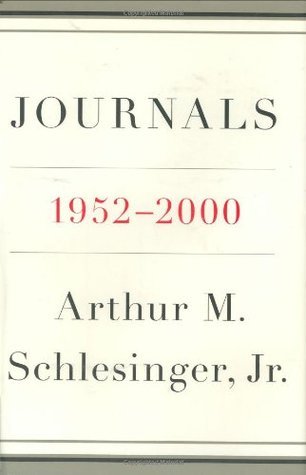
Review: Journals 1952-2000 by Arthur Schlesinger Jr.
In Journals 1952-2000,” Arthur Schlesinger Jr. offers a captivating exploration of American political history spanning the Eisenhower to Clinton administrations. Through his unparalleled connections with U.S. Presidents, foreign leaders, intellectuals, and cultural icons, Schlesinger provides an insider’s perspective on the tumultuous events that shaped the 20th century.
With candor, Schlesinger delves into his personal sentiments, both favorable and critical, towards prominent figures of the era. The admiration for the Kennedy brothers, John and Robert, shines through, while his disillusionment with Lyndon Johnson’s interpersonal approach and bizarre behavior is apparent. Notably, Schlesinger’s palpable disdain for Richard Nixon adds an ironic twist, considering their proximity as neighbors following Nixon’s presidency.
Throughout the book, Schlesinger’s political inclinations come to the fore, as he expresses his reservations about Republican presidents such as Dwight Eisenhower, Ronald Reagan, George W. Bush, and Nixon. His critique extends to a fellow Democrat, Jimmy Carter, revealing Schlesinger’s willingness to evaluate leaders from his own party objectively.
The narrative isn’t limited to policy discussions; Schlesinger enthralls readers with captivating anecdotes, insider gossip, and subtle insinuations involving prominent politicians, particularly those in the nation’s capital. Delicate topics, including the romantic entanglements of President Kennedy, Ted Kennedy, Gary Hart, Bill Clinton, Martin Luther King, and Nelson Rockefeller, are deftly navigated.
A noteworthy revelation is Schlesinger’s subtle hint at the complex relationship between himself, Robert Kennedy, and the enigmatic Marilyn Monroe. His close friendship with Jackie Kennedy also comes to the forefront, offering readers a unique glimpse into her life.
“Journals” serves as a window into Schlesinger’s engagement with pivotal issues of his time, encompassing the Vietnam War, the Cold War, Mideast tensions, diplomatic overtures with Russia and China, and the high-stakes Cuban Missile Crisis. Schlesinger’s multifaceted talents shine as he shares his role in crafting speeches and messages for aspiring Democratic presidential candidates.
Despite its substantial 783-page length, it maintains an engrossing narrative that captivates without causing reader fatigue. The book is both an enjoyable read and an invaluable source of information, making it a compelling recommendation for scholars of presidential history and anyone intrigued by the intricacies of American politics and events from 1952 to 2000.
Thoughts after Reading The Pope at War by David Kertzer
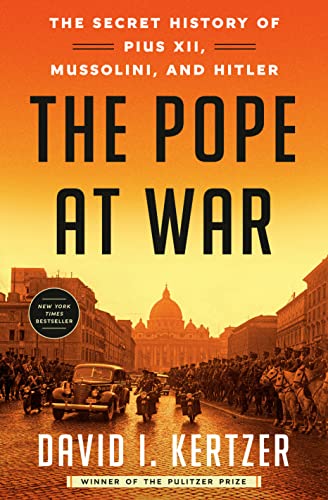
- Excellent book. Reads like a novel. Highly recommended for students, scholars and readers interested in World War II and specifically the Catholic Church’s role dealing with the leaders of Italy (Mussolini) and Germany (Hitler).
- While understanding that the Pope needed to proceed cautiously on the diplomatic front to protect the Church and Catholics who lived in Italy and Germany, Pius XII generally caved to the demands of the Fascists and Nazis.
- In pre-war Germany, there was evidence of abuse committed by Catholic priests. This was used as a negotiation card by the Nazis to get Pius XII to agree to their terms.
- Pius XII’s reluctance to speak out against the atrocities committed against the Jews was an act of moral cowardice.
- Pius XII did not address the Nazi bombings of London, Rotterdam and Warsaw as they occurred. However he lobbied the Americans and British not to bomb Rome and the Vatican.
- Kertzer provided stories where priests and nuns refused to aid Jews seeking to hide or flee from Nazi pursuers.
- Pius XII did lobby Nazi authorities to protect Jews who did convert to Catholicism. He did very little to protest the poor treatment and murder of Jews.
- Pius XII was fully aware of what atrocities were occurring.
- Many of the atrocities against Jews were committed by Nazi officers and soldiers who were Catholic.
- Pius XII does not merit any consideration for canonization. He certainly was no saint.
Political Potpourri
Why should I worry about the future? Political, religious and cultural groups are pushing an agenda to return to the way things were in the mid-1960s when I was in my teens. Intolerance, racism, sexual repression, discrimination, and religious fanaticism are making a return thanks to Republicans and the Supreme Court, though I’m sure they have never left.
In my almost eight decades of life in the United States, I have seen so much improvement in our technology, medicine and science. Sadly I have not seen the same level of improvement in our national character.
Studying American history after November 21, 1963 is like reading a tragedy. The previous four Presidents before that date were successful ones: FDR, Truman, Eisenhower and JFK. The next four Presidents were LBJ, Nixon, Ford and Carter. They were responsible for the Vietnam War, Watergate, Nixon’s pardon and Iran hostage crisis. Since 1963, we have been involved in unnecessary wars in Vietnam, Iraq and Afghanistan. Starting with the Reagan years, we have hollowed out the middle class in this country and made it much harder for young citizens to achieve the “American dream.” The United States has largely lost the immense respect it had in the world after World War II.
Was the last great national achievement of this country the moon landing in July 1969?
So many Americans are content to being entertained as opposed to being informed and educated. Those Americans are like professional wrestling “marks”. They are gullible to the most ludicrous story lines and pontifications…
Today’s Supreme Court has the same credibility as a moral, ethical, judicial and intellectual authority and arbiter as the Vatican.
While many in this country seem to celebrate individual success stories, one senses that many in the public secretly revel more in the failures, scandals and downfalls of those individuals. The media like to highlight the successes but love to cover and commentate on the downfall.
“Next time the National Anthem is played, every woman and girl should take a knee.” Cheri Jacobus, writing on Twitter
I think that you may receive a more accurate projection of your money and finances from a carnival fortuneteller then a certified financial advisor.
Book Review: The Fire is Upon Us: James Baldwin, William F. Buckley Jr. and the Debate over Race in America
What a fascinating and enlightening book! I had seen the Baldwin/Buckley debate at Cambridge on YouTube so I was at least familiar with that event. However, I was not familiar with the backstories regarding the two men and how they influenced the civil rights movement. Buccola’s book provides an excellent historical context around the debate. I am somewhat ashamed to admit that I was not familiar with Mr. Baldwin’s contributions regarding the civil rights movement. Baldwin was certainly a very persuasive and excellent spokesman for civil rights.
I was familiar with Mr. Buckley, particularly through his TV show Firing Line which I watched in my much younger years. Though I did not always agree (or understand) Mr. Buckley’s point of view, I was always impressed by his articulateness, vocabulary and presentation. However after reading this book, I am not so impressed by Mr. Buckley. I had no idea about his views regarding civil rights and blacks as human beings. I know it was a different time and many people shared Mr. Buckley’s opinion that the civil rights movement was proceeding too quickly. But I ascribed more intelligence, judgment and reasoning to Mr. Buckley that he deserved. This book opened my eyes to this part of history that I missed.
According to the author, Mr Baldwin’s opinion of William F. Buckley was much harsher…
“Buckley, Baldwin believed, knew better and had the ability to exert a considerable amount of influence in the world. Indeed, Buckley’s work as a guardian of white supremacy was, from Baldwin’s perspective, more sinister than that of the most hardened racists in American politics. Time and again, Buckley’s ends were the same as the racist demagogues he was always sure to condemn; his primary objection to these men was the means they chose to use on behalf of ‘the cause of white people.’ For these reasons, Baldwin concluded, some of the blood shed as a result of the American racial nightmare was on Buckley’s hands.”
The author points out this warning for American politics today…
“The price of victory, though, has been incredibly high. The American Right seems to be in much the same place today as where it found itself over half a century ago. To achieve overwhelming power, conservatives have had to rely on the political energy provided by racial resentment and status anxiety. Much like Buckley, many conservative elites find reliance on such energy unseemly, but they cling to it because they know it gives life to their agenda. For the American Right, the price of power has been a deal with the devil of white supremacy. This was true in Buckley’s time, and it is true in our own.”
The book is about 400 pages. If you only have limited time, read the transcript of the debate at Cambridge found in the Appendix of the book.
Two Days of Infamy: One Act of Leadership
Two days of infamy. The first we commemorate on its 80th anniversary today, the attack on Pearl Harbor by Japan. The second day of infamy, 1/6/2021 was when our democracy was attacked in plain sight by a crazed and violent mob at the U.S. Capitol provoked by incendiary speeches by a desperate and defeated President and his delusional sycophants.
The Pearl Harbor attack was met with a declaration of war by the President and Congress. A nation became united in its determination to win a war and defend its democracy. Men signed up for the military, women took over jobs in industry and manufacturing to help in the war effort. Americans sacrificed so that needed resources and materials would go to our military. Maybe more importantly, we had a leader, Franklin Delano Roosevelt, who had prepared the country for war. Roosevelt covertly aided England to help in their national survival. During an election year (1940), FDR reinstituted the draft knowing it could hurt his re-election chances. He placed the interests of the country before his personal interests.

The Capitol attack was met by indifference and denials by the Republican party, even though its Vice President was a target by the mob. Instead of a united country, there was significant support for the insurrection. In 1941, Congress united and declared war. In 2021, many Congressional members ran from their responsibility with the same alacrity as they ran from the mob. Some members of Congress who aided the mob are still in office. Instead of action, a Congressional “commission” was created to investigate what clearly happened that day and who was clearly responsible for incitement and violence.
History calls Americans alive during the 1940s as the “Greatest Generation.” What will history call the Americans living in the past five years based on our political discord and antipathy to science and reason? One generation dedicated to saving democracy; one ready to abandon it.
Note: Photo taken of FDR was by Harry Podlinski, my father-in law and amateur photographer.
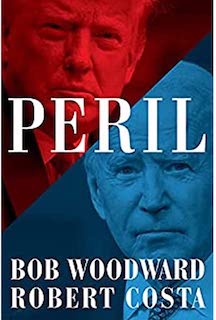
Review: Peril by Bob Woodward and Robert Costa
Authors Bob Woodward and Robert Costa closed this book with the following warning based on a conversation with Donald Trump.
“Real power is – – I don’t even want to use the word – – fear,” Trump told us.
“I bring the rage out. I do bring rage out. I always have. I don’t know if that’s an asset or a liability, but whatever it is, I do.”
Could Trump work his will again? Were there any limits to what he and his supporters might do to put him back in power?
Peril remains.
I have read a number of the retrospectives of the Trump presidency particularly as it relates to his last year and last days in office. There is nothing in this book that presents Trump in a positive light. There are plenty of examples of him being a bully, arrogant, insensitive and just plain stupid. Despite entreaties from many in his cabinet, among advisers and even from his daughter Ivanka, Trump continued to believe that he was cheated in the 2020 presidential election. There is very little doubt that he caused the insurrection on January 6, 2021.
Most of the highlights of this book have been reported through various media. Here is my list of observations and analysis from this book:
Mike Pence was a coward. Yes he finally did the right thing by validating the election. But it appears to the reader that he was looking for a way to accommodate Donald Trump’s wishes to overturn the election results. Pence even sought the advice of that well-known constitutional scholar, Dan Quayle, as to what to do. Quayle thankfully told Pence that he had no role in overturning the election. Even after a Trump mob wanted to hang him, Pence returned to the White House and tried to mend a relationship with a man who mocked him and treated him very poorly during their four year administration.
General Mark Milley was a voice of reason during a very precarious period in our nation’s history. He understood the danger that Donald Trump represented and was very concerned that Trump would create either a war or some type of foreign policy crisis so he could stay in office. In particular Milley assured the Chinese that there would be no military actions against them. There were a few countries that were very concerned that Trump would initiate a military attack against them.
The benefit of this book was to see the campaign of Joe Biden and his first few months as President. The contrast in decency between Biden and Trump is very evident throughout the many anecdotes in this book. Unfortunately the Democratic party does not shine. Too much infighting. Lack of party discipline and unity. Too much influence by West Virginia senator Joe Manchin. One gets the sense that Biden is a placeholder and does not possess the necessary influence to put forward a transformative domestic agenda and get it passed in Congress.
Interestingly enough, there is not a lot of coverage about Vice President Kamala Harris. Biden had spoken with South Carolina congressman Jim Clyburn prior to the South Carolina primary and Biden indicated he was favorable to Kamala being on the national ticket. There is little indication how much influence Harris possesses in decision making or policy.
If you are going to read just one book about the end of the Trump presidency in 2021, this book is the best to read. Just don’t be surprised if Woodward has to write another sequel in 2024 about the re-election of Trump.
Book Review: Landslide: The Final Days of the Trump Presidency by Michael Wolff
There are so many tragedies described within this book. First, Donald Trump’s obsession with perceived fraud in the 2020 presidential election. It absolutely consumed him. Despite entreaties from some responsible Republicans, Trump continued to pursue crackpot theories and schemes that the election was stolen. His “legal team” filed hundreds of suits but no court, including the Supreme Court would listen to their case. Second, the complete fall of Mayor Rudy Giuliani. Once the hero of 9/11, he was described in this book as a drunk and a flatulent, senile old man, spinning wild conspiracy theories and urging Trump to just announce that he won the election. The third major tragedy was that approximately 74 million people voted for Donald Trump. And a significant majority of them also believed that Trump was the legitimate winner of the election.
The book describes the bizarre behaviors of Mike Lindell, Peter Navarro, Mike Flynn and Sidney Powell along with other Trump enablers to encourage Trump to protest the election.
Wolff also recounts the events of January 6, 2021 when at the urging of Donald Trump, his supporters invaded The Capitol. What will future generations think of us that such a horrific event could happen?
There are a number of unflattering portraits and descriptions of people within the Trump White House. Very few heroes exist as no one was able to curb the actions and plans of Donald Trump.
If you are not a supporter of President Trump, nothing in this book will surprise you. What may surprise you is how much worse things really were during his administration. Wolff also includes a chapter on his interview with Trump after the election. Unsurprisingly Trump is not apologetic or remorseful in what he put this nation through, especially in the last year of his Presidency.
Book Review: I Alone Can Fix It: Donald J. Trump’s Catastrophic Final Year by Carol Leonnig and Philip Rucker
Anyone interested in reading this book should first understand that this is not a pro – Trump book. There are very few instances where Donald Trump is shown in a positive light or where he is shown competent in his job. This is not because of the prejudice of the authors but based on the actual reporting and eyewitness accounts during the last year of the Trump presidency. If you keep up with the news or have not been in a coma the past four years, there is not a lot in this book that will surprise you. If I gathered anything new it was that things were a lot worse than even I imagined.
This book primarily focuses on three major events/issues in Trump’s last year: handling (or mishandling) the coronavirus, the 2020 presidential election and post-election claims of fraud by Trump resulting in the January 6, 2021 invasion of The Capitol by his supporters.
What I was looking for were examples of competence and courage by people within the Trump administration. There were a few including General Mark Milley, who was very concerned about a possible coup and how Trump viewed the military as a weapon that he could use. Despite incredible abuse and intimidation by the White House, Dr. Anthony Fauci continued to tell the truth about COVID-19. On occasion, even Attorney General Bill Barr showed some back bone when pressed by Trump to initiate some bogus investigations against Trump enemies.
Secretary of Defense Mark Esper was fired by Trump primarily due to his opposition to Trump’s plan to use the military against demonstrations from the George Floyd killing. Trump wanted to employ the Insurrection Act of 1807 as a means of curbing demonstrations.
Regrettably Trump had a lot of enablers. Rudy Giuliani, Mike Flynn, and Mark Meadows, Trump’s chief of staff was a faithful soldier to until the end of his Presidency. Mike Pence does not read well in this book. He blindly supported Trump throughout the four years. And though Pence did the right thing in certifying the electoral vote, it seems that he was looking for a way to blocking it. Pence comes off as a toady.
The authors appeared to make every attempt to keep this story as authentic and factual as possible. They also conducted a several hour interview with Trump after he left office.
A very revealing book though there are about 74 million people in the U.S. who might disagree.
 Esot-eric