Book Review of 1929: Inside the Greatest Crash in Wall Street History – and How It Shattered a Nation by Andrew Ross Sorkin

I’ve been an admirer of Andrew Ross Sorkin’s financial reporting for years, particularly through his work on CNBC, and I previously enjoyed his book Too Big to Fail, a definitive account of the 2008–2009 financial crisis. With that bias admitted upfront, I found 1929 to be an engaging and illuminating read. Though the book is lengthy—about 444 pages—it never feels like a dry history textbook. Instead, it flows with the narrative tension of a novel, making complex financial events accessible and compelling.

A background or interest in finance, economics, or banking certainly enriches the reading experience, but Sorkin’s storytelling makes the material approachable even for those who aren’t steeped in economic jargon.

A Rich, Relevant History

What makes this book especially resonant is how closely the late 1920s echo aspects of our present moment. The U.S. had recently emerged from a pandemic; optimism about growth and technological change was widespread; and the stock market appeared unstoppable. Investors—large and small—took on unprecedented leverage, borrowing heavily to chase rising share prices.

But economic momentum is fragile. Once confidence cracked, the market’s collapse was swift and devastating. The crash wiped out fortunes, triggered a steep economic downturn, and led to widespread unemployment. The government and the Federal Reserve lacked a clear or unified strategy, and their responses were often reactive, hesitant, or contradictory.

Sorkin offers a nuanced view of Herbert Hoover, depicting him not as the caricature of incompetence found in some earlier accounts, but as a leader who recognized the depth of the crisis and attempted—albeit imperfectly—to stem the damage. It’s a more sympathetic portrait than many readers might expect.

Vivid Personalities and Power Players

The book is populated with fascinating figures from finance, government and politics, including:

  • Charles Mitchell, chairman and CEO of National City Bank (a central figure in the era’s excessive speculation)
  • Winston Churchill
  • Franklin Delano Roosevelt
  • Senator Carter Glass
  • Evangeline Adams
  • Herbert Hoover
  • Ferdinand Pecora
  • and many others

Sorkin demonstrates how the interplay of personalities, policies, and economic forces created the conditions for both the boom and the crash. His research is broad, and his interpretations are measured yet insightful.


Reflections on Today’s Economy

Reading about 1929 inevitably led me to think about the state of the economy today. Although history doesn’t repeat itself exactly, the parallels are difficult to ignore.

  • Policy and leadership concerns: I have deep concerns about the current administration’s economic management. Policies such as tariffs continue to ripple through the U.S. and global economies, often harming consumers and industries rather than helping them.
  • Social and economic inequities: Decisions to cut or withhold food aid and other social supports can create long-lasting harm. Tax structures continue to favor the wealthy, while those with the least must rely on charity to meet basic needs.
  • Economic data skepticism: I find it increasingly hard to trust official numbers—whether on inflation, unemployment, or growth—given how politicized and selectively interpreted economic data has become.
  • Uncertain impact of AI: Artificial intelligence is propping up portions of the stock market, but the long-term effects on employment, productivity, and corporate earnings remain unclear. Few leaders or analysts can articulate what the next decade will really look like if the hype fizzles.
  • Declining trust in corporate leadership: Watching CEOs—particularly in tech and finance—publicly defer to political power has shaken my confidence in their judgment. Elon Musk is the most visible example, but he is not alone.
  • The culture of greed: Increasingly, it feels as if greed has become our national creed. Even institutions that purport to offer moral guidance seem more interested in fundraising than fostering compassion or community.

Melancholy Musings

My expectation for those promoting the teaching of the Ten Commandments in schools is that they’ll soon explain how the penalties for breaking them depend on one’s political party, ideology, or religious affiliation.

***

This may be the sorriest era in which to write a decent book or speech, for the mob no longer reads to think but to feel confirmed—and preferably entertained.

***

Commercially, the most successful political and cultural “thought leaders,” pundits, and analysts are those who are first controversial, second entertaining, and a distant third—if ever—wise, prescient, or correct in their pronouncements.

***

Twenty or thirty years from now, history will mock and expose many of today’s cultural, political, and religious heroes and influencers as the charlatans and fools they always were.

***

Once, citizens braved fire hoses, clubs, and bullets to win the rights we now take for granted—laws signed in ink but sealed in blood. Today, those rights are being revised by comfortable hands and poisoned hearts, undone not by courage but by cowardice.

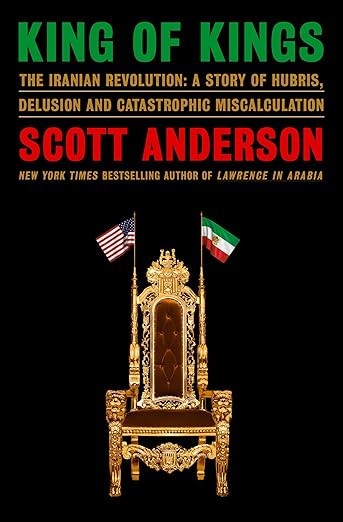
Book Review: King of Kings: The Iranian Revolution: A Story of Hubris, Delusion and Catastrophic Miscalculation by Scott Anderson

After reading this book, it’s easy to understand why U.S. relations with Iran remain so strained and why so much hostility exists toward America. For nearly a century, presidential administrations have made diplomatic blunders, compounded by intelligence failures that shaped disastrous outcomes.

I recently finished Tim Weiner’s The Mission: The CIA in the 21st Century, which documented the CIA’s missteps in Vietnam, Afghanistan, Iran, Iraq, and elsewhere. Anderson’s account shows the same pattern: Did we get anything right?

The intelligence failures in Iran were staggering. Agencies recorded Ayatollah Khomeini’s speeches but never bothered to translate them—missing clear warnings about his intentions. Meanwhile, the U.S. continued to prop up Shah Mohammad Reza Pahlavi, a weak and indecisive ruler despised by his own people. Ironically, his wife, Farah Pahlavi, displayed far more backbone and foresight. Yet to Washington, Iran’s real value was simply the oil beneath its soil.

Equally unconscionable was the way U.S. embassy staff in Tehran were treated as expendable pawns. The Carter administration fully understood the risks—especially after allowing the Shah into the United States—yet left personnel exposed to the fury of revolutionary crowds.

The lack of coordination between diplomatic and intelligence communities in the 1970s was nothing short of criminal. Mixed signals to the Shah, who desperately needed guidance and resolve, only deepened the chaos. Even today, the lingering question remains: Did Ronald Reagan deliberately delay the hostages’ release until after his inauguration?

Anderson does an excellent job highlighting both the heroes and villains of this tragic story. One memorable account involves teacher Michael Metrinko, who earned the respect of his Iranian students by deliberately standing up to—and physically subduing—the toughest among them.

By weaving personal tales with geopolitical history, Anderson makes the Iranian Revolution come alive in all its complexity. The result is a powerful and unsettling reminder of how deeply poor leadership and intelligence failures can alter history.

This is the Week That Was

I’m amused by Trump’s reluctance to release the Epstein files—as if there’s anything left that could truly shock us. His behavior has long been an open book. At this point, what more could possibly lower public opinion of him?

Replace Jerome Powell as head of the Federal Reserve? Makes about as much sense as firing the fire department while a building is still on fire.

The CEO and the HR Director of Astronomer were caught on a kiss cam in a romantic embrace at a Coldplay concert. The CEO is married with children and the HR Director is recently divorced. Due to the public and rather unusual nature of the disclosure of the relationship, this story is all over social media and other news outlets. My guess is that the HR Director will either resign or be let go but that the CEO will keep his job after publicly confessing his infidelities and promising to reform.

Though I’m not a late-night viewer at my age, I recognize that some of the sharpest political and social commentary in recent years has come from the desks of Stephen Colbert, Jimmy Fallon, and especially Jimmy Kimmel. The upcoming end of The Late Show with Colbert marks more than just the close of a program—it signals the fading of a cultural force that once helped us laugh through the chaos.

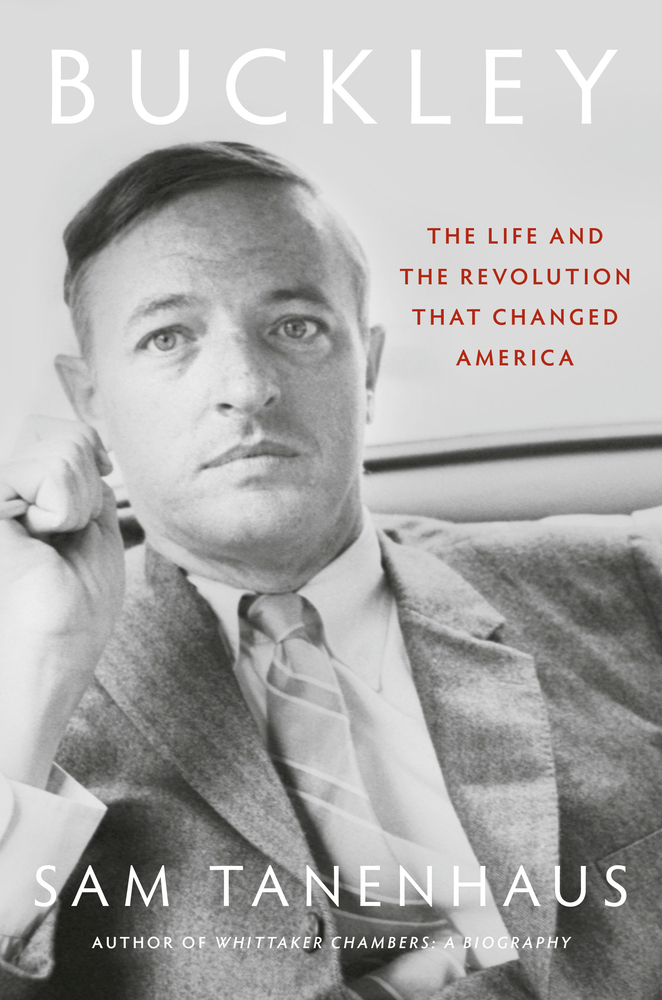
Review of Buckley: The Life and The Revolution That Changed America by Sam Tanenhaus

Sam Tanenhaus’s nearly 900‑page biography is a major investment of time, and it helps to arrive already curious about—or at least aware of—William F. Buckley Jr. and the post‑war conservative movement he helped shape. For readers who meet that threshold, the book proves surprisingly readable; for those who don’t, the dense historical detail may feel arduous.

Scope and Balance

Tanenhaus is both exhaustive and even‑handed. He neither canonizes nor demonizes his subject, instead cataloguing Buckley’s triumphs alongside his missteps. Critics may bristle at the close attention paid to family “warts,” especially the overbearing father, but the research is meticulous and the portrait persuasive.

Buckley’s Major Misjudgments

  • Foreign‑policy zigzags – Buckley opposed U.S. entry into World War II before Pearl  Harbor yet staunchly backed the Vietnam War.
  • McCarthyism and Watergate – He defended Senator Joe McCarthy and later downplayed Watergate, even championing conspirator Howard Hunt.
  • Civil‑rights resistance – Buckley was late to endorse full political rights for Black Americans, claiming many were unprepared for the franchise.
  • The Edgar Smith debacle – Perhaps his worst lapse: lobbying for the release of convicted murderer Edgar Smith, who soon attacked another woman. Charm and flattery clouded Buckley’s judgement, and basic due diligence was absent.

Admirable Qualities

Despite his blind spots, Buckley inspired loyalty. Friends—ideological allies and foes alike—describe his private warmth, generosity, and wit. His charitable giving was substantial and discreet, and he remained courteous to adversaries off camera.

Education and Talents

An indifferent early student who failed several prep‑school entrance exams, Buckley benefited from a cosmopolitan upbringing in Europe, becoming multilingual. At Yale he honed the dazzling rhetorical style that later defined Firing Line. A true polymath, he wrote gracefully, played concert‑level piano, skippered ocean races, debated ferociously, and chronicled his frenetic routines in the memoir Overdrive.

Personal Speculations

Tanenhaus briefly entertains Gore Vidal’s insinuations about Buckley’s sexuality but unearths no substantial evidence. The Buckley‑Vidal televised clashes, however, remain one of the book’s liveliest threads.

Blind Spots in Business

For all his verbal precision, Buckley was financially inept. National Review survived only through repeated infusions from his father and sympathetic backers; balance sheets mystified him, and bankruptcy loomed more than once.

How the Book Changed My View

I once saw Buckley as an unalloyed Renaissance man. Tanenhaus complicates that picture, revealing antisemitic streaks, chronic resistance to civil rights, and a habit—memorably skewered by Yale philosopher Paul Weiss—of sounding authoritative on books he hadn’t read. In the end, Buckley emerges as brilliant but fallible, magnetic yet blinkered—a man whose revolution reshaped American conservatism while mirroring its contradictions.

Verdict

For readers already engaged with post‑war political history, Tanenhaus offers a definitive, engrossing study. Newcomers to Buckley may wish to sample his columns or television debates first; only then will they fully appreciate the nuance—and magnitude—of this sprawling biography.

Discordia Ascendant (Chaos Rules)

Reading the news is not necessarily the best way to start your day

“Big, beautiful” tax bill would add $2.4 trillion to US debts, CBO says.

Trump bans 12 countries’ citizens from entering the US.

Emergency Abortions: The Trump administration announced that it had revoked a Biden administration requirement that hospitals provide emergency abortions to women whose health is in peril, including in states where abortion is restricted or banned.

Too many Christians are transforming Christianity into a vertical faith, one that focuses on your personal relationship with God at the expense of the horizontal relationship you have with your neighbors. Selfishness Is Not a Virtue David French NYT 6/5/25

The consumer goods giant Procter & Gamble said on Thursday that it would cut 7,000 jobs globally over the next two years, or 6 percent of its total work force, as it seeks to reorganize amid uncertainty caused by President Trump’s trade war.

A federal judge in Colorado on Wednesday temporarily blocked the Trump administration from deporting the wife and children of the Egyptian man charged with attacking an event in Boulder, Colo., honoring hostages in Gaza….“Punishing individuals for the alleged actions of their relatives is a feature of premodern justice systems or police state dictatorships, not democracies,” (Eric Lee, Attorney for the family)

But with the Trump administration slashing spending on science, Dr. Patapoutian’s federal grant to develop new approaches to treating pain has been frozen. In late February, he posted on Bluesky that such cuts would damage biomedical research and prompt an exodus of talent from the United States. Within hours, he had an email from China, offering to move his lab to “any city, any university I want,” he said, with a guarantee of funding for the next 20 years…Applications from China and Europe for graduate student or postdoctoral positions in the United States have dropped sharply or dried up entirely since President Trump took office. The number of postdocs and graduate students in the United States applying for jobs abroad has spiked.

When the current Congress was convened in January, there were nearly 120 members who were 70 or older — 86 in the House, including nonvoting delegates, and 33 in the Senate. This number, which is unmatched in modern history, included 14 octogenarians in the House, five in the Senate, and 91-year-old Senator Charles E. Grassley, Republican of Iowa.“Big, beautiful” tax bill would add $2.4 trillion to US debts, CBO says.


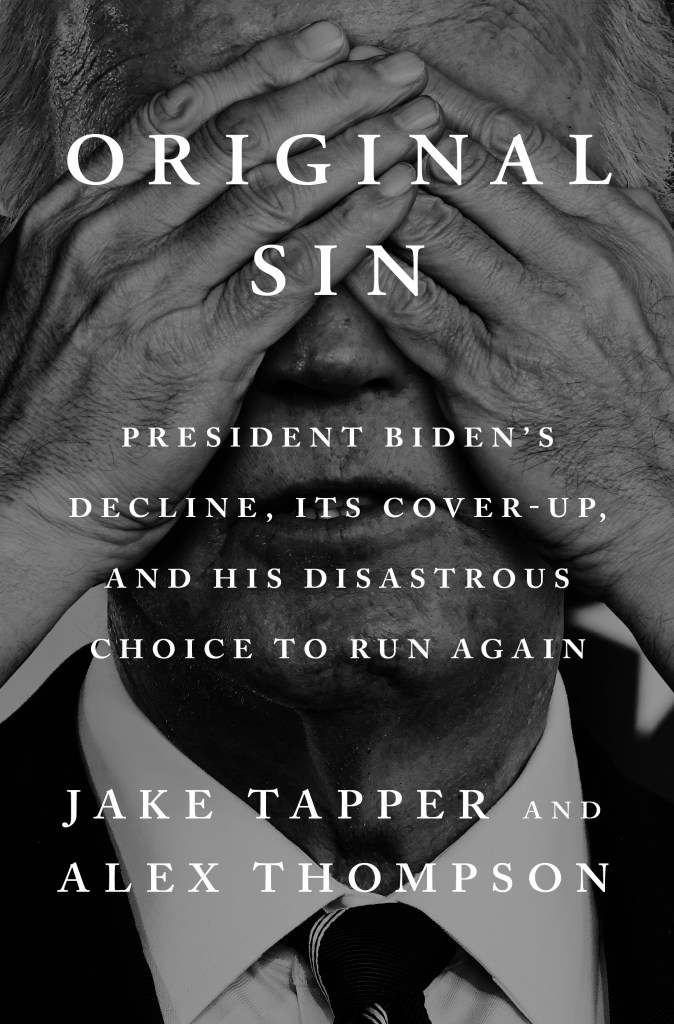
Book Review: Original Sin: President Biden’s Decline, Its Cover-Up, and His Disastrous Choice to Run Again by Jake Tapper and Alex Thompson

This book is well-written, compelling, and—most notably—largely uncontested. I’ve read and heard very little pushback on the specific facts or episodes it reveals, which suggests that authors Alex Thompson and Jake Tapper did their journalistic homework. The anger it has generated seems not to concern the accuracy of its content, but rather the timing of its release—particularly among Biden loyalists, who view it as a betrayal during a time when the President is reportedly battling stage four colon cancer.

Others, more detached, wonder aloud why this information wasn’t brought to light sooner—why major media outlets, especially CNN, did not explore or disclose the full extent of President Biden’s physical and cognitive decline during his time in office. That is perhaps the most damning question of all.

This is an important book. It speaks to an uncomfortable truth that extends far beyond one man: the American political establishment, across all branches, has proven remarkably inept at addressing questions of age, health, and capacity among its senior-most officials. From the silent frailty of Dianne Feinstein to the vanished vigor of Ruth Bader Ginsburg, we’ve seen what happens when ego and denial—both personal and institutional—take precedence over public responsibility.

Perhaps the quintessential case of this phenomenon was Woodrow Wilson’s second term. After a debilitating stroke, Wilson was essentially incapacitated. His wife, Edith, barred access to him, managed his communications, and in effect acted as President. It was a quiet coup by pillow and teacup. The Republic endured, but barely.

There are shades of Edith Wilson in Jill Biden. She appears to have acted as her husband’s chief protector—controlling access, managing his schedule, shielding him from the press, and preserving the illusion of a functioning presidency. In her role as spouse, that’s understandable. In her unelected role as a shadow gatekeeper to the Commander-in-Chief, it is far more problematic. One might say she acted out of love; but in doing so, she may have done a grave disservice not just to Joe, but to the country.

The book should be read not as a political hit job, but as a cautionary tale—a sobering account of what happens when the reality of aging is denied, hidden, or downplayed in a role where vitality, decisiveness, and mental clarity are non-negotiable. The tragic erosion of strength and cognition in old age is painful to witness in any context. But when the individual in decline is the President of the United States, the stakes are exponentially higher.

Being President is not a part-time job. And yet, this administration’s inner circle seemed intent on turning it into a 10 a.m. to 4 p.m. desk duty—often with questionable results. The staff’s attempts to mask or manage the President’s decline weren’t just misguided; they were reckless. Shame on them. Shame on the senior Democrats who knew the truth and said nothing. And shame, too, on the partisans who savaged the few journalists who dared to report what millions of Americans could plainly see.

Modest Proposals for Reform

The republic deserves better than this. Here are a few modest proposals to restore some measure of honesty and responsibility to our political gerontocracy:

  • Mandatory retirement at 78 for all members of Congress and Supreme Court justices. This would mean the last year someone could run for the Senate would be age 73; for the House, age 76.
  • Presidential retirement at 78. If a sitting President reaches that age during their term, the Vice President should assume office.
  • Lower the minimum age to run for President to 32. Why 35, anyway? If you’re old enough to command a drone strike, you’re old enough to command the White House.
  • Annual cognitive testing starting at age 68 for any sitting President, Supreme Court justice, or member of Congress, with results made public. Transparency, like sunlight, is the best disinfectant.

And What of Donald Trump?

Let us not delude ourselves. The other septuagenarian (now octogenarian) candidate is not immune to the same questions. A similar book could be written—perhaps will be written—about Donald Trump’s own health, mental acuity, and fitness for office. The signs are there, albeit in a different key.

One would hope that, should Trump become clearly unfit for office due to health reasons, the wise and the decent would persuade him to step aside. But hoping for wise and decent behavior in American politics is a bit like hoping the Mississippi River will reverse course out of courtesy.

We are a nation now ruled by its elders, but without the wisdom such a gerontocracy is supposed to confer. Instead, we cling to figureheads and fictions, while truth sits ignored in the wings—sometimes until it’s too late. Original Sin may not be a comfortable read, but it is a necessary one.

Notes on Democracy by H.L. Mencken Still Relevant Today

H.L. Mencken’s Notes on Democracy was written about 100 years ago, yet the reader will be struck by how sharply his observations on 1920s politics and culture mirror the political landscape of today.

Mencken’s caustic style and biting sarcasm run throughout the book. He held little confidence in the judgment and wisdom of his fellow citizens, particularly regarding politics and voting, as evidenced by this remark:

“Democracy is a pathetic belief in the collective wisdom of individual ignorance. No one in this world, so far as I know—and I have researched the records for years, and employed agents to help me—has ever lost money by underestimating the intelligence of the great masses of the plain people. Nor has anyone ever lost public office thereby.”

Mencken’s disdain was not reserved solely for the electorate. He was equally unforgiving when it came to the judgment and competence of elected leaders, describing their primary motivation with brutal clarity:

“It is his business to get and hold his job at all costs. If he can hold it by lying, he will hold it by lying; if lying peters out, he will try to hold it by embracing new truths.

One quote in particular struck me—written a century ago, yet hauntingly apt in describing the Trump administration’s approach to governance:

“No man would want to be President of the United States in strict accordance with the Constitution. There is no sense of power in merely executing laws; it comes from evading or augmenting them.”

The relevance of Mencken’s skepticism and critique of American democracy is both startling and disheartening. His writing is a reminder that the flaws he saw in the democratic process and its leaders are not new—they are simply dressed in the colors of each era. We could certainly use more writers and journalists like Mencken today: fearless in their observations, unyielding in their criticism, and unafraid to expose the flaws in both our political culture and the electorate that sustains it.

Murder the Truth by David Enrich: Brief Review and Recommendation

There is little doubt that investigative reporting, journalism, and legacy media are under full-scale assault. When politicians or public figures are confronted with articles or reporting that challenge their narratives, they are quick to sneer, “fake news.” In Murder the Truth: Fear, the First Amendment, and a Secret Campaign to Protect the Powerful, David Enrich details the escalating legal and political efforts to undermine press freedoms in the United States. These efforts, he explains, are largely initiated and financed through right-wing groups and MAGA followers.

One glaring example of this shift is the recent resignation of Bill Owens, executive producer of 60 Minutes. Owens cited that “over the past months, it has become clear that I would not be allowed to run the show as I have always run it, to make independent decisions based on what was right for 60 Minutes, right for the audience.” This resignation is symptomatic of a larger fear permeating newsrooms. Newspapers like The Washington Post and The Los Angeles Times have even become hesitant to make political endorsements. Fear of lawsuits, loss of subscriptions, and dwindling advertising revenue have left many media organizations wary of publishing anything that might stir controversy. As a result, crucial stories and investigations—those that expose government corruption, public official malfeasance, and corporate irresponsibility—often remain buried, locked away in the dead files of an editor’s desk drawer.

More than 2500 newspapers in the United States have stopped publishing in the past two decades, a rate of about two per week. Most counties in the United States are no longer home to any daily papers, and many surviving outlets have been gutted by layoffs and other cost-cutting. 70 million Americans live in what researchers have dubbed “news deserts.”

As staffing at local newspapers, declines, mayoral races, become less competitive, and voter turnout wins. Misinformation spreads. Politicians and other public figures are rarely held to account for lies and misdeeds. Today, state, legislators, city Council members, and small town mayors – – not to mention companies that pollute or mistreat workers or sell dangerous products – –are operating with a degree of invisibility and impunity that they have not enjoyed in a century

This book contains interesting stories and analysis of several free speech battles including:

Sarah Palin vs. The New York Times
Donald Trump’s Lawsuits Against Media Entities
Dominion Voting Systems vs. Fox News
Hulk Hogan vs. Gawker
Melania Trump vs Daily Mail

Enrich’s book may come too late to reverse this tide, but it serves as critical research for future historians who will undoubtedly question how a nation that once prided itself on free speech allowed censorship and political pressure to erode First Amendment guarantees.

An excellent read. Highly recommended for anyone who values a free and independent press.

Times Out

The Sunday New York Times remains one of life’s pleasures. I do miss reading the enormous print edition of the paper with the magazine but at least the online edition still suffices. Shown below are a book I’d like to read and useful analysis and advice from various columnists.

Flesh

by David Szalay

Szalay’s new novel traces the life of a young man in Hungary who eventually makes his way to England, following him from troubled youth to immigrant success to tragic fall. Each chapter provides glimpses of the major stages of adulthood — first love, marriage, parenthood — interwoven with intervals of aimlessness, reinvention and grief. With cool detachment, Szalay offers observations on both the complicated self and the unpredictable world surrounding it.

***

Our current antiglobal moment could last for a long time. Illiberalism is alive and strong. Comparisons that once seemed incendiary or irresponsible now seem obvious. As in the 1930s, minority groups are being scapegoated as symbols and causes of globalization’s ills. For Jews then, read migrants or trans people now. Mr. Trump’s imminent betrayal of Ukraine suggests that we are moving rapidly through the 1930s and have already arrived in 1938. That’s when Western leaders in Munich decided to allow Hitler to dismember one of Europe’s few remaining democracies, Czechoslovakia. It was not worth risking lives over “a quarrel in a faraway country, between people of whom we know nothing,” reasoned the dangerously reasonable Neville Chamberlain. Less than one year later, Hitler browbeat the president of what remained of Czechoslovakia into accepting a complete occupation of his country.

Russia’s invasion of Ukraine was a déjà vu moment for historians of World War II. Will Greenland and Canada become the next Czechoslovakia and Poland?

Globalization Is Collapsing. Brace Yourselves.
By Tara Zahra
Dr. Zahra is a professor of history at the University of Chicago and has written extensively about globalization’s first collapse.

***

A 20 minute agility workout to improve balance

***

Instead of following the standard guidance to keep withdrawals to 4 percent of the balance in your retirement account, then adjust annually for inflation, you might forgo the inflation raise when stock prices are falling, Dr. Pfau said. Or you can install so-called guardrails, limiting withdrawals to, say, 3 percent in bad years for stocks but taking out, perhaps, 5 percent when the market is surging.

How to Protect Your Retirement Savings Now as Markets Plunge by Diane Harris

***

My problem is with Trump’s magical thinking that you just put up walls of protection around an industry (or our whole economy) and — presto! — in short order, U.S. factories will blossom and make those products in America at the same cost with no burden for U.S. consumers.

For starters, that view completely misses the fact that virtually every complex product today — from cars to iPhones to mRNA vaccines — is manufactured by giant, complex, global manufacturing ecosystems. That is why those products get steadily better and cheaper. Sure, if you are protecting the steel industry, a commodity, our tariffs might quickly help. But if you are protecting the auto industry and you think just putting up a tariff wall will do it, you don’t know anything about how cars are made. It would take years for American car companies to replace the global supply chains they depend on and make everything in America. Even Tesla has to import some parts.

I Just Saw the Future. It Was Not in America. Thomas L. Friedman