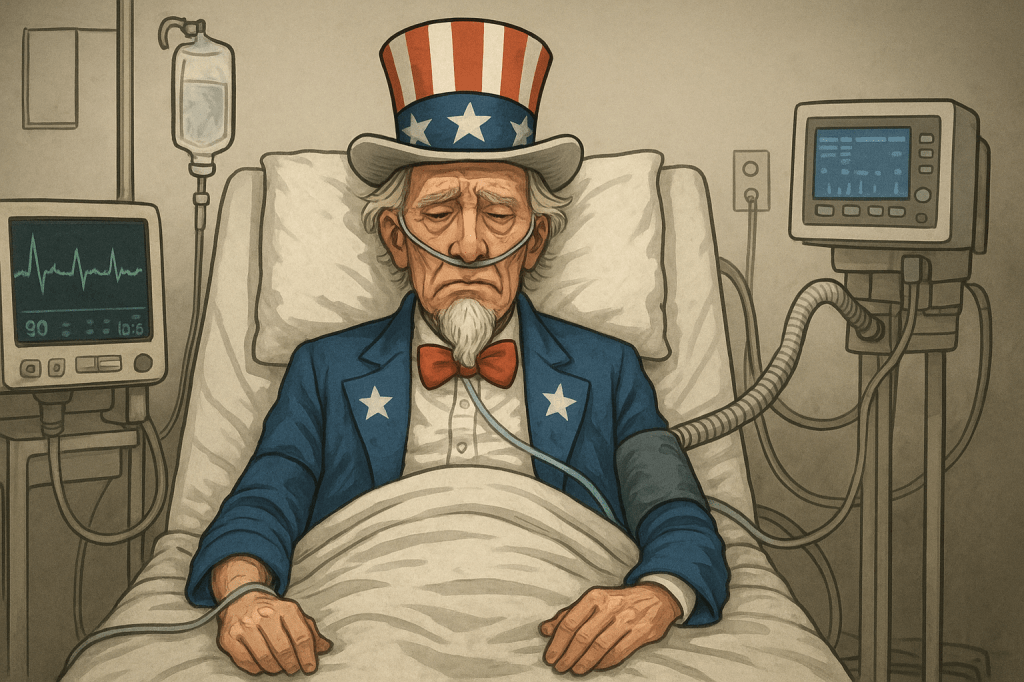
Uncle Sam’s Patient Chart

Medical Observation

Patient Name: Uncle Sam
Age: 249 years
Date of Birth: July 4, 1776
Location: United States of America


Chief Complaint:

Progressive systemic decline characterized by political arrhythmia, social inflammation, moral neuropathy, and chronic division.


Medical History:

Patient presents with metastatic ideological cancer, first detected in 2017 following years of untreated inflammation from greed, corruption, and truth decay. A brief remission was noted, but malignancy has since spread to vital organs including the Judicial SystemCongress, and National Conscience.

Patient also suffers from acute historical amnesia, with repeated lapses in memory regarding equal rightsfreedom of the press, and separation of church and state. Increasing episodes of selective recall noted, often triggered by political self-interest and social media exposure.

In 2020, the patient contracted COVID-19, complicated by political co-infection. Though vaccinated, his recovery was hampered by widespread disinformation and refusal among many cells to follow treatment protocols. Residual scarring remains in the respiratory and trust systems.

Patient also exhibits chronic income disparityhypertension of hostility, and arteriosclerosis of empathy, limiting blood flow to compassion and understanding.


Psychiatric History:

Patient demonstrates paranoid delusions, convinced that enemies lurk within rather than abroad. Displays mood instability, alternating between manic displays of nationalism and depressive bouts of self-loathing.

Once socially active, the patient is now increasingly isolated from former allies and global partners. Exhibits projection, blaming others for self-inflicted wounds.

Recent assessments reveal addiction to misinformation and dopamine dependency on outrage-based media. Sleep cycle disrupted due to 24-hour news exposure and endless campaigning.


Family History:

Descended from immigrants, now expresses hostility toward relatives of similar lineage. Strained relationship with younger generations due to generational and cultural disconnect.


Current Medications:

  • Denial (high dosage)
  • Partisan rhetoric (administered hourly)
  • Corporate lobbying (self-prescribed)
  • Occasional dose of hope and activism, though compliance inconsistent

Vital Signs:

  • Pulse: Erratic (divided between left and right chambers)
  • Blood Pressure: Elevated due to constant internal conflict
  • Temperature: Rising globally
  • Vision: Impaired by polarization
  • Hearing: Selective—responds mainly to echo chambers
  • Heart: Enlarged historically, now showing signs of hardening

Prognosis:

Guarded to poor. Survival depends on:

  • Aggressive treatment of ideological malignancy
  • Coronary transplant (restore compassion and moral circulation)
  • Rehabilitation therapy to strengthen backbone and restore balance
  • Cognitive behavioral therapy to reverse chronic denial and historical amnesia
  • Detoxification from greed, fear, and misinformation
  • Long-term infusion of education, empathy, and critical thinking

Summary:

Patient remains in critical but not terminal condition. Though his immune system of democracy is weakened, the antibodies of truth, courage, and civic duty still circulate—albeit faintly. Immediate intervention is required to prevent full organ failure of the Republic.


Image provided by Chat GPT

From Sunlight to Shadows

At 73, this Labor Day weekend makes me wonder: How many summers do I have left?

I don’t miss the heat or humidity of summer. I miss the sunlight—the early sunrises, the lingering evenings. A metaphor, perhaps, for life’s stages.

Leisure reading is fading. Only 16% of Americans read regularly for pleasure—down from 28% in 2003. In the UK, just 41% of parents read daily to toddlers, compared with 64% in 2012.

I wandered into a Barnes & Noble last week, my first visit in over a year. Chairs and cozy nooks were gone—B&N is all business now. I left without a book. Even their sale couldn’t entice me; I balk at paying more than $20 for a hardcover.

On my nightstand:

  • King of Kings: The Iranian Revolution—A Story of Hubris, Delusion and Catastrophic Miscalculation by Scott Anderson
  • Miracles and Wonder: The Historical Mystery of Jesus by Elaine Pagels

Haruki Murakami once wrote:

“If you only read the books that everyone else is reading, you can only think what everyone else is thinking.”

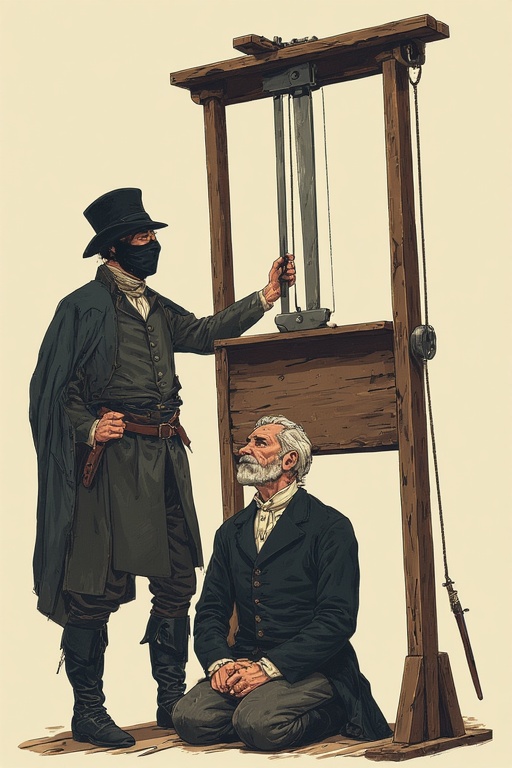
Mortality hovers. I don’t fear death, but I do fear dying. Sometimes I feel like a man with his head beneath a guillotine, staring at the blade. I’ve been fortunate with health, but around me I see friends whose luck has run out. The blade will fall on me too.

Meanwhile, the U.S. falters. Ineptitude, cowardice, hubris—displayed daily. A recent New York Times photo showed India’s Modi with Putin and Xi, a tableau of shifting power. It captured the failure of American diplomacy and leadership. One man bears much of the blame: Donald Trump. As summer declines, so does America as it retreats further into the darkness.

Bangers: 624 aphorisms from 9 Deep Thinkers by Jash Dholani (Notes and Gems)

I read, collect and on occasion try to write pithy and wise aphorisms. Like a gold miner from the American West, I sifted through the contents of this book and found these gems. Author is listed before his aphorisms.

By La Rochefoucauld

We promise according to our hopes; we perform according to our fears.

==========

To establish ourselves in the world we do everything to appear as if we were established.

==========

Everyone blames his memory, no one blames his judgment.

==========

Old men delight in giving good advice as a consolation for the fact that they can no longer set bad examples.

==========

We become so accustomed to disguising ourselves to others that at last we are disguised to ourselves.

==========

The refusal of praise is only the wish to be praised twice.

==========

Those who apply themselves too closely to little things often become incapable of great things.

==========

By Nicolas De Chamfort

What makes the success of many books consists in the affinity there is between the mediocrity of the author’s ideas and those of the public.

==========

A WITTY woman told me one day what may well be the secret of her sex: it is that every woman in choosing a lover takes more account of the way in which other women regard the man than of her own.

==========

By Charles Caleb Colton

With books, as with companions, it is of more consequence to know which to avoid, than which to choose; for good books are as scarce as good companions.

==========

By John Lancester Spalding

To be more impartial about the modern world, you need the vantage point of old books.

==========

The weak, when they have authority, surround themselves with the weak.

==========

Conversation injures more than it benefits. Men talk to escape from themselves, from sheer dread of silence. Reflection makes them uncomfortable, and they find distraction in a noise of words. They seek not the company of those who might enlighten and improve them, but that of whoever can divert and amuse them.

==========

The smaller the company, the larger the conversation.

==========

By Austin O’Malley 

Beware of the patient man The bigger the dam of patience, the worse the flood when the dam breaks.

==========

A man’s life is like a well, not like a snake— it should be measured by its depth, not by its length.

==========

In selecting a wife use your ears before your eyes.

==========

By Goethe

An intelligent man finds almost everything ridiculous, a wise man hardly anything.

==========

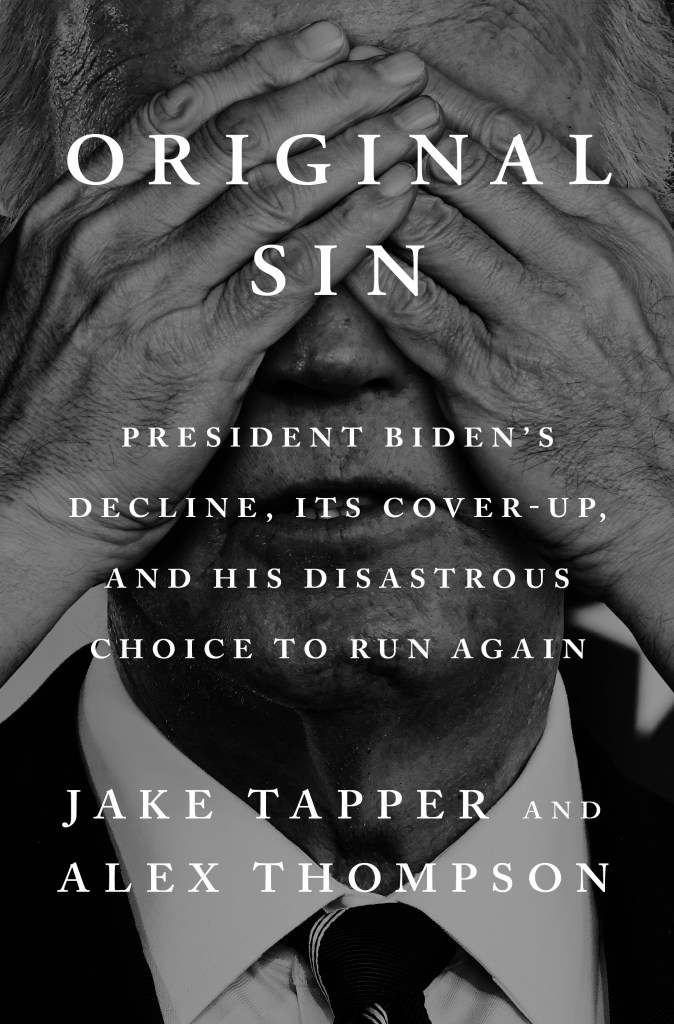
Book Review: Original Sin: President Biden’s Decline, Its Cover-Up, and His Disastrous Choice to Run Again by Jake Tapper and Alex Thompson

This book is well-written, compelling, and—most notably—largely uncontested. I’ve read and heard very little pushback on the specific facts or episodes it reveals, which suggests that authors Alex Thompson and Jake Tapper did their journalistic homework. The anger it has generated seems not to concern the accuracy of its content, but rather the timing of its release—particularly among Biden loyalists, who view it as a betrayal during a time when the President is reportedly battling stage four colon cancer.

Others, more detached, wonder aloud why this information wasn’t brought to light sooner—why major media outlets, especially CNN, did not explore or disclose the full extent of President Biden’s physical and cognitive decline during his time in office. That is perhaps the most damning question of all.

This is an important book. It speaks to an uncomfortable truth that extends far beyond one man: the American political establishment, across all branches, has proven remarkably inept at addressing questions of age, health, and capacity among its senior-most officials. From the silent frailty of Dianne Feinstein to the vanished vigor of Ruth Bader Ginsburg, we’ve seen what happens when ego and denial—both personal and institutional—take precedence over public responsibility.

Perhaps the quintessential case of this phenomenon was Woodrow Wilson’s second term. After a debilitating stroke, Wilson was essentially incapacitated. His wife, Edith, barred access to him, managed his communications, and in effect acted as President. It was a quiet coup by pillow and teacup. The Republic endured, but barely.

There are shades of Edith Wilson in Jill Biden. She appears to have acted as her husband’s chief protector—controlling access, managing his schedule, shielding him from the press, and preserving the illusion of a functioning presidency. In her role as spouse, that’s understandable. In her unelected role as a shadow gatekeeper to the Commander-in-Chief, it is far more problematic. One might say she acted out of love; but in doing so, she may have done a grave disservice not just to Joe, but to the country.

The book should be read not as a political hit job, but as a cautionary tale—a sobering account of what happens when the reality of aging is denied, hidden, or downplayed in a role where vitality, decisiveness, and mental clarity are non-negotiable. The tragic erosion of strength and cognition in old age is painful to witness in any context. But when the individual in decline is the President of the United States, the stakes are exponentially higher.

Being President is not a part-time job. And yet, this administration’s inner circle seemed intent on turning it into a 10 a.m. to 4 p.m. desk duty—often with questionable results. The staff’s attempts to mask or manage the President’s decline weren’t just misguided; they were reckless. Shame on them. Shame on the senior Democrats who knew the truth and said nothing. And shame, too, on the partisans who savaged the few journalists who dared to report what millions of Americans could plainly see.

Modest Proposals for Reform

The republic deserves better than this. Here are a few modest proposals to restore some measure of honesty and responsibility to our political gerontocracy:

  • Mandatory retirement at 78 for all members of Congress and Supreme Court justices. This would mean the last year someone could run for the Senate would be age 73; for the House, age 76.
  • Presidential retirement at 78. If a sitting President reaches that age during their term, the Vice President should assume office.
  • Lower the minimum age to run for President to 32. Why 35, anyway? If you’re old enough to command a drone strike, you’re old enough to command the White House.
  • Annual cognitive testing starting at age 68 for any sitting President, Supreme Court justice, or member of Congress, with results made public. Transparency, like sunlight, is the best disinfectant.

And What of Donald Trump?

Let us not delude ourselves. The other septuagenarian (now octogenarian) candidate is not immune to the same questions. A similar book could be written—perhaps will be written—about Donald Trump’s own health, mental acuity, and fitness for office. The signs are there, albeit in a different key.

One would hope that, should Trump become clearly unfit for office due to health reasons, the wise and the decent would persuade him to step aside. But hoping for wise and decent behavior in American politics is a bit like hoping the Mississippi River will reverse course out of courtesy.

We are a nation now ruled by its elders, but without the wisdom such a gerontocracy is supposed to confer. Instead, we cling to figureheads and fictions, while truth sits ignored in the wings—sometimes until it’s too late. Original Sin may not be a comfortable read, but it is a necessary one.

Muses on Aging and Decline

Riches in youth measured by wealth; riches in maturity measured by health.

“Alarm clock: once for work, now for timely pickleball registration.”

Deterioration, diminishment, death and disability, Damocles’ swords for the older generation.

Lament of an older athlete: Often what the mind can conceive, the body can’t achieve.

Lost in cyberspace: the Sunday papers, complete with sports pages, TV section, crosswords and comic strips.”

77 million voters created 346 million “Anne Franks.”

Like humans, democracies can deteriorate—toward dementia or, politically, tyranny.

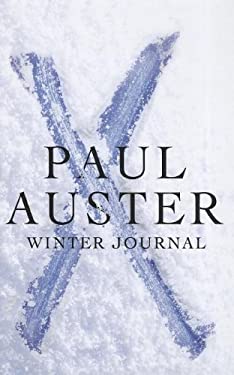
Winter Journal by Paul Auster (Recommendation and Review)

I first read this book in 2012 when I was 60 years old. It had a profound effect on me then. My fears of getting older were starting. Reading this book at 72, I have a new appreciation for Auster’s messaging on aging, death and memories. The tale is sobering, not depressing. Auster had an interesting story to tell about his life’s experiences.

“Winter Journal” is a deeply personal memoir published in 2012, written when Auster was 64 years old. Auster begins by documenting his bodily sensations and physical experiences, starting with a detailed account of his mother’s death and moving through various moments of his life. He explores personal traumas, near-death experiences, and significant physical memories that have shaped his understanding of himself.

The memoir covers several key themes: mortality, aging, memory, and personal history.

List of my favorite excerpts below:

Your bare feet on the cold floor as you climb out of bed and walk to the window. You are 64 years old. Outside, the air is gray, almost white, with no sun visible. You ask yourself: How many mornings are left?

Nevertheless, there are things that you miss from the old days, even if you have no desire to see those days return. The ring of the old telephones, the clacking of typewriters, milk and bottles, baseball without designated hitters, vinyl records, galoshes, stockings, and garter belts, black and white movies, heavyweight champions,… basketball before the three-point shot, contempt for authority.

Your birthday has come and gone. 64 years old now, inching ever closer to senior citizenship, to the days of Medicare and Social Security benefits, to a time when more and more of your friends will have left you. So many of them are gone already – –but just wait for the deluge that is coming.

That is why you will never forget these words, which were the last words spoken to one of your friends by his dying father: “Just remember, Charlie, “he said “never pass up an opportunity to piss.” And so the wisdom of the ages is handed down from one generation to the next.

Joubert: The end of life is bitter. Less than a year after writing those words, at the age of 61, which must’ve seemed considerably older in 1815 then it does today, he jotted down a different and far more challenging formulation about the end of life: One must die, lovable (if one can.)


Clearing my Mental Cache

The New York Times published a list of their Reader’s picks for the best 100 books of the 21st-century. Here are the only three books I have read that were on this list: A Gentleman in Moscow by Amor Towles, Trust by Hernan Diaz; and When Breath Becomes Air by Paul Kalanithi. I was very moved by the Kalanithi book which I read in one sitting. I did not like Trust at all. I don’t remember anything about the Towles book other than I read or skimmed it.

I don’t understand the need for a second debate between Kamala Harris and Donald Trump. Who thinks that Trump will be better prepared? I have absolutely no sympathy or understanding for any “undecided voter” that may still exist. It’s pretty obvious which candidate people should vote for…

The three best college fight songs are from these schools: 1. Michigan; 2. Notre Dame and 3. USC.

At my stage in life, I think it better to appear certain, confidant but possibly wrong on one’s opinions, philosophy and views than still struggling to find the right answers.

Notes from Ageless Soul by Thomas Moore

Stages in the aging process 

  1. feeling immortal, 
  2. first taste of aging, 
  3. settling into maturity, 
  4. shifting toward old age, 
  5. letting things take their course.

***

We can deal with this anxiety individually by living a day at a time, being present to what the day has to offer. If there is no sickness or any other problem, we can enjoy the day. Some people project themselves into a debilitating future and live in the anxiety of imagined woes to come.

***

I don’t care what the calendar says. I have a strong youthful component in me, and often that person in his 40s seems to inhabit my body. Even when I look in the mirror, I sometimes manage to see more of the 40 year old man than the one who is 76. I’ve always been a strong believer in illusions.

***

Simple, ordinary activities can improve your health and ease the black bile of melancholy that afflicts many older people. Take that walk in the woods, look for a sparkling lake or river, and don’t spend much time with negative people. We don’t realize how important it is to rely on nature for our health and mood, to think about the kind of people we have around us, and to understand the value of gardens and trees. 

***

The older years offer a perfect time to reflect more often, more deeply and more seriously on these important aspects of life. Of course, we need to begin this kind of reflection in our youth, but it can reach its depth in old age. Being part of a culture that has lost interest in profound ideas and intense reflection on experience makes aging more difficult.

***

Being an elder not only helps other people find guidance and wisdom, but it also gives the older person added reason for living. It may be the final act of a generous and thoughtful life. It is service taken to the last moment and done with a special authority and dedication it helps if the older person consciously adopts the role of elder. I could say from my own experience that a certain point people begin to treat you as an elder and look for benefits that you may be able to give them.

***

The poet Maya Angelou once wrote: “I’ve learned that people will forget what you said, people will forget what you did, but people will never forget how you made them feel.” Thus legacy is a matter of the heart. It’s not an idea but a feeling connected to largely invisible people, it’s a special way of loving, and if there is anything that could make growing old more pleasurable, it would be to discover new ways to love.

***

Reflection – – the first stage for an ordinary person is reading or listening to someone else offer an understanding of events. You listen or read and make those ideas your own in your own way. The second stage of reflection is conversation. You make a point to speak with people who have something worthwhile to say and with whom you enjoy speaking. A third stage of reflection is to find some effective mode in which you can express yourself it could be writing of various forms – – journals poems, essays, fiction…

***

My Review of the Book

I am a bit of a cynic. Books like these discussing getting older are often written with the goal to alleviate the concerns and fears of elderly people as they approach death. The objectives when you get into your 70s and 80s are to find interests and things that will motivate you to stay alive or at least maintain your enthusiasm for healthy living.

While one can try to maintain a healthy attitude about life in your 70s and 80s, what’s more important are the states of your mind and your body. It’s critically important that you are not alone and that you do have some type of social network that hopefully includes family and friends.

It’s a comforting book with some useful bromides about topics like overcoming melancholy and leaving legacies. I don’t think there is one philosophy or set of rules to follow in life after 70. One of the things that I try to adjust to is the declining control I have in the direction of my life. I don’t have the physical, intellectual or mental energy I had a year ago and I expect that to continue to decline.

My five worst fears as I get older:

  • Losing my wife
  • Loneliness
  • Dementia
  • Disabilities and loss of health
  • Running out of money