Uncle Sam’s Patient Chart

Medical Observation

Patient Name: Uncle Sam
Age: 249 years
Date of Birth: July 4, 1776
Location: United States of America


Chief Complaint:

Progressive systemic decline characterized by political arrhythmia, social inflammation, moral neuropathy, and chronic division.


Medical History:

Patient presents with metastatic ideological cancer, first detected in 2017 following years of untreated inflammation from greed, corruption, and truth decay. A brief remission was noted, but malignancy has since spread to vital organs including the Judicial SystemCongress, and National Conscience.

Patient also suffers from acute historical amnesia, with repeated lapses in memory regarding equal rightsfreedom of the press, and separation of church and state. Increasing episodes of selective recall noted, often triggered by political self-interest and social media exposure.

In 2020, the patient contracted COVID-19, complicated by political co-infection. Though vaccinated, his recovery was hampered by widespread disinformation and refusal among many cells to follow treatment protocols. Residual scarring remains in the respiratory and trust systems.

Patient also exhibits chronic income disparityhypertension of hostility, and arteriosclerosis of empathy, limiting blood flow to compassion and understanding.


Psychiatric History:

Patient demonstrates paranoid delusions, convinced that enemies lurk within rather than abroad. Displays mood instability, alternating between manic displays of nationalism and depressive bouts of self-loathing.

Once socially active, the patient is now increasingly isolated from former allies and global partners. Exhibits projection, blaming others for self-inflicted wounds.

Recent assessments reveal addiction to misinformation and dopamine dependency on outrage-based media. Sleep cycle disrupted due to 24-hour news exposure and endless campaigning.


Family History:

Descended from immigrants, now expresses hostility toward relatives of similar lineage. Strained relationship with younger generations due to generational and cultural disconnect.


Current Medications:

  • Denial (high dosage)
  • Partisan rhetoric (administered hourly)
  • Corporate lobbying (self-prescribed)
  • Occasional dose of hope and activism, though compliance inconsistent

Vital Signs:

  • Pulse: Erratic (divided between left and right chambers)
  • Blood Pressure: Elevated due to constant internal conflict
  • Temperature: Rising globally
  • Vision: Impaired by polarization
  • Hearing: Selective—responds mainly to echo chambers
  • Heart: Enlarged historically, now showing signs of hardening

Prognosis:

Guarded to poor. Survival depends on:

  • Aggressive treatment of ideological malignancy
  • Coronary transplant (restore compassion and moral circulation)
  • Rehabilitation therapy to strengthen backbone and restore balance
  • Cognitive behavioral therapy to reverse chronic denial and historical amnesia
  • Detoxification from greed, fear, and misinformation
  • Long-term infusion of education, empathy, and critical thinking

Summary:

Patient remains in critical but not terminal condition. Though his immune system of democracy is weakened, the antibodies of truth, courage, and civic duty still circulate—albeit faintly. Immediate intervention is required to prevent full organ failure of the Republic.


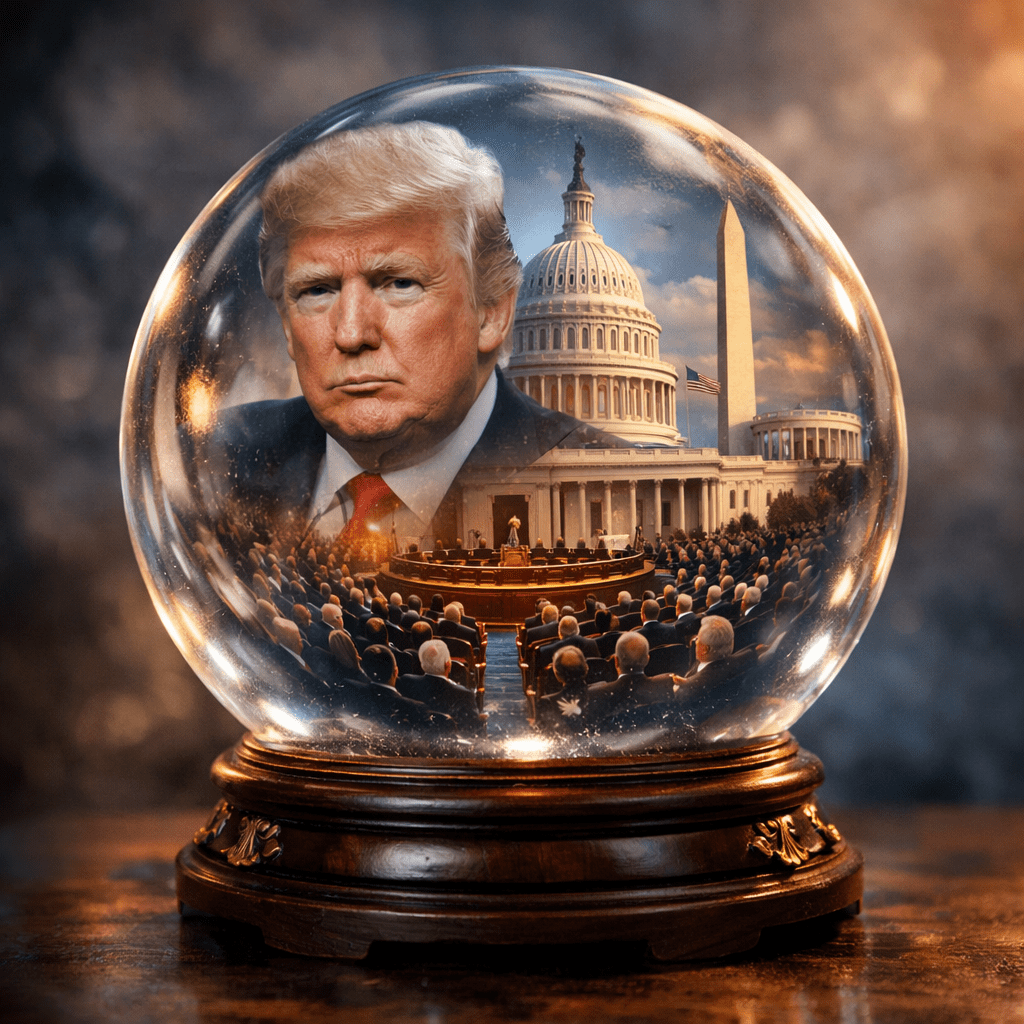
Image provided by Chat GPT

Melancholy Musings

My expectation for those promoting the teaching of the Ten Commandments in schools is that they’ll soon explain how the penalties for breaking them depend on one’s political party, ideology, or religious affiliation.

***

This may be the sorriest era in which to write a decent book or speech, for the mob no longer reads to think but to feel confirmed—and preferably entertained.

***

Commercially, the most successful political and cultural “thought leaders,” pundits, and analysts are those who are first controversial, second entertaining, and a distant third—if ever—wise, prescient, or correct in their pronouncements.

***

Twenty or thirty years from now, history will mock and expose many of today’s cultural, political, and religious heroes and influencers as the charlatans and fools they always were.

***

Once, citizens braved fire hoses, clubs, and bullets to win the rights we now take for granted—laws signed in ink but sealed in blood. Today, those rights are being revised by comfortable hands and poisoned hearts, undone not by courage but by cowardice.

Fickle Finger of Hate

I find it totally fascinating how sports fans demand perfection in games that don’t matter and patience in affairs that do. A coach can fall quickly out a favor with fickle fans and lose their jobs instantly when their teams underperform often unrealistic expectations, while the chief executive of this country, despite a calamity of losses and fumbles with far greater consequences to the public than games over a much longer period of time, keeps his.

EAB 10/12/25

Heel Turns and Blue Secession

In professional wrestling parlance, a “heel turn” occurs when the heroic figure (the face) does something unexpectedly cruel or out of character, transforming into a villain.

In a recent Ryder Cup tournament—where U.S. golfers compete against their European counterparts—the American crowd became so boisterous, rude, and insulting that several European golfers said they would never return to the United States. Rory McIlroy, one of the world’s top players, said he and his wife endured personal insults and even had drinks poured on them.

Years ago, the U.S. brand was that of the world’s leading democracy. Now, foreigners see chaos in the manhunt and detention of immigrants and the deployment of soldiers in major U.S. cities. We are viewed as selfish and destructive, especially in light of new tariffs. I don’t see a “face turn” for America anytime soon.

Ironically, Marjorie Taylor Greene seems to be attempting her own heel-to-face transformation—saying and doing things that suggest a rebranding effort, however implausible.

The arrogance of Pam Bondi testifying before the Senate oversight committee reminded me of certain high-ranking Nazi officials at the Nuremberg Trials—lying and obfuscating to save themselves.

Can one win the Nobel Peace Prize while presiding over a civil war?

I agree with Jessica Tarlov, the moderate voice on Fox News’ The Five, who expressed surprise that there hasn’t been a stronger national reaction to ICE’s actions and the deployment of soldiers to “blue city” locations. My sense is that the Baby Boom generation—now mostly passive—would have been far more disruptive if these events had occurred 40 or 50 years ago.

What could possibly go wrong sending the military and National Guard into U.S. cities? Remember Kent State?

There’s growing fury over the pending release of the Epstein files. Many believe Donald Trump will be prominently named among those accused of sexual misconduct with underage girls. I confess to some cynicism: if such evidence emerged, the Republican Party and MAGA movement might simply try to lower the age of consent.

Our inability to have children has been my wife’s and my greatest life regret. Yet, given how American culture and politics have deteriorated, that regret feels less sharp. Perhaps it was a blessing.

I spend much of my time reading or listening to financial analysts about the current and future state of the U.S. economy. There’s no consensus. While some investors thrive in the stock market, many Americans are struggling with rising costs for food, health insurance, prescriptions, and other essentials. Trump’s tariffs are beginning to bite. As a senior on a fixed income, I know I’ll have to tighten my belt in 2026.

While I’m not happy, I feel great sympathy for those in their 20s and 30s who are trying to build careers under the shadow of artificial intelligence. They must now question the value of a college degree: Is the time and money worth it? The average first-time homebuyer is now 38 years old.

If someone is a struggling comedian or athlete, I’d understand their choice to perform at Saudi-sponsored events. But most of the entertainers and athletes going there are already wealthy—well-positioned to follow their conscience and decline the money.

I once dismissed talk of “blue-state secession” as fanciful. Now, I’m not so sure.

As Mother Jones editor Clara Jeffery recently wrote:

“So far this year has been marked by a collective action problem. Media conglomerates, law firms, universities, banks, CEOs—too many powerful institutions have failed to meet the moment. That’s why people across the country, desperate for pushback against Trump’s autocracy, have embraced Newsom’s redistricting plan. With Trump provocatively sending troops into blue cities, and using rescission and shutdowns to claw back funds from blue states, it’s time to turn the tables. Soft secession, powered by the ambitions of blue-state governors, could become the proving ground for a new confederacy. Hopefully the threat of CalExit or a new Union will be enough. But that such extreme measures might be necessary to ensure that American democracy shall not perish from the earth is becoming more self-evident with every passing day.”


Maybe it is time for a soft secession??

From Maginot to Meltdown: Watching the Guardrails Collapse

I once thought the Constitution, the rule of law, and basic common sense would protect this country from political chaos, the way the French believed the Maginot Line would shield them from invasion in 1940. The French were wrong—and so was I. What I did not anticipate was the near-total surrender of many corporate leaders to the political pressures of the Trump administration.

The word “hero” has been so cheapened in the past eight years that the bar hasn’t just been lowered—it’s been buried underground.

Before his death, I knew little about Charlie Kirk beyond a handful of YouTube clips where he “debated” college students. His philosophy struck me as shallow, reactionary, and hostile to nearly every step of progress made since the 1960s—civil rights, women’s rights, gay marriage. To me, he seemed like this generation’s David Duke.

As much as I would love to be a historian looking back at this moment from 20 or 30 years in the future, that’s exactly how much I despise living through the chaos in real time.

Strangely enough, comedians have become the most responsible and courageous voices in these perilous times, while many of our politicians and representatives play the role of clowns.

Now, with Jimmy Kimmel’s indefinite suspension, we’ll see whether the promised economic and cultural backlash against Disney, ABC, and their affiliates materializes. As for Kimmel himself, I would not be surprised if he decides not to return at all to his show.

Fair and Balanced??

Fox News Channel host Brian Kilmeade apologized for advocating for the execution of mentally ill homeless people in a discussion on the network last week, saying his remark was “extremely callous.” (Still has his job)

MSNBC fired its senior political analyst Matthew Dowd after he suggested on air that the slain conservative activist Charlie Kirk’s own radical rhetoric may have contributed to the shooting that killed him.

Civil War??

I’d say this analysis from outside the United States and about the United States is dead on and reflects my thinking about the end of the American dream. I don’t think things will change, certainly not for the better. My sense is that there will be a “Civil War” in this country and it probably has already started.

The United States is a dangerously volatile country. There has always been a palpable element of derangement in its social order. It has a record of assassinations and attempted assassinations, and a perennial problem with violent crime which is matched by almost no other first world country. But what is happening now feels different: apocalyptic and inexorable. And the reason it cannot be stopped is that the people, both the population at large and those who are supposed to be in charge, do not want it to stop whatever they may claim.

If they sincerely wanted to put an end to it, they could do so in a moment of reasonable consensus. But they have consistently resisted any attempt to enforce standards or controls on the virulent social media activity which is undermining the real freedoms they revere. So the tide of what would once have been called “extremism” – the incitement of violence and the perpetration of blind hatred – are now the accepted currency of political discourse.

Janet Dailey The American Dream is ending in a Psychotic Breakdown The Telegraph

Book Review: King of Kings: The Iranian Revolution: A Story of Hubris, Delusion and Catastrophic Miscalculation by Scott Anderson

After reading this book, it’s easy to understand why U.S. relations with Iran remain so strained and why so much hostility exists toward America. For nearly a century, presidential administrations have made diplomatic blunders, compounded by intelligence failures that shaped disastrous outcomes.

I recently finished Tim Weiner’s The Mission: The CIA in the 21st Century, which documented the CIA’s missteps in Vietnam, Afghanistan, Iran, Iraq, and elsewhere. Anderson’s account shows the same pattern: Did we get anything right?

The intelligence failures in Iran were staggering. Agencies recorded Ayatollah Khomeini’s speeches but never bothered to translate them—missing clear warnings about his intentions. Meanwhile, the U.S. continued to prop up Shah Mohammad Reza Pahlavi, a weak and indecisive ruler despised by his own people. Ironically, his wife, Farah Pahlavi, displayed far more backbone and foresight. Yet to Washington, Iran’s real value was simply the oil beneath its soil.

Equally unconscionable was the way U.S. embassy staff in Tehran were treated as expendable pawns. The Carter administration fully understood the risks—especially after allowing the Shah into the United States—yet left personnel exposed to the fury of revolutionary crowds.

The lack of coordination between diplomatic and intelligence communities in the 1970s was nothing short of criminal. Mixed signals to the Shah, who desperately needed guidance and resolve, only deepened the chaos. Even today, the lingering question remains: Did Ronald Reagan deliberately delay the hostages’ release until after his inauguration?

Anderson does an excellent job highlighting both the heroes and villains of this tragic story. One memorable account involves teacher Michael Metrinko, who earned the respect of his Iranian students by deliberately standing up to—and physically subduing—the toughest among them.

By weaving personal tales with geopolitical history, Anderson makes the Iranian Revolution come alive in all its complexity. The result is a powerful and unsettling reminder of how deeply poor leadership and intelligence failures can alter history.

Book Review: Miracles and Wonder: The Historical Mystery of Jesus by Elaine Pagels

As an agnostic, I opened this book hoping it might shift my faith-doubt meter. It didn’t. Perhaps I expected too much.

Elaine Pagels, a distinguished scholar of religion, offers a deeply researched exploration of the history, culture, and legends surrounding Jesus. She examines familiar themes—the virgin birth, Jesus as prophet, miracles, crucifixion, and resurrection—while weaving in theories, conjectures, and historical possibilities. At times, though, her inquiry stops short of resolution, leaving questions dangling.

She does not shy away from provocative possibilities: Was Mary a prostitute? Was Jesus the illegitimate son of a Roman soldier? Was Jesus even buried after crucifixion, or left, like most executed criminals of the era, to scavenging animals?

Pagels acknowledges that the gospels themselves—written decades after Jesus’ death—are a blend of myth, storytelling, and propaganda designed to win followers. Yet she ends with a surprisingly devotional note: “The point is clear as a lightning flash; God can make a way out of no way.” She praises the gospels for offering what humanity craves most—an outburst of hope.

That left me puzzled. How much of Jesus’ life was historical, and how much was invention? If much of it was propaganda, why cling to its hope-filled message? For me, the book opened doors, raised intriguing questions, and stirred thought—but ultimately left me standing where I began.

To Lob or Not to Lob

There are five dreaded labels in the pickleball world that no one wants to wear: sandbagger, hooker (that’s a cheater on line calls, for the uninitiated), poacher, banger, and—my personal cross to bear—lobber.

Now, I can’t speak for the first four, but I’ve earned a reputation for being that last one. Yes, I lob. Sometimes more than once. Occasionally more than “socially acceptable.”

One of my partners recently suggested that I might want to cut back. Apparently, I’ve been annoying some of my fellow players. The eye rolls and glares haven’t escaped me, and I’ll admit I’ve even apologized a few times for exceeding the unofficial “lob quota.”

But here’s the thing: the lob is not the weak, outdated, sneaky shot it was once considered. Years ago, pros and commentators sneered at it. You almost never saw it on the big stage. Today? Pros lob often, and they lob well. It’s a legitimate strategy—a way to reset a point or outwit opponents who camp at the kitchen line like they’ve paid rent there.

At 73, I don’t have the hand speed or footwork of a 30-year-old tournament player. Just as a pitcher with a fading fastball learns to mix in more curveballs and off-speed junk, I mix in more lobs. For me, it’s both a survival tool and an offensive weapon.

If I lob you, take it as a compliment: it means I think you’re good enough to deserve it.

That said, I try to be mindful. I don’t lob against beginners, players with mobility challenges, or anyone who tells me they just don’t want to chase them down. I do not use the sun as my secret doubles partner, I do my best not to lob into it deliberately. (Though, if I see a wide-open chance for a clean winner? Sorry, I’m taking it. I’m not that saintly.)

At this point in my pickleball journey, I want opponents to bring their best game against me—lobs, drop shots, body-bag drives, all of it. It’s part of what makes pickleball fun and unpredictable. And when the day comes that I can no longer compete, I’ll gladly hang up my paddle and write about pickleball instead of playing it. Or maybe I’ll take up chess—where, mercifully, no one will complain about a well-timed lob