Stoner by John Williams
All Quiet on the Western Front by Erich Maria Remarque
Inherit The Wind by Lawrence and Lee
The Bridges at Toko-Ri by James Michener
Failsafe by Eugene Burdick
A Night to Remember by Walter Lord
You Only Live Twice by Ian Fleming
Forever and a Day by Anthony Horowitz
Moriarty by Anthony Horowitz
Babbitt by Sinclair Lewis
Conspirata by Robert Harris
Conclave by Robert Harris
In the Garden of Beasts: Love, Terror, and an American Family in Hitler’s Berlin by Erik Larson
Dead Wake: The Last Crossing of the Lusitania by Erik Larson
Winter Journal by Paul Auster
Our Souls at Night by Kent Haruf
Bright, Precious Days by Jay McInerney
The Only Story by Julian Barnes
The Sense of an Ending by Julian Barnes
Talk to Me by John Kenney
City on Fire by Don Winslow
Running to the Mountain: A Midlife Adventure by Jon Katz
All The Old Knives A Novel by Olen Steinhauer
Disclosure by Michael Crichton
The End of October: A novel by Lawrence Wright
The Last Days of Night: A Novel by Graham Moore
Category: Book Review
Crash Landing: The Inside Story of How the World’s Biggest Companies Survived an Economy on the Brink by Liz Hoffman (Review)
My rating: 5 of 5 stars
A compelling narrative about how various CEOs, politicians and business leaders manuevered companies, industries and the U.S. economy during the pandemic. Bill Ackman was able to foresee the future and made billions in profits. Other CEOs struggled to keep their companies afloat and needed loans and financing from the government to survive.
Hoffman presents a study of various approaches of crisis management from the perspectives of different industries (hotel, airlines, auto, financial services etc.) The book was very well written. You do not have to be a MBA student to grasp the precarious situations companies were in during the first months of the pandemic.
Government and specifically President Trump were not very helpful. Trump exhibited zero leadership skills during this crisis and his only concern was getting re-elected. However Steve Mnuchin, Secretary of the Treasury, did exhibit some initiative and acumen in working with various CEOs during the crisis.
The reader realizes that a lot of money was thrown against this pandemic to save companies and also to assist workers and the public to survive. How much of this effort was prudent and effective may be worth another book.
If you read and enjoyed Too Big to Fail by Andrew Ross Sorkin about the financial crisis of 2008-2009, you will like this book too.
View all my reviews
Outlive: The Science and Art of Longevity by Peter Attia (Review and Notes)
My rating: 3 of 5 stars (Goodreads)
It’s a very long book with some helpful background science and medical information. But I can’t say that I really learned anything new. It may or less reinforces things that I have read or heard previously. For someone younger than 40, it may be a cautionary tale and a more valuable read than for someone as old as me.
My notes from the book.
The odds are overwhelming that you will die as a result of one of the chronic diseases of aging that I call the Four Horsemen: heart disease, cancer, neurodegenerative disease, or type 2 diabetes and related metabolic dysfunction.
Exercise is by far the most potent longevity “drug.” No other intervention does nearly as much to prolong our lifespan and preserve our cognitive and physical function. But most people don’t do nearly enough—and exercising the wrong way can do as much harm as good.
Our tactics in Medicine 3.0 fall into five broad domains: exercise, nutrition, sleep, emotional health, and exogenous molecules.
So we will break down this thing called exercise into its most important components: strength, stability, aerobic efficiency, and peak aerobic capacity. Increasing your limits in each of these areas is necessary if you are hoping to reach your limit of lifespan and healthspan.
My point is that if you really stop to consider the kind of aerobic fitness that most people actually need in the course of their lives, it basically boils down to being really good at going slow for a long time, but also able to go hard and fast when needed.
The best science out there says that what you eat matters, but the first-order term is how much you eat: how many calories you take into your body.
You may have heard of this gene, which is called APOE, because of its known effect on Alzheimer’s disease risk.¨
The authors of the study, published in Nature, speculated that rapamycin might extend lifespan “by postponing death from cancer, by retarding mechanisms of aging, or both.”¨
This is not an atypical scenario: when a patient comes to me and says their father or grandfather or aunt, or all three, died of “premature” heart disease, elevated Lp(a) is the first thing I look for. It is the most prevalent hereditary risk factor for heart disease, and its danger is amplified by the fact that it is still largely flying under the radar of Medicine 2.0, although that is beginning to change.
¨This is why, if you have a history of premature heart attacks in your family, you should definitely ask for an Lp(a) test. We test every single patient for Lp(a) during their first blood draw.¨
The single most powerful item in our preventive tool kit is exercise, which has a two-pronged impact on Alzheimer’s disease risk: it helps maintain glucose homeostasis, and it improves the health of our vasculature.¨
Strength training is likely just as important. A study looking at nearly half a million patients in the United Kingdom found that grip strength, an excellent proxy for overall strength, was strongly and inversely associated with the incidence of dementia.¨
Sleep disruptions and poor sleep are potential drivers of increased risk of dementia. If poor sleep is accompanied by high stress and elevated cortisol levels, as in Stephanie’s case, that acts almost as a multiplier of risk, as it contributes to insulin resistance and damaging the hippocampus at the same time.¨
Studies have found that hearing loss is clearly associated with Alzheimer’s disease, but it’s not a direct symptom. Rather, it seems hearing loss may be causally linked to cognitive decline, because folks with hearing loss tend to pull back and withdraw from interactions with others.¨
In Medicine 3.0, we have five tactical domains that we can address in order to alter someone’s health. The first is exercise, which I consider to be by far the most potent domain in terms of its impact on both lifespan and healthspan.¨
Next is diet or nutrition—or as I prefer to call it, nutritional biochemistry. The third domain is sleep, which has gone underappreciated by Medicine 2.0 until relatively recently. The fourth domain encompasses a set of tools and techniques to manage and improve emotional health. Our fifth and final domain consists of the various drugs, supplements, and hormones that doctors learn about in medical school and beyond. I lump these into one bucket called exogenous molecules, meaning molecules we ingest that come from outside the body.¨
Think of the Centenarian Decathlon as the ten most important physical tasks you will want to be able to do for the rest of your life.¨
The three dimensions in which we want to optimize our fitness are aerobic endurance and efficiency (aka cardio), strength, and stability. All three of these are key to maintaining your health and strength as you age.¨
In San Millán’s view, healthy mitochondria are key to both athletic performance and metabolic health. Our mitochondria can convert both glucose and fatty acids to energy—but while glucose can be metabolized in multiple different ways, fatty acids can be converted to energy only in the mitochondria. Mitochondrial health becomes especially important as we grow older, because one of the most significant hallmarks of aging is a decline in the number and quality of our mitochondria.¨
Strength training, especially with heavy weights, stimulates the growth of bone—more than impact sports such as running…
View all my reviews
Hidden Potential: The Science of Achieving Greater Things by Adam M. Grant (Book Review)
My rating: 4 of 5 stars
Want to reach your potential? Achieve success on your terms? This book offers a variety of strategies to get you there.
There were perspectives on success, learning and improvement that I found interesting and consistent with what I experienced in my life. For example, I wish that I was not so afraid to make mistakes when I was younger. I also wished that I dreamed bigger than I did. I believe its important to have a network of advisors and mentors.
Parts of the book were more interesting to me than others. However it is well written. I particularly enjoyed the stories about Seth Curry and R.A. Dickey and their routes to playing at professional levls in their respective sports. Dickey’s story about how he finally succeeded as a major-league pitcher is particularly inspiring.
Listed below are portions of the book I found worthy of note…
Potential is not a matter of where you start but of how far you travel.
This capacity to absorb, filter and adapt enables sponges to grow and thrive. And it’s a capacity that matters a great deal for humans too.
A key to being a sponge is determining what information to absorb versus what to filter out.
Seek discomfort. Instead of just striving to learn, aim to feel uncomfortable. Pursuing discomfort sets you on faster path to growth. If you want to get it right, it has to first feel wrong.
Seek out new knowledge, skills and perspectives to fuel your growth—-not feed your ego.
Strive for excellence, not perfection. Practice wabi sari, the art of honoring beauty in imperfection. Did you make yourself better today?
Deliberate practice is the structured repetition of a task to improve performance based on clear goals and immediate feedback. Deliberate play = deliberate practice + free play (Seth Curry)
It’s better to disappoint others than to disappoint yourself.
Compete against yourself. The risk of competing against others is that you can win without getting better.
Instead of relying on a single expert or mentor, remember that the best directions come from multiple guides.
Hundreds of experiments show that people improve faster when they alternate between different skills (interleaving).
It turns out that if you are taking a new road, the best experts are often the worst guides. Experts often have an intuitive understanding of a route, but they struggle to articulate all the steps to take.
Intellectuals by Johnson, Paul (1989) (A Book Review)
My rating: 2 of 5 stars
A dozen people picked at random on the street are at least as likely to offer sensible views on moral and political matters as a cross-section of the intelligentsia. But I would go further. One of the principal lessons of our tragic century, which has seen so many millions of innocent lives sacrificed in schemes to improve the lot of humanity, is – – beware intellectuals. Not merely should they be kept well away from the levers of power, they should also be objects of particular suspicion when they seek to offer collective advice. Beware committees, conferences and leagues of intellectuals. Distrust public statements issued from their serried ranks. Discount their verdicts on political leaders and important events. For intellectuals, far from being highly individualistic and non-conformist people, follow certain regular patterns of behavior. Taking as a group, they are often ultra conformist within the circles formed by those whose approval they seek and value.
The quote above is on the last page of the author’s book and is his conclusion based on his review of the lives of many people that could be classified as “Intellectuals.” Those coming under his inspections include Rousseau, Bertrand Russell, Lillian Hellman, Sartre, Ernest Hemingway, Norman Mailer and others. He finds them wanting and points out their particular foibles, weaknesses and sins. Some were actually not so smart at all or what they were reputedly to be. Many were not very good human beings treating the public, friends and family members poorly. Many were inconsistent in their political and philosophical views and proven to be wrong in their opinions. Rousseau, Russell, Hemingway and Mailer were womanizers and treated their wives shabbily. Being a great writer does not translate into being good with money, family life, healthy habits and smart living.
Johnson’s point is that these people may not deserve the pedestal that history or conventional thinking has placed them. They may not be as smart or as notable as they may consider themselves.
Interesting perspectives on interesting people…reads like a National Enquirer expose on the intelligentsia.
View all my reviews
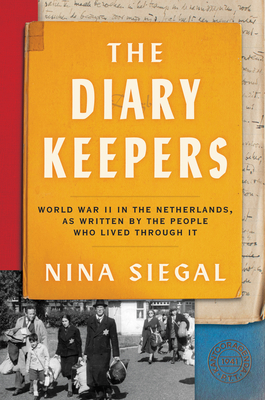
The Diary Keepers: World War II in the Netherlands, as Written by the People Who Lived Through It by Nina Siegal
75% of the Dutch Jewish community perished in the Second World War, while in other western European countries, the proportions were significantly lower. Coincidentally as I read this book, Israel is recovering from terroristic attacks on its citizens.
History has recorded the treatment of Jews by the Nazis from 1933-1945. However this reader was surprised by similar treatment of Jews by the Dutch. The diaries describe how Jews were hunted down and families were separated. Their properties and possessions were seized. They suffered physical beatings and a variety of emotional and mental humiliations.
Some Dutch did their best on hiding Jews or preventing them from being sent outside the country to labor camps and gas chambers. Jews were thrown on trains as cattle. There were vivid descriptions on how they were horribly treated and humiliated.

How could civilized people allows this to happen? Fear of reprisals? Hatred and distrust of Jews?
There were diaries of those who supported Jews and those that supported the Nazis. Their motives are part of the story. The diaries depict stories of both heroism and cowardice. This reader became uncomfortable. Could these same acts happen today? Could they happen in the United States?
History continues to repeat itself…
Very sobering book and surprising as one would expect the Dutch people to be more civilized. Excellent reference book on how a country lives and fares upon occupation by a foreign power.
American Philosophy: Book Review and Notes
This book was a very pleasant surprise. In college, I took a philosophy course that covered Pragmatism and I read books by William James, Charles Sanders Pierce, John Dewey, Josiah Royce etc. Kaag had a strong interest in the American philosophy of the late 19th century and did an excellent job of explaining it so that the general reader could understand it. In addition, he described the personalities and lives of the various philosophers – – many of them had more interesting lives outside of their academic pursuits. Kaag’s research takes place in the abandoned library of William Ernest Hocking. To be honest, reading about someone’s research in a library could be very tedious and boring. But I found it very interesting – –Kaag’s dedication and pursuit of information and material.

I highlight portions of books I own if I find them informative or interesting. Shown below are some of my notes below:
Pragmatism holds the truth is to be judged on the basis of its practical consequences, on its ability to negotiate an enrich human experience.
“Riches take wings; fame is a breath; love is a cheat; youth and health and pleasure vanish.” William James
Thoreau… had a hunch that frenetic busyness should not be the business of human life, that chatter makes one feel horribly alone, that well-paid jobs are different from “callings.” And that long relationships are not necessarily synonymous with meaningful ones. (Thoreau never married.)
Walking gives one many things, according to Thoreau, but one of its greatest gifts is time.
Socrates stands before his neighbors and says the unthinkable – – that there is something worse than death: living an ugly, wicked, boring life.
The lesson that William James gleaned from evolutionarily theory was of an existential variety – – human life was a natural process that began in the wailing of babies and ended in the pangs of death. In between was the seemingly futile struggle for survival.
In the 17th century the Frenchman (Pascal) argued that in the absence of proof, it is safer to believe in God ( since you lose relatively little if you were wrong) about his existence ( then to adopt atheism) and face eternal damnation on the Day of Judgment.
Review: Journals 1952-2000 by Arthur Schlesinger Jr.
In Journals 1952-2000,” Arthur Schlesinger Jr. offers a captivating exploration of American political history spanning the Eisenhower to Clinton administrations. Through his unparalleled connections with U.S. Presidents, foreign leaders, intellectuals, and cultural icons, Schlesinger provides an insider’s perspective on the tumultuous events that shaped the 20th century.
With candor, Schlesinger delves into his personal sentiments, both favorable and critical, towards prominent figures of the era. The admiration for the Kennedy brothers, John and Robert, shines through, while his disillusionment with Lyndon Johnson’s interpersonal approach and bizarre behavior is apparent. Notably, Schlesinger’s palpable disdain for Richard Nixon adds an ironic twist, considering their proximity as neighbors following Nixon’s presidency.
Throughout the book, Schlesinger’s political inclinations come to the fore, as he expresses his reservations about Republican presidents such as Dwight Eisenhower, Ronald Reagan, George W. Bush, and Nixon. His critique extends to a fellow Democrat, Jimmy Carter, revealing Schlesinger’s willingness to evaluate leaders from his own party objectively.

The narrative isn’t limited to policy discussions; Schlesinger enthralls readers with captivating anecdotes, insider gossip, and subtle insinuations involving prominent politicians, particularly those in the nation’s capital. Delicate topics, including the romantic entanglements of President Kennedy, Ted Kennedy, Gary Hart, Bill Clinton, Martin Luther King, and Nelson Rockefeller, are deftly navigated.
A noteworthy revelation is Schlesinger’s subtle hint at the complex relationship between himself, Robert Kennedy, and the enigmatic Marilyn Monroe. His close friendship with Jackie Kennedy also comes to the forefront, offering readers a unique glimpse into her life.
“Journals” serves as a window into Schlesinger’s engagement with pivotal issues of his time, encompassing the Vietnam War, the Cold War, Mideast tensions, diplomatic overtures with Russia and China, and the high-stakes Cuban Missile Crisis. Schlesinger’s multifaceted talents shine as he shares his role in crafting speeches and messages for aspiring Democratic presidential candidates.
Despite its substantial 783-page length, it maintains an engrossing narrative that captivates without causing reader fatigue. The book is both an enjoyable read and an invaluable source of information, making it a compelling recommendation for scholars of presidential history and anyone intrigued by the intricacies of American politics and events from 1952 to 2000.
Review: King-A Life by Jonathan Eig
As I immersed myself in this captivating biography, a whirlwind of emotions, memories, and contemplations flooded my mind. Recalling my teenage years, I realized how little I truly comprehended the magnitude of the civil rights struggle, especially in the deeply segregated South during the 1960s. Although I had heard of Martin Luther King Jr. as a young boy, I had no inkling of the profound impact he would have on our nation’s history.
This book, a compelling account of King’s life, stirred within me a deep sense of shame for the violence and hatred inflicted upon Black individuals due to their skin color and the prejudiced perceptions held by many white people. The author’s vivid descriptions of the bombings that claimed innocent lives, the brutal attacks on peaceful demonstrators by police dogs, and the countless murders committed by racists and law enforcement are a haunting reminder of the dark stain on our collective history.

Undeniably, Martin Luther King Jr. was an extraordinarily brave man—perhaps one of the bravest. Despite being subjected to jail, beatings, threats, and mob attacks, he remained steadfast in his commitment to nonviolence. The author adeptly captures King’s experiences, leaving readers in awe of his unwavering equanimity in the face of such brutality.
Moreover, the book delves into King’s personal flaws, including accusations of numerous affairs. The author, Eig, does not shy away from these indiscretions. It is revealed that King was targeted by the FBI through wiretapping and attempts to blackmail him with incriminating information. The book effectively dispels accusations of King being a communist sympathizer, providing compelling evidence to the contrary.
King faced adversaries from all angles: the FBI, racist politicians and officials, the police, fellow Black individuals who disagreed with his nonviolent philosophy, as well as ministers, church leaders, and conservative commentators who opposed his influence. Even Presidents Kennedy and Johnson, while initially ambivalent about King’s politics and impact on the civil rights movement, became entangled in a complex relationship with him. Johnson’s sentiments towards King soured when the latter publicly voiced his opposition to U.S. involvement in the Vietnam War.
Meticulously researched and skillfully written, this biography stands as the pinnacle of my reading experiences this year. It effortlessly transports readers into the turbulent era of the civil rights movement, providing a profound understanding of the indomitable spirit of Martin Luther King Jr. and the transformative power of his vision.
In conclusion, this book is an absolute must-read, capable of evoking an array of emotions and leaving a lasting impact. I wholeheartedly give it five stars, and then some.
Best Books for First Half of 2023