I think therefore I am. I write therefore I think.
Author: Eric
INTJ personality. Jack of many trades, master of some. Former banker, consultant, technical writer, marketing manager, infopreneur and communications manager, now retired. Eclectic and sometimes eccentric. Cynical and often critical.
I feel like I am a family member whose father has gone on a drunken murder spree and murdered innocent women and children randomly in the streets. To make it worse, other members of my family support him and make excuses for his insane actions.
“We are on track to complete all of America’s military objectives shortly — very shortly,” he said. “We are going to hit them extremely hard over the next two to three weeks. We’re going to bring them back to the Stone Ages, where they belong.”
Donald J. Trump 4/1/26 Address to nation
Washington has become the court of Nero, a fiery emperor, submissive courtiers and a ketamine-fueled jester in charge of purging the civil service…Never in history has a President of the United States capitulated to the enemy. Never has anyone supported an aggressor against an ally. Never has anyone trampled on the American Constitution, issued so many illegal decrees, dismissed judges who could have prevented him from doing so, dismissed the military general staff in one fell swoop, weakened all checks and balances, and taken control of social media.
Claude Malhuet on the End of American Democracy, speaking in the French Senate, Tuesday, March 4, 2025.
Most of America is exhausted with all the lies, buffoonery, hypocrisy, incompetence and delusions in Washington. With all the firings (Bondi, Noem etc.) can we fire Donald Trump too? Then we must seriously question the judgment of the people who voted for and still support him.
There was a time when I could sit for hours and read without interruption—five or six books a month, fully absorbed. At 73, that kind of sustained attention has faded. I now struggle to finish three books a month, and even then, my focus isn’t what it once was.
Newport argues that technology—especially the ever-present phone—has rewired our attention. His advice is deceptively simple: keep your phone out of reach. When it’s not within arm’s length, it loses its power to hijack your thinking. A small habit, perhaps, but one that hints at a larger truth: we are living in an age of constant distraction.
That theme—diminished focus—feels like it extends beyond the personal and into the national.
I’ve been watching commentary from Paul Krugman on the current tensions involving the U.S. and Iran. In one particularly sharp observation, he contrasted the so-called “Best and the Brightest” of the Lyndon B. Johnson era—those who guided America into Vietnam—with what he jokingly calls today’s equivalent: “the worst and the dumbest.”
The remark is biting, but it reflects a deeper concern about competence in leadership. Krugman suggests that this problem may not be confined to politics alone but could extend into the military, where experienced leadership has reportedly been sidelined in favor of loyalty.
Watching recent confirmation hearings only reinforces that impression. Time and again, nominees evade straightforward questions—particularly those concerning January 6, 2021 United States Capitol attack and the outcome of the 2020 election. The refusal to engage plainly with basic facts is not just frustrating—it’s revealing.
All of this points to a broader unease: a sense that competence, once expected as a baseline, is now optional.
Leadership matters most in moments of uncertainty, and yet this is when clarity, judgment, and integrity seem in shortest supply. The handling of tensions abroad, particularly involving Iran, reflects not just strategic missteps but a deeper erosion of seriousness.
Even figures like Pete Hegseth—sometimes dismissed as more performative than substantive—have come to symbolize this shift. The comparison to “Baghdad Bob” may be harsh, but it captures a growing perception: rhetoric is replacing reality.
Perhaps Newport’s observation applies more broadly than he intended. When attention fragments, so does judgment. And when judgment falters at the highest levels, the consequences are no longer personal—they are national.
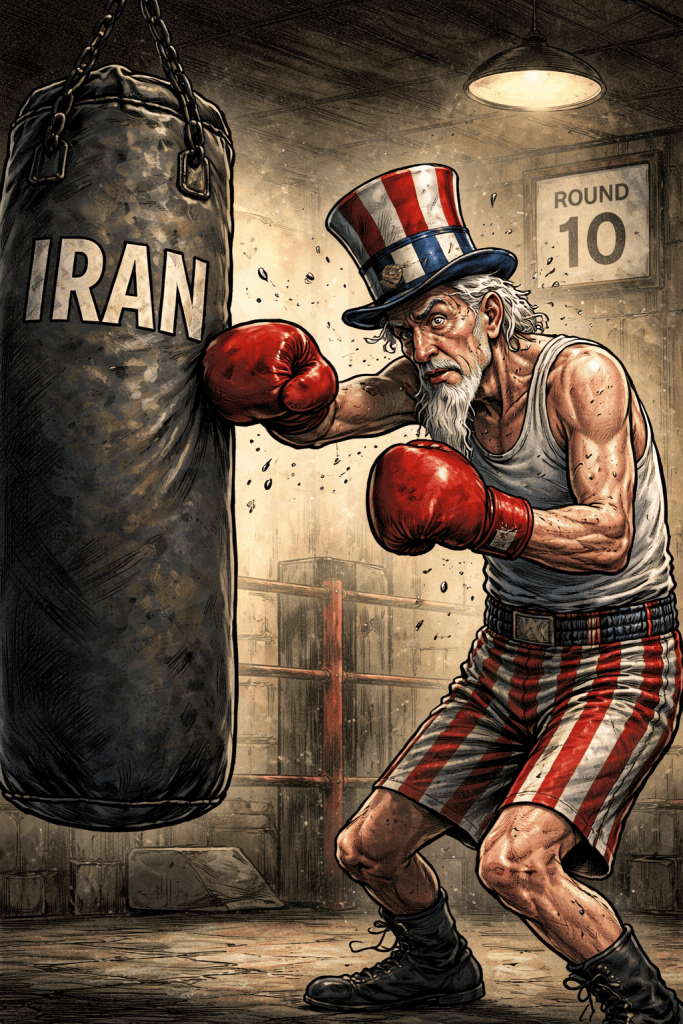
Mr. Trump prides himself on his sporting acumen, boxing included. He might profit from revisiting the old tactic known as rope-a-dope—absorbing an opponent’s early blows while allowing him to exhaust himself.
It increasingly appears that Iran, whether by design or by default, has let the United States and Israel expend their fury in the early rounds. The fantasy of a swift and decisive victory has already begun to fade. The later rounds, as history reminds us, are rarely kind to the overconfident
I am struck by how many baby boomers—people who lived through the long, humiliating unraveling of the Vietnam War—now sit mute as events in Iran unfold with eerie familiarity. Administration officials boast of battlefield successes, air superiority, and naval dominance, seemingly oblivious to the central truth: one can win engagements and still lose a war. We have seen this movie before, and it did not end well.
Robert McNamara and Pete Hegseth could scarcely be more dissimilar in intellect, temperament, or experience. Yet each, in his own way, has helped steer the nation toward costly and unnecessary entanglements—misjudgments dressed up as strategy.
Donald Trump’s reaction to the death of Robert Mueller—equal parts gloating and grievance—barely registered. The public has grown accustomed to his braying bombast. What future historians may judge more harshly is not the noise, but the silence: the quiet acquiescence of supporters and enablers to language that is scurrilous, conduct that is aberrant, and a worldview steeped in grievance and suspicion.
Who, then, is winning?
Perhaps it is the side whose propaganda is merely implausible rather than preposterous. A concealed—and possibly incapacitated—ayatollah now enjoys more perceived credibility than an American president. That alone should give pause.
And who will yield first?
The Israeli citizen huddled in a basement as drones darken the sky? The Iranian civilian surveying shattered streets and calling it survival? Or the American consumer, grumbling at the gas pump before heading to the shore or a matinee?
“We didn’t tell anybody about it because we wanted surprise,” he said. “Who knows better about surprise than Japan, OK? Why didn’t you tell me about Pearl Harbor, OK? Right?”
There was some laughter from the officials and journalists gathered in the room. “You believe in surprise, I think, much more so than us,” he added.
As Mr. Trump spoke, Ms. Takaichi (Japanese Prime Minister) widened her eyes and appeared to take a deep breath. She kept her arms crossed in her lap and did not speak.
My commentary:
Trump should be very careful about “Pearl Harbor references. The United States was in negotiations with Iran when it launched its attack. According to Oman diplomats who were facilitating the meetings, negotiations were going quite well and peace seemed reasonable as Iran had agreed to many of U.S. demands. Then the U.S. began to bomb Iran. In December 1941, the United States and Japan were also in the midst of diplomatic negotations and this provided confidence to the U.S. that no hostile acts from Japan were imminent. On December 7, 1941 Japan attacked Pearl Harbor
2. Any journalist or official who laughed at that remark is an idiot and not worthy of being in a room with the stature of the Japanese Prime Minister and she would be right to consider the laughter as an insult to her personally and Japan.
3. Trump desperately needs not to make any more enemies or to make enemies feel more embittered to the United States. Japan, like most of the world is getting screwed from rising oil prices. And Trump wonders why no one takes him seriously.
It is a curious coincidence that my current mood mirrors the title of our military operation in Iran: “Epic Fury.” The name suggests thunder, certainty, and righteous purpose. The reality, at least from the cheap seats, looks more like improvisation.
I have lived long enough to watch the United States march confidently into a number of foreign adventures—Vietnam, Afghanistan, Libya, Bosnia, and Iraq. Each was introduced with a sense of urgency and moral clarity. Most ended with a mixture of exhaustion, regret, and unanswered questions. Our present venture in Iran already shows signs of joining that distinguished club, perhaps even eclipsing it.
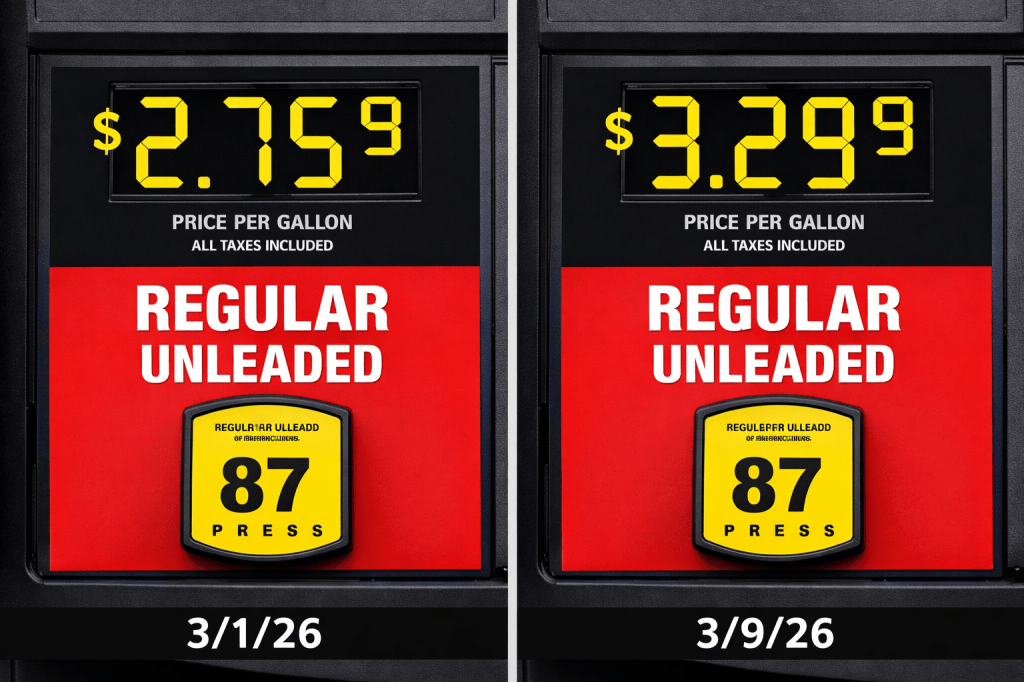
The consequences are beginning to show up in the most ordinary places. Less than two weeks ago, I was able to buy gasoline for $2.75 a gallon. Today the price stands at $3.29, nearly a 20 percent increase in a remarkably short time. If the conflict drags on—and poorly managed wars have a habit of doing just that—it is not difficult to imagine four- or even five-dollar gasoline within a couple of months.
Military operations also have political consequences beyond the battlefield. Whatever chance there might have been for ordinary Iranians to rise up against their government likely vanished with the bombing of a school that reportedly housed more than 160 girls. Matters were made worse when the President of the United States denied American responsibility for the strike, despite widespread evidence suggesting otherwise. In international affairs, credibility is a fragile currency; once spent, it is not easily replenished.
Meanwhile, reports have surfaced of American citizens stranded in the Middle East and struggling to return home. Many of them have publicly criticized the government’s response as slow and ineffective. European nations appear to have moved more quickly to assist their citizens. One might think that when preparing to launch military action in a volatile region, the vulnerability of civilians traveling there would be among the first considerations.
At home, the tone of official commentary has been oddly celebratory. President Donald Trump and Defense Secretary Pete Hegseth have spoken enthusiastically about the progress of the war, as though they were watching a football game and cheering for the home team. The president has even suggested that victory is already at hand. One cannot help recalling the moment when George W. Bush stood beneath a banner reading Mission Accomplished during the early days of the Iraq War—history’s way of reminding us that wars rarely consult our schedules.
Equally striking is the silence from United States Congress, which has shown little appetite for asserting its constitutional role in declaring war. In an odd twist, the make shift government of Iraq seems to have displayed more backbone than the legislative branch of the United States.
Nor does the rhetoric appear to be cooling. The president and Senator Lindsey Graham have already floated the possibility of confronting Cuba next. If this pace continues, the rest of the world may soon revive the old phrase “axis of evil,” this time with the United States awkwardly included in the lineup.
Yet the most unusual feature of this conflict may be the public reaction—or lack of it. There is little enthusiasm for the war. Outside of Fox News, vocal support seems muted. To be sure, few people mourn the death of Ruhollah Khomeini, but his successor—his son, widely described as even more militant—now stands ready to assume power. If the goal was regime change, the results remain unclear and may even prove counterproductive.
At the same time, there are no massive protests in the streets. My suspicion is that the country is suffering from a kind of national exhaustion—call it Trump fatigue. Americans have been through so many political convulsions in recent years that many seem to have retreated into weary silence. That quiet might evaporate quickly if the conflict expands into a ground war requiring a military draft.
History provides its own contrast. During World War II, the United States benefited from the leadership of Franklin D. Roosevelt and a formidable group of experienced military commanders. Today’s leadership—President Trump and Secretary Hegseth—presents a different picture. Comparisons are inevitable, though perhaps best left unstated.
Where all this leads is anyone’s guess. The conflict has already begun to ripple through the global economy and the delicate machinery of international politics. My own sense is that the outcome will prove costly for the United States in both arenas. At the moment, the only nation that appears satisfied is Israel. Elsewhere, goodwill toward America is becoming a scarce commodity.
For a country that prides itself on making friends and leading alliances, that may turn out to be the most serious casualty of all.
If the first casualty of war is truth, the second casualty is trust..
What if you throw a regime-change party and the people you’re “liberating” don’t come?
Iran is an example of intelligence failure, not that attributed to the CIA or military sources but specifically the lack of judgement, expertise and rationality from decision makers in Washington.
Trump supporters and enablers are learning or will soon find out that they will be held with the same regard as those associated with Jeffrey Epstein.
Past “credible war spokeswomen”: Tokyo Rose and Axis Sallie; today: Karoline Leavitt
Opportunity open for regime change in Iran= Khomeini killed; opportunity closed for regime change in Iran= Minab school bombing
Personal Note: What a mess! Not much rationality and reason getting through at this time. Iran’s drones are more successful penetrating our defense system.
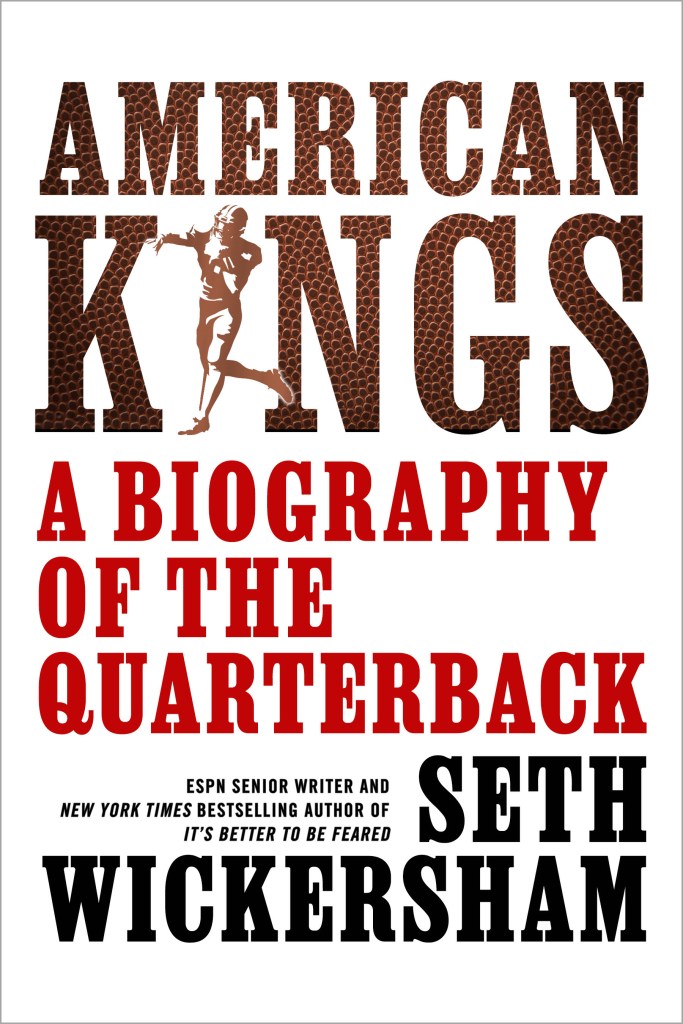
This is one of the finest sports books I’ve read—less a manual on throwing mechanics than a deep dive into the psychology, privilege, pressure, and mythology of the quarterback position. Seth Wickersham strings together interesting personal anecedotes and stories, from Bob Waterfield to Arch Manning, showing how the job evolved from leather-helmet grit to NIL-era celebrity. The through line isn’t arm strength—it’s judgment, image management, leadership, and the peculiar loneliness of being the face of a franchise. The challenge of being a quarterback, is not necessarily just on the field, but off the gridiron and at home.
For those of us who grew up in earlier NFL eras, the portraits of Johnny Unitas, Joe Namath, Y. A. Tittle, Warren Moon, and James Harris are especially resonant—rich with texture and context. Wickersham also delivers sharp, modern profiles of John Elway, Caleb Williams, and even Colin Hurley, who hasn’t yet thrown a college pass but already carries the weight of expectation.
This book pairs nicely, across the decades, with Paper Lion, by George Plimpton which captured the physical reality an author of trying to play the position. American Kings captures the aura.
At nearly 400 pages, it’s substantial but never dull—an absorbing read for any football fan and a revealing study of how America builds (and burdens) its field generals.
A blizzard is forecast for tomorrow—10 to 16 inches. Everyone is rushing to the grocery store. I rushed to the library instead, making sure I have enough books to survive the confinement.
My gym—my pickleball refuge—has already announced it will be closed through Wednesday.
Driving past several supermarkets, I saw parking lots packed to capacity. Nothing induces panic quite like the promise of snow.
Storms like this create a kind of white claustrophobia for me. Movement shrinks. The walls feel closer.
A friend’s son recently closed his small Mexican restaurant. It had been doing reasonably well, but food costs made the business untenable. A case of lettuce that cost $20 a few months ago now costs $80. He couldn’t pass that on to customers without losing them, so he shut the doors. So much for affordability.
I watched a few minutes of Real Time with Bill Maher. His guests were James Talarico and Lauren Boebert. Talarico came across as smart, articulate, and measured—Senate material. Boebert, in contrast, added little of substance. I’m still not sure why she was booked.
On a more pleasant note, I watched three films this week, all worth seeing. Solo Mio (**½), a light comedy with Kevin James, Andrea Bocelli, and Nicole Grimaudo, was charming. Nuremberg (**½), with Russell Crowe and Rami Malek, was powerful and timely. Now You See Me 3 () delivered the expected mix of magic, action, and humor from Woody Harrelson, Jesse Eisenberg, Dave Franco, and Morgan Freeman.
We saw Solo Mio in a theater. Even with the senior discount, tickets were $13 each. A small diet soda cost $9. There were barely ten people in the audience. It’s hard to see how movie theaters survive on that model.
I’m reminded of a column I wrote in late summer 2008 suggesting—half seriously—that the election be moved up because the George W. Bush administration seemed paralyzed by the financial crisis. I believed Barack Obama had the intelligence and temperament to navigate the moment. Today, facing domestic, technological, and financial challenges, I feel the same urgency: we need capable, thoughtful leadership. The deficit of judgment in our governing institutions is unsettling.
Even the Wall Street Journal recently described one of Donald Trump’s outbursts as “the worst moment of his presidency.” Given the competition, that is saying something. I doubt we have reached the bottom.
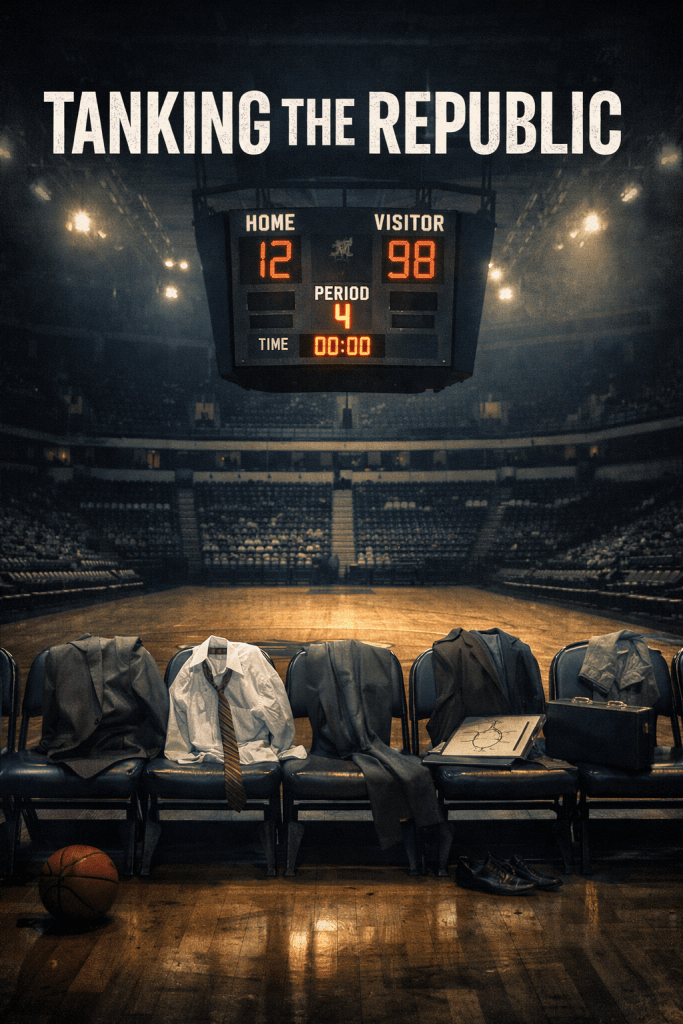
“Tanking” is all the rage in the NBA. It is the calculated decision to stop pretending to compete today in order to improve tomorrow. Lose now, draft later, and pray for salvation in the lottery.
It is hard to avoid the suspicion that the American electorate has adopted a similar strategy. Our current executive, legislative, and judicial rosters show little evidence of being built to win. Perhaps, collectively, we have decided to bottom out in the standings and hope for a better draft class in some future season.
The nation’s most serious intelligence failure is not occurring in a foreign capital; it is the chronic absence of intelligence—judgment, knowledge, and expertise—among too many who hold high office. At precisely the moment when we require leaders capable of navigating artificial intelligence, climate disruption, geopolitical instability, and the inevitability of another pandemic, the bench has been cleared of the studious and the competent. In their place stand political improvisers, confidently winging it.
The much-discussed Epstein files, said to number in the millions of pages, have become a Rorschach test for institutional credibility. In the popular imagination, their handling has elevated cynicism to an Olympic sport. Watergate, once the gold standard of scandal, now risks being remembered as a procedural misdemeanor—a historical jaywalking citation.
One is tempted—half seriously, half in despair—to suggest turning the whole archive over to artificial intelligence. Let the machines do what our bureaucracies cannot: sort the evidence, connect the names, and identify conduct worthy of prosecution. It would be an ironic triumph if algorithms proved more diligent custodians of justice than the institutions designed for that purpose.
Image by AI
Meanwhile, scandal behaves less like a series of discrete events and more like a metastatic disease, radiating outward from Washington, weakening already fragile civic tissue. The body politic coughs politely while the infection spreads.
Political commentary, however eloquent, feels increasingly like prescribing lozenges for a structural fracture. Words—mine included—are no match for a system that rewards performance over competence and outrage over understanding.
As for last week’s congressional theatrics, one could not help but notice the Attorney General auditioning for a post-government career in the insult-comedy circuit. If the aspiration is to channel Don Rickles, the material requires sharpening and the timing considerable work. Even Mencken, patron saint of American skepticism, understood that ridicule is most effective when it is both precise and economical.
In the meantime, the republic appears committed to playing out the season with a depleted roster, a distracted coaching staff, and a fan base divided between those booing, those cheering, and those already studying next year’s draft prospects.
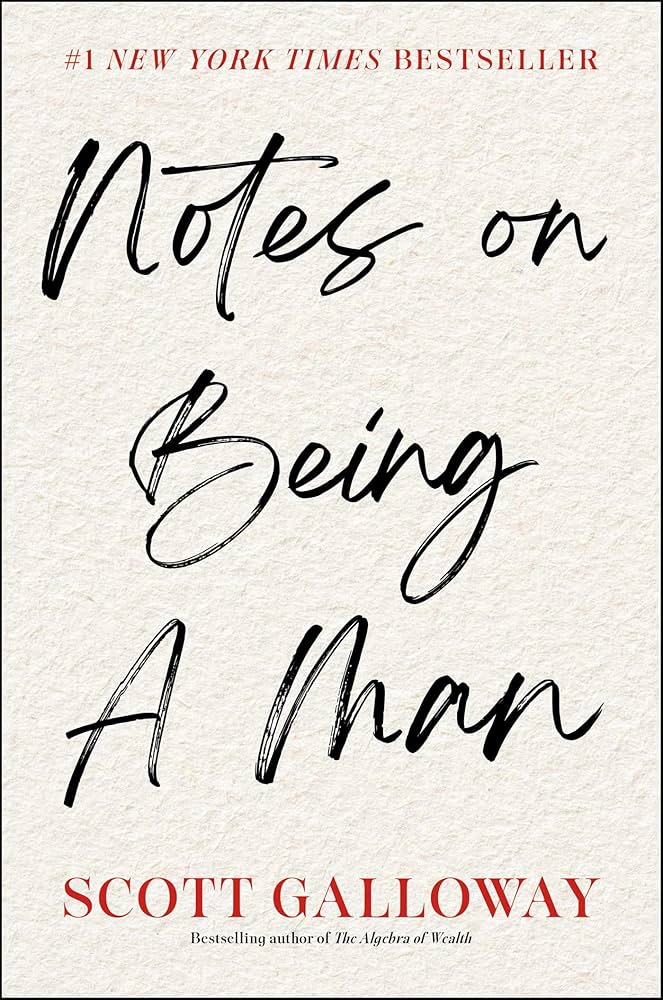
Good book for young men in their 20s and 30s. For this reader in his 70s, it provided some perspective on his life and a bit of a report card on how well he did. Scott Galloway is one of the nation’s top thought leaders. This book is a combination of an autobiography and his notes on how to conduct one’s life as a man. He cites the many issues of masculinity in today’s culture and society and offers his advice on relationships, education, career, family, work and health.
I think Scott has been very lucky. He had a loving and caring mother who filled the parenting roles when his father divorced her. I don’t think many men will identify with his life’s path. Scott worked very hard for his success but there were prices to pay in terms of his first marriage and health. Listed below are some notes of advice from Scott and my commentary regarding its validity and wisdom.
Scott’s Notes
My Notes and Comments
Most boys come apart when a male role model leaves. If there is no father present, the son is more likely to be incarcerated than graduate from college.
I don’t think that I’m the exception. My father died when I was seven. I had a caring mother and family for help. I graduated from college. I dealt successfully with adversity.
Success comes when you put in small, consistent amounts of effort, every day and every week.
Success comes more from luck, connections and opportunity than effort.
College teaches you critical thinking-how to triage.
Depends on the classes, the teacher and the student’s desire to learn. Based on what I see, very few people have marshaled the knack of critical thinking, college or not.
The ratio of time you spend sweating to watching others sweating is forward looking indicator of your success.
Unless you are Donald Trump
Your body will sometimes make decisions for you when your brain won’t. Learn to listen to your body.
Good advice when you’re young, better and more valid advice as you get older!
Don’t be afraid to quit. Failing fast is better than failing over a long period.
As soon as you start a new job, develop a Plan B to escape if the job does not work out. Have an FU fund.
The best romantic partnerships are synced up on three things: passion, values and money.
Money or lack of it ruins many marriages and relationships.

 Esot-eric