Top 50 Movies in My Lifetime (My Opinion)

Movie TitleTop 2 StarsYear
Butch Cassidy and the Sundance KidPaul Newman, Robert Redford1969
Citizen KaneOrson Welles, Joseph Cotten1941
RockySylvester Stallone, Talia Shire1976
All Quiet on the Western FrontLew Ayres, Louis Wolheim1930
DraculaBela Lugosi, Helen Chandler1931
Animal HouseJohn Belushi, Tim Matheson1978
Witness for the ProsecutionTyrone Power, Marlene Dietrich1957
Duck SoupGroucho Marx, Harpo Marx1933
The GodfatherMarlon Brando, Al Pacino1972
Nicholas and AlexandraMichael Jayston, Laurence Olivier1971
GoodfellasRobert De Niro, Ray Liotta1990
The Grand Budapest HotelRalph Fiennes, Tony Revolori2014
John WickKeanu Reeves, Ian McShane2014
You Only Live TwiceSean Connery, Donald Pleasence1967
Airplane!Robert Hays, Julie Hagerty1980
The Last SamuraiTom Cruise2003
CasablancaHumphrey Bogart, Ingrid Bergman1942
Bull DurhamKevin Costner, Susan Sarandon1988
The Good, the Bad and the UglyClint Eastwood, Eli Wallach1966
The Naked GunLeslie Nielsen, Priscilla Presley1988
Death at a Funeral Chris Rock, Martin Lawrence2010
Once Upon a Time in HollywoodLeonardo DiCaprio, Brad Pitt2019
The CandidateRobert Redford, Peter Boyle1972
The Best ManHenry Fonda, Cliff Robertson1964
CasinoRobert De Niro, Sharon Stone1995
Road HousePatrick Swayze, Sam Elliott1989
Margin CallKevin Spacey, Jeremy Irons2011
Raging BullRobert De Niro, Joe Pesci1980
The Good ShepherdMatt Damon, Angelina Jolie2006
DownfallBruno Ganz, Alexandra Maria Lara2004
Glengarry Glen RossAl Pacino, Jack Lemmon1992
Bonnie and ClydeWarren Beatty, Faye Dunaway1967
High NoonGary Cooper, Grace Kelly1952
City HallAl Pacino, John Cusack1996
HeatAl Pacino, Robert De Niro1995
Scarface (1932)Paul Muni, Ann Dvorak1932
Wall StreetMichael Douglas, Charlie Sheen1987
Too Big to FailWilliam Hurt, Billy Crudup2011
Casino RoyaleDaniel Craig, Eva Green2006
Fatal AttractionMichael Douglas, Glenn Close1987
The Dirty DozenLee Marvin, Charles Bronson1967
All the King’s MenBroderick Crawford, John Ireland1949
Advise and ConsentHenry Fonda, Charles Laughton1962
The Last HurrahSpencer Tracy, Jeffrey Hunter1958
The Ides of MarchGeorge Clooney, Ryan Gosling2011
RoninRobert De Niro, Jean Reno1998
Mission: Impossible – FalloutTom Cruise, Henry Cavill2018
The Thomas Crown Affair (1968)Steve McQueen, Faye Dunaway1968
The Thomas Crown Affair (1999)Pierce Brosnan, Rene Russo1999

I collected this list in about an hour’s time. I’m sure there are movies I would add/subtract to my top 50 if given more time and reflection. These are movies that I would view again and again. I know that most of these movies are older and were enjoyed when I was younger. Just about all these movies had compelling storylines that I enjoyed.
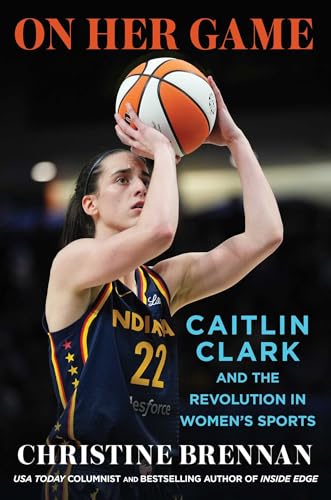
Review: On Her Game: Caitlin Clark and the Revolution in Women’s Sports by Christine Brennan

On Her Game is a compelling homage to Caitlin Clark, the dazzling college basketball star whose impact on women’s sports has transcended the court. In just four years at the University of Iowa, Clark became a national phenomenon: a 3.64 GPA marketing major, multiple-time All-American, record-setting scorer, and the face of a sport in transformation. She led her team to the Final Four, sold out arenas, and inspired young fans—both girls and boys—to wear her jersey.

Clark’s influence extended beyond basketball. With millions in endorsement deals, a sharp media presence, and a spotless off-court reputation, she quickly became a symbol of excellence and marketability in women’s sports. Articulate, humble, and team-oriented, she embraced her role as an ambassador of the game with poise.

So why has Clark—and this book—stirred controversy?

Christine Brennan, a veteran journalist with a well-earned reputation for fairness, explores the complex cultural tensions that have surrounded Clark’s rise. She notes that Clark’s identity as a white, attractive, straight woman in a league where many stars are Black and openly gay has led to resentment in some quarters. A handful of critics—players, coaches, and analysts—dismissed her collegiate dominance and questioned whether her game would translate to the pros. Early in her WNBA career, she faced not only physically intense defenses but also moments that bordered on bullying.

Some veteran players treated her with noticeable coldness. I draw parallels to the experience of Pete Maravich, another flamboyant scorer whose transition from college to the pros in 1970 was also met with skepticism and envy—particularly from Black teammates and established NBA stars who resented the media attention he received.

Interestingly, Brennan herself came under fire from some WNBA figures who accused her of pushing an agenda. Yet her reporting includes attempts to speak with those critical of Clark, many of whom declined to go on record. Brennan does not shy away from addressing racial dynamics, including examples of racism aimed at Clark. She also argues that leaving Clark off the 2024 U.S. Olympic team was a mistake—one that speaks more to league politics than performance.

Brennan’s book is sharp, fair, and timely. It raises important questions about race, gender, power, and the uneasy growing pains of a league adjusting to sudden mainstream attention.

As a fan of Caitlin Clark, I found On Her Game to be both informative and affirming. I hope Clark continues to thrive in the WNBA and that the league’s leadership recognizes the opportunity she represents. Stars like Clark don’t come along often—and when they do, they have the power to elevate not just a team or a league, but an entire sport.

I Don’t Get It….?

House Republicans Move to Rename Kennedy Center Opera House After Melania Trump. Why? This woman has as much interest in being first lady as she does in spending any meaningful time with her husband. I can’ t think of any remote contribution that Melania Trump has made to the Arts, the Theater or Entertainment to deserve that type of recognition.

French President Macron Files Lawsuit Against Candace Owens for Repeatedly Claiming His Wife Is a Man. Again why? I would advise any Europeans or people outside the United States to largely ignore the gross insanity of our political culture, comportment and chaos. Why give this woman any platform or notoriety for her ridiculous charges?

The extent of the furor and mockery about the “Coldplay couple” canoodling at a concert and getting caught. The Astronomer CEO immediately retired or was fired, depending on what story you believe. However, we have a president whose conduct was even worse (with even more to come?) and yet there is no outrage about him still holding office.

Regrettably the shame committed by the CEO and HR director is going to be shared with their spouses and even worse, their young children. Maybe we should consider terminating all the parodies and skits that most of us have found funny just out of respect for their kids.

Greg Gutfeld of Fox News? I’ve seen brief snippets of his show and also some of his appearances on The Five. I don’t find him funny or relevant. Gutfeld is not an H.L. Mencken, he’s not even Dennis Miller.

This is the Week That Was

I’m amused by Trump’s reluctance to release the Epstein files—as if there’s anything left that could truly shock us. His behavior has long been an open book. At this point, what more could possibly lower public opinion of him?

Replace Jerome Powell as head of the Federal Reserve? Makes about as much sense as firing the fire department while a building is still on fire.

The CEO and the HR Director of Astronomer were caught on a kiss cam in a romantic embrace at a Coldplay concert. The CEO is married with children and the HR Director is recently divorced. Due to the public and rather unusual nature of the disclosure of the relationship, this story is all over social media and other news outlets. My guess is that the HR Director will either resign or be let go but that the CEO will keep his job after publicly confessing his infidelities and promising to reform.

Though I’m not a late-night viewer at my age, I recognize that some of the sharpest political and social commentary in recent years has come from the desks of Stephen Colbert, Jimmy Fallon, and especially Jimmy Kimmel. The upcoming end of The Late Show with Colbert marks more than just the close of a program—it signals the fading of a cultural force that once helped us laugh through the chaos.

Aphorisms at 6×12 +1

If you look back at your life and have no regrets, that should be your biggest regret.

***

In the past, character made heroes; today, heroes are made of characters.

***

Old adage: “The only thing necessary for the triumph of evil is for good men to do nothing.”

Current adage: The only thing necessary for the triumph of good is for evil men to do nothing.

***

True love makes unbearable life circumstances bearable.

***

The bucket list of old age often reveals not future dreams, but past joys now out of reach.

***

I’ve reached the semifinals of the senior musical chairs championship—a game where the chairs disappear, the music dies, and the last one standing still loses… just more slowly than the rest.

***

My pickleball mantra (thanks to Toby Keith)

I ain’t as good as I once was, but I’m as good once as I ever was

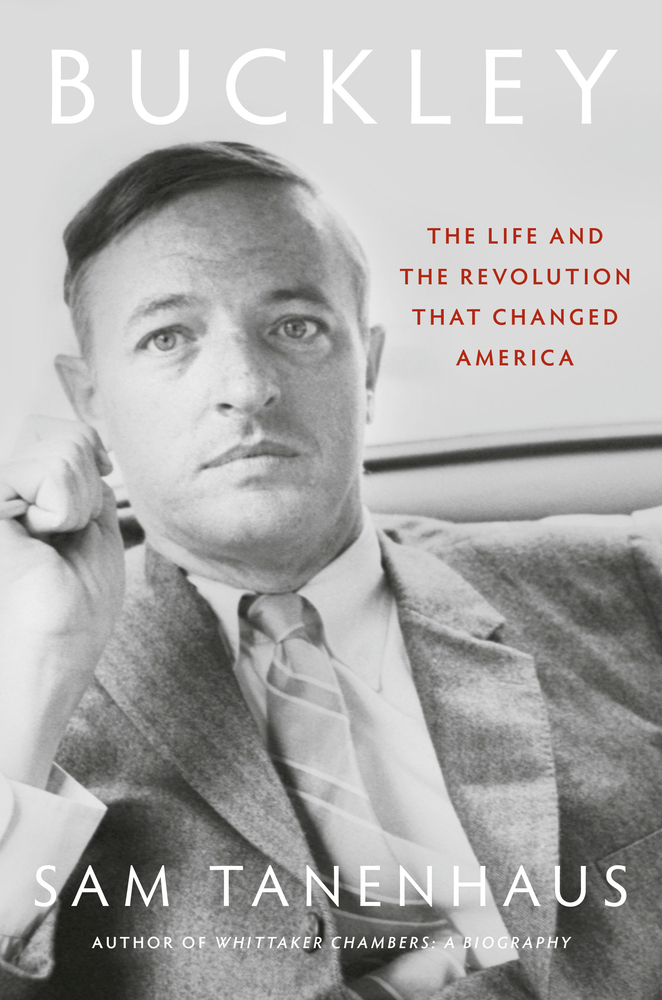
Review of Buckley: The Life and The Revolution That Changed America by Sam Tanenhaus

Sam Tanenhaus’s nearly 900‑page biography is a major investment of time, and it helps to arrive already curious about—or at least aware of—William F. Buckley Jr. and the post‑war conservative movement he helped shape. For readers who meet that threshold, the book proves surprisingly readable; for those who don’t, the dense historical detail may feel arduous.

Scope and Balance

Tanenhaus is both exhaustive and even‑handed. He neither canonizes nor demonizes his subject, instead cataloguing Buckley’s triumphs alongside his missteps. Critics may bristle at the close attention paid to family “warts,” especially the overbearing father, but the research is meticulous and the portrait persuasive.

Buckley’s Major Misjudgments

  • Foreign‑policy zigzags – Buckley opposed U.S. entry into World War II before Pearl  Harbor yet staunchly backed the Vietnam War.
  • McCarthyism and Watergate – He defended Senator Joe McCarthy and later downplayed Watergate, even championing conspirator Howard Hunt.
  • Civil‑rights resistance – Buckley was late to endorse full political rights for Black Americans, claiming many were unprepared for the franchise.
  • The Edgar Smith debacle – Perhaps his worst lapse: lobbying for the release of convicted murderer Edgar Smith, who soon attacked another woman. Charm and flattery clouded Buckley’s judgement, and basic due diligence was absent.

Admirable Qualities

Despite his blind spots, Buckley inspired loyalty. Friends—ideological allies and foes alike—describe his private warmth, generosity, and wit. His charitable giving was substantial and discreet, and he remained courteous to adversaries off camera.

Education and Talents

An indifferent early student who failed several prep‑school entrance exams, Buckley benefited from a cosmopolitan upbringing in Europe, becoming multilingual. At Yale he honed the dazzling rhetorical style that later defined Firing Line. A true polymath, he wrote gracefully, played concert‑level piano, skippered ocean races, debated ferociously, and chronicled his frenetic routines in the memoir Overdrive.

Personal Speculations

Tanenhaus briefly entertains Gore Vidal’s insinuations about Buckley’s sexuality but unearths no substantial evidence. The Buckley‑Vidal televised clashes, however, remain one of the book’s liveliest threads.

Blind Spots in Business

For all his verbal precision, Buckley was financially inept. National Review survived only through repeated infusions from his father and sympathetic backers; balance sheets mystified him, and bankruptcy loomed more than once.

How the Book Changed My View

I once saw Buckley as an unalloyed Renaissance man. Tanenhaus complicates that picture, revealing antisemitic streaks, chronic resistance to civil rights, and a habit—memorably skewered by Yale philosopher Paul Weiss—of sounding authoritative on books he hadn’t read. In the end, Buckley emerges as brilliant but fallible, magnetic yet blinkered—a man whose revolution reshaped American conservatism while mirroring its contradictions.

Verdict

For readers already engaged with post‑war political history, Tanenhaus offers a definitive, engrossing study. Newcomers to Buckley may wish to sample his columns or television debates first; only then will they fully appreciate the nuance—and magnitude—of this sprawling biography.