If America is a stock, is it time to dump it and sell?
Like the ouroboros, I believe Big Tech is eating itself alive with its component companies throwing more and more cash at investments in one another that are most likely to generate less and less of a return. Monday’s correction shows that our financial markets — and possibly your retirement portfolio — may be starting to reflect an understanding of this dynamic. New York Times 1/28/25 I Study Financial Markets. The Nvidia Rout Is Only the Start. Mihir A. Desai is a professor at Harvard Business School and Harvard Law School.
If Trump’s all-in-on-fossil-fuels, “drill, baby, drill” rallying cry — at the dawn of this era of artificial intelligence, electric vehicles, batteries and autonomous cars — really becomes our strategy, it will not make America great again. But it will definitely help make China great again. New York Times 1/28/25 Trump Is Going Woke Thomas Friedman
The bond market is telling us something about the dawn of the second Trump presidency, and it’s not pretty….Most of the policies proposed by President Trump, from tariffs to additional fiscal stimulus to deportations that tighten the labor market, are expected to add to inflation. And to the degree they are enacted, they will combine with an inflation rate that has declined rapidly, but which remains above the Federal Reserve’s target and is still higher than it was during most of the decade leading up to the pandemic. Rising long-term rates are bad for businesses and households that need to borrow, since the cost of loans such as mortgages and auto loans are directly linked to 10-year Treasury yields. New York Times 1/29/25 Trump’s Plans Are Already Making Your Life More Expensive Rebecca Patterson (is an economist and market strategist)
I am less agitated by the pardons of two men within the past few weeks than the pardons granted by 77.3 million voters last November.
I have no sympathy for Buyer’s remorse. I note the surprise and consternation as the curtain opened and the opening acts started. The fine print was clear: no returns, no exchanges, and no refunds on this runaway circus of calamity. You bought the ticket, and now you’re strapped in for the whole ghastly ride, derailments and all.
Upset that his hand wasn’t on the Bible during the oath of office? Why bother with a prop for principles he neither understands nor respects!
“We criticized the German people for allowing a Hitler to rise, but in the early 1930s, Germany was reeling from a global economic depression, compounded by severe unemployment and the crushing reparations imposed after World War I. Restricted in rebuilding its military and manufacturing, Germany was a demoralized and defeated nation. In contrast, the United States in 2024 elected Trump amidst economic prosperity, low unemployment, and a position of military and political strength, fully in control of its destiny.”
What would Dwight Eisenhower, Harry Truman, Douglas McArthur, Edward R. Murrow and Walter Cronkite opine if they were at the Inauguration ceremonies last Monday?
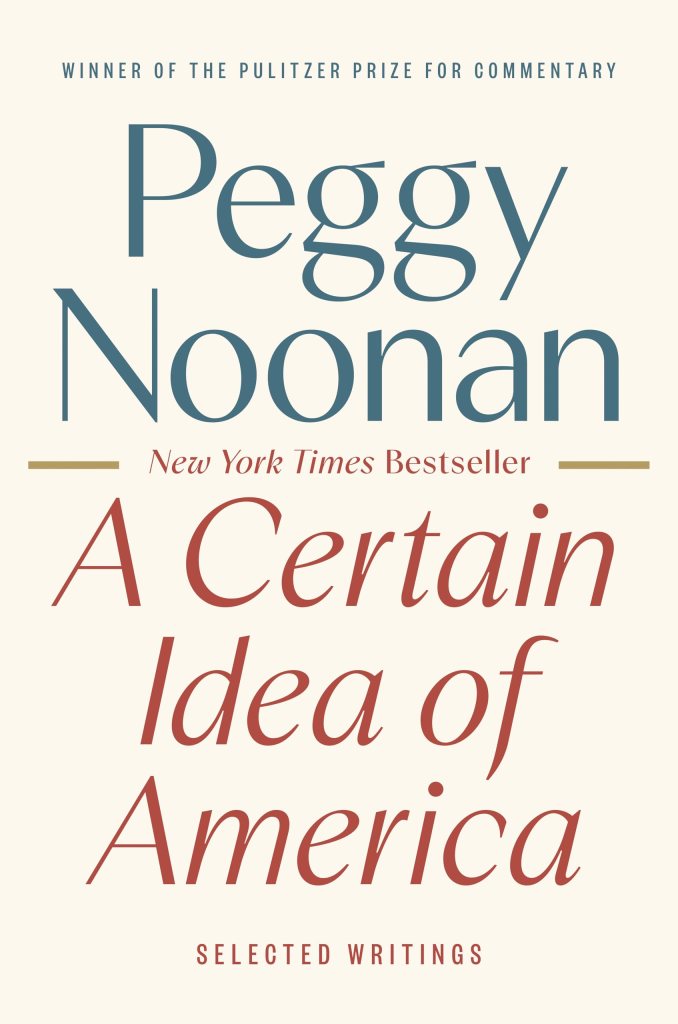
Peggy Noonan is one of the very few Republicans with whom I feel I could sit down and have a civil conversation about politics, history, and current events. My belief is affirmed after reading her book, A Certain Idea of America: Selected Writings, a collection of recent commentaries on politics, personalities, culture, and contemporary issues. Her writing is measured, thoughtful, and often insightful.
For instance, in a column written in 2019, Noonan offered advice to Joe Biden, attempting to dissuade him from running for president in 2020. Her words, in hindsight, appear not only as good counsel but also as prophetic given Biden’s mixed success as president:
“Your very strength – that you enjoy talking to both sides, that deep in your heart you see no one as deplorable – will be your weakness. You aren’t enough of a warrior. You’re sweet, you’re weak, you’re half daffy. You’re meh.”
Noonan stands as an outlier within the Republican Party. Her style of writing seeks to inform, inspire, and not inflame. She is no supporter of Trump. Even her criticism of Trump’s antics and leadership is measured—acerbic yet never descending into vitriol.
One passage in particular may encapsulate her sharp perspective on America’s present and future trajectory:
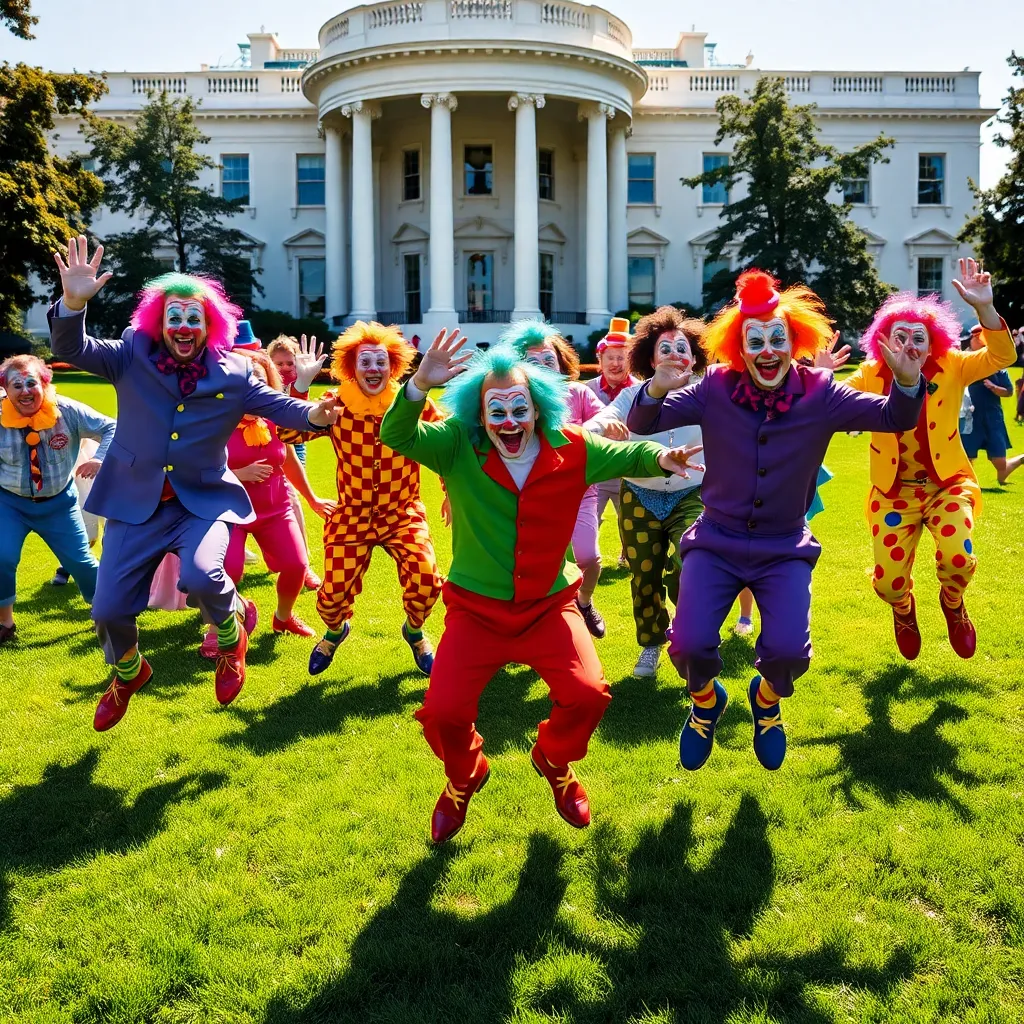
“In time, we’ll see you lose something when you go post-heroic. Colorful characters will make things more divided, not less. They’ll entertain, but not ennoble. And the world will think less of us – America has become a clownish, unserious country with clownish, unserious leaders – which will have an impact on our ability to influence events.”
This observation feels prescient and poignant, capturing a sense of national disquiet. Unfortunately, not enough Americans shared this view during the last election. Perhaps Noonan could have lent her rhetorical skills to Kamala Harris and the Democrats to sharpen their messaging.
While I don’t agree with all her views—for instance, I’m not as enamored with Billy Graham or Ronald Reagan as she is—I respect her opinions. Her prose is engaging, and the short commentaries, originally published in The Wall Street Journal, make for an easy yet thought-provoking read.
I looked back on my 2024 predictions and though I did nail that Joe Biden would withdraw from running for President. I did not guess correctly that Donald Trump would also withdraw and with a pardon. Despite my predictions, Twitter did not go dark and the Russia-Ukraine war did not end. I did not fare well in my sports predictions.
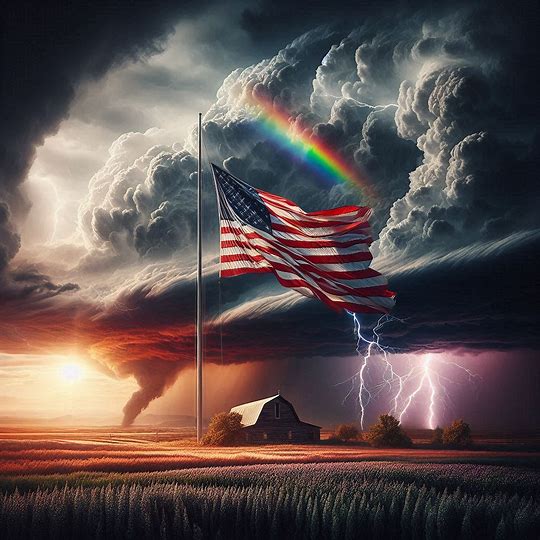
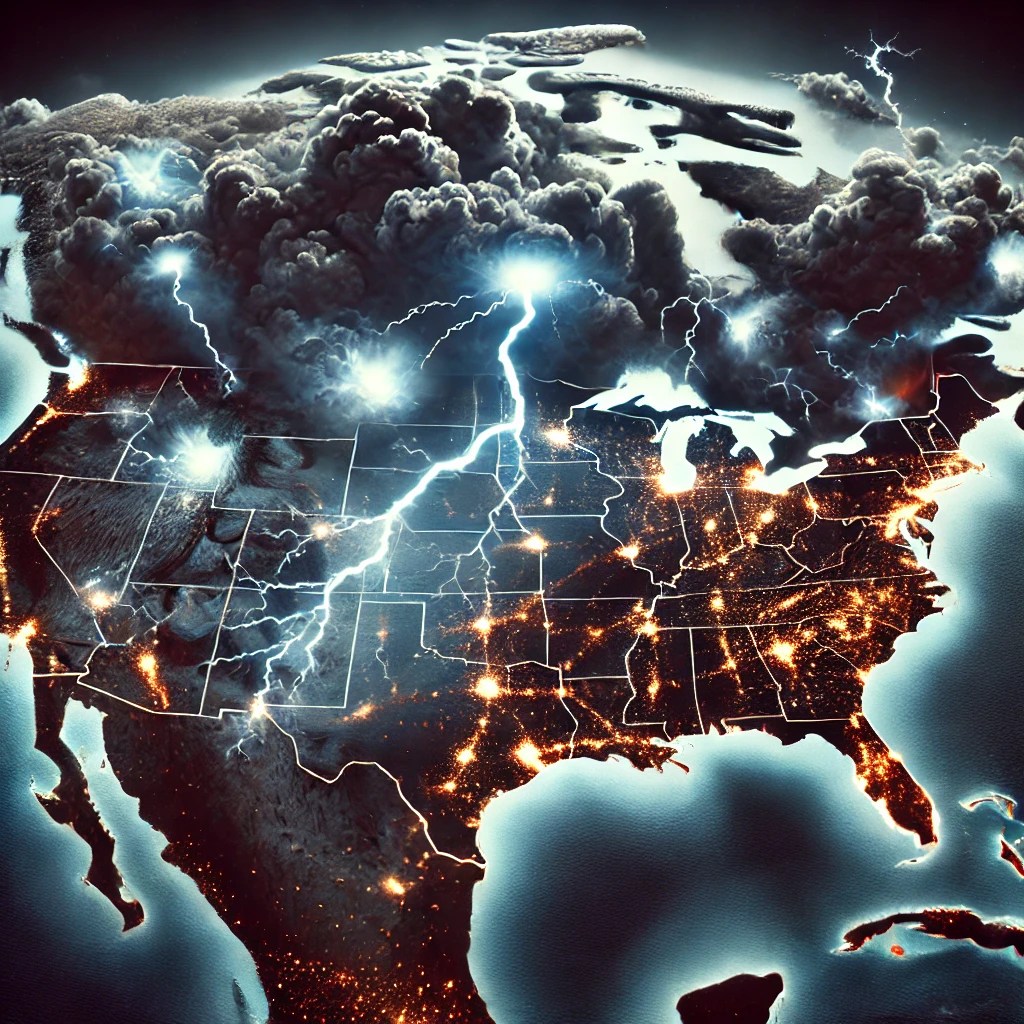
However, I am back with my 2025 predictions. My crystal ball looks a bit gloomy and stormy…
Image by AI
With a cabinet with incompetent and mediocre appointees by President Trump, brace for turmoil during any emergency or major national issue. Expect significant mismanagement in response to natural disasters (hurricanes) or medical crises (epidemics), resulting in widespread public frustration and delays in assistance.
I expect an unsatisfactory resolution in 2025 to the Ukraine-Russia war now that Trump is President. I anticipate a huge FU to our European allies who have made significant economic and financial sacrifices who have assisted Ukraine. My sense is that Europe and NATO will have little influence or say how the war is resolved.
The mainstream press will continue to erode. Layoffs among journalists will rise, and investigative reporting will wane due to mounting fears of libel lawsuits. The result? A media landscape increasingly dominated by shallow reporting and sensationalism with declining viewership and subscription.
With America’s collective attention span shrinking, network TV shows, many sports events (including the NBA), and news programs will see further declines in audience engagement. Streaming platforms and niche content will solidify their dominance as traditional formats struggle.
Iran is poised for more liberal reforms. Humiliated by its ongoing struggles with Israel and diminishing influence in the Middle East, internal pressures will drive gradual social and political changes, signaling a shift away from strict authoritarianism.
Taylor Swift and Travis Kelce will become engaged this year. Hedging my bets if this means they will get married.
The 76ers will inch into the play-in round of the NBA Championship playoffs where they will lose in the first round. Joel Embiid will not play due to injury. Process #2 begins with the firing of Nick Nurse and the trade of Embiid after the season.
Christianity in America will increasingly shift focus from spiritual worship to political and cultural conservatism. Expect legislation at both state and federal levels aiming to roll back rights on abortion, birth control, and civil rights for LGBTQ individuals, women, and racial minorities, with the Supreme Court playing a pivotal role.
2025 will bring further credible evidence of extraterrestrial activity. Governments worldwide will grapple with the implications, leading to heightened discussions about national security and military preparedness in the face of potential unknown threats.
Neither current NFL favorites, Kansas City or Detroit will win the 2025 Super Bowl.
There will be similar concerns about Donald Trump’s physical and mental decline similar to the experiences about Joe Biden. Joe’s issues were obfuscated by the First Lady, Jill. Trump will have not have similar cover from Melania.
With increasing dissatisfaction among Democrats and moderates, a new third-party movement will gain momentum, fueled by widespread dissatisfaction with the two-party system, but it will face significant hurdles in gaining electoral traction.
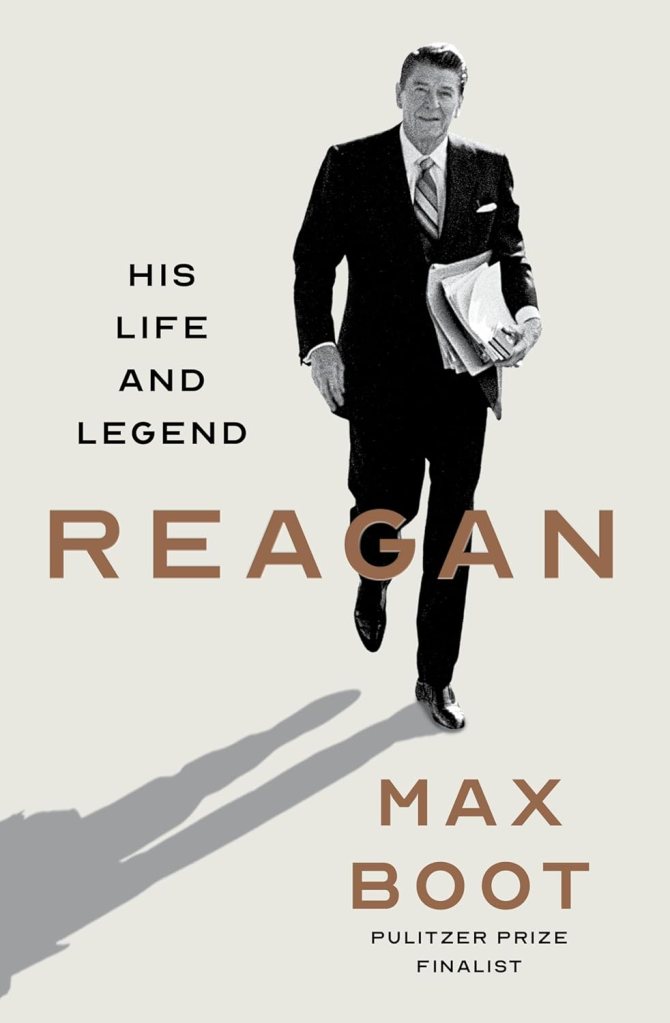
Max Boot’s biography, Reagan: His Life and Legend, offers a well-written and balanced examination of Ronald Reagan as President, Governor of California, husband, and father. While the book sheds light on Reagan’s admirable traits, it doesn’t shy away from his flaws, making it a nuanced portrayal that might not have pleased Reagan or his wife, Nancy, if they were alive to read it.
Reagan’s admirers—particularly those who regard him as one of the greatest U.S. Presidents—may find aspects of this book unsettling. While Boot acknowledges Reagan’s good qualities, he also highlights numerous shortcomings, presenting a more complex figure than the idealized version often celebrated.
The biography reinforced my belief that Reagan, though a decent man, was neither a particularly intelligent individual nor an exceptional leader. He lacked intellectual curiosity, with Reader’s Digest reportedly being his preferred reading material. Reagan, at heart, was an actor, and much of his success stemmed from his ability to follow direction—something he desperately needed throughout his political life.
One quality I genuinely admired in Reagan was his courage following the 1981 assassination attempt by John Hinckley. His ability to maintain a sense of humor even as he faced death was truly inspiring.
Reagan’s presidency benefited immensely from the presence of highly skilled advisors. For instance, Jim Baker, widely regarded as the best Chief of Staff in presidential history, played a pivotal role in keeping the administration on track. To Reagan’s credit, he recognized his limitations and leaned heavily on his team for guidance. Similarly, he often sought advice from Nancy, who was both his greatest supporter and, at times, a source of controversy in his life.
The book, at 731 pages, is lengthy but flows efficiently, offering a comprehensive look at Reagan’s life. Boot’s writing is engaging, making the biography an easy and compelling read despite its depth.
While there are faint parallels between Reagan and Donald Trump, I would caution against drawing too many comparisons. Reagan’s legacy, while flawed, is distinct in character and style from Trump’s presidency.
However, the book is not without its omissions. Boot largely sidesteps critical moments and controversies that shaped Reagan’s legacy. There’s no mention of the bombings of the U.S. Embassy, the Embassy annex, or the Marine barracks in Beirut—or the paralyzing indecision that followed. Likewise, the humiliating hostage crisis in Lebanon, the Iran-Contra affair, and the diversion of funds to the Contras are conspicuously absent.
Equally glaring is the lack of discussion on domestic issues, including scandals involving savings and loan regulators, the Department of Housing and Urban Development, and other government agencies. Boot also neglects to address Reagan’s rollback of civil rights laws, his failed nomination of Robert Bork to the Supreme Court, or the infamous visit to Bitburg Cemetery. The administration’s tax cuts, social welfare reductions, and their role in growing income inequality and the hollowing out of the middle class are similarly omitted.
On foreign policy, Boot overlooks Reagan’s apathy toward the AIDS pandemic, his opposition to sanctions on South Africa, and the dangerous escalation of tensions with the Soviet Union during the early 1980s fueled by his military buildup and incendiary rhetoric.
While Boot succeeds in painting a vivid picture of Reagan’s life and personality, these omissions leave the portrait incomplete. For readers seeking a full accounting of Reagan’s presidency, these gaps may feel significant. Nonetheless, the book offers a fascinating exploration of Reagan’s life, warts and all.
I can’t get too excited or surprised about Joe Biden providing a pardon for his son Hunter. What does Joe have to lose? He’s not running for President any more and he certainly does not owe the Democratic party any explanation. ***
As I was reading this essay, I nodded my head as this section captured my attitude about politics, the election and Trump…
Not long after the election, I had a conversation with a relative in which she said, in so many words, that she’d given up. She wasn’t worried for herself and her husband; they would be fine, financially and otherwise, whatever Trump did; they were safe within the bubble of professional-class privilege. Yes, she was sad that her children and grandchildren would inherit a worse world now—less-free, more violent, more subject to the ravages of climate change—than would have been the case, she believed, had Trump lost, but she couldn’t take responsibility for that. If the American people were stupid enough to vote for this guy, then they deserved whatever they got, and she wasn’t going to care anymore. She would look out for her own as best she could, and that’s it.
Biden Gives Up On America Noah Millman
***
At my age, I am content to have seen the best of America. I regret that this experience will not be passed down to future generations. ***
Off the top of my head, a partial Cabinet I’d nominate if I was President. Sorry no Fox commentators or former employees.
Attorney General: Lynn Cheney
Secretary of Treasury: Jamie Dimon
Secretary of State: Mitt Romney
Secretary of Defense: Mark Milley
Secretary of Education: Michelle Obama
Administrator of Small Business and Entrepreneurship: Seth Godin
Secretary of Homeland Security: Chris Christie
Secretary of Veterans Affairs: Phil Murphy (current NJ governor)
Director of OMB: Pete Buttigieg
Secretary of Health and Human Services: Mark Cuban
Director of National Intelligence: Jethro Gibbs (I’m kidding)
Press Secretary: Kara Swisher
***
It somewhat amuses me that fans urge the firing of a football coach, who has an excellent win-loss season record but makes the unforgivable mistake of losing a game to a bitter rival. But yet they will show infinite patience by re-electing politicians of poor performance, character and results. ***
I think as you grow older your Christmas list gets shorter because the things you want can’t be bought.
As I contemplated last week’s election results, with all their dreary portents for the years ahead, I was reminded of the lament of a Roman senator—his power fading, his influence diminished, as Caesar’s star ascended:
“I shall tend my fish, study philosophy, and comport myself for death. This republic holds no place for me any longer.”
(Conspirata: A Novel of Ancient Rome, Robert Harris)
And then I asked myself, “Does this country hold a place for me?
The question is not rhetorical. At this late point in my life, I find myself at odds with the culture, principles, and trajectory of the nation I once revered. My beliefs—anchored in reason, history, and an old-fashioned sense of duty—seem increasingly alien in a land preoccupied with spectacle over substance.
A Discontented Creed
Consider, for example:
Religion in Politics: As an agnostic, I believe that the pulpit should stay far away from the podium. Ministers and pastors claiming divine insights on policy strike me as charlatans with better wardrobes. Faith should inspire personal virtue, not dictate public policy.
Loyalty to Allies: In diplomacy and in life, I value loyalty. A true ally stands by you in both triumph and trial. Yet we seem to cast off old friends—countries and principles alike—as if they were expired coupons.
Science and Competence: I favor facts over feelings, competence over pretense. But ours is an age where bombast outweighs expertise, and the loudest voice is mistaken for the wisest.
Reckoning with Our Past: This country’s history is a patchwork of greatness and failure. We have saved nations and crushed dreams, built monuments to liberty and ignored the cries of the oppressed. I believe in confronting our flaws honestly, not whitewashing them with comforting myths—or worse, erasing them entirely in the name of “offense.”
Respect for Women: Here is a simple proposition: anyone who assaults, demeans, or dehumanizes women is unfit for public office. Full stop. Yet, 52% of white women voters apparently find this a negotiable standard. I am baffled—and disgusted.
Character Matters: Good judgment, responsibility, empathy, and moral clarity—these should be the cornerstones of a person’s character. Increasingly, though, they are dismissed as relics of a bygone era, sacrificed on the altar of “winning at all costs.”
A Nation Entertained to Death The deepest cut of all, perhaps, is that we have traded informed citizenry for the hollow thrills of reality-show governance. Americans now crave entertainment over enlightenment. The morning chatter of Joe and Mika or the smirking commentary of Bill Maher may pass for insight, but to me, they feel like reruns of Neville Chamberlain in Munich, mistaking platitudes for policy while calamity looms.
The Final Reckoning
So here I am, like that Roman senator, contemplating my fish and philosophy. The republic of my youth—the one I fought to believe in—is unrecognizable.
It is a strange thing to feel like an exile in one’s own country, but perhaps the true patriots are always exiles. We stand apart, unwilling to settle for the tawdry spectacle on offer, and dream of something better—a nation of character, competence, and courage.
The received wisdom insists that the United States is the tireless champion of democracy and human rights—a paragon of “Wilsonian idealism” and “American exceptionalism.” Noam Chomsky’s and Nathan J. Robinson’s The Myth of American Idealism: How U.S. Foreign Policy Endangers the World eviscerates this comforting narrative. The authors argue that U.S. foreign policy aligns not with noble ideals but with the strategic and economic interests of domestic elites. The result? A history marred by moral indifference, lawlessness, and a ruthless adherence to what Adam Smith once called “the vile maxim of the masters of mankind: All for ourselves and nothing for other people.”
This is not a book for the faint of heart or those who prefer their history wrapped in the star-spangled illusions of Hollywood. It is a damning indictment of U.S. actions abroad, examining case studies from Vietnam to Iraq, Chile to Palestine. The authors spare no sacred cow, exposing the contradictions between America’s lofty rhetoric and its sordid realpolitik.
I approached this book with some skepticism. Chomsky’s political ideology leans further left than my own, and I was wary of polemics. Yet his analysis aligns uncomfortably well with historical evidence. Take, for instance, his examination of U.S. support for Israel. The one-sided nature of American backing—military aid, UN vetoes, and tacit approval of Israeli excesses—has devastated Palestinians while fueling anti-American animus across the Middle East. Chomsky is clear-eyed about the complexities: there are cruel men on both sides of the Israeli-Palestinian divide. But the suffering of millions of innocent Palestinians, bombed, maimed, and displaced, is a humanitarian tragedy in which the United States is deeply complicit.
Equally scathing is his treatment of the Vietnam War—a blunder of monumental proportions. The authors chronicle how leaders lied to the public, sent thousands of soldiers to die needlessly, and plunged the nation into chaos. As someone who lived through that era, I can attest to the war’s divisive impact. For younger readers, this history is essential reading, a sobering reminder of how disastrously foreign policy can go astray when guided by hubris and deceit.
The prose is not exactly uplifting, but it is brutally clarifying. Are we, as Americans, driven by democracy and justice—or by greed and oil? The book challenges readers to reckon with a less flattering version of our heritage, one that calls for reflection rather than whitewashing.
No matter where you fall on the political spectrum, The Myth of American Idealism will provoke thought, discomfort, and perhaps a much-needed reckoning. If you prefer fairy tales about America’s benevolence, look elsewhere. For those willing to confront uncomfortable truths, this book is indispensable.
The best possible result from election day would be Kamala Harris winning the popular vote by greater than 4% and easily winning the electoral college. If that doesn’t happen, expect another 60 to 90 days of political turmoil from lawsuits, appeals, allegations of election fraud and sporadic acts of violence that will surpass the chaos of January 6, 2021.
***
I don’t need polls to tell me the definite “Losers” in this election: civility, truth, integrity, candor and self-respect.
***
This is the 18th presidential election of my lifetime. I don’t remember anything about my first two elections (Dwight Eisenhower in 1952 and 1956.) Certainly a different time regarding morals and acceptable behavior in politics in my youth. For example, I don’t think that a candidate who was found liable for sexual assault or being a convicted felon awaiting sentencing, would even get a whiff at being a candidate for national office in 1960.
***
If Kamala loses, I expect to read countless articles and criticisms on how she ran her campaign. Based on my observations, she ran a fairly positive campaign that exhibited a lot of enthusiam and energy.
***
Now we leave it up to the judgement of voters… why does this make me so apprehensive and discouraged?


 Esot-eric