
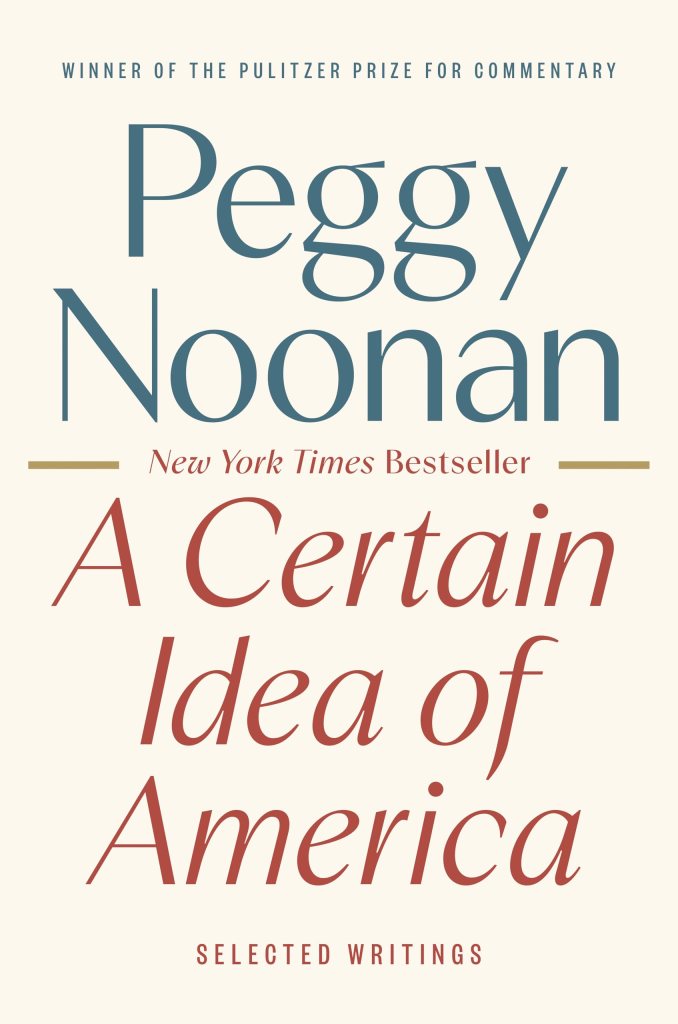
Peggy Noonan is one of the very few Republicans with whom I feel I could sit down and have a civil conversation about politics, history, and current events. My belief is affirmed after reading her book, A Certain Idea of America: Selected Writings, a collection of recent commentaries on politics, personalities, culture, and contemporary issues. Her writing is measured, thoughtful, and often insightful.
For instance, in a column written in 2019, Noonan offered advice to Joe Biden, attempting to dissuade him from running for president in 2020. Her words, in hindsight, appear not only as good counsel but also as prophetic given Biden’s mixed success as president:
“Your very strength – that you enjoy talking to both sides, that deep in your heart you see no one as deplorable – will be your weakness. You aren’t enough of a warrior. You’re sweet, you’re weak, you’re half daffy. You’re meh.”
Noonan stands as an outlier within the Republican Party. Her style of writing seeks to inform, inspire, and not inflame. She is no supporter of Trump. Even her criticism of Trump’s antics and leadership is measured—acerbic yet never descending into vitriol.
One passage in particular may encapsulate her sharp perspective on America’s present and future trajectory:
“In time, we’ll see you lose something when you go post-heroic. Colorful characters will make things more divided, not less. They’ll entertain, but not ennoble. And the world will think less of us – America has become a clownish, unserious country with clownish, unserious leaders – which will have an impact on our ability to influence events.”
This observation feels prescient and poignant, capturing a sense of national disquiet. Unfortunately, not enough Americans shared this view during the last election. Perhaps Noonan could have lent her rhetorical skills to Kamala Harris and the Democrats to sharpen their messaging.
While I don’t agree with all her views—for instance, I’m not as enamored with Billy Graham or Ronald Reagan as she is—I respect her opinions. Her prose is engaging, and the short commentaries, originally published in The Wall Street Journal, make for an easy yet thought-provoking read.
 Esot-eric