
I’ve never had much appetite for horror—neither on the screen nor on the page. Tales of cruelty, suffering, and human rot hold little charm for me. And yet, each morning, with a kind of reluctant curiosity, I scan the headlines. That’s where the real horror lives now—brewing not in some gothic castle, but in Washington, D.C..
Consider this week’s “trailers”:
About 6 in 10 say they try to avoid Trump news
U.S. debt tops 100% of GDP
Inflation spikes to 3.5% as conflict with Iran drives prices higher
The U.S. military was losing its edge—after Iran, everyone knows it
Americans struggle under rising health insurance premiums after Congress declines to extend tax credits
Trump delivers a word-salad response when asked about congressional approval for war
It would be comforting to dismiss all this as fiction. But unlike a novel by Stephen King, there is no final chapter, no closing of the book—only the uneasy sense that the plot is still unraveling.
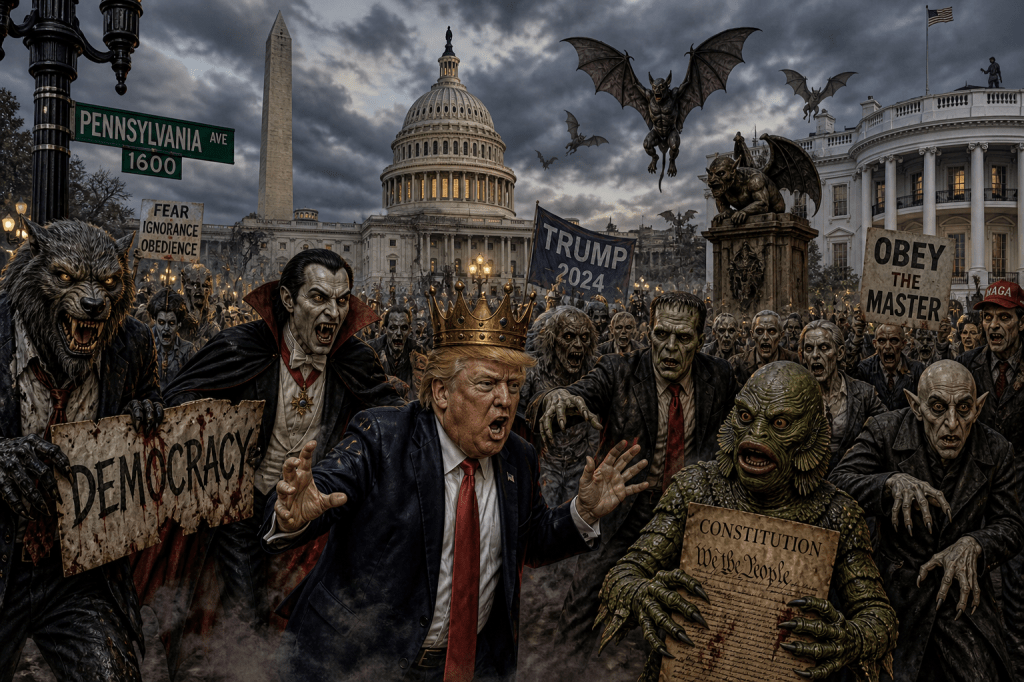
The bitter truth is this: the public, in its wisdom or folly, has had a hand in conjuring these monsters. Not with the dramatic panic of Martians descending from the skies, but with ballots cast, loyalties hardened, and reason often set aside.
In Congress, the spectacle borders on the servile. One is reminded less of statesmen and more of Renfield, ever watchful, ever obedient, fearful above all of displeasing the Master.
And the public? There is protest, yes—but it is largely polite, contained, almost quaint. Handmade signs. Chants that echo briefly and fade. No torches, no reckoning—just a low, persistent murmur of discontent.
Meanwhile, the monsters do what monsters do: they carry on, untroubled, perhaps even amused. The republic searches for its kryptonite—and has yet to find it.

