
Of the last fifty books I’ve read, forty came from my local library and ten from Kindle. I didn’t buy a single physical book in 2025. When I do purchase a Kindle title, I rarely pay more than $2.99. That number feels less like thrift and more like a verdict on how I now value books: still important, but no longer precious objects.
I wandered into Barnes & Noble twice this past year. Both times I walked out empty-handed. The books that were heavily discounted held no appeal, and the books I might have been interested in weren’t discounted at all. The store felt less like a literary crossroads and more like a museum gift shop—pleasant to browse, but disconnected from my reading life.
When I’m looking for something new to read, I rely on a small, familiar circle: The New York Times Sunday Book Review, Kirkus Reviews, or Goodreads review.
1929: Inside the Greatest Crash in Wall Street History–and How It Shattered a Nation by Andrew Ross Sorkin is the only current New York Times nonfiction bestseller I’ve read. I have no interest in the other titles on the list. The hardcover fiction list holds even less appeal; I haven’t read—and don’t intend to read—any of those books.
What surprises me most is not my indifference to bestseller lists, but how little conversation books generate anymore. I honestly can’t remember the last time someone recommended a book to me, or when I had a real discussion with another person about something we’d both read. Books seem to have slipped quietly out of our shared conversations.
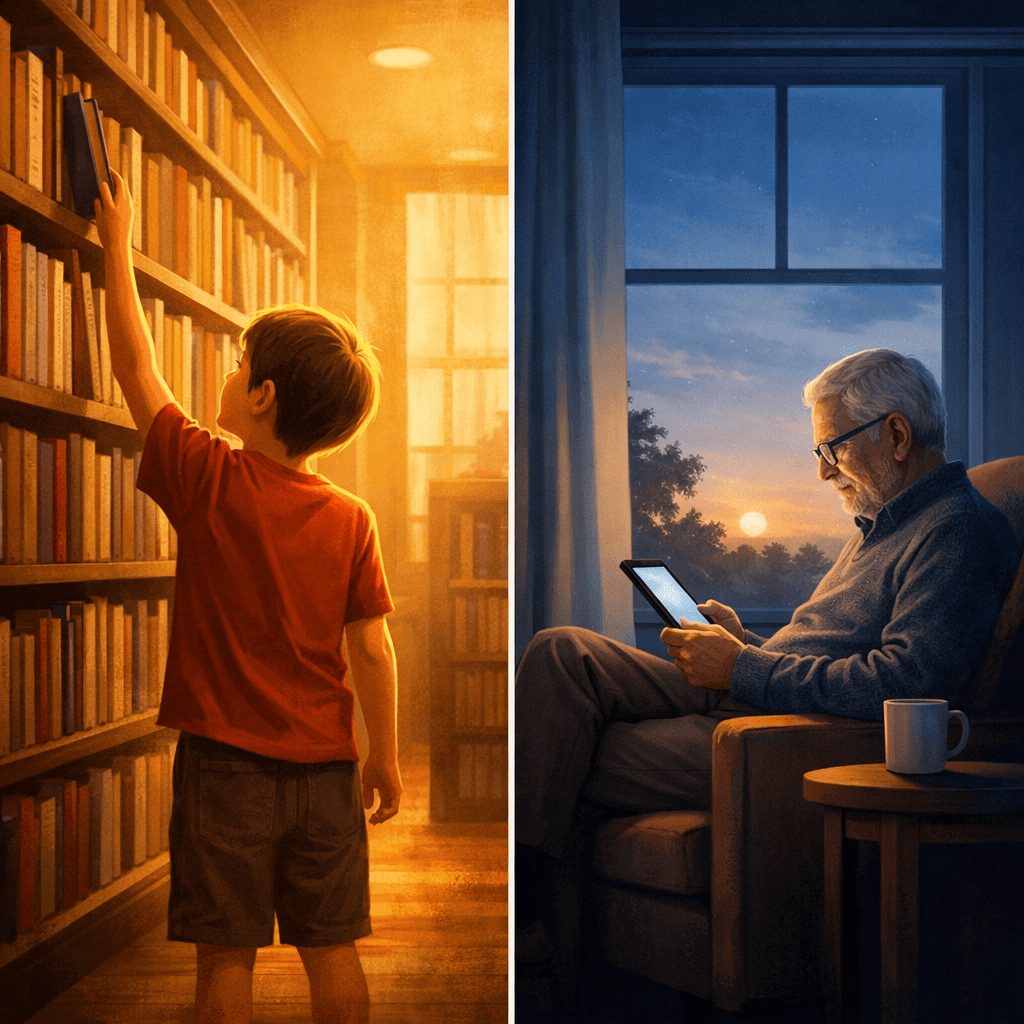
That feels especially strange when I think back to being ten or eleven years old, roaming the Pennsauken Library in search of the next Hardy Boys, Tom Swift, or Chip Hilton book. I wish I had even a quarter of the excitement I felt then—the sense of urgency, discovery, and possibility that came with finding the next volume in a series. Reading was once a small, private adventure that somehow felt enormous.
At seventy-three, reading is harder in ways that have nothing to do with motivation. My mind doesn’t focus for long stretches. My eyes tire quickly. Cataracts and floaters dull the sharpness of the page. And beyond the physical changes, there’s the persistent feeling that many books now trigger: been there, done that. As one gets older, interest naturally drains from subjects that once felt endlessly compelling—politics, sports, business, self-improvement, psychology, religion. Not because they don’t matter, but because their patterns repeat.
There’s also the sense that books—especially those about current events, politics, or celebrities—have lost some of their gravity. So much of their content is given away in advance through interviews, podcasts, op-eds, and promotional appearances that the book itself feels like an afterthought, a bound summary of things already half-known.
And yet, despite all of this, I keep reading. Maybe not with the hunger of a child or the ambition of a younger adult, but with a quieter persistence. The library card still works. The Kindle still lights up. And every now and then, a book manages to cut through the fatigue and familiarity, reminding me why reading mattered in the first place—and why it still does, even now.
 Esot-eric