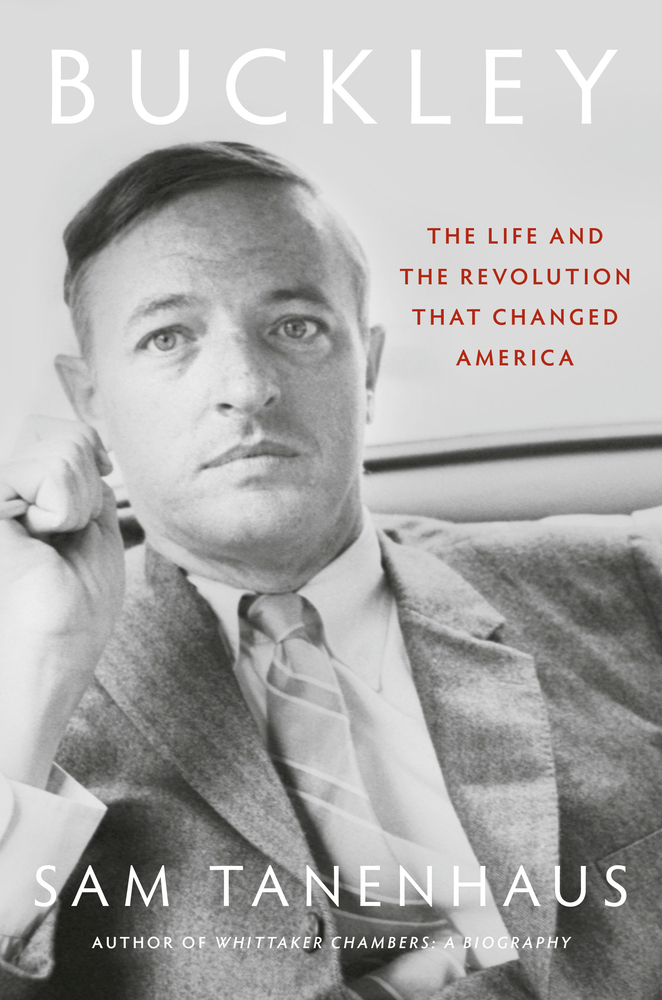
Review of Buckley: The Life and The Revolution That Changed America by Sam Tanenhaus

Sam Tanenhaus’s nearly 900‑page biography is a major investment of time, and it helps to arrive already curious about—or at least aware of—William F. Buckley Jr. and the post‑war conservative movement he helped shape. For readers who meet that threshold, the book proves surprisingly readable; for those who don’t, the dense historical detail may feel arduous.

Scope and Balance

Tanenhaus is both exhaustive and even‑handed. He neither canonizes nor demonizes his subject, instead cataloguing Buckley’s triumphs alongside his missteps. Critics may bristle at the close attention paid to family “warts,” especially the overbearing father, but the research is meticulous and the portrait persuasive.

Buckley’s Major Misjudgments

  • Foreign‑policy zigzags – Buckley opposed U.S. entry into World War II before Pearl  Harbor yet staunchly backed the Vietnam War.
  • McCarthyism and Watergate – He defended Senator Joe McCarthy and later downplayed Watergate, even championing conspirator Howard Hunt.
  • Civil‑rights resistance – Buckley was late to endorse full political rights for Black Americans, claiming many were unprepared for the franchise.
  • The Edgar Smith debacle – Perhaps his worst lapse: lobbying for the release of convicted murderer Edgar Smith, who soon attacked another woman. Charm and flattery clouded Buckley’s judgement, and basic due diligence was absent.

Admirable Qualities

Despite his blind spots, Buckley inspired loyalty. Friends—ideological allies and foes alike—describe his private warmth, generosity, and wit. His charitable giving was substantial and discreet, and he remained courteous to adversaries off camera.

Education and Talents

An indifferent early student who failed several prep‑school entrance exams, Buckley benefited from a cosmopolitan upbringing in Europe, becoming multilingual. At Yale he honed the dazzling rhetorical style that later defined Firing Line. A true polymath, he wrote gracefully, played concert‑level piano, skippered ocean races, debated ferociously, and chronicled his frenetic routines in the memoir Overdrive.

Personal Speculations

Tanenhaus briefly entertains Gore Vidal’s insinuations about Buckley’s sexuality but unearths no substantial evidence. The Buckley‑Vidal televised clashes, however, remain one of the book’s liveliest threads.

Blind Spots in Business

For all his verbal precision, Buckley was financially inept. National Review survived only through repeated infusions from his father and sympathetic backers; balance sheets mystified him, and bankruptcy loomed more than once.

How the Book Changed My View

I once saw Buckley as an unalloyed Renaissance man. Tanenhaus complicates that picture, revealing antisemitic streaks, chronic resistance to civil rights, and a habit—memorably skewered by Yale philosopher Paul Weiss—of sounding authoritative on books he hadn’t read. In the end, Buckley emerges as brilliant but fallible, magnetic yet blinkered—a man whose revolution reshaped American conservatism while mirroring its contradictions.

Verdict

For readers already engaged with post‑war political history, Tanenhaus offers a definitive, engrossing study. Newcomers to Buckley may wish to sample his columns or television debates first; only then will they fully appreciate the nuance—and magnitude—of this sprawling biography.
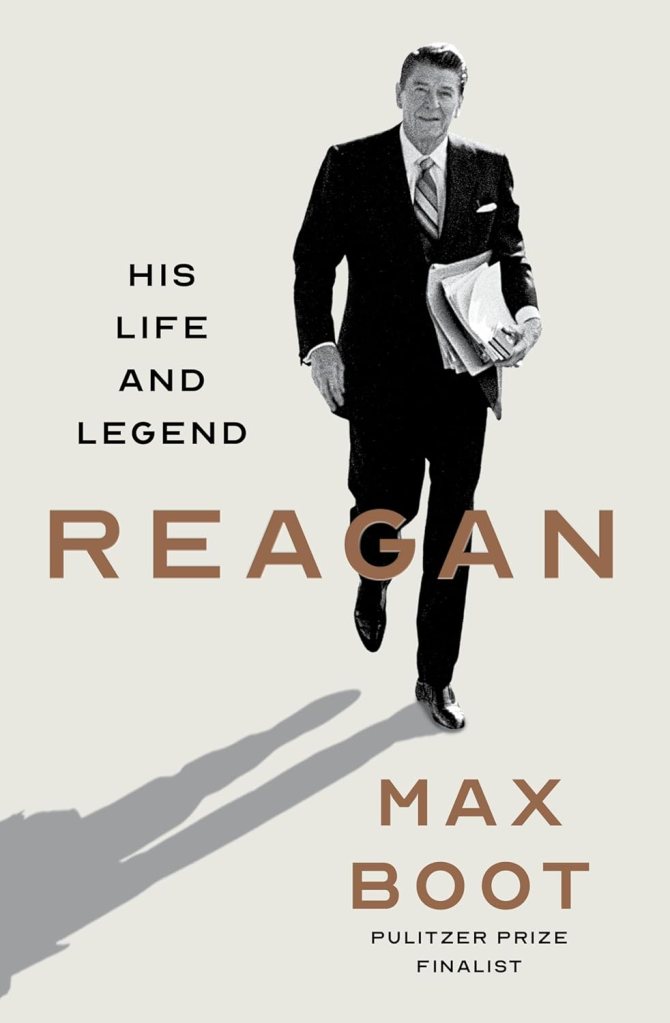
Reagan: His Life and Legend by Max Boot (Book Review)


Max Boot’s biography, Reagan: His Life and Legend, offers a well-written and balanced examination of Ronald Reagan as President, Governor of California, husband, and father. While the book sheds light on Reagan’s admirable traits, it doesn’t shy away from his flaws, making it a nuanced portrayal that might not have pleased Reagan or his wife, Nancy, if they were alive to read it.

Reagan’s admirers—particularly those who regard him as one of the greatest U.S. Presidents—may find aspects of this book unsettling. While Boot acknowledges Reagan’s good qualities, he also highlights numerous shortcomings, presenting a more complex figure than the idealized version often celebrated.

The biography reinforced my belief that Reagan, though a decent man, was neither a particularly intelligent individual nor an exceptional leader. He lacked intellectual curiosity, with Reader’s Digest reportedly being his preferred reading material. Reagan, at heart, was an actor, and much of his success stemmed from his ability to follow direction—something he desperately needed throughout his political life.

One quality I genuinely admired in Reagan was his courage following the 1981 assassination attempt by John Hinckley. His ability to maintain a sense of humor even as he faced death was truly inspiring.

Reagan’s presidency benefited immensely from the presence of highly skilled advisors. For instance, Jim Baker, widely regarded as the best Chief of Staff in presidential history, played a pivotal role in keeping the administration on track. To Reagan’s credit, he recognized his limitations and leaned heavily on his team for guidance. Similarly, he often sought advice from Nancy, who was both his greatest supporter and, at times, a source of controversy in his life.

The book, at 731 pages, is lengthy but flows efficiently, offering a comprehensive look at Reagan’s life. Boot’s writing is engaging, making the biography an easy and compelling read despite its depth.

While there are faint parallels between Reagan and Donald Trump, I would caution against drawing too many comparisons. Reagan’s legacy, while flawed, is distinct in character and style from Trump’s presidency.

However, the book is not without its omissions. Boot largely sidesteps critical moments and controversies that shaped Reagan’s legacy. There’s no mention of the bombings of the U.S. Embassy, the Embassy annex, or the Marine barracks in Beirut—or the paralyzing indecision that followed. Likewise, the humiliating hostage crisis in Lebanon, the Iran-Contra affair, and the diversion of funds to the Contras are conspicuously absent.

Equally glaring is the lack of discussion on domestic issues, including scandals involving savings and loan regulators, the Department of Housing and Urban Development, and other government agencies. Boot also neglects to address Reagan’s rollback of civil rights laws, his failed nomination of Robert Bork to the Supreme Court, or the infamous visit to Bitburg Cemetery. The administration’s tax cuts, social welfare reductions, and their role in growing income inequality and the hollowing out of the middle class are similarly omitted.

On foreign policy, Boot overlooks Reagan’s apathy toward the AIDS pandemic, his opposition to sanctions on South Africa, and the dangerous escalation of tensions with the Soviet Union during the early 1980s fueled by his military buildup and incendiary rhetoric.

While Boot succeeds in painting a vivid picture of Reagan’s life and personality, these omissions leave the portrait incomplete. For readers seeking a full accounting of Reagan’s presidency, these gaps may feel significant. Nonetheless, the book offers a fascinating exploration of Reagan’s life, warts and all.


Charlie Hustle: The Rise and Fall of Pete Rose, and the Last Glory Days of Baseball by Keith O’Brien (Book Review)

My rating: 5 of 5 stars

I thought this was a fair and sensitive biography of a complicated and controversial man. This book was excellently researched and the author was able to get cooperation of many of the players, family and even mistresses of Pete Rose. The book confirms to me that Pete was a vain, greedy, self-serving and not a very smart man, not someone who you would want as a friend or be around with.

The author documents Rose’s playing exploits on the baseball field, which were legendary and his off field foibles which were many. Well I think it was easy to admire Pete Rose the player, it must’ve been very hard to admire Pete Rose the man. It’s as if he never grow up.

All that being said, I think the Pete Rose deserves to be in the Hall of Fame. Yes his gambling, particularly on baseball, may be disqualifying. However I have not read or heard of any evidence where he directly or indirectly affected the performance or results of a baseball game. What Pete Rose achieved on the field, he achieved largely on his own merits. I did not read of any evidence that he took steroids or performance-enhancing drugs.

This book is an excellent read for any sports fan but especially for this reader as I remember watching Pete Rose’s career, particularly when he played for the 1980 Phillies who won the World Series that year.

Review: King-A Life by Jonathan Eig

As I immersed myself in this captivating biography, a whirlwind of emotions, memories, and contemplations flooded my mind. Recalling my teenage years, I realized how little I truly comprehended the magnitude of the civil rights struggle, especially in the deeply segregated South during the 1960s. Although I had heard of Martin Luther King Jr. as a young boy, I had no inkling of the profound impact he would have on our nation’s history.

This book, a compelling account of King’s life, stirred within me a deep sense of shame for the violence and hatred inflicted upon Black individuals due to their skin color and the prejudiced perceptions held by many white people. The author’s vivid descriptions of the bombings that claimed innocent lives, the brutal attacks on peaceful demonstrators by police dogs, and the countless murders committed by racists and law enforcement are a haunting reminder of the dark stain on our collective history.

Undeniably, Martin Luther King Jr. was an extraordinarily brave man—perhaps one of the bravest. Despite being subjected to jail, beatings, threats, and mob attacks, he remained steadfast in his commitment to nonviolence. The author adeptly captures King’s experiences, leaving readers in awe of his unwavering equanimity in the face of such brutality.


Moreover, the book delves into King’s personal flaws, including accusations of numerous affairs. The author, Eig, does not shy away from these indiscretions. It is revealed that King was targeted by the FBI through wiretapping and attempts to blackmail him with incriminating information. The book effectively dispels accusations of King being a communist sympathizer, providing compelling evidence to the contrary.

King faced adversaries from all angles: the FBI, racist politicians and officials, the police, fellow Black individuals who disagreed with his nonviolent philosophy, as well as ministers, church leaders, and conservative commentators who opposed his influence. Even Presidents Kennedy and Johnson, while initially ambivalent about King’s politics and impact on the civil rights movement, became entangled in a complex relationship with him. Johnson’s sentiments towards King soured when the latter publicly voiced his opposition to U.S. involvement in the Vietnam War.

Meticulously researched and skillfully written, this biography stands as the pinnacle of my reading experiences this year. It effortlessly transports readers into the turbulent era of the civil rights movement, providing a profound understanding of the indomitable spirit of Martin Luther King Jr. and the transformative power of his vision.

In conclusion, this book is an absolute must-read, capable of evoking an array of emotions and leaving a lasting impact. I wholeheartedly give it five stars, and then some.