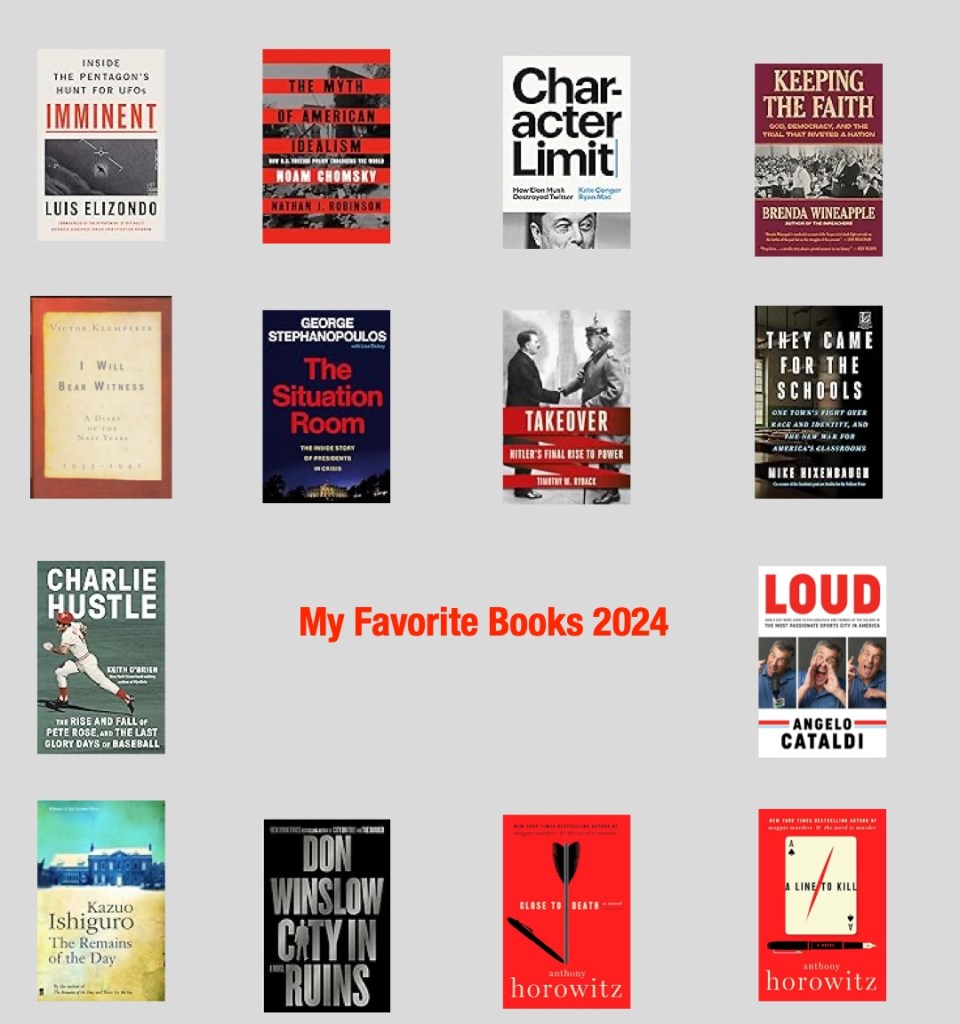
In 2024, I’ve read 60 books, and these are my top 12—representing the best 20%. Before diving into a book, I perform due diligence, as I want to make the most of my reading time. I gravitate toward nonfiction and typically source my books from the library or Kindle, rarely purchasing hardcovers or paperbacks anymore.
My reading tastes are eclectic. This year, I found myself delving into several books about German history between World War I and World War II, when Hitler rose to power. Perhaps this was influenced, consciously or not, by the recent presidential election results.
The books on this list stood out as informative, thought-provoking, or entertaining. While I may sometimes favor books that align with my existing beliefs, I actively seek perspectives that challenge me and shake up the cobwebs in my thinking.
I can’t get too excited or surprised about Joe Biden providing a pardon for his son Hunter. What does Joe have to lose? He’s not running for President any more and he certainly does not owe the Democratic party any explanation. ***
As I was reading this essay, I nodded my head as this section captured my attitude about politics, the election and Trump…
Not long after the election, I had a conversation with a relative in which she said, in so many words, that she’d given up. She wasn’t worried for herself and her husband; they would be fine, financially and otherwise, whatever Trump did; they were safe within the bubble of professional-class privilege. Yes, she was sad that her children and grandchildren would inherit a worse world now—less-free, more violent, more subject to the ravages of climate change—than would have been the case, she believed, had Trump lost, but she couldn’t take responsibility for that. If the American people were stupid enough to vote for this guy, then they deserved whatever they got, and she wasn’t going to care anymore. She would look out for her own as best she could, and that’s it.
Biden Gives Up On America Noah Millman
***
At my age, I am content to have seen the best of America. I regret that this experience will not be passed down to future generations. ***
Off the top of my head, a partial Cabinet I’d nominate if I was President. Sorry no Fox commentators or former employees.
Attorney General: Lynn Cheney
Secretary of Treasury: Jamie Dimon
Secretary of State: Mitt Romney
Secretary of Defense: Mark Milley
Secretary of Education: Michelle Obama
Administrator of Small Business and Entrepreneurship: Seth Godin
Secretary of Homeland Security: Chris Christie
Secretary of Veterans Affairs: Phil Murphy (current NJ governor)
Director of OMB: Pete Buttigieg
Secretary of Health and Human Services: Mark Cuban
Director of National Intelligence: Jethro Gibbs (I’m kidding)
Press Secretary: Kara Swisher
***
It somewhat amuses me that fans urge the firing of a football coach, who has an excellent win-loss season record but makes the unforgivable mistake of losing a game to a bitter rival. But yet they will show infinite patience by re-electing politicians of poor performance, character and results. ***
I think as you grow older your Christmas list gets shorter because the things you want can’t be bought.
As I contemplated last week’s election results, with all their dreary portents for the years ahead, I was reminded of the lament of a Roman senator—his power fading, his influence diminished, as Caesar’s star ascended:
“I shall tend my fish, study philosophy, and comport myself for death. This republic holds no place for me any longer.”
(Conspirata: A Novel of Ancient Rome, Robert Harris)
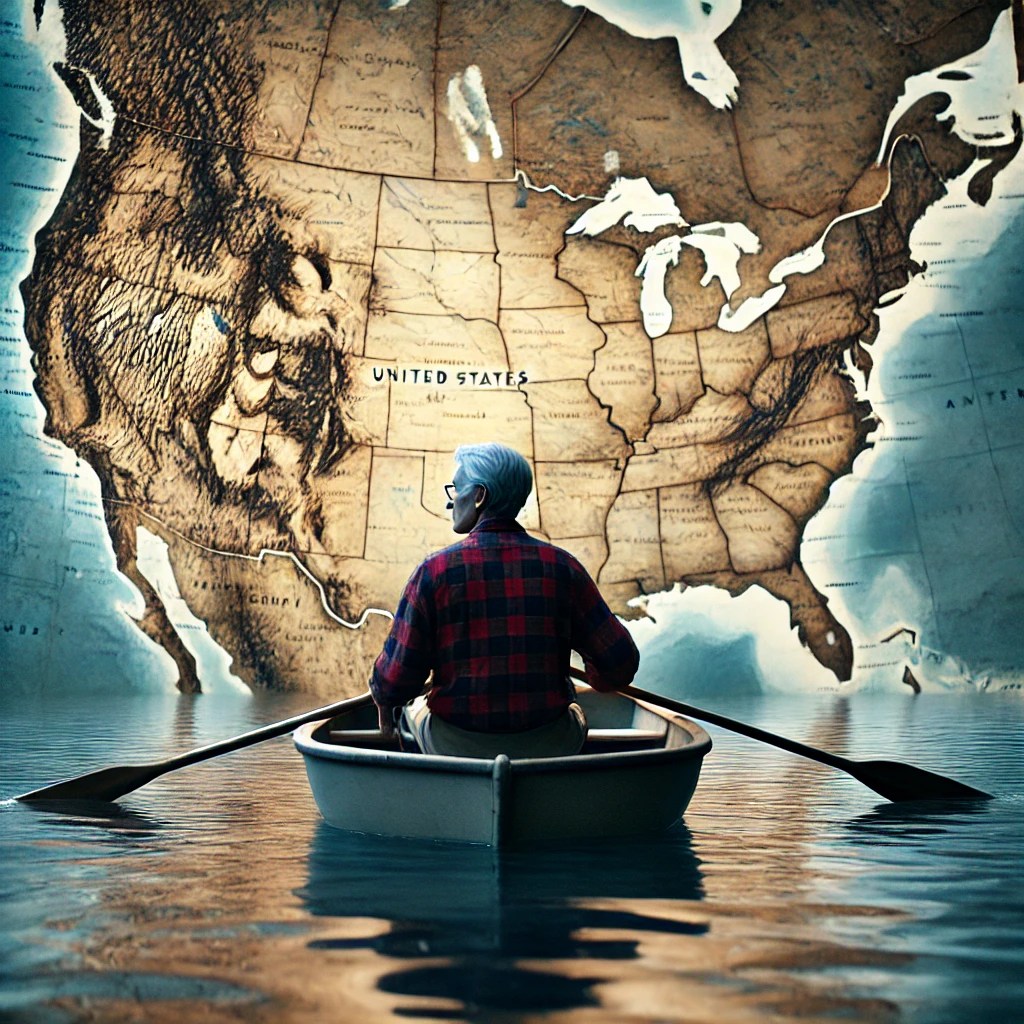
And then I asked myself, “Does this country hold a place for me?
The question is not rhetorical. At this late point in my life, I find myself at odds with the culture, principles, and trajectory of the nation I once revered. My beliefs—anchored in reason, history, and an old-fashioned sense of duty—seem increasingly alien in a land preoccupied with spectacle over substance.
A Discontented Creed
Consider, for example:
Religion in Politics: As an agnostic, I believe that the pulpit should stay far away from the podium. Ministers and pastors claiming divine insights on policy strike me as charlatans with better wardrobes. Faith should inspire personal virtue, not dictate public policy.
Loyalty to Allies: In diplomacy and in life, I value loyalty. A true ally stands by you in both triumph and trial. Yet we seem to cast off old friends—countries and principles alike—as if they were expired coupons.
Science and Competence: I favor facts over feelings, competence over pretense. But ours is an age where bombast outweighs expertise, and the loudest voice is mistaken for the wisest.
Reckoning with Our Past: This country’s history is a patchwork of greatness and failure. We have saved nations and crushed dreams, built monuments to liberty and ignored the cries of the oppressed. I believe in confronting our flaws honestly, not whitewashing them with comforting myths—or worse, erasing them entirely in the name of “offense.”
Respect for Women: Here is a simple proposition: anyone who assaults, demeans, or dehumanizes women is unfit for public office. Full stop. Yet, 52% of white women voters apparently find this a negotiable standard. I am baffled—and disgusted.
Character Matters: Good judgment, responsibility, empathy, and moral clarity—these should be the cornerstones of a person’s character. Increasingly, though, they are dismissed as relics of a bygone era, sacrificed on the altar of “winning at all costs.”
A Nation Entertained to Death The deepest cut of all, perhaps, is that we have traded informed citizenry for the hollow thrills of reality-show governance. Americans now crave entertainment over enlightenment. The morning chatter of Joe and Mika or the smirking commentary of Bill Maher may pass for insight, but to me, they feel like reruns of Neville Chamberlain in Munich, mistaking platitudes for policy while calamity looms.
The Final Reckoning
So here I am, like that Roman senator, contemplating my fish and philosophy. The republic of my youth—the one I fought to believe in—is unrecognizable.
It is a strange thing to feel like an exile in one’s own country, but perhaps the true patriots are always exiles. We stand apart, unwilling to settle for the tawdry spectacle on offer, and dream of something better—a nation of character, competence, and courage.
The received wisdom insists that the United States is the tireless champion of democracy and human rights—a paragon of “Wilsonian idealism” and “American exceptionalism.” Noam Chomsky’s and Nathan J. Robinson’s The Myth of American Idealism: How U.S. Foreign Policy Endangers the World eviscerates this comforting narrative. The authors argue that U.S. foreign policy aligns not with noble ideals but with the strategic and economic interests of domestic elites. The result? A history marred by moral indifference, lawlessness, and a ruthless adherence to what Adam Smith once called “the vile maxim of the masters of mankind: All for ourselves and nothing for other people.”
This is not a book for the faint of heart or those who prefer their history wrapped in the star-spangled illusions of Hollywood. It is a damning indictment of U.S. actions abroad, examining case studies from Vietnam to Iraq, Chile to Palestine. The authors spare no sacred cow, exposing the contradictions between America’s lofty rhetoric and its sordid realpolitik.
I approached this book with some skepticism. Chomsky’s political ideology leans further left than my own, and I was wary of polemics. Yet his analysis aligns uncomfortably well with historical evidence. Take, for instance, his examination of U.S. support for Israel. The one-sided nature of American backing—military aid, UN vetoes, and tacit approval of Israeli excesses—has devastated Palestinians while fueling anti-American animus across the Middle East. Chomsky is clear-eyed about the complexities: there are cruel men on both sides of the Israeli-Palestinian divide. But the suffering of millions of innocent Palestinians, bombed, maimed, and displaced, is a humanitarian tragedy in which the United States is deeply complicit.
Equally scathing is his treatment of the Vietnam War—a blunder of monumental proportions. The authors chronicle how leaders lied to the public, sent thousands of soldiers to die needlessly, and plunged the nation into chaos. As someone who lived through that era, I can attest to the war’s divisive impact. For younger readers, this history is essential reading, a sobering reminder of how disastrously foreign policy can go astray when guided by hubris and deceit.
The prose is not exactly uplifting, but it is brutally clarifying. Are we, as Americans, driven by democracy and justice—or by greed and oil? The book challenges readers to reckon with a less flattering version of our heritage, one that calls for reflection rather than whitewashing.
No matter where you fall on the political spectrum, The Myth of American Idealism will provoke thought, discomfort, and perhaps a much-needed reckoning. If you prefer fairy tales about America’s benevolence, look elsewhere. For those willing to confront uncomfortable truths, this book is indispensable.
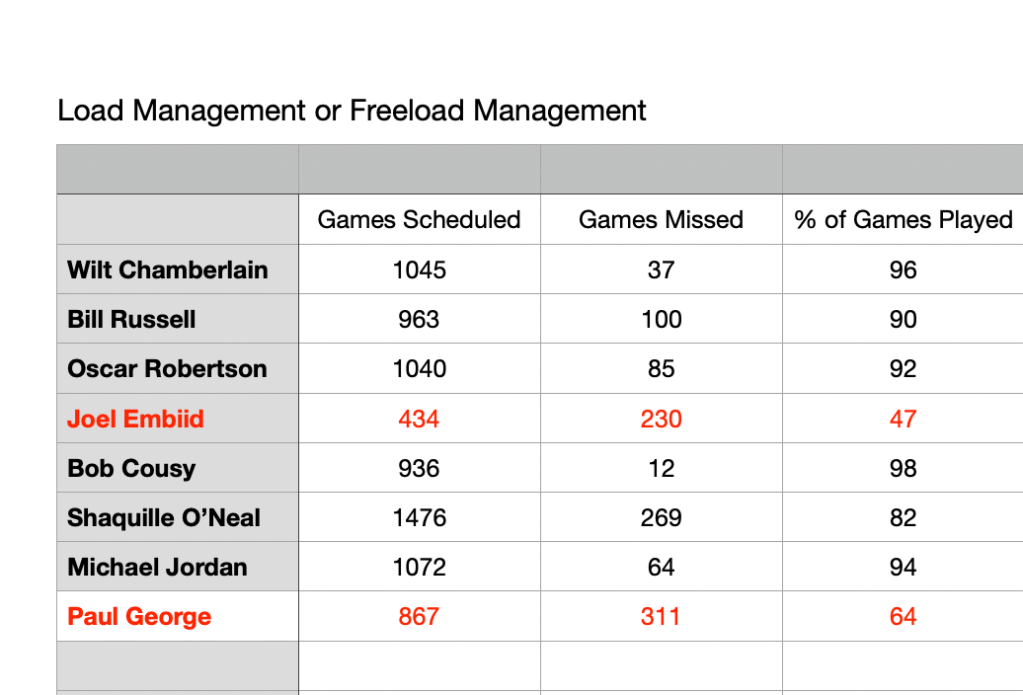
NBA players in the 1960s and 1970s did not have access to trainers, machines, whirlpools, massages, and other current technologies to recover from games. Plus travel was not as comfortable or as convenient for players 50 or 60 years ago. However, despite an 82 game schedule, like today, they did not take days off and they played through minor injuries. There was no “load management” if you played for Red Auerbach or Bill Russell.
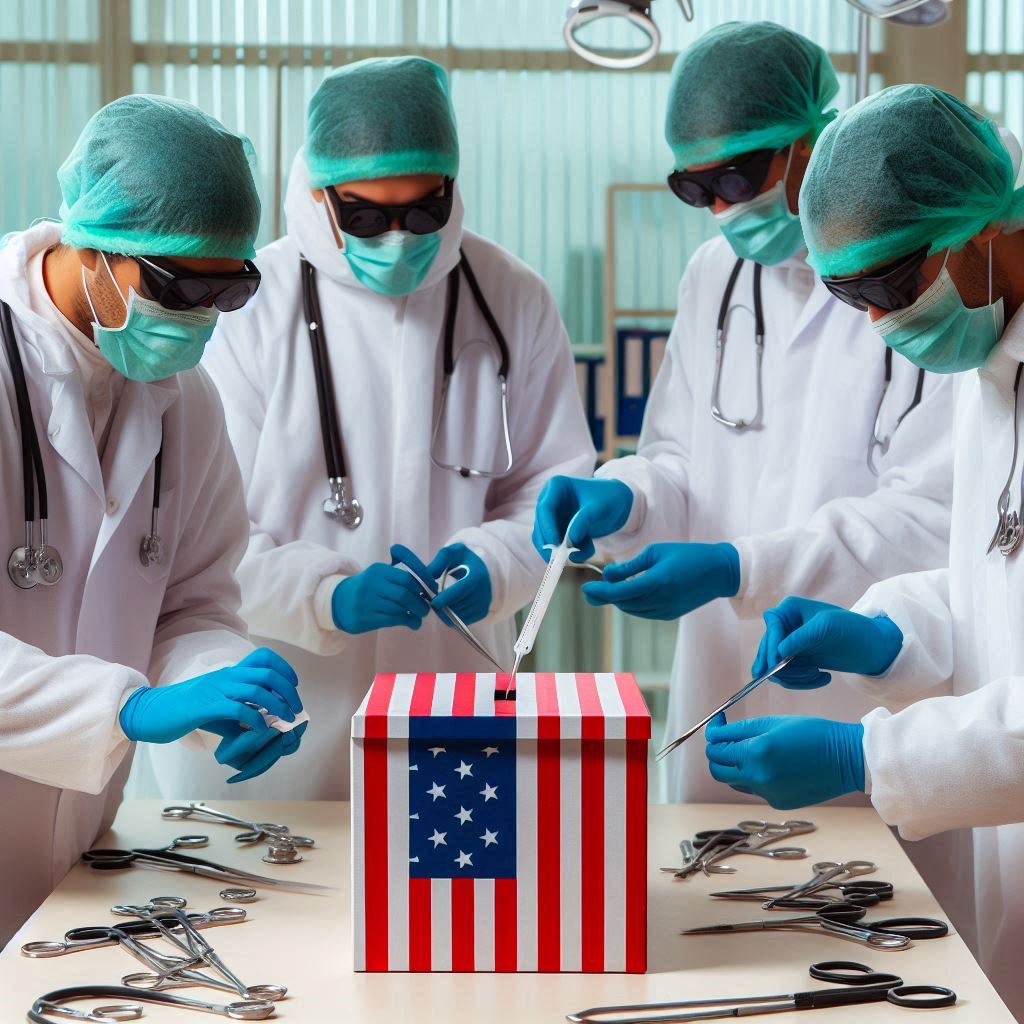
For decades, America’s democratic process has shown signs of decline. On November 5, 2024, that decline may have reached a fatal turning point. Donald Trump was re-elected as President, marking—some would say—the final blow to a weakened democracy, neglected by its stewards and estranged from its founding principles.
Three pillars are essential for democracy: (1) a transparent, fair election process, (2) qualified candidates, and (3) an informed electorate, capable of choosing wisely. Yet, in today’s climate, who genuinely trusts the judgment of the American voter?
Consider this: The stock market is booming, unemployment is at a historic low, and gas prices are stable. The Biden administration was handling critical issues from Middle Eastern conflicts to Russian aggression against Ukraine. But in this era, good governance and stability didn’t win the day.
Trump’s victory stunned many, especially with his support among white women—53% of whom preferred Trump over Harris, despite his controversial record. These female voters chose a candidate from a party poised to limit their rights, including access to abortion. How did we arrive here?
Leading up to election night, the media portrayed Trump’s campaign as a dwindling force, with sparse rally turnouts and low energy, contrasted by the enthusiastic crowds at Kamala Harris’s events. Yet, in the end, reality defied expectations. Were these rallies misreported, or did the media miss the sentiment driving Trump’s base?
For those disappointed by the outcome, here’s a light-hearted note: maybe it’s time to book a one-way ticket before January 20, 2025. Think Liz Cheney, Robert De Niro, Jimmy Kimmel, Hillary Clinton, and others at odds with the new direction of our country.
Hitler’s rise in 1933-34 has long fascinated historians. He exploited public discontent, channeling German frustrations into loyalty to his cause, much as Trump does today. As we brace for the next four years—or more—it’s clear that we are living in historic, if challenging, times.
The best possible result from election day would be Kamala Harris winning the popular vote by greater than 4% and easily winning the electoral college. If that doesn’t happen, expect another 60 to 90 days of political turmoil from lawsuits, appeals, allegations of election fraud and sporadic acts of violence that will surpass the chaos of January 6, 2021.
***
I don’t need polls to tell me the definite “Losers” in this election: civility, truth, integrity, candor and self-respect.
***
This is the 18th presidential election of my lifetime. I don’t remember anything about my first two elections (Dwight Eisenhower in 1952 and 1956.) Certainly a different time regarding morals and acceptable behavior in politics in my youth. For example, I don’t think that a candidate who was found liable for sexual assault or being a convicted felon awaiting sentencing, would even get a whiff at being a candidate for national office in 1960.
***
If Kamala loses, I expect to read countless articles and criticisms on how she ran her campaign. Based on my observations, she ran a fairly positive campaign that exhibited a lot of enthusiam and energy.
***
Now we leave it up to the judgement of voters… why does this make me so apprehensive and discouraged?
I voted in my 13th Presidential election this morning. This woman represents the best chance that I will still be able to vote in my 14th election in 2028, God willing…
Interesting question or admission from Fox News host Bret Baier in his “debate” with Kamala Harris yesterday…
At one point, Bret Baier asked Vice President Harris what she made of such a large number of Americans expressing support for former President Trump, while the two candidates remained largely close in polling, asking her, “Are they stupid?”



 Esot-eric