My pickleball friends will understand this graphic. In many pickleball meet-ups, a player needs to sign in at a dedicated website (e.g. meetup.com)and at an appointed reservation time, press “Attend” to reserve their spot. Many times, if you don’t sign up in the first 10-15 seconds, you may find yourself on a waitlist with dozens of other players. Such is the popularity of pickleball and the need for more places to play.
Washington DC, that dismal swamp of mediocrity and mendacity, approaches the hiring of its high officials with a flair unmatched in any sane business enterprise. In the sober halls of a corporation, the applicant who arrives reeking of drink, armed with a résumé bereft of accomplishment, and crowned with the dubious laurels of personal absurdity would be unceremoniously ejected. Yet in our Capitol, such a man or woman, smirking contemptuously, as they avoid answering questions or explaining past comments is not merely tolerated but fêted as a paragon of public service. A carnival of absurdity, and the joke, as always, is on us.
On January 20 at noon, the curtain rises, the stage lights dim and the horror show begins.
Behold the mighty pageant of our age: politicians, pundits, and captains of industry prostrate not before the divine, but grovel in servility before our self proclaimed Caesar, trading their spines for a pat on the head and scraps from his table.
I Saw the Light Still playing “lights out”—literally—at St. Matt’s pickleball. No word yet on when the new lights will be installed. Despite the dim conditions, meetups remain popular, with players showing up under less-than-ideal circumstances.
It’s Not You, It’s Me Like speed dating, partner switching in professional pickleball has become the norm. Even Ben and Colin Johns, dominant champions for years, are splitting up in 2025 to pursue new partnerships. Many pros are following suit, aiming for gold medals and bigger paydays. Pair splitting also happens at the recreational level, but with much less drama.
Offers I Could Refuse PickleballTV, the online media service, now offers subscriptions: $5.99/month or $59.99/year. While I enjoy watching pickleball online, PickleballTV doesn’t yet match the production quality of Tennis Channel. From a business perspective, it feels premature to charge for a service that’s still refining its offerings.
Meanwhile, MeetUp has introduced MeetUp+ with subscription features that were previously free. Since being acquired by Bending Spoons last year, the platform feels outdated and in need of a refresh—not exactly a premium experience worth the added cost.
What Goes Up, Must Come Down Pickleball’s growth is impressive, but industry players should tread carefully. If I were a paddle manufacturer, coach, or facility owner, I’d focus on competitive pricing, branding and quality. Just like the stock market, a “correction” could be on the horizon, forcing adjustments in strategy.
Crystal Ball Outlook An analysis of DUPR scores shows the median player rating at 3.29, meaning half of players score higher and half lower. I predict the median will rise to around 3.50 in the next five years as younger players pick up the sport in schools and colleges.
To Lob or Not to Lob—No Longer the Question Lobbing in pickleball can be as polarizing as playing with the sun in your eyes or battling high winds. Offensive lobs are often seen as unfair and even risky in social games, where players can injure themselves chasing down balls. I’ve decided to reserve lobs for defensive purposes in casual matches, but in a competitive game, all bets are off!
Takin’ Care of Business The business side of pickleball risks overshadowing the sport itself. Pro pickleball is a mess, with issues like financial instability, disputes over illegal paddles, ever-changing rules, and player misconduct. Thankfully, the recreational game has largely been insulated from these woes—for now.
Three Best Pickleball Podcasts
King of the Court with Tyler Loong and Jimmy Miller
PicklePod with Zane Navratil and Thomas Shields
Tennis Sucks with Travis Rettenmaier and Graham D’Amico
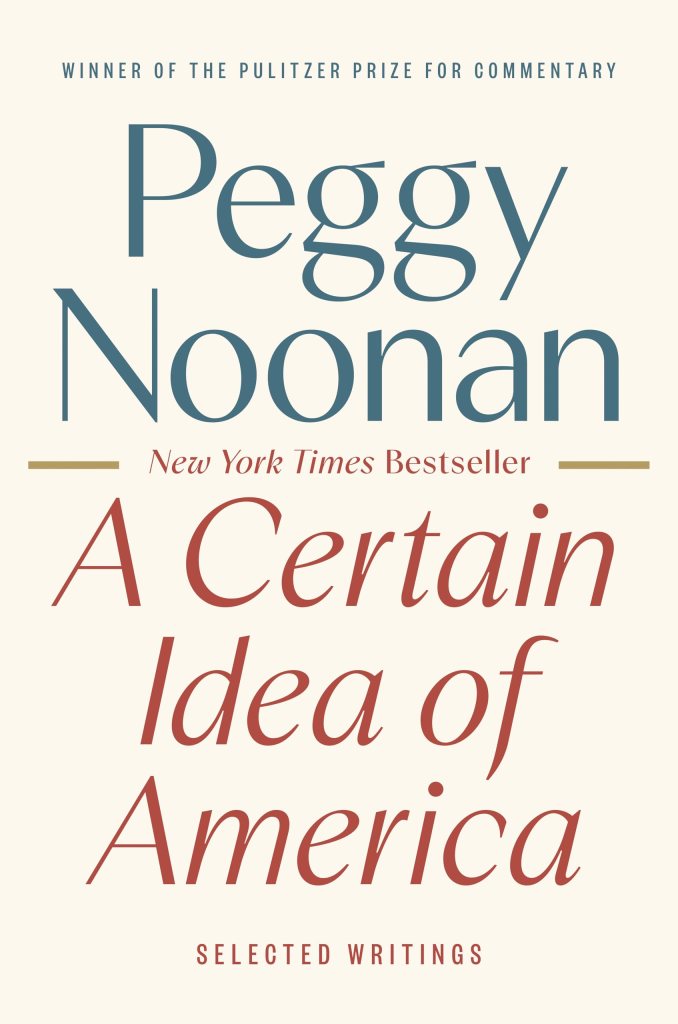
Peggy Noonan is one of the very few Republicans with whom I feel I could sit down and have a civil conversation about politics, history, and current events. My belief is affirmed after reading her book, A Certain Idea of America: Selected Writings, a collection of recent commentaries on politics, personalities, culture, and contemporary issues. Her writing is measured, thoughtful, and often insightful.
For instance, in a column written in 2019, Noonan offered advice to Joe Biden, attempting to dissuade him from running for president in 2020. Her words, in hindsight, appear not only as good counsel but also as prophetic given Biden’s mixed success as president:
“Your very strength – that you enjoy talking to both sides, that deep in your heart you see no one as deplorable – will be your weakness. You aren’t enough of a warrior. You’re sweet, you’re weak, you’re half daffy. You’re meh.”
Noonan stands as an outlier within the Republican Party. Her style of writing seeks to inform, inspire, and not inflame. She is no supporter of Trump. Even her criticism of Trump’s antics and leadership is measured—acerbic yet never descending into vitriol.
One passage in particular may encapsulate her sharp perspective on America’s present and future trajectory:
“In time, we’ll see you lose something when you go post-heroic. Colorful characters will make things more divided, not less. They’ll entertain, but not ennoble. And the world will think less of us – America has become a clownish, unserious country with clownish, unserious leaders – which will have an impact on our ability to influence events.”
This observation feels prescient and poignant, capturing a sense of national disquiet. Unfortunately, not enough Americans shared this view during the last election. Perhaps Noonan could have lent her rhetorical skills to Kamala Harris and the Democrats to sharpen their messaging.
While I don’t agree with all her views—for instance, I’m not as enamored with Billy Graham or Ronald Reagan as she is—I respect her opinions. Her prose is engaging, and the short commentaries, originally published in The Wall Street Journal, make for an easy yet thought-provoking read.
I looked back on my 2024 predictions and though I did nail that Joe Biden would withdraw from running for President. I did not guess correctly that Donald Trump would also withdraw and with a pardon. Despite my predictions, Twitter did not go dark and the Russia-Ukraine war did not end. I did not fare well in my sports predictions.
However, I am back with my 2025 predictions. My crystal ball looks a bit gloomy and stormy…
Image by AI
With a cabinet with incompetent and mediocre appointees by President Trump, brace for turmoil during any emergency or major national issue. Expect significant mismanagement in response to natural disasters (hurricanes) or medical crises (epidemics), resulting in widespread public frustration and delays in assistance.
I expect an unsatisfactory resolution in 2025 to the Ukraine-Russia war now that Trump is President. I anticipate a huge FU to our European allies who have made significant economic and financial sacrifices who have assisted Ukraine. My sense is that Europe and NATO will have little influence or say how the war is resolved.
The mainstream press will continue to erode. Layoffs among journalists will rise, and investigative reporting will wane due to mounting fears of libel lawsuits. The result? A media landscape increasingly dominated by shallow reporting and sensationalism with declining viewership and subscription.
With America’s collective attention span shrinking, network TV shows, many sports events (including the NBA), and news programs will see further declines in audience engagement. Streaming platforms and niche content will solidify their dominance as traditional formats struggle.
Iran is poised for more liberal reforms. Humiliated by its ongoing struggles with Israel and diminishing influence in the Middle East, internal pressures will drive gradual social and political changes, signaling a shift away from strict authoritarianism.
Taylor Swift and Travis Kelce will become engaged this year. Hedging my bets if this means they will get married.
The 76ers will inch into the play-in round of the NBA Championship playoffs where they will lose in the first round. Joel Embiid will not play due to injury. Process #2 begins with the firing of Nick Nurse and the trade of Embiid after the season.
Christianity in America will increasingly shift focus from spiritual worship to political and cultural conservatism. Expect legislation at both state and federal levels aiming to roll back rights on abortion, birth control, and civil rights for LGBTQ individuals, women, and racial minorities, with the Supreme Court playing a pivotal role.
2025 will bring further credible evidence of extraterrestrial activity. Governments worldwide will grapple with the implications, leading to heightened discussions about national security and military preparedness in the face of potential unknown threats.
Neither current NFL favorites, Kansas City or Detroit will win the 2025 Super Bowl.
There will be similar concerns about Donald Trump’s physical and mental decline similar to the experiences about Joe Biden. Joe’s issues were obfuscated by the First Lady, Jill. Trump will have not have similar cover from Melania.
With increasing dissatisfaction among Democrats and moderates, a new third-party movement will gain momentum, fueled by widespread dissatisfaction with the two-party system, but it will face significant hurdles in gaining electoral traction.
I have no idea of the number of Christmas presents that I have received in my life. I do recall that the Christmas presents when I was very young were relatively modest. My memory of these pictures are that I was age 6, and were taken a few months before my father died of a heart attack. I was very excited to receive possibly my first piece of technology, a pocket watch.
My recollection was that my parents were very surprised when I was in first grade how quickly I picked up basic math and knew how to tell time. The picture on the left shows my happiness at getting a pocket watch and the picture on the left shows how dapper I looked with the pocket watch.
I must confess that Christmas is pretty much a sad day for me. Most of my family members have died, including my parents and my sister who is shown at age 2. I vaguely remember that we used to get a small Christmas tree and that I would help put tinsel on the branches. There was a Christmas village surrounding the base of the tree as well as a Lionel track and train set. There’s nothing like this smell of a real Christmas tree!
* On Oct. 30, 1938, Orson Welles and his Mercury Theatre broadcast the infamous “War of the Worlds” on the CBS radio network, reporting that aliens had invaded Grovers Mill, New Jersey.
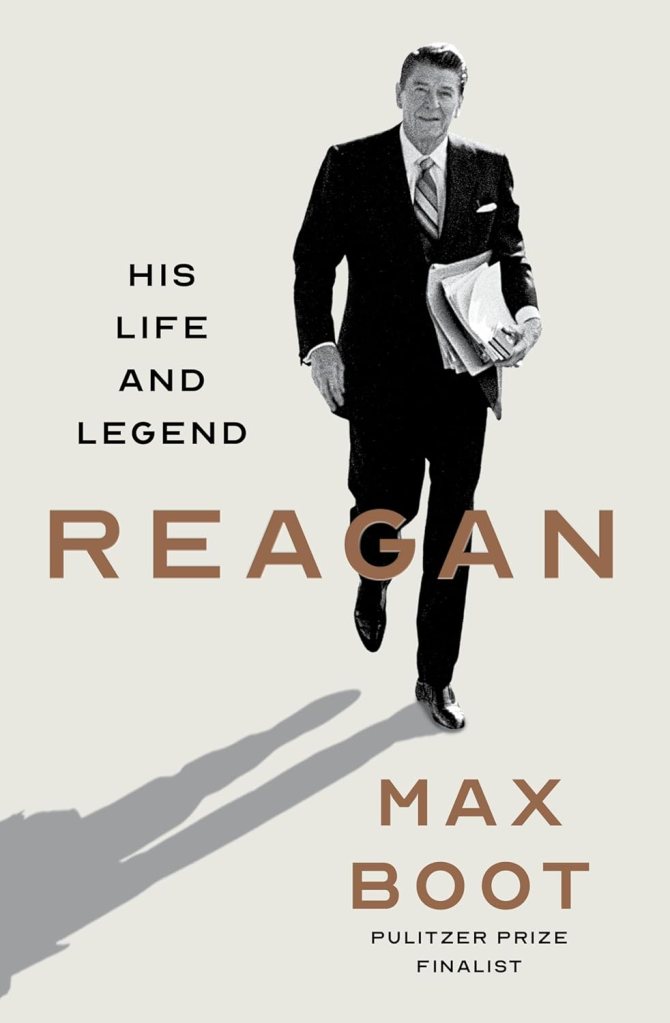
Max Boot’s biography, Reagan: His Life and Legend, offers a well-written and balanced examination of Ronald Reagan as President, Governor of California, husband, and father. While the book sheds light on Reagan’s admirable traits, it doesn’t shy away from his flaws, making it a nuanced portrayal that might not have pleased Reagan or his wife, Nancy, if they were alive to read it.
Reagan’s admirers—particularly those who regard him as one of the greatest U.S. Presidents—may find aspects of this book unsettling. While Boot acknowledges Reagan’s good qualities, he also highlights numerous shortcomings, presenting a more complex figure than the idealized version often celebrated.
The biography reinforced my belief that Reagan, though a decent man, was neither a particularly intelligent individual nor an exceptional leader. He lacked intellectual curiosity, with Reader’s Digest reportedly being his preferred reading material. Reagan, at heart, was an actor, and much of his success stemmed from his ability to follow direction—something he desperately needed throughout his political life.
One quality I genuinely admired in Reagan was his courage following the 1981 assassination attempt by John Hinckley. His ability to maintain a sense of humor even as he faced death was truly inspiring.
Reagan’s presidency benefited immensely from the presence of highly skilled advisors. For instance, Jim Baker, widely regarded as the best Chief of Staff in presidential history, played a pivotal role in keeping the administration on track. To Reagan’s credit, he recognized his limitations and leaned heavily on his team for guidance. Similarly, he often sought advice from Nancy, who was both his greatest supporter and, at times, a source of controversy in his life.
The book, at 731 pages, is lengthy but flows efficiently, offering a comprehensive look at Reagan’s life. Boot’s writing is engaging, making the biography an easy and compelling read despite its depth.
While there are faint parallels between Reagan and Donald Trump, I would caution against drawing too many comparisons. Reagan’s legacy, while flawed, is distinct in character and style from Trump’s presidency.
However, the book is not without its omissions. Boot largely sidesteps critical moments and controversies that shaped Reagan’s legacy. There’s no mention of the bombings of the U.S. Embassy, the Embassy annex, or the Marine barracks in Beirut—or the paralyzing indecision that followed. Likewise, the humiliating hostage crisis in Lebanon, the Iran-Contra affair, and the diversion of funds to the Contras are conspicuously absent.
Equally glaring is the lack of discussion on domestic issues, including scandals involving savings and loan regulators, the Department of Housing and Urban Development, and other government agencies. Boot also neglects to address Reagan’s rollback of civil rights laws, his failed nomination of Robert Bork to the Supreme Court, or the infamous visit to Bitburg Cemetery. The administration’s tax cuts, social welfare reductions, and their role in growing income inequality and the hollowing out of the middle class are similarly omitted.
On foreign policy, Boot overlooks Reagan’s apathy toward the AIDS pandemic, his opposition to sanctions on South Africa, and the dangerous escalation of tensions with the Soviet Union during the early 1980s fueled by his military buildup and incendiary rhetoric.
While Boot succeeds in painting a vivid picture of Reagan’s life and personality, these omissions leave the portrait incomplete. For readers seeking a full accounting of Reagan’s presidency, these gaps may feel significant. Nonetheless, the book offers a fascinating exploration of Reagan’s life, warts and all.







 Esot-eric