
I voted in my 13th Presidential election this morning. This woman represents the best chance that I will still be able to vote in my 14th election in 2028, God willing…

I voted in my 13th Presidential election this morning. This woman represents the best chance that I will still be able to vote in my 14th election in 2028, God willing…
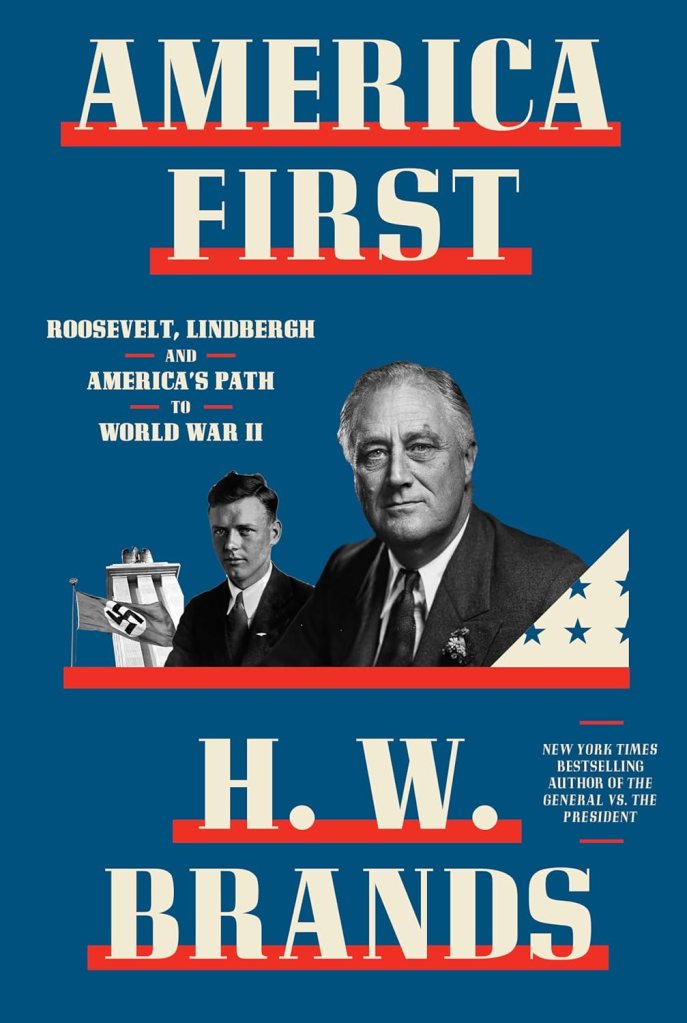
My rating: 4 of 5 stars
On September 1, 1939, fighting broke out in Europe. After the invasion of Poland by Germany, both France and England declared war against the Nazis. Many, if not most Americans, were resistant to participating in a European war. Indeed, there was resistance to even supplying military supplies and other goods to Britain while they basically fought Germany on their own. There was also significant support for the Germany and Hitler’s regime at this time.
Franklin D. Roosevelt managed a fine line. He wished to be re-elected for a third term, but he also understood that Hitler’s goals were not only the conquest of Europe, but world conquest. Charles Lindbergh was an American hero for his exploits about flying across the Atlantic on his own. He and his wife Anne endured the kidnapping and murder of his son in 1932 and this endeared him more to the American public.
Lindbergh opposed US involvement in any war overseas. Lindbergh felt that America was invincible as it was protected by oceans and not vulnerable to air attacks. Lindbergh saw no reason for America to sacrifice its sons in European wars and spoke out strongly against any intervention.
How FDR positioned the United States to prepare for World War II is an interesting story of great judgment and leadership. FDR coordinated closely with Winston Churchill to ensure that Britain had the necessary weapons and materials to survive German assaults. Roosevelt had to skillfully maneuver his aid to Churchill under the watchful eye and some time opposition of a reluctant Congress.
Charles Lindbergh was accused of being an agent and dupe of the German government. There seems to be a little evidence of that. Lindbergh firmly believed that United States could stand on its own and ably defend itself against any foreign attack or invasion. Circumstances and events proved that Lindburgh was incorrect in his analysis but he did volunteer to help the military in any capacity once United States entered the war.
Today there are isolationist policies still being supported. There are many Americans and people in Congress, who do not feel that we should be supporting Ukraine in its battle against Russia and Putin. Are they guilty of being short sighted too? There are some interesting historical similarities there.
This book was well researched and an excellent read. It quotes from Lindbergh’s diaries and provides a good measure of the man and his ambitions. I think that Lindbergh was largely circumspect and responsible in his criticism over American foreign policy. FDR happened to be right in his judgement about Hitler and America’s role in stopping tyranny.
Interesting question or admission from Fox News host Bret Baier in his “debate” with Kamala Harris yesterday…
At one point, Bret Baier asked Vice President Harris what she made of such a large number of Americans expressing support for former President Trump, while the two candidates remained largely close in polling, asking her, “Are they stupid?”
From my couch seat, I must admit that I find college football to be more entertaining and interesting than watching professional football.
***
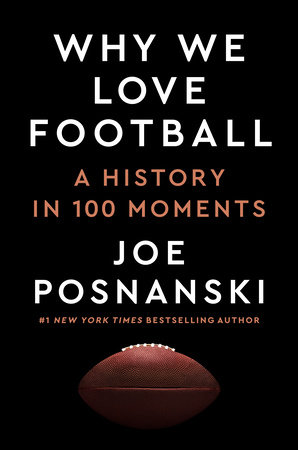
I read and enjoyed Why We Love Football: A History in 100 Moments by Joe Posnanski. Here is my quick review of the book:
Brief capsules (1-4 pages) of 100 pro, college and high school football moments that makes the sport special. Five of the 100 moments were about the Philadelphia Eagles: 1. Chuck Bednarik’s hit on NY Giants Frank Gifford; 2. Fans throwing snowballs at Santa; 3. Miracle at the Meadowlands (Herman Edwards returning late game fumble vs Giants); 4. DeSean Jackson returning late game punt vs. Giants; and 5. Philly Special from the Super Bowl game vs. the Patriots.
There are a lot of great stories, some deserving of additional length and elaboration. For this football fan of many decades, it was a quick nostalgic trip through my memories of memorable football experiences.
I would be interested in reading his similar themed book on baseball based on how I enjoyed this work.
***
If Deshaun Watson of the Cleveland Browns tried out as QB for the University of Texas, he might make fourth string.
***
Cleveland could be a three point underdog if they played Texas.
***
Nick Sirianni has not made many friends among the local and national media or the football fans of the Philadelphia Eagles. There are calls to fire Sirianni now and not let him finish the season. But who would replace him? Is there a “coach in waiting” on the Eagles staff? Some experts are touting Bill Bellichek but I think he is an awful fit for the football culture in Philadelphia. I expect with the talent and relatively easy schedule the Eagles have, they should make the playoffs. If they don’t, then let’s revisit Siranni’s tenure in Philly.
***
I read an article by a Temple alumnus who feels that the university should terminate its college football program because of the very poor on-field results and the lack of support and attendance from students, alumni and football fans. I concur. I also think that Rutgers University football should take a step or two back. I am not at the point where they should stop playing football, but they should consider competing at a lower level. I am not sure what football conference is appropriate for the school, but the Big 10 was and still remains a gigantic leap of faith. Possibly the greatest challenge for Rutgers football is finding a quarterback that you can build an offense around. In the 30–40 years that I have been watching Rutgers football, I can only recall maybe two, maybe three quarterbacks, who were good. The rest have been largely mediocre or awful. I recall many years ago being at a high school football game where a Rutgers coach was scouting for a quarterback. I did not think that any of the quarterbacks playing on the two teams were good enough to be recruited for a major college football program and expressed that to him. I made a suggestion to the coach about another local player who did wind up playing at a Division I school at quarterback. I hope that the Rutgers scouting program has improved greatly since that time.
***
I’m constantly amused when the media throws around the term “blockbuster” to describe some new crime, malfeasance, idiotic comment, lie, or scandal swirling around Donald Trump. At this point, can there really be anything more shocking or revolting that we haven’t already seen from him? It feels like we’ve hit the limit of outrage, and most people seem to be numb to it.
For the anti-Trump crowd, it’s clear: Trump has glided through scandal after scandal, barely touched by accountability. Nothing he does seems to stick, so what’s left to be shocked by? On the flip side, if you’re a Trump supporter, none of it matters anyway. You’ve long dismissed the onslaught of reports, evidence, and documentation. His personal behavior, crimes, and failures? They mean nothing. Trump has become untouchable in his own bubble of denial and deflection.
There’s a pervasive worry among many that if Trump returns to power, it will spell the end of democracy as we know it. But here’s the real gut-punch: if someone as blatantly unqualified as Trump can win a national election, what does that say about the judgment of the American people? And if you can’t trust the people’s judgment, how can you trust democracy itself? It’s like we’re testing the very system we claim to cherish, racing toward disaster without a second thought.

I recently came across a term that fits this moment perfectly: sanewashing. It’s the attempt to normalize abhorrent or vile behavior, especially when it’s done by politicians or the media covering for them. We’ve seen it play out endlessly, particularly with one candidate in mind. But the sad truth is, no matter how bizarre or outrageous the behavior, it often doesn’t register anymore. Why? Because we’ve allowed ourselves to grow numb to it.
It’s like those storm-chaser videos where you see a tornado bearing down, and yet there’s always some car trying to outrun it. That reckless dash parallels our current political landscape, where half the electorate seems willing to gamble on disaster. Will we outrun the storm, or will we be swallowed by it? Only time will tell, but one thing’s for sure: we’re speeding straight into the whirlwind, and it’s anyone’s guess how this ride ends.
One piece of offered advice in today’s heated political environment is to separate an individual’s politics from the person. You should respect them regardless of how their politics may offend or upset you. Easier said than done. If someone pulls out a match in a building with a gas leak, should I not be upset? Their reckless act endangers everyone, including me. That’s how I feel about voters choosing irresponsible candidates whose reckless behavior and proposed actions pose risks to us all.

Quiet, scenic, green, serene, an oasis of rustic culture, good food, crafts, antiques and a subdued lifestyle. One day, paradise; next day, hell. Roads flooded. Homes and businesses destroyed by wind, floodwaters and mud. And within this maelstrom, eerily silence. No contact with the outside world. No help to rescue trapped, injured and dying citizens. No way to escape. It felt like the end of the world…

Nature’s fury cannot be controlled, and one cannot reason with it. It is indiscriminate in its horror and its victims. Nature’s fury does not respect age, whether a person has led a good and moral life and what its affected targets are. Nature’s fury does not respect beauty and tranquility. It rampages blindly, horrifically and without pity.
I hope that the residents of Asheville NC and the surrounding communities are able to recover from this devastation as soon as possible. However I’m sure the scars and memories of Helene will last a long time. It’s a lesson for all of us, one day, blue skies; the next day, death and destruction.
 Esot-eric